
Llevo un tiempo lidiando con nutrientes descompensados e intentando mantener los nitratos altos. Pensé que solo era un acuario sucio, pero no sé si esto son diatomeas. Si podéis ayudarme, gracias.
Been dealing with unbalanced nutrients and trying to keep nitrates up . I thought I was just dealing with a dirty tank but idk if this is diatoms if you guys can help me out
Comentarios
Inicia sesión para dejar un comentario
Todavía no hay comentarios
Sé el primero en iniciar la conversación.

Sube el caudal; el movimiento en superficie no basta, hace falta más circulación
Raise your water flow a surface movement not enough circulation
 @brother5of5
20d
Las diatomeas suelen aparecer si añades una roca nueva, arena o algo así. Hace poco añadí medicación que también me dejó los nitratos y los fosfatos por los suelos y tuve una floración enorme de algas. Ciano, además de una especie de porquería marrón desconocida. Subí muchísimo el flujo por todo el acuario y volví a poner los nutrientes en orden. Y quité a mano parte de la porquería. Desapareció. El flujo es clave. Súbelo.
Diatoms usually comes if you add a new rock, or sand or something like that. I recently added medication that bottomed out my nitrate and phos too and I had a huge algae bloom. Cyano, plus some unknown brown gunk. I cranked up my flow hard throughout the tank and got nutrients back on track. And manually removed some of the gunk. It went away. Flow is key. Crank it up.
@WILMER
20d
Entonces es una MP40 en un acuario de 32 galones, ni idea de cuál es el ajuste ideal para el tamaño del acuario
So it’s a MP40 in a 32 gallon tank idk what’s the sweet setting for the size of the tank
@brother5of5
20d
Esa es la parte difícil. Pensé que ya estaba en mi punto ideal. Pero después de la floración, durante unos días puse todas mis bombas al 100 y no murió nada excepto las algas. Los cambios bruscos de nutrientes dañan más a los corales. Pero bajé otra vez el flujo cuando desaparecieron las algas, aunque sigo con el doble de potencia de flujo que antes de la floración. Y todo parece contento. Así que creo que he sido demasiado prudente con el flujo. Solo vigila los corales. Busca señales de que hay demasiado flujo. Y súbelo.
That’s the hard part. I thought I was in my sweet spot. But after the bloom, over a few days I turned all my powerheads to 100 and nothing died except the algae. The nutrient swings hurt the corals more. But I’ve dialed flow back once the algae was gone but im still at double flow power than I was before the bloom. And things seem happy. So I think I’ve been too hesitant with flow. Just watch corals. Look for their too much flow warning signs. And crank it up.
@WILMER
20d
Gracias, se agradece la info
Thank you appreciate the info
@brother5of5
20d
Sí, tío, ¡mucha suerte! ¡Sigue peleando! Volverás a estar arriba.
Yeah man good luck! Keep up the fight! You’ll get back on top.
@WILMER
20d
Me venía bien, gracias
Needed that, thanks
@brother5of5
20d
Bueno, otra cosa que estoy aprendiendo ahora que puede ayudarte es la luz. Mi acuario grande está recuperándose muy bien, pero el pequeño está constantemente invadido por algas de pelo verdes. Guerras de algas, tío. Pero mi investigación es que los corales y las anémonas, sobre todo, les encanta el espectro azul y violeta de la luz. Y las algas les gustan los rojos, verdes y amarillos. Así que todavía no tengo pruebas. Pero estoy intentando un tratamiento con luz azul, combinado con más corriente en mi acuario pequeño. Las algas pueden seguir sobreviviendo con luz azul. Pero quizá se ralentice. No estoy quitando todos los demás colores. Solo los estoy bajando un poco. Otra cosa para tener en cuenta.
Well another thing im learning right now that may help you is light. My big tank is bouncing back nicely but my little tank is constantly getting over run with green hair algae. Algae wars man. My research though is that corals and nems mostly love the blue and violet spectrum of light. And algae likes reds greens and yellows. So I don’t have proof yet. But im trying a blue light treatment, combined with extra flow in my small tank. Algae can still survive on blue. But it may slow it down. I’m not cutting out all the other colors. But tuning them down some. Just another thing to think about.
 @wcj_ink
20d
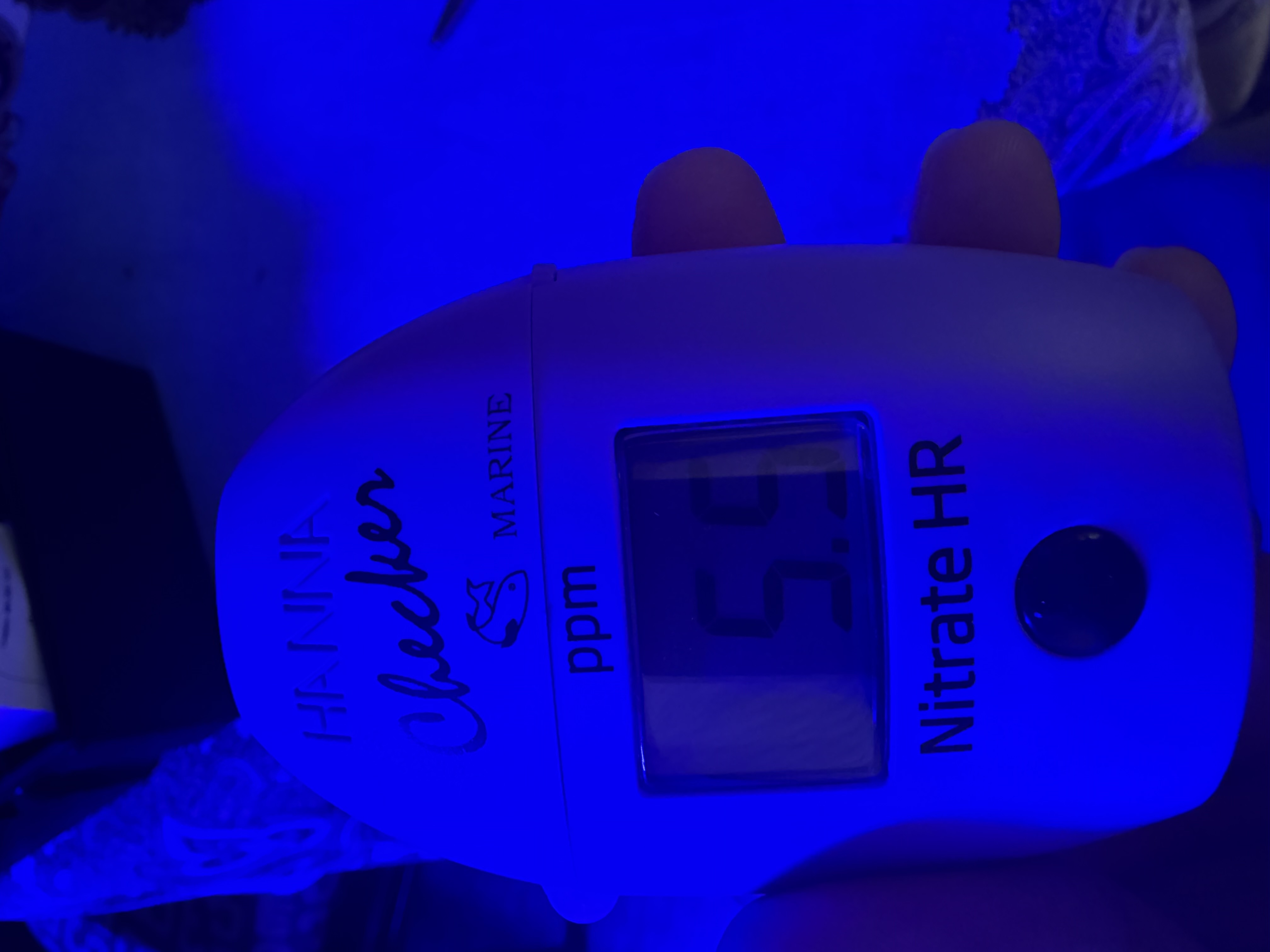
¿Puedes poner tus parámetros?
Can you post up your parameters?
@WILMER
20d
 @WILMER
20d
Mis fosfatos están en 0.03
My phosphates are at 0.03
@WILMER
20d
No he hecho un cambio de agua en casi un mes
Haven’t done a water change close to a month
@wcj_ink
20d
No sé qué edad tiene tu acuario, pero si es nuevo quizá tengas que esperar a que pase la etapa fea, pero los cambios de agua son clave; aunque tus parámetros estén bien, puede que te falten otros minerales traza en el agua que controlan los brotes. Yo haría 3 cambios de agua del 10% cada 4 días mientras sifonas todo lo que pueda del sustrato y luego volvería a mis cambios de agua semanales normales del 20%. Si eso no cambia nada, miraría otras opciones, pero por experiencia los cambios de agua programados con un buen sistema de rodi arreglan casi cualquier problema
Bot sure how old your tank is but if it’s new then you might have to wait out the ugly stage but WCs are key, even if your parameters are in check you may be lacking other trace minerals in your water that control outbreaks, I would do 3 x 10% water changes every 4 days while siphoning out as much I can from the substrate and then go back to my regular 20% weekly water changes. If that doesn’t change anything I would look into other options but in my experience scheduled water changes with a good rodi system will fix almost any problem
@WILMER
20d
Bueno, tiene unos 3-4 años. Estaba haciendo un cambio de agua semanal y luego me relajé y dejé de ser constante. Después empecé a obsesionarme con los números, así que si hago los cambios de agua intensivos, ¿con qué frecuencia hago los cambios de agua y de cuánto para un 32 AIO?
So about a 3-4 year old tank, I was doing a weekly water change and then I fell off and wasn’t consistent. Then I started chasing numbers, so if I do the heavy water changes how often do I do water changes and how much for a 32 AIO.
@WILMER
20d
Porque lo que también me di cuenta fue que estaba eliminando todos mis nitratos con mi cambio de agua semanal
Because what I also noticed was I was stripping all my nitrates from my weekly water change
@wcj_ink
20d
En cuanto descuidas los cambios de agua, eso va cuesta abajo y obsesionarte con los números te volverá loco y te hará gastar dinero en productos que no necesitas. Vale, así que ahora tenemos un acuario del mismo volumen; acabo de volver al hobby con un Biocube 32… así que mis cambios de agua también me eliminan los nitratos, así que lo complemento con una dosis diaria de brightwells neonitro. Actualmente hago cambios de agua cada semana y dosifico 5 ml de neonitro al día; cada acuario es diferente, así que sigue midiendo los nitratos a diario hasta que llegues a tu dosis diaria deseada.
Once you slack on wcs it’s a downhill slope and chasing numbers will drive you insane and waste money on products you don’t need. Okay so we have the same volume tank rn I just started back up into the hobby with a 32 biocube…so my water changes strip my nitrates away as well so i supplement that with a daily dose of brightwells neonitro. Im currently doing water changes every week and dose 5ml of neonitro daily, every tank is different so keep testing your nitrates daily until you reach your desired daily dosage.
@WILMER
20d
¿Haces un cambio de agua del 10% cada semana?
You do a 10% water change weekly?
@wcj_ink
20d
Sí, hago cambios de agua de 5 g cada semana y un cambio de agua de 10 g cada mes, que es cada 4.ª vez
Yes I do, 5g water changes every week and 10g water change every month which is every 4th time
@WILMER
20d
Eso es interesante, ¿por qué? El cambio de agua de 10 g
That’s interesting why’s that? The 10g water change
@wcj_ink
20d
Ni idea, es solo lo que hago 🤣 para ser sincero, con los cambios de agua de 5 g semanales irá bien
Idk it’s just what I do 🤣 to tell you the truth it will be fine with the 5g wcs weekly
@WILMER
20d
Gracias por la ayuda. Te iré contando cómo va mi acuario, agradezco toda la ayuda
Thanks for the help. I’ll let you know how my tanks is doing appreciate all the help
@wcj_ink
20d
¡Claro, tío! Solo sigue con ese mantenimiento regular y te irá bien, yo aprendí esa lección por las malas. ¡Suerte con ello!!
Ofc man! Just keep that regular maintenance up and you’ll be good, I learned that lesson the hard way. Good luck with it!!
Quieres que la corriente sea justo la suficiente para que mueva ligeramente la arena y haga un pequeño hueco, y lo siguiente sería el equipo de limpieza
You want your flow just enough that it slightly blows the sand to make a small pocket and next would be cleanup crew
 @vetteguy53081
13d
Las diatomeas son unas algas marrones que suelen aparecer en un acuario que acaba de terminar su ciclado, pero también pueden aparecer en un acuario reef ya establecido. Quedan feas, pero en la mayoría de los casos son inocuas y se alimentan principalmente de silicatos, así como de compuestos orgánicos disueltos, fosfatos y nitratos. El agua del grifo puede contener silicatos y es una buena forma de provocar una proliferación si la usas para mezclar sal o para reponer el agua que se ha evaporado del acuario. Usar una unidad RODI ayuda, aunque aun así puedes tener diatomeas con una unidad RODI si el cartucho que elimina los silicatos está caducado. Las diatomeas suelen ser inofensivas y se pueden eliminar una vez que desaparece su fuente de alimento. Para brotes importantes quizá quieras plantearte un apagón de tres días. Se quitan fácilmente del cristal con un mag float; un baster de pavo o un cepillo de dientes pueden cubrir otras zonas del acuario. Prepárate para que vuelvan a establecerse rápidamente después de la limpieza, ya que probablemente puedan reaparecer y volver a crecer. Para evitar que regresen, haz cambios de agua regulares, mantén el sustrato limpio, no sobrealimentes el acuario, asegúrate de que tu skimmer esté funcionando al nivel óptimo y mantén limpias de forma habitual las mallas filtrantes y las esponjas. Algunos del equipo de limpieza que ayudan a controlarlas son: caracoles Cerith, caracoles Nerite y caracoles Trochus, y también los caracoles Astraea son eficaces eliminando diatomeas.
Diatoms are a brown algae that typically appear in a tank which has just completed its cycle but they can also appear in an established reef tank and looks ugly but in most cases are harmless and feed mainly off of silicates as well as dissolved organic compounds, phosphate and nitrates. Tap water can contain silicates and is a good way to get a bloom if you use it to mix salt or to replace water that evaporated from the tank. Using an RODI unit helps, although you can still get diatoms with an RODI unit if the cartridge that removes silicates becomes expired. Diatoms are typically harmless and can be beaten once their food source is gone. For major outbreaks you may want to consider a three day blackout. They are easily wiped from the glass with a mag float, a turkey baster or a toothbrush can cover other areas of the tank. Be prepared for them to re-establish themselves quickly after a cleaning as they are likely to be able to reappear and have re-growth rates. To prevent their return, do regular water changes, keep the bedding clean, don’t overfeed tank, ensure your skimmer is running at an optimal level and keep filter socks and sponges clean on a regular basis. Some cleaner crew to help control it are : Cerith snails, Nerite snails and Trochus snails and also Astraea snails are effective at removing diatoms.

Parece que podrían ser diatomeas, sobre todo si el acuario es todavía nuevo. Yo miraría primero los niveles de nitrato y fosfato y evitaría hacer demasiados cambios a la vez.
Looks like it could be diatoms, especially if the tank is still new. I’d check nitrate and phosphate levels first and avoid making too many changes at once.
Inicia sesión para unirte a la conversación.

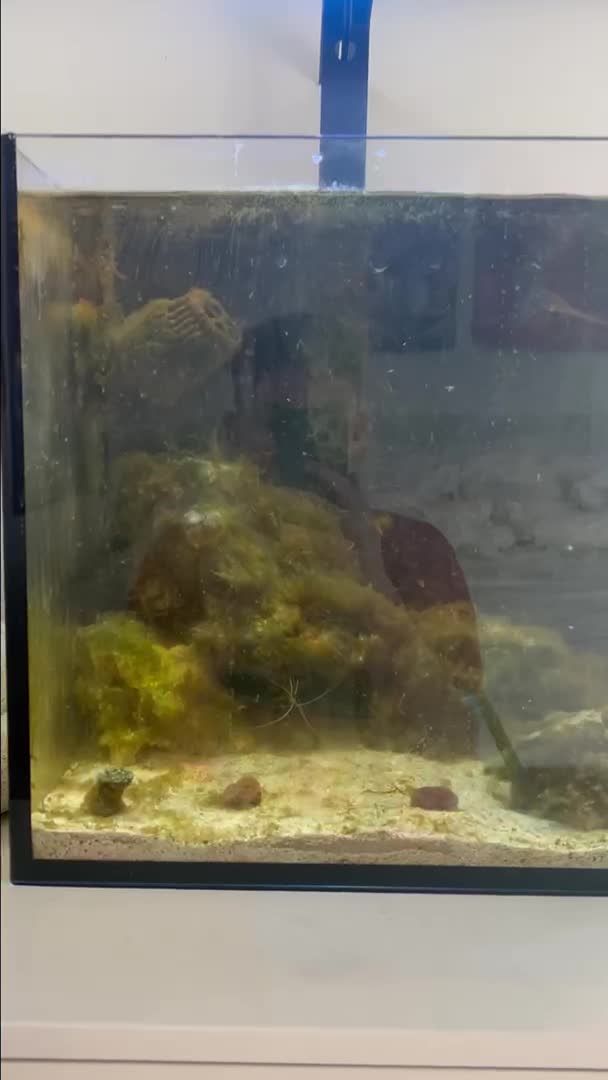
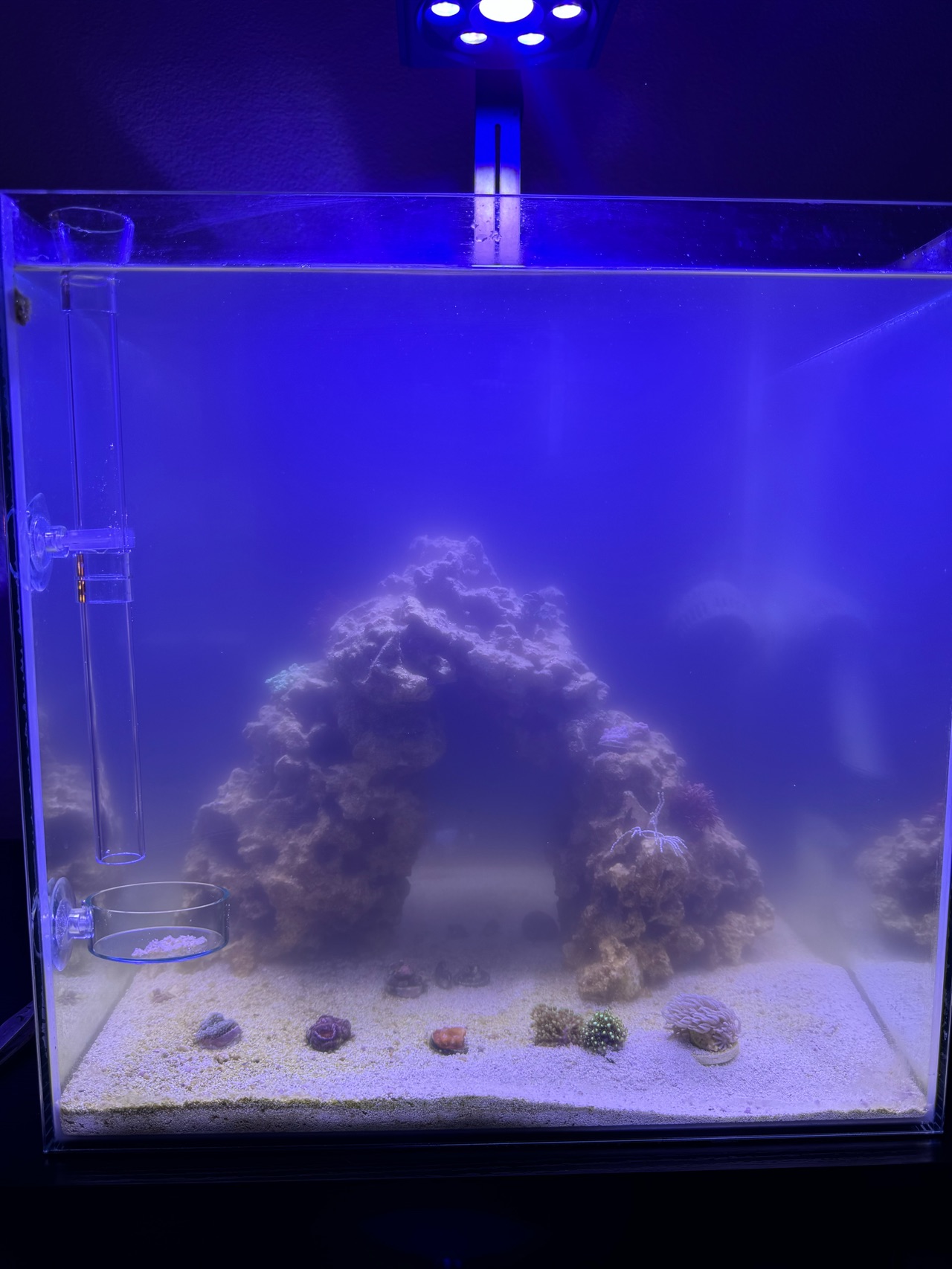

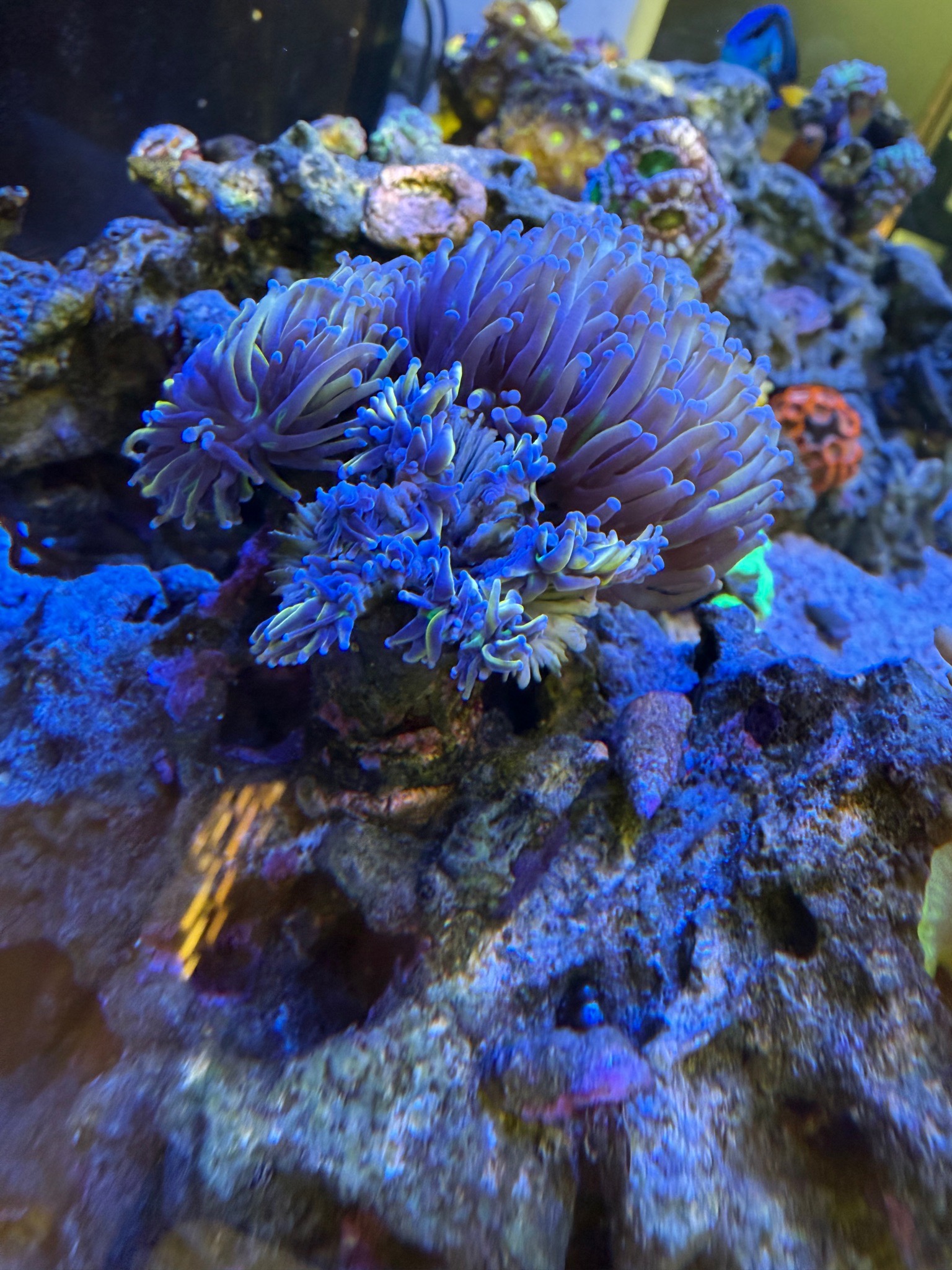




Podría ser algo más que diatomeas
Could be more than diatoms
¿Qué más podría ser? ¿Cómo puedo averiguarlo?
What else could it be? How can I find out
También podría ser dinos o ciano. La mejor forma es un microscopio barato si puedes, o subir una foto muy de cerca.
Could be dinos or cyano too. Best way is a cheap microscope if you can, or post a close