
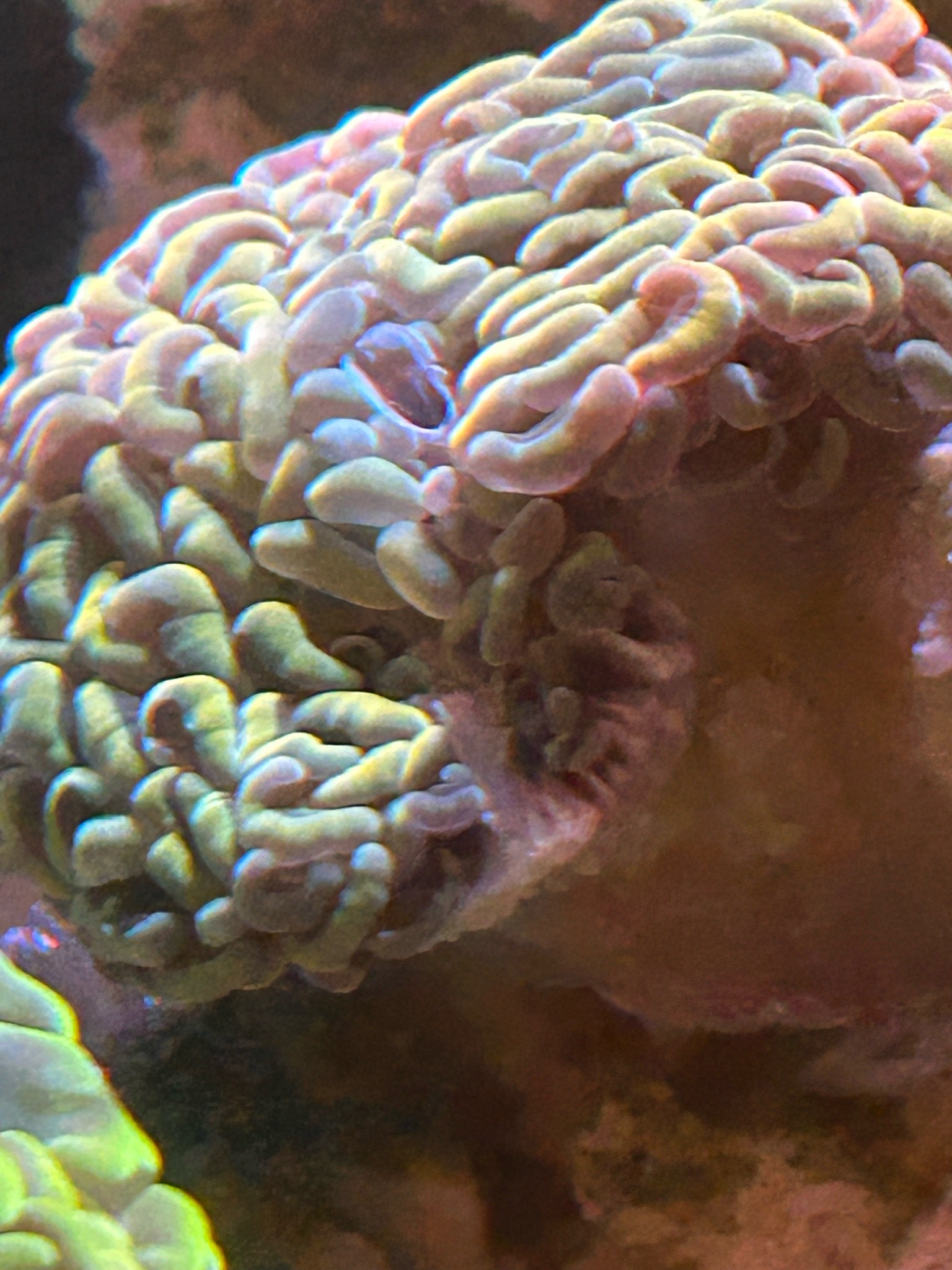
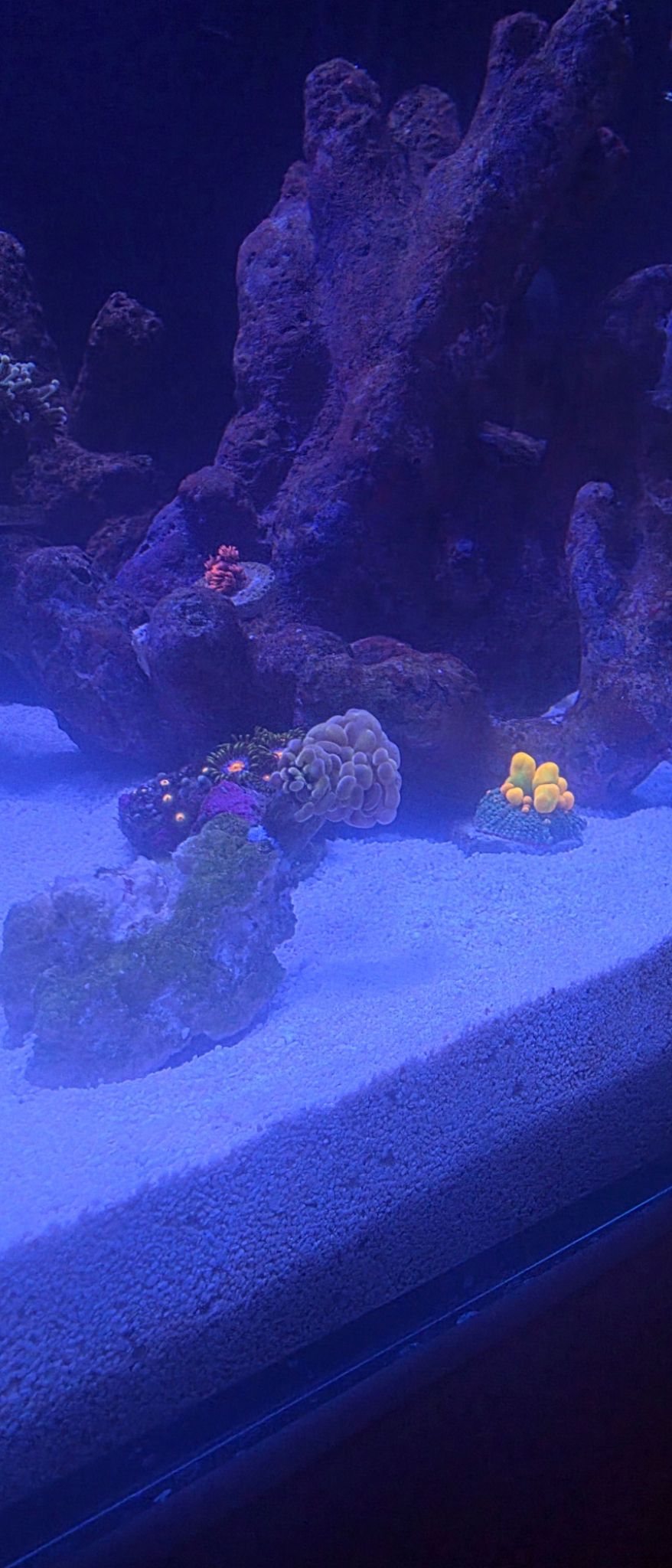
Salut tout le monde. J’aimerais savoir si c’est de la RTN ? Et si oui, qu’est-ce qu’on peut faire ? Mes paramètres sont dans la norme : KH 8.3, Ca 457, Mg 1535, NO3 11, PO4 0.05, pH 8.4, Temp 24, Salinity 1.027. J’apprécierais votre aide.
ello everyone. I’d like to know if this is RTN? And if so, what can be done? My parameters are within range: KH 8.3, Ca 457, Mg 1535, NO3 11, PO4 0.05, pH 8.4, Temp 24, Salinity 1.027. I would appreciate your help.
Commentaires
Connecte-toi pour laisser un commentaire
Aucun commentaire pour le moment
Sois le premier à lancer la conversation.
 @jasmine_ilands
14h
Les chiffres ne sont pas ton problème, et c’est ça le plus agaçant. KH 8.3, Ca 457, PO4 0.05, NO3 11, c’est un bac qui tourne. Le RTN s’en fiche. Ça évolue en quelques heures, pas en semaines, et ça commence généralement à un point : une zone sans courant, un point de colle fraîche, une brûlure d’un voisin, ou une éraflure due à la manipulation. Donc les questions qui décident vraiment de ça : - Le bord blanc avance-t-il pendant que tu regardes ? Prends une photo maintenant et une dans une heure. Si le blanc est plus grand, c’est du RTN et tu agis aujourd’hui. - Le tissu se décolle-t-il en plaques ou en filaments ? C’est le signe. Une zone pâle qui progresse lentement, c’est différent, là c’est du STN et tu as le temps de chercher la cause. Si c’est du RTN : coupe la partie saine, à un pouce au-dessus de la ligne, jusqu’au squelette propre, et fixe ça. Pars du principe que la partie touchée est perdue. Mets du charbon neuf et fais un changement d'eau de 20 percent pour la mortalité, pas pour courir après un chiffre. Un point de ta liste que je vérifierais deux fois : salinité 1.027. Si c’est un densimètre à aiguille, ça peut être beaucoup plus élevé que tu ne le penses. Réfractomètre calibré avant de lui faire confiance. Ne dose rien pour corriger ça. Changer l’alcalinité ou le Ca en plein événement l’accélère. Et poste les deux photos, je regarderai.
The numbers aren't your problem, and that's the annoying part. KH 8.3, Ca 457, PO4 0.05, NO3 11 is a working tank. RTN doesn't care. It moves in hours, not weeks, and it usually starts at a point: a spot with no flow, a fresh glue joint, a sting from a neighbour, or a nick from handling. So the questions that actually decide this: - Is the white edge advancing while you watch it? Take a photo now and one in an hour. If the white is bigger, it's RTN and you act today. - Does tissue peel off in sheets or strings? That's the tell. A slow pale patch is different, that's STN and you have time to look for the cause. If it's RTN: cut the healthy part off, an inch above the line, into clean skeleton, and mount that. Assume the affected section is lost. Run fresh carbon and do a 20 percent water change for the die-off, not to chase any number. One thing in your list I'd double check: salinity 1.027. If that's a swing-arm hydrometer it could be a lot higher than you think. Calibrated refractometer before you trust it. Don't dose anything to fix this. Changing alk or Ca mid-event makes it faster. And post the two photos, I'll look.
@aviram
12h
I cut one of them, and for now, it seems the spread has stopped; I made the cut slightly above the living tissue. As for the coral itself, it completely disintegrated within just a few hours. I performed a 15% water change and started using STN/RTN-X. I hope I won’t wake up to any new surprises tomorrow and that the spread to other corals will halt.
Connecte-toi pour participer à la conversation.






Vérifie d’abord si ça se propage vite
Check if it spreads fast first