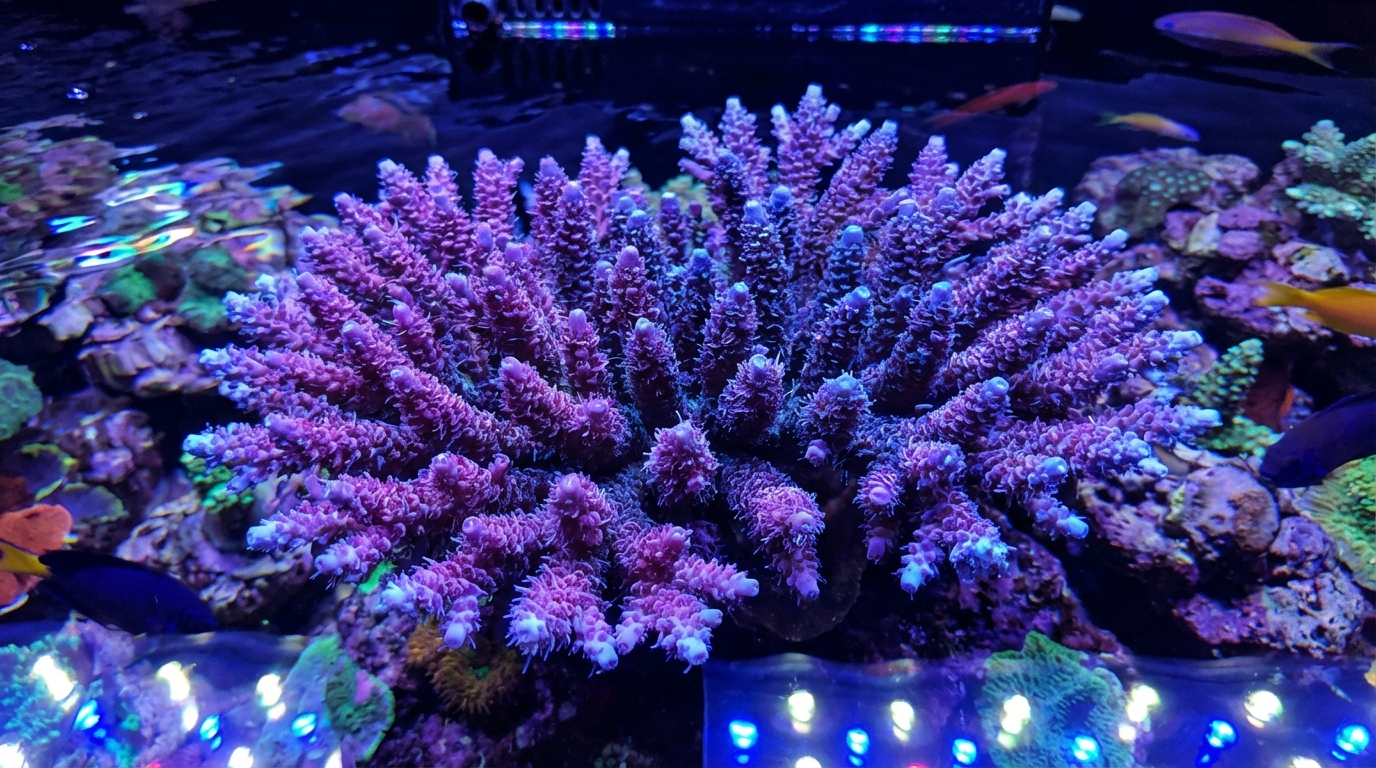
Acropora corals represent the pinnacle of reef keeping. These stunning SPS (Small Polyp Stony) corals are known for their intricate branching structures and vibrant colors, but they're also considered one of the more challenging corals to keep successfully. This guide will walk you through everything you need to know to keep Acropora thriving in your reef tank.
What Makes Acropora Special?
Acropora is the largest genus of stony corals, with over 150 species found on reefs worldwide. In the aquarium hobby, they're prized for their:
- Stunning growth forms - From tight tables to elegant branching colonies
- Incredible colors - Blues, purples, greens, pinks, and multicolored varieties
- Active polyp extension - Giving colonies a fuzzy, living appearance
- Fast growth rates - Under optimal conditions, they can grow several inches per year
Water Parameters for Acropora
SPS corals like Acropora are highly sensitive to water quality. Maintaining stable, pristine water is essential for success.
Critical Parameters
- Temperature: 76-79°F (24-26°C) - Stability is more important than the exact number
- Salinity: 1.025-1.026 specific gravity (35 ppt)
- pH: 8.1-8.4
- Alkalinity: 7-9 dKH (some reefers push to 10-11 dKH for faster growth)
- Calcium: 400-450 ppm
- Magnesium: 1300-1400 ppm
- Phosphate: 0.03-0.1 ppm (ultra-low but not zero)
- Nitrate: 1-10 ppm (again, not zero)
Pro Tip: Many new SPS keepers chase "zero" nutrients, but Acropora actually need some nitrate and phosphate to maintain their color and health. Starving corals of nutrients leads to pale, washed-out colors and slow growth.
Lighting Requirements
Acropora are high-light corals that come from shallow reef environments. They need intense lighting to thrive.
PAR Levels
- Optimal range: 300-450 PAR
- Acceptable range: 250-500 PAR
- Placement: Upper third of the tank, often directly under the light
Acclimation
When adding new Acropora to your tank, start them lower in the rockwork and gradually move them up over 2-4 weeks. Sudden exposure to intense light can cause bleaching.
Flow Requirements
Strong, chaotic water flow is essential for Acropora. They need:
- High turnover: 30-50x tank volume per hour
- Chaotic patterns: Avoid laminar flow that comes from one direction
- Visible polyp movement: Polyps should sway but not be blown over
Flow serves multiple purposes - it delivers food and removes waste, prevents detritus buildup on branches, and provides the mechanical stimulation that promotes dense growth.
Feeding Acropora
While Acropora get most of their nutrition from their symbiotic zooxanthellae (photosynthesis), supplemental feeding can boost growth and color.
Feeding Options
- Coral foods designed for SPS
- Amino acid supplements
- Phytoplankton (small amounts)
- Reef Roids or similar products
Feed 2-3 times per week, preferably at night when polyps are extended. Target feeding with a pipette works best.
Common Acropora Problems
STN/RTN (Slow/Rapid Tissue Necrosis)
The dreaded tissue recession that kills Acropora colonies. Usually caused by:
- Parameter swings (especially alkalinity)
- Temperature fluctuations
- Bacterial infections
- Shipping stress
Browning Out
When Acropora lose their vibrant colors and turn brown, it usually indicates:
- Too much light (excess zooxanthellae production)
- Not enough light (coral producing more zooxanthellae)
- Elevated nutrients
Acropora Eating Flatworms (AEFW)
These tiny pests are nearly invisible but devastate Acropora colonies. Dipping all new corals is essential for prevention.
Best Beginner Acropora Species
If you're ready to try SPS, start with these hardier varieties:
- Acropora millepora - Colorful and relatively forgiving
- Acropora tenuis - Beautiful table forms, good starter SPS
- Acropora valida - Hardy branching species
- Montipora - Technically a different genus but great SPS training wheels
Tank Requirements
Before attempting Acropora, make sure your tank meets these criteria:
- Tank age: At least 6-12 months old (mature, stable system)
- Quality lighting: Modern LEDs or T5 fixtures with appropriate spectrum
- Strong flow: Multiple powerheads or a gyre-style pump
- Stable dosing: Calcium reactor or consistent 2-part dosing
- Quality test kits: Hanna checkers or equivalent for accuracy
Shopping for Acropora
When purchasing Acropora, look for:
- Fully extended polyps with good coloration
- No white tips or recession at the base
- Strong encrusting base
- No visible pests
Browse the ReefBay marketplace to find healthy Acropora from trusted sellers. Many hobbyists sell aquacultured frags that are already adapted to aquarium conditions.
Final Thoughts
Acropora aren't beginner corals, but they're absolutely achievable for dedicated reefers. The key is patience, stable parameters, and learning to read your corals. Use the ReefBay app to track your parameters over time - you'll start to see patterns that help you understand what your Acropora need.
Start with frags rather than colonies, master the basics with hardier SPS first, and you'll be growing stunning Acropora forests in no time.