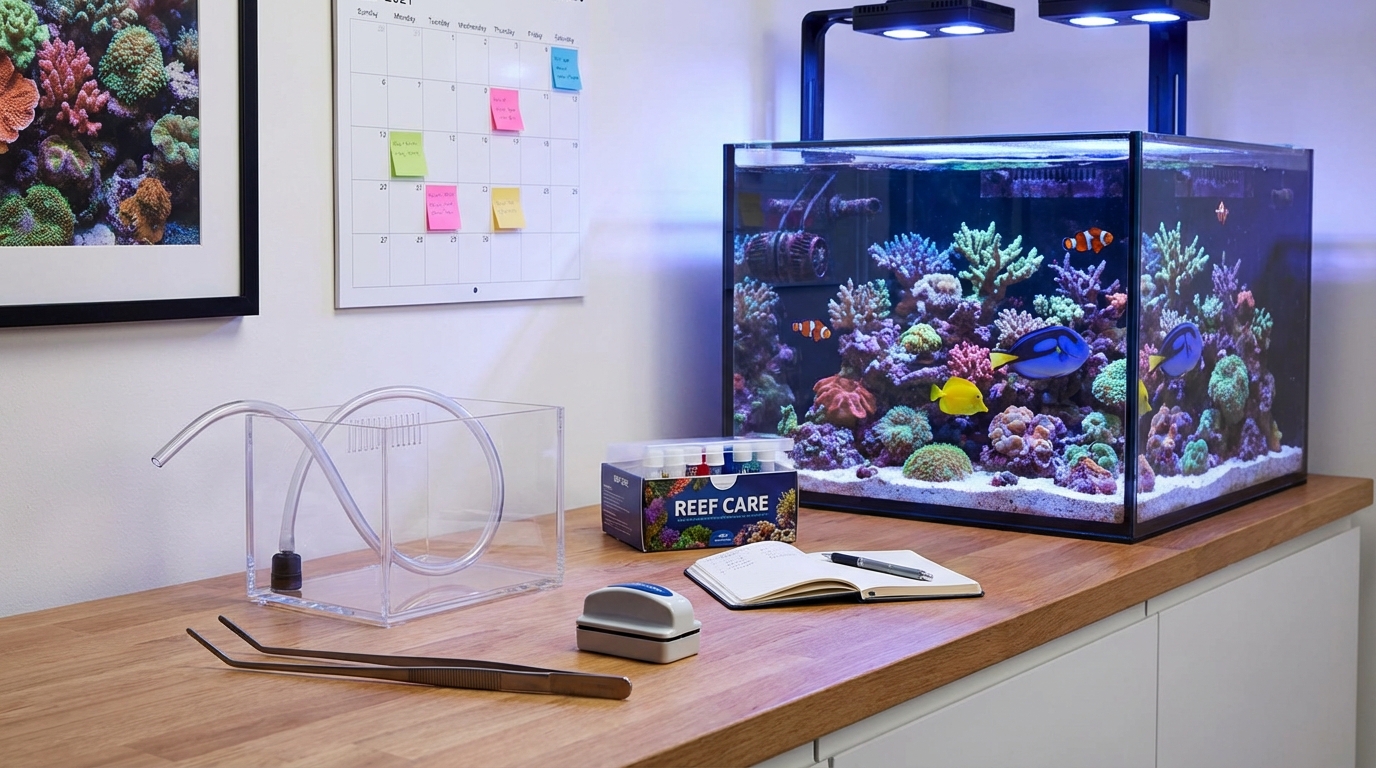
The Ultimate Reef Tank Maintenance Schedule: Daily, Weekly & Monthly Tasks
A complete reef tank maintenance schedule covering daily, weekly, and monthly tasks. Learn exactly what to check, when to test, and how to keep your reef thriving with this printable checklist.
Quick answer
A reef tank stays healthy with a simple daily, weekly, bi-weekly, and monthly routine: inspect livestock and equipment daily, test alkalinity, calcium, nitrate, and phosphate weekly, do a 10% to 20% water change every two weeks, and deep clean and test magnesium and pH monthly. Consistency matters more than long sessions.
Keeping a reef tank healthy doesn't require hours of work each day — it requires consistency. The key to a thriving reef is establishing a maintenance routine and sticking to it. This guide breaks down exactly what you need to do daily, weekly, and monthly to keep your tank in top shape.
Daily Tasks (5-10 Minutes)
Daily maintenance is about observation and quick checks. These tasks take just a few minutes but catch problems early.
✅ Visual Inspection
- Check all livestock — are fish swimming normally? Corals extended?
- Look for any signs of disease (white spots, torn fins, unusual behavior)
- Check coral health — tissue recession, bleaching, closed polyps?
- Scan for pests (aiptasia, flatworms, nudibranchs)
✅ Equipment Check
- Verify all pumps are running
- Check ATO (auto top-off) reservoir level
- Confirm heater is maintaining temperature
- Ensure protein skimmer is producing skim
- Check for any unusual sounds or vibrations
✅ Feed Your Tank
- Feed fish 1-2 times daily (only what they can consume in 2-3 minutes)
- Target feed corals if you have an LPS-heavy tank
- Add any daily supplements (amino acids, etc.)
✅ Quick Parameter Glance
- Check temperature (should be 76-80°F)
- Verify salinity if you have a monitor
- Log any dosing amounts
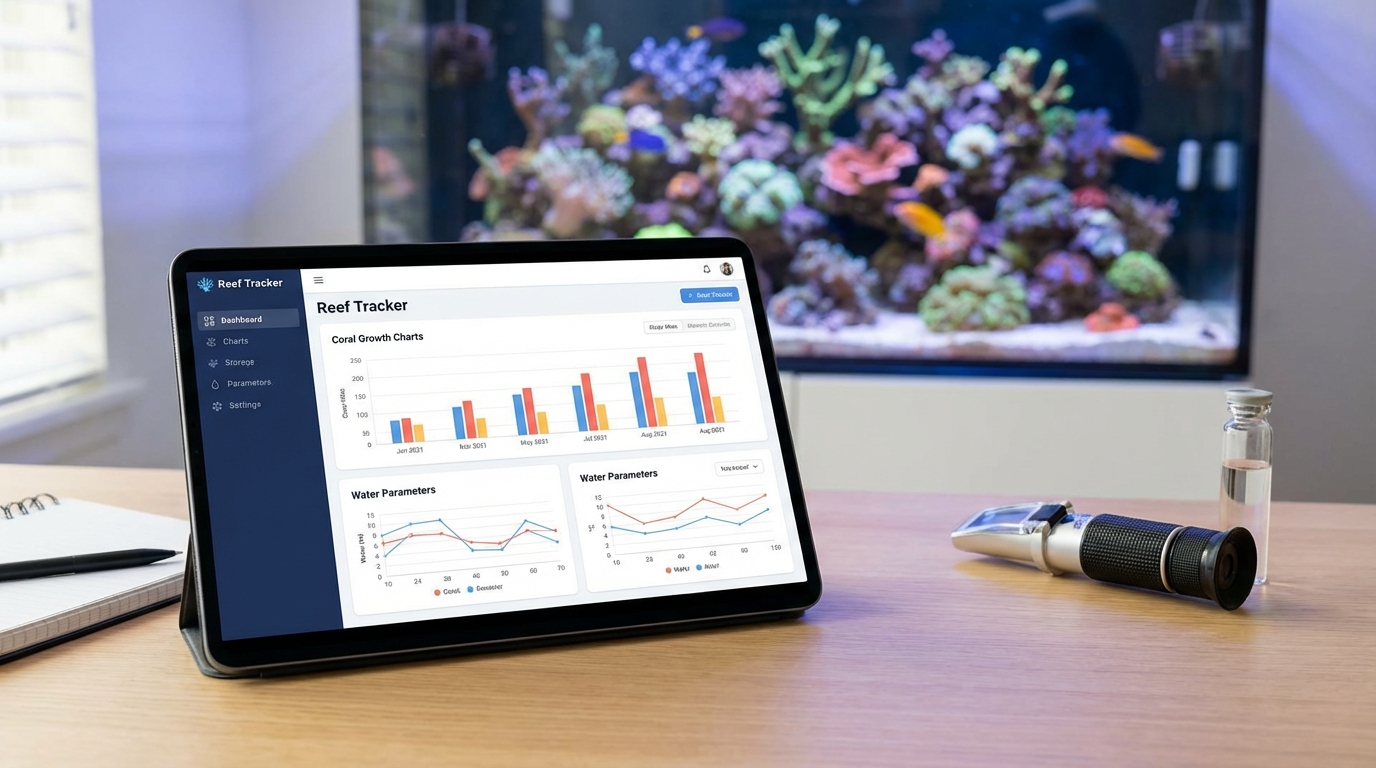
Pro Tip: Use the ReefBay app to log observations quickly. Patterns become visible over time.
Weekly Tasks (30-60 Minutes)
Weekly maintenance involves testing, cleaning, and more thorough inspections.
✅ Water Testing
Test these parameters weekly (at minimum):
- Alkalinity — most important for coral growth
- Calcium — essential for stony corals
- Nitrate — should be 5-20 ppm
- Phosphate — should be 0.03-0.1 ppm
Log all results in your parameter tracker to spot trends.
✅ Glass Cleaning
- Clean inside glass with a magnet cleaner or scraper
- Clean outside glass with a microfiber cloth
- Don't forget the sides and back if visible
✅ Equipment Maintenance
- Empty and rinse protein skimmer collection cup
- Clean skimmer neck if gunky
- Rinse filter socks/floss (or replace)
- Check return pump intake for debris
- Clean any sensors (pH probe, salinity probe)
✅ Top Off Reservoirs
- Refill ATO reservoir with RO/DI water
- Check dosing container levels
- Ensure saltwater mixing station has enough for next water change
Bi-Weekly Tasks
✅ Water Change (10-20%)
This is the single most important maintenance task:
- Mix saltwater 24+ hours ahead to temperature/salinity match
- Remove 10-20% of tank water
- Siphon any detritus from sand bed (optional)
- Refill with pre-mixed saltwater
Water changes export nutrients and replenish trace elements that testing doesn't catch.
✅ Clean Powerheads
- Remove and soak in vinegar/water solution
- Scrub away any buildup
- Check impellers for wear
Monthly Tasks (1-2 Hours)
Monthly maintenance covers deeper cleaning and less frequent tests.
✅ Extended Water Testing
Test these parameters monthly:
- Magnesium — should be 1300-1400 ppm
- pH — should be 8.0-8.4
- Salinity calibration — verify refractometer accuracy
✅ Deep Equipment Cleaning
- Disassemble and clean protein skimmer thoroughly
- Clean return pump and check impeller
- Inspect heater for damage or malfunction
- Clean light fixtures and lenses
- Check ATO float switches for buildup
✅ Sump Maintenance
- Clean filter socks or replace media
- Remove detritus from sump bottom
- Trim chaeto in refugium if overgrown
- Check baffles for accumulated debris
✅ Livestock Assessment
- Count fish — any missing?
- Assess coral growth — time for fragging?
- Check clean-up crew population — need reinforcements?
- Evaluate if any corals need moved
Quarterly/Seasonal Tasks
✅ Replace Consumables
- Replace RO/DI filters and membrane
- Replace GFO/carbon if using reactors
- Change UV sterilizer bulb (if applicable)
- Replace dosing pump tubing
✅ Calibrate Equipment
- Calibrate pH probe with fresh solution
- Calibrate refractometer with calibration fluid
- Verify heater accuracy with separate thermometer
✅ System Review
- Review parameter trends over past 3 months
- Adjust dosing amounts if consumption has changed
- Plan any equipment upgrades
- Stock up on salt, supplements, and consumables
The Printable Checklist
Daily:
- □ Visual livestock check
- □ Equipment running?
- □ Temperature check
- □ Feed fish
- □ ATO level
Weekly:
- □ Test Alk, Ca, NO3, PO4
- □ Clean glass
- □ Empty skimmer cup
- □ Rinse filter media
- □ Log parameters
Bi-Weekly:
- □ Water change (10-20%)
- □ Clean powerheads
- □ Check dosing containers
Monthly:
- □ Test Mg, pH
- □ Deep clean skimmer
- □ Inspect all equipment
- □ Sump maintenance
- □ Livestock assessment
Making It Easy: Automate What You Can
The more you automate, the less daily effort required:
- Auto top-off (ATO): Maintains salinity automatically
- Dosing pumps: Handle calcium/alkalinity supplementation
- Auto-feeders: Ensure fish are fed even when you're away
- Smart controllers: Monitor temp, pH, and send alerts
Even with automation, visual checks and water changes remain essential.
Final Thoughts
Successful reef keeping isn't about perfection — it's about consistency. A simple routine followed religiously beats sporadic intensive care sessions. Start with the basics, build habits, and your reef will reward you with vibrant growth and healthy livestock.
Track all your maintenance tasks and parameters with the ReefBay app to stay organized and spot issues before they become problems.
Ready to stock your tank? Browse corals and fish from trusted sellers on the marketplace.