
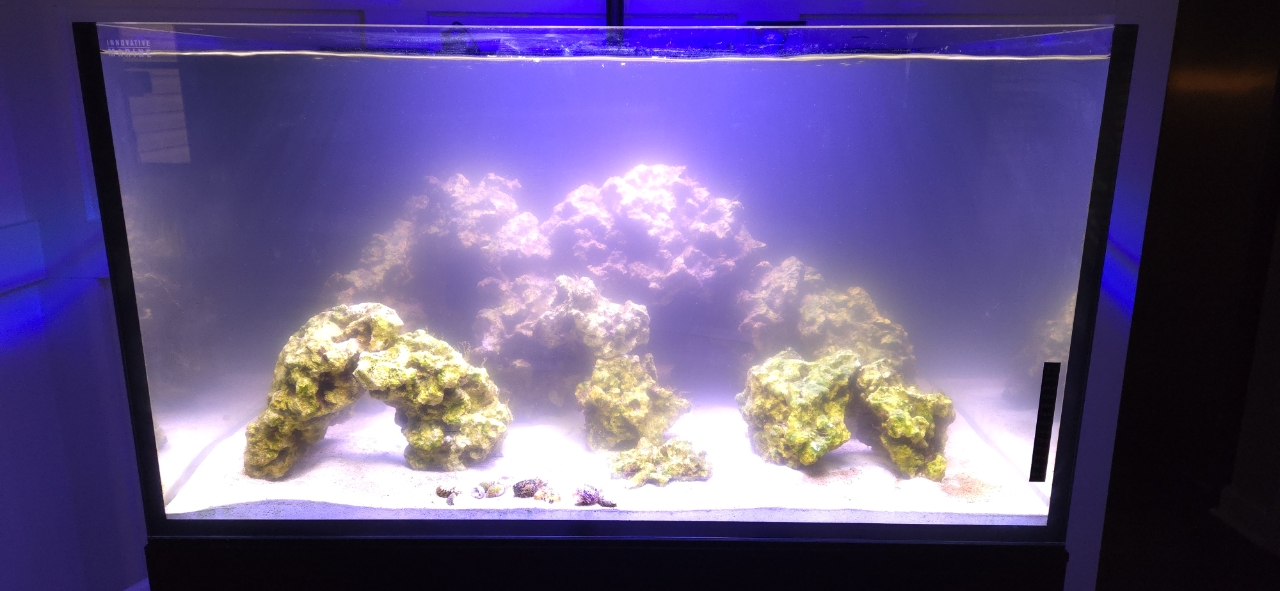
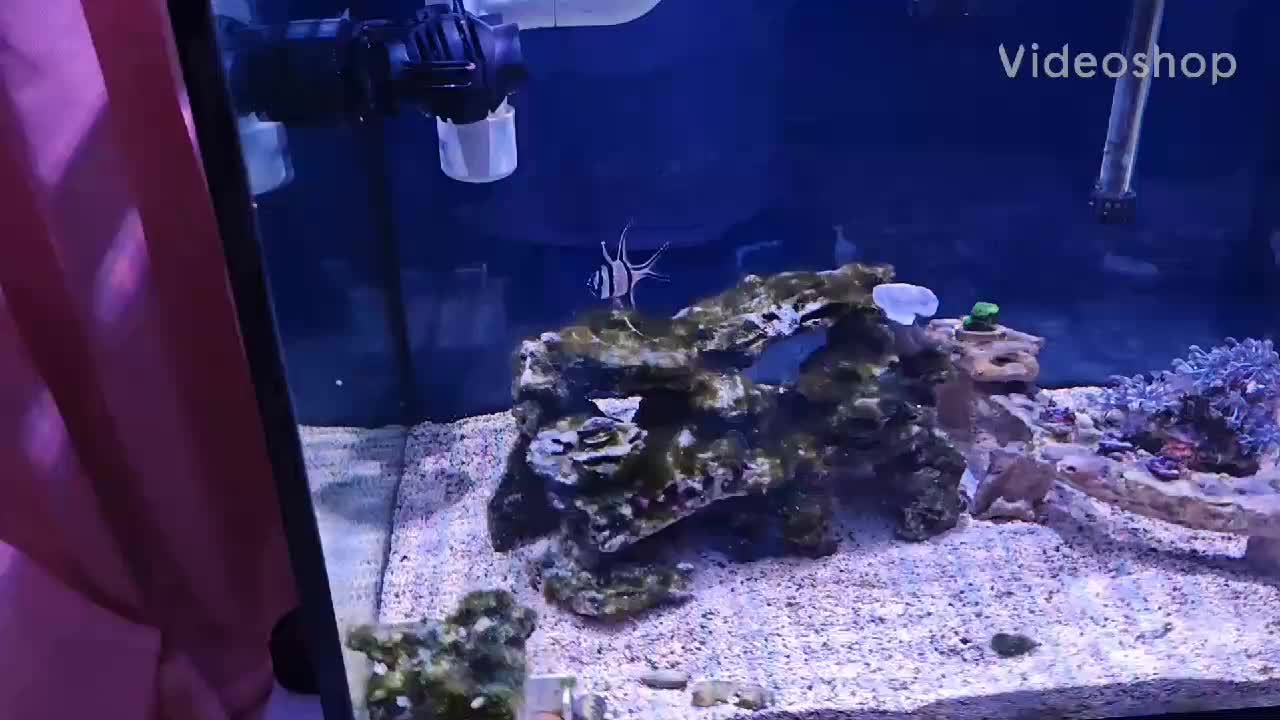
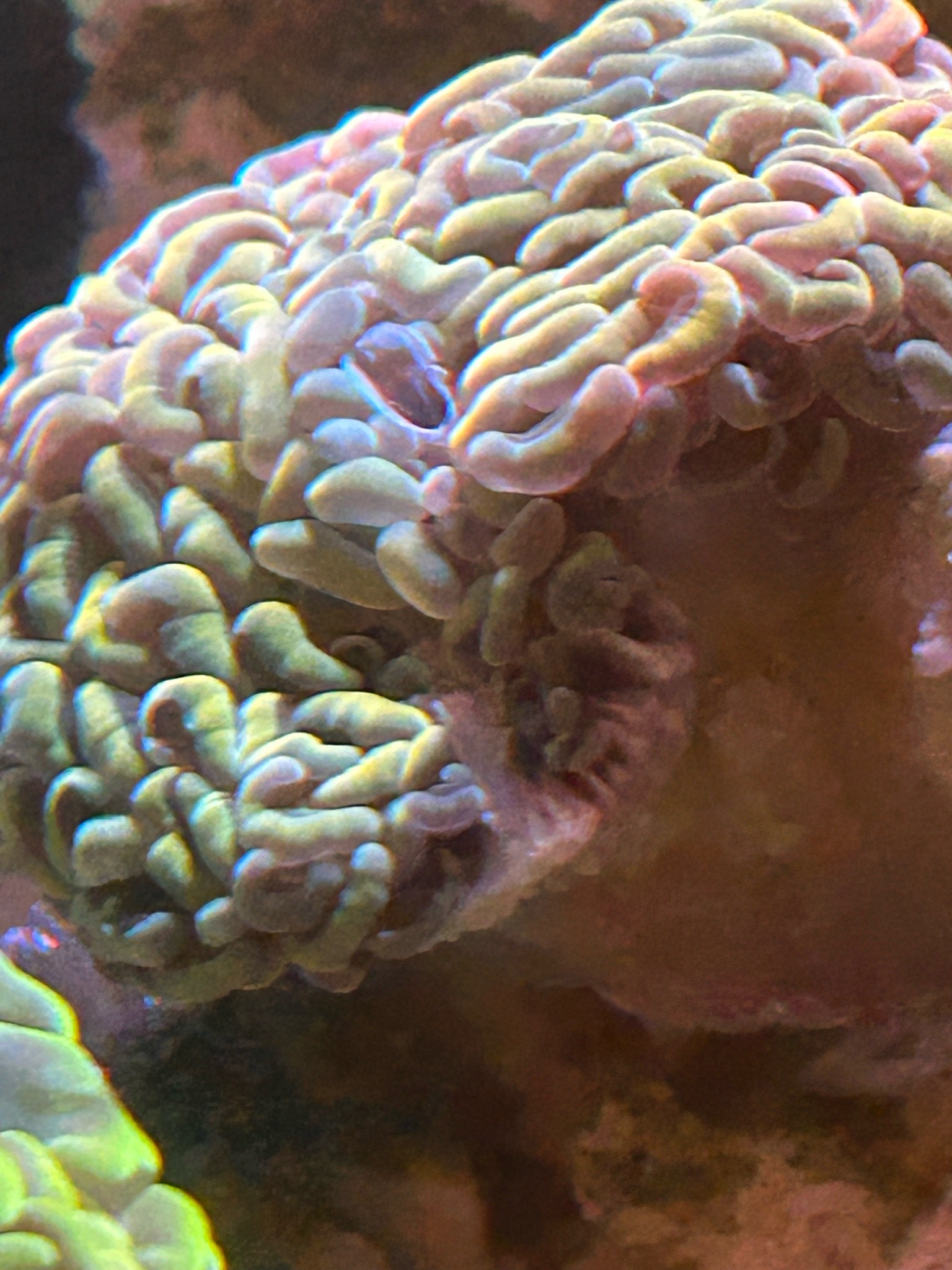
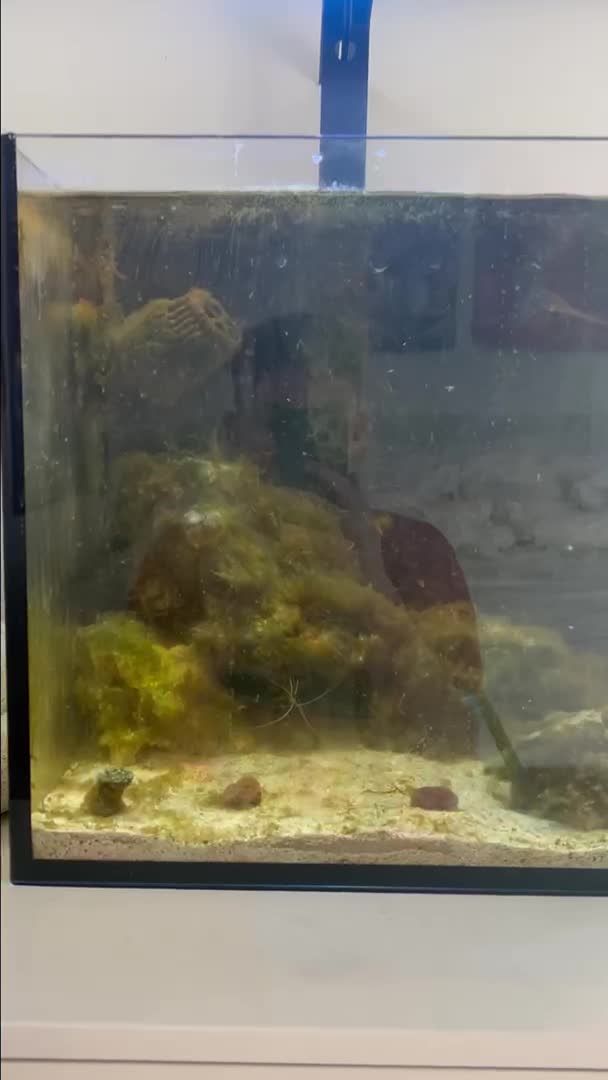
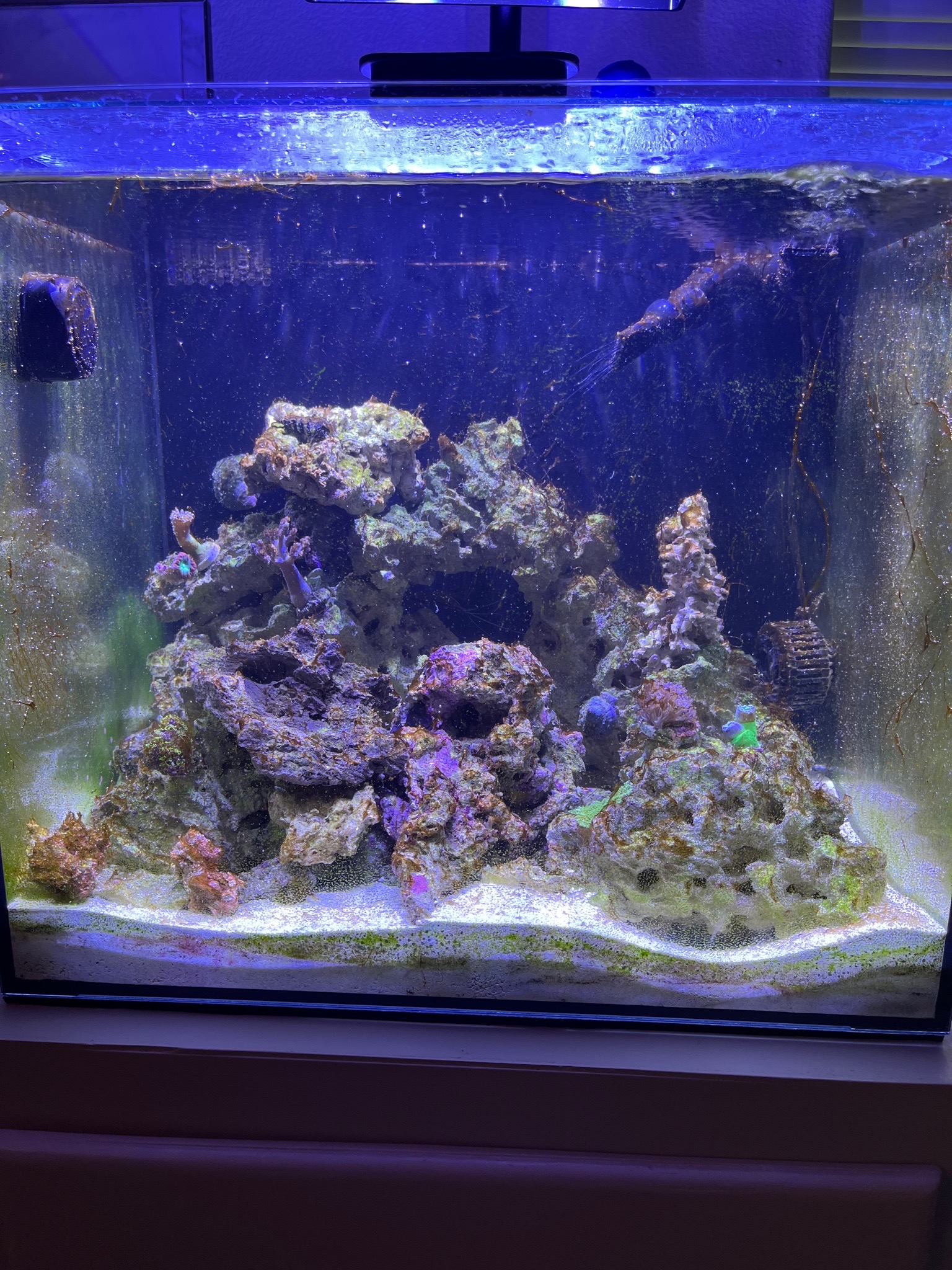
Tengo esta alga verde que no logro controlar. Los parámetros están normales excepto el magnesio alto. Estoy haciendo cambios de agua semanales del 20% para bajarlo, pero el alga sigue pegando fuerte. ¿Alguna sugerencia?
Ive got this green algae that I cant seem to get under control. Parameters are normal except high Magnesium. Doing weekly 20% water changes to lower it but the algae still kicks in hard. Any suggestions?
Comentarios
Inicia sesión para dejar un comentario
Todavía no hay comentarios
Sé el primero en iniciar la conversación.
 @RunswithTrtles
20d
Cuando lo tuve, fue por exceso de nitrato y fosfato normal. Los parámetros se ven normales porque las algas están absorbiendo el exceso, así que no está en la columna de agua. Alimentar menos si puedes, y las macroalgas en el sump son el mejor remedio en mi opinión.
When I had it, it was from excess nitrate and normal phos. Parameters look normal because the algae is soaking up the excess, so it's not in the water column. Feeding less if you can, and Macroalgae in the sump is the best remedy in my opinion.
 @DHood10
20d
Si tus parámetros de agua están bien, intenta dejar el acuario a oscuras por unos días
If your water parameters are good, try blacking out the tank for a few days
@Cdunn352
20d
¿Cómo les afectará eso a las anémonas?
How will that affect anemones?
@DHood10
20d
Si están sanas, deberían poder aguantarlo. Las va a estresar un poco, pero si no controlas esa alga, va a terminar cubriéndolo todo. Recientemente tuve un problema con eso y creció sobre todo
If they're healthy they should be able to handle it. It will stress them out a bit but if you don't get that algae under control it will drown everything out. I had an issue with it recently and it grew over everything
 @camaro42
20d
Peróxido de hidrógeno al 3%. 0.5-1 ml por cada 10 galones de volumen de agua una vez al día.
3% hydrogen peroxide. 0.5-1 ml per 10 gallons of water volume once daily.
 @singwithmylife
16d
¿Eso matará algo más? Como cosas que quizá no quiera que se mueran?
Will that kill anything else? Like things I might not want to die?
 @Proofy
20d
Remoción física (exportación manual) Problema: Una vez que el alga de pelo establece un césped denso, los herbívoros muchas veces evitan los filamentos largos y fibrosos. Solución: Quita a mano y sifonea el crecimiento principal durante los cambios de agua antes de atacarla biológicamente. Tallar la roca fuera del acuario o justo junto a una manguera de sifón evita que los filamentos sueltos se asienten y vuelvan a propagarse. 3. Equipo de limpieza biológico (herbivoría dirigida) Herbívoros fuertes: Los erizos Tuxedo (Mespilia globulus) son los consumidores más implacables e indiscriminados de alga de pelo corta y césped. Limpiadores especializados: Los cangrejos esmeralda (Mithraculus sculptus) destrozan las alfombras densas, mientras que caracoles herbívoros como Trochus, Turbo y caracoles Cerith grandes se encargan de las superficies de la roca una vez que el césped se recorta corto. Nudibranquios/babosas: Una liebre de mar (Dolabella auricularia) se comerá rápidamente un bosque de alga de pelo, aunque debe reubicarse o alimentarse con nori adicional una vez que se despeje la cosecha para evitar que se muera de hambre. 4. Ajuste del fotoperiodo y el espectro Problema: Los espectros altos de blanco, rojo y verde junto con fotoperiodos largos potencian el alga filamentosa verde. Solución: Reduce el fotoperiodo total 1–2 horas, baja los canales cálidos/blancos (favoreciendo espectros azules/actínicos para la vitalidad de los corales) y considera un apagón de 3 días si los corales no están demasiado estresados. 5. Eliminación química / enzimática (si persiste) Si la exportación manual y agregar más equipo de limpieza no cambian la situación, un tratamiento activo con Fluconazole (Reef Flux) o alguicidas (como Vibrant o MicroBacter Clean) descompondrá las paredes celulares del alga filamentosa verde sin dañar corales SPS/LPS ni la filtración biológica.
Physical Removal (Manual Export) Issue: Once hair algae establishes a thick turf, grazers often avoid the long, fibrous strands. Fix: Manually pluck and siphon the bulk growth during water changes before targeting it biologically. Scrubbing rockwork outside the tank or right next to a siphon tube prevents loose filaments from settling and reseeding. 3. Biological Cleanup Crew (Targeted Herbivory) Heavy Grazers: Tuxedo Urchins (Mespilia globulus) are the most relentless, indiscriminate consumers of short hair algae and turf. Specialized Cleaners: Emerald Crabs (Mithraculus sculptus) tear through thick mats, while herbivorous snails like Trochus, Turbo, and large Cerith snails handle the rock surfaces once the turf is trimmed short. Nudibranchs/Slugs: A sea hare (Dolabella auricularia) will mow down a hair algae forest rapidly, though it must be rehomed or supplemental nori fed once the crop is cleared to avoid starvation. 4. Photoperiod & Spectrum Adjustment Issue: High white, red, and green spectrums alongside long photoperiods supercharge green filamentous algae. Fix: Dial back the overall photoperiod by 1–2 hours, drop the warm/white channels down (favoring blue/actinic spectrums for coral vitality), and consider a 3-day blackout if corals aren't overly stressed. 5. Chemical / Enzymatic Knockout (If Persistent) If manual export and clean-up crew additions do not turn the tide, an active treatment of Fluconazole (Reef Flux) or algaecides (like Vibrant or MicroBacter Clean) will break down the cell walls of filamentous green algae without harming SPS/LPS corals or biological filtration.
@Proofy
20d
Canales del espectro Canales blanco / cálido / rojo / verde: bájalos drásticamente al 8% – 12% (o apágalos por completo si el brote es agresivo). Quitar los diodos rojos y verdes corta los principales impulsores fotosintéticos que las algas hilo aprovechan sobre los corales. Canales azul royal / azul profundo: mantenlos al 55% – 65%. Esto conserva suficiente PAR (Radiación Fotosintéticamente Activa) para el tejido coralino y las zooxantelas mientras se les quita a las algas la luz de espectro completo. Canales violeta / UV: configúralos entre 20% – 30% para mantener la fluorescencia del coral y las rutas fotosintéticas principales sin promover un crecimiento vegetativo estilo terrestre. 2. Horario del fotoperiodo Fotoperiodo total: redúcelo de los horarios estándar de 10–12 horas a 7.5 – 8 horas en total. Tiempos de rampa: 1.5 a 2 horas de subida gradual (solo azules), una ventana pico condensada de 3.5 a 4 horas y 1.5 a 2 horas de bajada gradual. Perfil de horario de ejemplo: 11:30 – 13:30 (Subida gradual): los canales azules suben de 0% a 50%; blanco/espectro completo se mantiene en 0%. 13:30 – 17:30 (Ventana pico): azules al 60–65%, blancos limitados a 10–12%. 17:30 – 19:30 (Bajada gradual): los blancos se apagan por completo (0%); los azules bajan de 50% a 0%.
Spectrum Channels White / Warm / Red / Green Channels: Cut drastically to 8% – 12% (or completely off if the outbreak is aggressive). Removing red and green diodes cuts off the primary photosynthetic drivers that hair algae exploits over corals. Royal Blue / Deep Blue Channels: Maintain at 55% – 65%. This preserves enough PAR (Photosynthetically Active Radiation) for coral tissue and zooxanthellae while starving the algae of full-spectrum light. Violet / UV Channels: Set between 20% – 30% to sustain coral fluorescence and core photosynthetic pathways without promoting terrestrial-style vegetative growth. 2. Photoperiod Timing Total Photoperiod: Reduce from standard 10–12 hour schedules down to 7.5 – 8 hours total. Ramp Times: 1.5 to 2 hours ramp-up (blues only), a condensed 3.5 to 4-hour peak window, and a 1.5 to 2 hours ramp-down. Example Schedule Profile: 11:30 – 13:30 (Ramp-Up): Blue channels ramp from 0% to 50%; White/Full-spectrum remains at 0%. 13:30 – 17:30 (Peak Window): Blues at 60–65%, Whites capped at 10–12%. 17:30 – 19:30 (Ramp-Down): Whites shut off completely (0%); Blues ramp down from 50% to 0%.
 @Thamann9154
19d
Dosis Vibrant, si no entonces dosis de peróxido de hidrógeno
Dose vibrant if not then dose hydrogen peroxide

Prueba con unos cangrejos pitho, les encanta
Try some pitho crabs they love it
@Cdunn352
19d
Tengo 2 ahí. Puede que tenga que subirlo a un total de 4. Pero ellos y los cangrejos esmeralda siempre están encima de eso, solo que parece demasiado para lo que hay ahí. (2 pitho & 5 emerald)
Have 2 in there. I may need to bump it up to a total of 4. But them and the emerald crabs are always on it, just seems like too much for what's in there. (2 pitho & 5 emerald)
 @Petey
14d
Tuve este problema y usé un cepillo eléctrico. Lo quité rápido y pude asegurarme de que no volviera a crecer nada nuevo con el control de parámetros.
Had this issue and used an electric scrub brush. Got it off fast and was able to make sure nothing new grew back with parameter control.

Mi sugerencia es un ataque de varios frentes. 1. Consigue un Lawnmower Benny, empezará a comérselo poco a poco. 2. Reduce la cantidad que alimentas y la frecuencia poco a poco, si es posible. No sé si tienes un pez que necesite alimentarse con frecuencia o no. 3. Consigue algunos turbo snails y hermit crabs ref o blue legged. 4. Reduce el tiempo que el acuario esté con luz blanca.
May suggestion is a multi-prong attack. 1. Get a Lawnmower Benny, it will begin to eat it away. 2. Reduce the amount you feed and the frequency slowly, if possible. I don't know if you have a fish that needs frequent feeding or not. 3. Get some turbo snails and hermit crabs ref or blue legged. 4. Reduce the time the tank is light with white light.
Inicia sesión para unirte a la conversación.



🤔🤔🤔