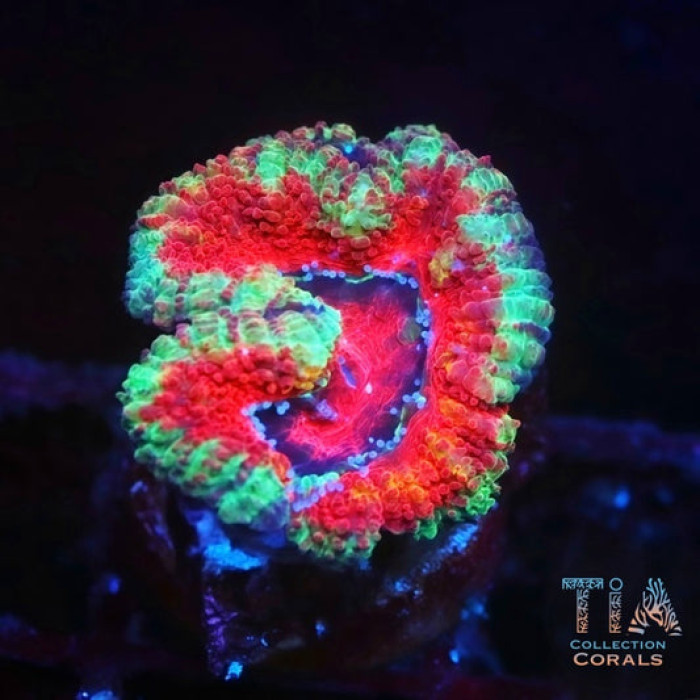
Acan corals (now scientifically classified as Micromussa lordhowensis) remain one of the most beloved LPS corals in the reef aquarium hobby. Often called "Acan Lords" or simply "Lords," these stunning corals offer incredible color variety, from deep reds and blues to rainbow multicolor morphs that can rival any coral in your tank. Best of all, they're forgiving enough for intermediate hobbyists while still rewarding advanced keepers who dial in their care.
Understanding Acan Coral Classification
Before diving into care requirements, it helps to understand what we're actually keeping. The coral hobby has traditionally used "Acan" as a catch-all term, but there are actually several distinct species often sold under this name:
- Micromussa lordhowensis (formerly Acanthastrea lordhowensis) - The classic "Acan Lord," featuring large fleshy polyps with distinct circular patterns
- Micromussa amakusensis - Similar to Lords but with smaller polyps
- Acanthastrea echinata - True Acans with rougher texture and more irregular polyp shapes
For practical purposes, all these corals require similar care. The name "Acan" has stuck in the hobby despite the reclassification, so you'll see both terms used interchangeably when shopping for acan corals on ReefBay.
Ideal Water Parameters for Acans
Acan corals thrive in stable reef aquarium conditions. While they're more forgiving than SPS corals, consistency is still crucial for long-term health and growth.
Target Parameters
- Temperature: 76-80°F (24-27°C)
- Salinity: 1.024-1.026 specific gravity
- pH: 8.1-8.4
- Alkalinity: 8-11 dKH
- Calcium: 400-450 ppm
- Magnesium: 1250-1350 ppm
- Nitrate: 5-20 ppm (some nitrate is beneficial)
- Phosphate: 0.03-0.1 ppm
Unlike ultra-low nutrient SPS systems, Acans actually appreciate slightly elevated nutrients. Tanks running too clean (near-zero nitrates and phosphates) often see Acan Lords lose color intensity and growth rates slow dramatically. Track your parameters regularly with the ReefBay app's parameter tracker to spot trends before problems develop.
Lighting Requirements
Acans are considered low to moderate light corals, making them excellent choices for shadier spots in your tank or systems with lower-powered reef lighting.
PAR Recommendations
- Optimal range: 50-150 PAR
- Acceptable range: 30-200 PAR
- Avoid: Placement directly under intense lighting above 250 PAR
In most reef tanks, this means placing Acans on the sand bed, lower rock work, or in shaded overhangs. Higher light isn't necessarily better - in fact, too much light causes Acans to bleach, lose color vibrancy, and retract their fleshy polyps.
Signs of Light Stress
- Polyps staying retracted during the day
- Colors fading or turning brown
- Tissue receding from skeleton edges
- White or pale appearance (bleaching)
If you notice these signs, move your Acan to a shadier location immediately. They recover well from light stress if caught early.
Flow and Water Movement
Acan Lords prefer low to moderate, indirect flow. Their large fleshy polyps can be damaged by strong direct current, and excessive flow prevents them from extending fully to feed.
Ideal Flow Characteristics
- Intensity: Low to moderate (gentle movement)
- Type: Indirect, random patterns work best
- Goal: Enough flow to prevent detritus settling on polyps without causing constant tissue retraction
Position your powerhead so flow bounces off rock or glass before reaching your Acans. You want to see gentle polyp sway, not polyps flattened against the skeleton.
Feeding Your Acan Corals
Here's where Acans really shine - they're enthusiastic feeders that visibly respond to food. Target feeding accelerates growth significantly and intensifies coloration.
Best Foods for Acans
- Meaty foods: Mysis shrimp, brine shrimp, finely chopped raw shrimp
- Prepared coral foods: Reef Roids, Benepets, Coral Frenzy
- Live foods: Copepods, rotifers
- Amino acid supplements: Brighten colors and support tissue health
Feeding Technique
For best results, turn off flow and target feed each polyp directly. Acan polyps will detect food in the water and begin extending feeding tentacles, usually visible after lights go out. Place a small piece of food (2-3mm) directly on each polyp and watch as tentacles grab it and pull it toward the mouth.
Feed 2-3 times per week for optimal growth. Some reefers feed daily with smaller portions and see excellent results. Avoid overfeeding, which can foul water quality and actually stress the coral.
Placement and Aquascaping
Finding the right spot for your Acan is crucial for long-term success. Consider these factors:
Best Locations
- Sand bed: Excellent for lower light and easy feeding access
- Lower rockwork: Natural habitat simulation with some elevation
- Shaded overhangs: Perfect light protection in high-powered tanks
- Island rocks: Good if you can control flow around them
Spacing Considerations
Acans can be moderately aggressive. Their sweeper tentacles extend several inches at night searching for food and can sting neighboring corals. Leave at least 3-4 inches between Acans and other coral species.
However, Acans of the same species can often be placed touching each other - they may even fuse over time into beautiful rainbow colonies. This is one reason multicolor Acan frags are so popular.
Growth and Fragging
Well-fed Acans under proper conditions grow surprisingly fast for LPS corals. New polyps bud from the edges of existing ones, gradually expanding the colony.
Expected Growth Rates
- New polyps: 1-2 new polyps per month under optimal conditions
- Size increase: Colonies can double in size within a year
- Color development: New polyps may take 2-3 months to develop full coloration
Fragging Acans
Acans frag easily using a band saw, Dremel with diamond blade, or bone cutters. Cut through the skeleton between polyps, being careful not to damage the soft tissue. Dip fresh cuts in iodine solution and allow to heal in low flow for a week before placing in their permanent spot.
Common Problems and Solutions
Tissue Recession
If your Acan's tissue is pulling back from the skeleton edges:
- Check alkalinity stability - swings are often the culprit
- Reduce lighting if recently moved to brighter area
- Ensure no neighboring corals are stinging it
- Test for elevated copper from medications or equipment
Loss of Color
Browning or fading Acans usually indicate:
- Too much light - move to shadier spot
- Ultra-low nutrients - increase feeding or allow nitrates to rise slightly
- Poor water quality - test parameters and perform water change
Won't Extend Polyps
Consistently retracted polyps suggest:
- Flow too strong - redirect powerheads
- Recent stress from shipping or fragging - give time to acclimate
- Pest infestation - inspect at night for flatworms or nudibranchs
- Fish pecking - watch for angelfish or butterflies nipping
Tank Mates and Compatibility
Acans coexist well with most reef-safe fish and invertebrates. Good companions include:
- Clownfish - Won't bother Acans
- Gobies and blennies - Peaceful sand-dwellers
- Tangs - Herbivores that ignore LPS
- Cleaner shrimp - May steal food but don't damage tissue
Tank Mates to Avoid
- Large angelfish - May nip at fleshy polyps
- Butterflyfish - Most species eat coral polyps
- Coral-eating nudibranchs - Devastating if introduced
- Aggressive LPS - Galaxea and some Euphyllia can sting Acans from surprisingly far away
Buying Healthy Acan Corals
When shopping for Acan corals on the ReefBay marketplace, look for:
- Fully extended, puffy polyps in photos
- Vibrant coloration without brown or white patches
- Tissue covering entire skeleton with no recession
- Clear photos showing actual coral (WYSIWYG listings)
- Seller ratings and reviews from other buyers
Acan Lords are commonly sold as single polyps, multi-polyp frags, or full colonies. Single polyps are budget-friendly for building a collection, while colonies make instant statement pieces.
Conclusion
Acan Lords and Micromussa corals reward patient, attentive reefkeepers with stunning colors and steady growth. Their relatively forgiving nature makes them excellent "next level" corals for hobbyists ready to move beyond beginner softies, while their incredible color morphs keep even experienced collectors hunting for the next amazing piece.
Focus on stability over perfection, feed regularly, and resist the urge to blast them with light - your Acans will thrive. Track your success and parameters with the ReefBay app, and browse the marketplace to find your next favorite Acan Lord.