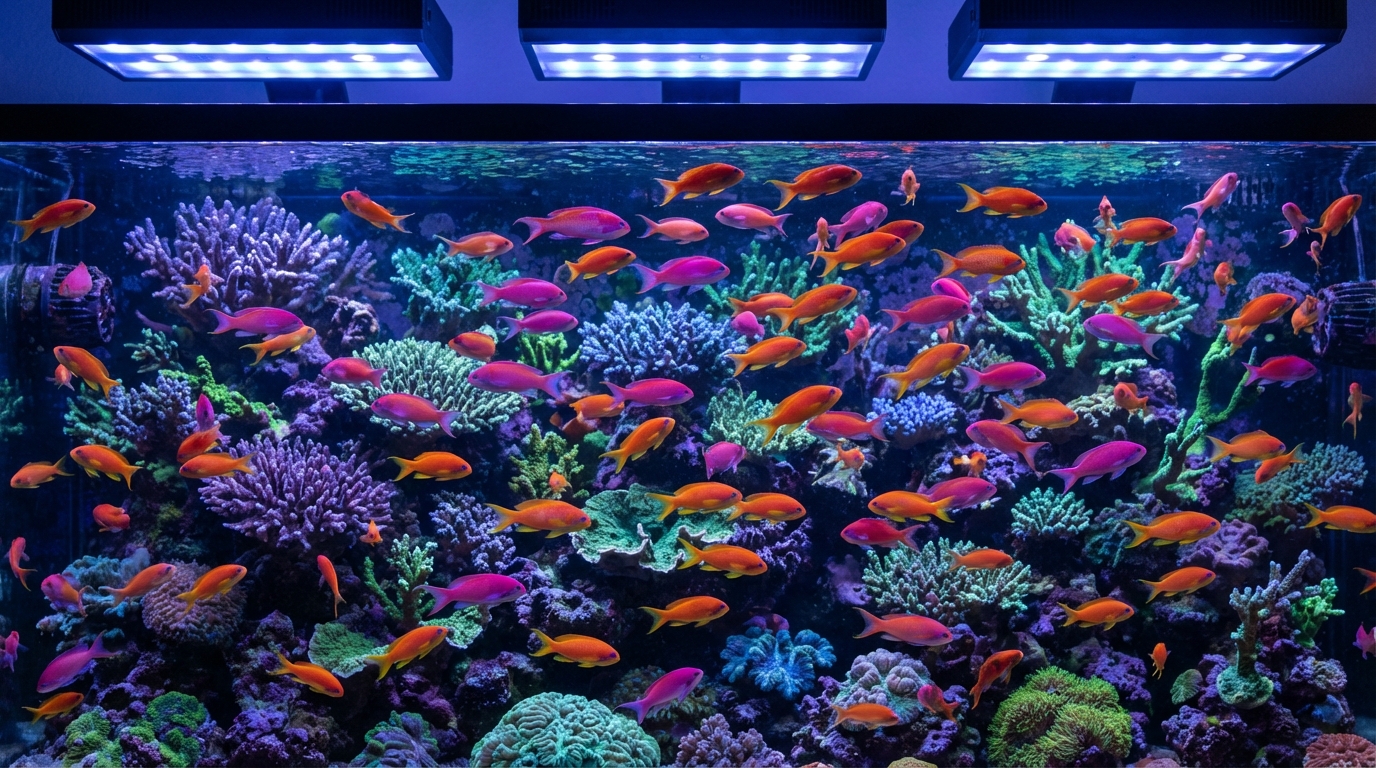
Anthias are among the most spectacular fish you can add to a reef aquarium. With their brilliant colors, active swimming behavior, and fascinating social dynamics, these schooling beauties transform any tank into a living work of art. But they're not without challenges—anthias have specific needs that differ from most common reef fish.
In this comprehensive guide, we'll cover everything you need to know to successfully keep anthias, from species selection to feeding strategies that prevent common problems.
Why Keep Anthias?
Anthias belong to the subfamily Anthiinae and are closely related to groupers. However, unlike their larger cousins, most anthias stay relatively small (2-5 inches) and are completely reef-safe. They won't bother your corals, and they add constant movement and color to the water column.
Key benefits of anthias:
- Stunning colors – Brilliant pinks, oranges, purples, and yellows
- Active swimmers – They're always moving, bringing your tank to life
- Reef-safe – No risk to corals or invertebrates
- Social hierarchy – Fascinating behavior to observe
- Schooling display – Multiple fish create an impressive visual impact
Best Anthias Species for Home Aquariums
Not all anthias are created equal when it comes to aquarium suitability. Here are the best species for most hobbyists, ranked from easiest to most challenging:
Beginner-Friendly Anthias
Lyretail Anthias (Pseudanthias squamipinnis)
The lyretail is the most commonly available and hardiest anthias species. Males display a brilliant orange-red color with elongated dorsal and tail fins, while females are golden-orange. These adapt well to aquarium foods and are relatively forgiving of beginner mistakes.
- Max size: 5 inches (males), 3 inches (females)
- Minimum tank: 75 gallons for a group
- Difficulty: Beginner-friendly
Bartlett's Anthias (Pseudanthias bartlettorum)
A beautiful species with males showing pink and yellow coloration. They're hardy, accept prepared foods readily, and stay on the smaller side. An excellent choice for medium-sized reef tanks.
- Max size: 3.5 inches
- Minimum tank: 55 gallons
- Difficulty: Beginner-friendly
Intermediate Anthias
Dispar Anthias (Pseudanthias dispar)
Also known as the Madder Seaperch, males have a stunning red-orange body. They're slightly more demanding than lyretails but still manageable for experienced hobbyists.
Bicolor Anthias (Pseudanthias bicolor)
Males display a striking two-tone pattern of purple and yellow. These require multiple daily feedings but adapt reasonably well to captivity.
Advanced Anthias
Fathead Anthias (Serranocirrhitus latus)
Also called the Sunburst Anthias, this unique species differs from typical anthias in behavior and requirements. They're more solitary and can be kept individually.
Tank Requirements
Tank Size
Anthias are active swimmers that need room to move. Minimum recommendations:
- Single female: 55 gallons (not recommended—they're social)
- Small group (1 male, 3-4 females): 75-90 gallons
- Larger school (1 male, 6+ females): 125+ gallons
Water Parameters
Anthias come from pristine reef environments and don't tolerate poor water quality. Maintain these parameters:
- Temperature: 75-80°F (24-27°C)
- Salinity: 1.024-1.026
- pH: 8.1-8.4
- Ammonia/Nitrite: 0 ppm
- Nitrate: Below 20 ppm (ideally under 10)
Track these parameters consistently using the ReefBay app to catch any changes before they stress your fish.
Flow and Oxygenation
Anthias appreciate moderate to strong flow. In the wild, they hover in currents picking off passing zooplankton. Good circulation also keeps oxygen levels high, which is important for these active metabolisms.
Aquascaping
Provide plenty of swimming space in the water column while also offering caves and overhangs where anthias can retreat when stressed. They don't need as many hiding spots as some fish, but they'll appreciate having options.
The Critical Importance of Feeding
This is where most anthias keepers fail. Anthias have extremely fast metabolisms and must be fed multiple times per day. In the wild, they eat constantly, picking zooplankton from the water column throughout the day.
Feeding Frequency
Feed anthias a minimum of 3 times per day. Ideally, 4-5 smaller feedings are even better. This is non-negotiable—underfed anthias will slowly waste away even in an otherwise perfect tank.
Best Foods for Anthias
- Frozen mysis shrimp – A staple food that most anthias readily accept
- Frozen brine shrimp – Good variety, though less nutritious alone
- Cyclops and copepods – Excellent supplemental foods
- High-quality pellets – Some anthias will accept these; useful for auto-feeders
- Live foods – Live copepods and baby brine shrimp are ideal treats
Feeding Tips
- Use an auto-feeder: Program it to dispense small amounts multiple times daily
- Target feed: Anthias eat in the water column, so foods need to stay suspended
- Enrich frozen foods: Soak in vitamins like Selcon for optimal nutrition
- Consider a refugium: A refugium that produces copepods provides supplemental food
Social Structure and Sex Change
Anthias live in harems with fascinating social dynamics:
All anthias are born female. The dominant fish in a group will transform into a male, developing brighter colors and different finnage. If the male dies, the most dominant female will begin transitioning within days.
How to Stock Anthias
- Buy a group: One male with 3-6 females is ideal
- All females work too: One will transition to male
- Never keep two males together: They'll fight until one dies
- More females = less aggression: The male's attention is divided
If you see a male harassing females excessively, the harem may be too small. Adding more females can help distribute aggression.
Quarantine and Acclimation
Anthias ship poorly and are prone to stress-related illness. Proper quarantine is crucial:
- Quarantine for 4-6 weeks: Monitor for disease before adding to your display
- Feed heavily during quarantine: Stressed anthias need nutrition to recover
- Consider prophylactic treatment: Some hobbyists treat for common parasites
- Acclimate slowly: Drip acclimate over 1-2 hours minimum
Common Problems and Solutions
Fish Won't Eat
New anthias may refuse food due to shipping stress. Try live baby brine shrimp or live copepods—the movement often triggers a feeding response. Keep the tank dim and minimize disturbances for the first few days.
Fin Nipping/Aggression
Usually indicates too few females in the harem. Add more females or remove the overly aggressive fish.
Rapid Weight Loss
Almost always a feeding issue. Increase feeding frequency immediately. Consider gut-loading frozen foods with nutritional supplements.
Faded Colors
Can indicate stress, poor nutrition, or unsuitable lighting. Address water quality, increase feeding variety, and ensure appropriate photoperiod.
Compatible Tank Mates
Anthias are peaceful and compatible with most reef inhabitants:
Good tank mates:
Avoid:
- Aggressive dottybacks
- Large angelfish (may bully)
- Very aggressive feeders that outcompete for food
Where to Buy Anthias
Quality matters enormously with anthias. Buy from reputable sellers who handle their fish properly. Look for specimens that are:
- Alert and swimming actively
- Eating (ask the seller to demonstrate)
- Free of visible damage or disease
- Not hiding in corners or breathing heavily
Browse the ReefBay marketplace for anthias from trusted sellers. Look for WYSIWYG listings where you can see the exact fish you'll receive.
Conclusion
Anthias are rewarding fish that add unmatched color and activity to reef aquariums. The key to success is understanding their unique needs—particularly their demanding feeding schedule. If you can commit to feeding multiple times daily, maintaining excellent water quality, and providing appropriate tank mates, anthias will reward you with years of beauty and fascinating behavior.
Ready to start your anthias journey? Download the ReefBay app to track your tank parameters and browse anthias listings from passionate hobbyists and trusted vendors.