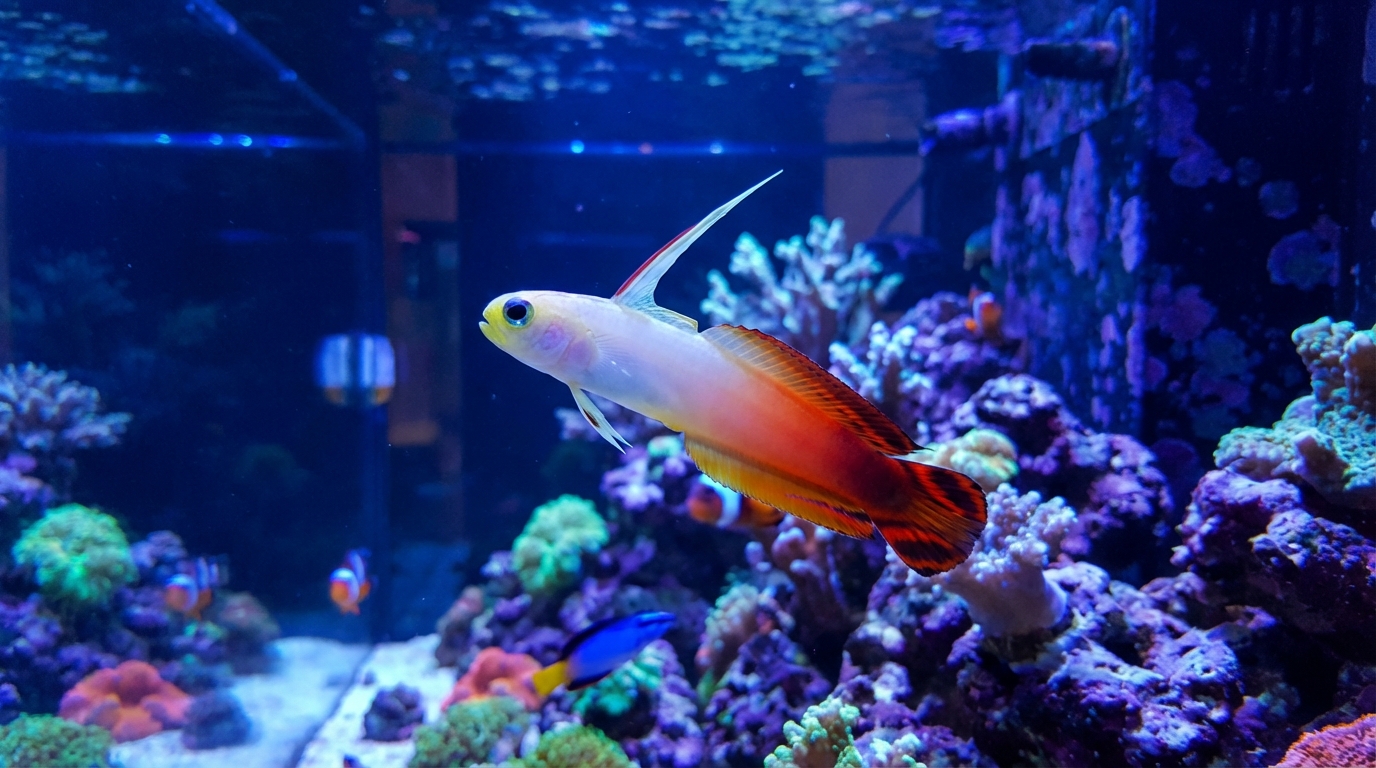
The Firefish Goby (Nemateleotris magnifica) is one of the most stunning and beginner-friendly fish in the saltwater aquarium hobby. With their striking coloration, peaceful nature, and minimal care requirements, firefish make an excellent choice for new reef keepers and experienced hobbyists alike. This guide covers everything you need to know to keep these beautiful fish thriving in your tank.
Firefish Species Overview
Firefish belong to the family Microdesmidae and are commonly found in the Indo-Pacific region. Two species are popular in the aquarium trade:
- Common Firefish (Nemateleotris magnifica) - White/yellow body with red-orange gradient toward the tail, elongated first dorsal spine
- Purple Firefish (Nemateleotris decora) - More vibrant with purple, red, and orange coloring throughout
Both species share similar care requirements and behavior patterns.
Quick Stats
- Adult size: 3 inches (7.5 cm)
- Lifespan: 3-5 years with proper care
- Temperament: Peaceful, can be shy
- Reef safe: Yes, completely
- Minimum tank: 20 gallons
- Diet: Carnivore (zooplankton, small meaty foods)
Tank Requirements
Tank Size
A minimum of 20 gallons is recommended for a single firefish, though 30+ gallons provides more swimming room and stability. If keeping a pair, aim for 30 gallons or larger.
Water Parameters
Firefish are relatively hardy but still require stable, clean water:
- Temperature: 72-78°F (22-26°C)
- Salinity: 1.023-1.025 specific gravity
- pH: 8.1-8.4
- Ammonia/Nitrite: 0 ppm
- Nitrate: Below 20 ppm
Track your parameters regularly with the ReefBay app to catch any issues before they affect your fish.
Aquascape and Hiding Spots
This is critical for firefish success. They need:
- Multiple hiding spots: Caves, crevices, and holes in the rockwork
- Vertical space: They hover mid-water but dart into hiding when threatened
- Sand substrate: They may burrow, so provide 2+ inches of fine sand
Without adequate hiding spots, firefish become stressed and are more prone to jumping.
The Jumping Problem: Carpet Surfing
This is the #1 cause of firefish deaths. Firefish are notorious jumpers, especially when startled or stressed. Prevention is essential:
- Tight-fitting lid: Cover all openings, including around equipment
- Mesh screen: Use aquarium netting if a solid lid isn't possible
- Reduce stress: Adequate hiding spots, peaceful tankmates, dim lighting at night
- Acclimation: Give new firefish time to settle—jumping often happens in the first few weeks
Many reefers have lost beautiful firefish to carpet surfing. Don't skip the lid!
Feeding Firefish
Firefish are planktivores that feed on tiny organisms in the water column. They're generally easy to feed:
Diet Options
- Frozen foods: Mysis shrimp, brine shrimp, cyclops
- Pellets: High-quality small pellets (they may need training to accept)
- Live foods: Copepods, baby brine shrimp
Feeding Tips
- Feed 2-3 times daily in small amounts
- Target feed if larger tankmates are outcompeting them
- They eat mid-water, so use slow-sinking foods
- A healthy firefish will actively swim out during feeding time
Behavior and Temperament
Understanding firefish behavior helps ensure their success:
Normal Behavior
- Hovering: They often hover in place with their distinctive first dorsal spine erect
- Darting: Quick retreats into hiding when startled
- Shy at first: New firefish may hide for days or weeks—this is normal
- Active at feeding: Once settled, they should emerge enthusiastically for food
Signs of Stress
- Constant hiding and refusing food
- Rapid breathing
- Faded colors
- Staying at the surface (possible water quality issue)
Tankmates
Good Tankmates
Firefish do well with other peaceful fish:
- Clownfish
- Royal Gramma
- Cardinalfish
- Blennies
- Small gobies
- Fairy and Flasher wrasses
Avoid These Tankmates
- Aggressive fish: Dottybacks, large wrasses, aggressive damsels
- Other firefish (usually): Unless introduced as a mated pair, firefish will often fight
- Fast, aggressive eaters: Will outcompete them for food
Keeping Pairs
Firefish can be kept as pairs, but:
- Best to buy an established pair
- Adding a second firefish later often results in aggression
- Same-species pairs only (don't mix common with purple)
- Provide extra space and multiple hiding spots
Acclimating New Firefish
Proper acclimation reduces stress and jumping risk:
- Float the bag for 15-20 minutes to equalize temperature
- Drip acclimate for 45-60 minutes
- Dim the tank lights before release
- Release the fish near a hiding spot
- Keep lights dim for the rest of the day
- Don't feed for the first 12-24 hours
Expect hiding for several days—this is normal. Don't try to force them out.
Common Health Issues
Ich and Velvet
Firefish can be susceptible to parasites. Quarantine all new fish for 4-6 weeks before adding to your display.
Bacterial Infections
Can occur from stress or poor water quality. Maintain good water parameters and reduce stressors.
Starvation
Shy firefish may not compete well for food. Target feed them directly if needed.
Firefish vs. Other Beginner Fish
How does the firefish compare to other popular starter fish?
- Clownfish: Hardier and bolder, but firefish are more elegant and peaceful
- Royal Gramma: Similar difficulty level, both are excellent choices
- Yellow Watchman Goby: Goby stays on the bottom; firefish hovers mid-water
- Chromis: Chromis school but can be aggressive; single firefish is more peaceful
Purchasing Firefish
When shopping for firefish, look for:
- Active swimming and hovering behavior
- Intact fins with no damage
- Bright, vivid coloration
- Alert eyes and awareness of surroundings
- Eating well at the store (ask the seller)
Avoid fish that are hiding excessively, have faded colors, or show signs of rapid breathing.
Conclusion
Firefish Gobies are one of the most rewarding beginner fish in the hobby. Their stunning colors, peaceful nature, and hardy constitution make them ideal for new reef keepers. The keys to success are simple: provide adequate hiding spots, secure your tank with a tight lid, and maintain stable water quality. Do this, and your firefish will reward you with years of graceful beauty.
Ready to add a firefish to your tank? Browse our marketplace for available specimens, and track your tank's health with the ReefBay app.