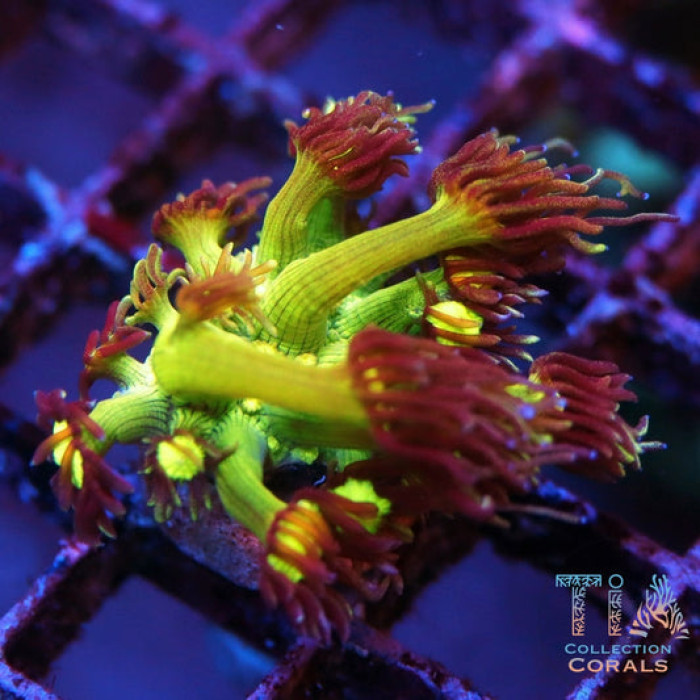
Goniopora, commonly known as flowerpot coral, has earned a reputation as one of the most challenging corals in the reef aquarium hobby. These beautiful LPS corals feature long, flowing polyps that extend dramatically from a stony skeleton, creating a stunning visual display that captivates hobbyists. However, their notorious difficulty has led many to avoid them entirely.
The good news? Modern understanding of goniopora care has improved dramatically. With the right approach, stable parameters, and proper feeding, these corals can thrive for years. This guide covers everything you need to succeed with flowerpot corals.
Goniopora Quick Facts
- Common Names: Flowerpot coral, daisy coral, ball coral
- Scientific Name: Goniopora sp.
- Type: Large Polyp Stony (LPS)
- Care Level: Difficult
- Lighting: Low to moderate (75-150 PAR)
- Flow: Low to moderate, indirect
- Placement: Sand bed or low rock
- Temperament: Semi-aggressive (long sweeper tentacles)
- Growth Rate: Slow to moderate
Why Goniopora Has a Bad Reputation
For decades, goniopora was considered nearly impossible to keep in captivity. Wild-collected specimens would often slowly decline over 6-12 months before dying, earning them the nickname "coffin coral." Several factors contributed to this:
- Collection stress: Wild goniopora suffered significant trauma during collection and shipping
- Unknown nutritional needs: Early hobbyists didn't understand their feeding requirements
- Poor water quality: Vintage reef tanks couldn't maintain the stability goniopora needs
- Wrong placement: Too much light and flow damaged delicate polyps
Today, aquacultured goniopora from reputable sellers on the ReefBay marketplace have much higher survival rates. These specimens are already adapted to aquarium conditions and respond well to proper care.
Ideal Water Parameters
Goniopora demands exceptional water quality and stability. More than most corals, they react poorly to parameter swings.
Target Parameters
- Temperature: 76-78°F (very stable)
- Salinity: 1.025-1.026
- pH: 8.1-8.4
- Alkalinity: 8-9 dKH
- Calcium: 420-450 ppm
- Magnesium: 1350-1450 ppm
- Nitrate: 5-15 ppm (not ultra-low!)
- Phosphate: 0.03-0.08 ppm
Critical tip: Goniopora actually does better with slightly elevated nutrients compared to SPS-dominant tanks. Ultra-low nutrient systems often starve these corals. Track your parameters consistently with the ReefBay app to spot trends before they become problems.
Lighting Requirements
One of the biggest mistakes with goniopora is placing them under intense lighting. These corals come from relatively shallow lagoons but are often found in shaded areas or murky water.
Optimal Lighting
- PAR: 75-150 (lower end for new specimens)
- Spectrum: Full spectrum with moderate blue
- Photoperiod: 8-10 hours
Start new goniopora at the bottom of your tank in lower light and gradually move them up over several weeks if they're responding well. Signs of too much light include:
- Polyps not fully extending
- Bleaching or pale coloration
- Tissue recession at the base
Flow and Placement
Flow is where many hobbyists go wrong with goniopora. These corals need gentle, indirect flow that allows their polyps to extend and sway naturally.
Flow Guidelines
- Low to moderate, indirect flow
- Polyps should gently sway, not blast around violently
- Avoid laminar (direct) flow from powerheads
- Random/chaotic flow patterns work well
Best Placement Options
- Sand bed: Ideal for most goniopora. Place directly on sand with space around them.
- Low rock: If placing on rock, choose a low, stable location with indirect flow.
- Island mount: Some keepers create isolated rock islands surrounded by sand.
Important: Leave at least 6 inches of space around your goniopora. Their polyps can extend 4+ inches, and they have sweeper tentacles that can damage neighboring corals. Check out the ReefBay marketplace for compatible tank mates.
Feeding Goniopora
Feeding is perhaps the most important aspect of goniopora care. Unlike many corals that can survive primarily on photosynthesis, goniopora actively captures and consumes food particles.
Recommended Foods
- Reef Roids or similar coral foods: Broadcast feed 2-3 times per week
- Phytoplankton: Dose regularly for background nutrition
- Amino acids: Coral amino supplements boost health
- Zooplankton: Cyclops, rotifers, or similar small foods
- Oyster eggs: Excellent size for goniopora polyps
Feeding Protocol
- Turn off flow for 15-20 minutes
- Target feed using a pipette or turkey baster
- Allow coral to capture food before restoring flow
- Feed 2-4 times per week minimum
You'll know your feeding regime is working when polyps extend eagerly during feeding time. Well-fed goniopora often have longer polyp extension overall.
Acclimation Process
Proper acclimation is critical for goniopora success. These corals are sensitive to changes in water chemistry.
- Temperature match: Float the bag for 20-30 minutes
- Drip acclimate: Use a drip line at 2-4 drops per second for 1-2 hours
- Dip (optional): Use a gentle coral dip to remove pests, but keep it brief
- Initial placement: Place in low light, low flow area
- Monitor: Watch for polyp extension over the first week
Don't panic if polyps don't extend immediately. Goniopora may take 1-3 weeks to fully acclimate and show normal extension.
Signs of Health vs. Stress
Healthy Goniopora
- Full polyp extension during daylight hours
- Vibrant coloration
- Polyps respond to food by capturing particles
- Visible flesh covering the skeleton
- Slow but steady growth over months
Signs of Stress
- Polyps retracted for extended periods
- Brown or pale coloration (vs. original color)
- Tissue recession revealing white skeleton
- Mucus production
- Polyps never fully extending
Common Problems and Solutions
Polyps Not Extending
Causes: Too much flow, too much light, water quality issues, inadequate feeding
Solutions:
- Move to lower flow/light area
- Test all parameters and correct any issues
- Increase feeding frequency
- Give time (2-3 weeks) to acclimate
Brown Coloration
Causes: Zooxanthellae response to light/nutrient changes
Solutions:
- Adjust lighting (usually reduce intensity)
- Maintain stable nutrients (slight elevation is okay)
- Continue regular feeding
Tissue Recession
Causes: Often bacterial infection, can be triggered by stress
Solutions:
- Fragging ahead of recession may save healthy tissue
- Improve water quality
- Consider treating with coral Rx or similar dip
- Increase feeding and amino acid supplementation
Goniopora Species for Aquariums
Several species are commonly available, each with slightly different care needs:
Goniopora lobata
The most common species in the hobby. Features long polyps and comes in many colors including red, pink, green, and purple. Generally considered the easiest species to keep.
Goniopora stokesi
Known for extremely long polyps (can exceed 6 inches). Beautiful but more challenging than lobata. Requires pristine water quality.
Goniopora minor
Smaller overall colony size with shorter polyps. Can be easier to place in smaller tanks but still requires the same care attention.
Tank Mates and Compatibility
Choose tank mates carefully, as goniopora can be damaged by more aggressive corals and some fish.
Good Tank Mates
- Clownfish (may host in goniopora!)
- Gobies and blennies
- Mushroom corals (with space)
- Leather corals (keep distant)
- Most peaceful fish
Avoid
- Coral-nipping fish (angelfish, some butterflyfish)
- Aggressive corals placed too close (torch, hammer within reach)
- Any fish that might pick at extended polyps
Fragging Goniopora
Goniopora can be fragged, though it requires more care than many corals.
- Use a band saw or dremel for clean cuts through skeleton
- Avoid crushing the skeleton—use sharp tools
- Allow frags to heal in low flow for several weeks
- Mount with gel super glue on frag plugs or rubble
- Don't frag stressed or declining specimens
Final Tips for Success
- Buy aquacultured: Captive-grown specimens from the ReefBay marketplace have far better survival rates
- Patience: Give goniopora weeks to months to settle, not days
- Feed consistently: This is non-negotiable for long-term success
- Stable parameters: Track with the ReefBay app and maintain consistency
- Less is more: Lower light, lower flow, minimal handling
- Space: Give them room away from aggressive neighbors
With modern aquaculture and improved understanding of their needs, goniopora can be successfully kept by intermediate to advanced hobbyists. The key is respecting their requirements for stability, nutrition, and gentle conditions. When thriving, few corals match the dramatic beauty of a fully-extended goniopora.