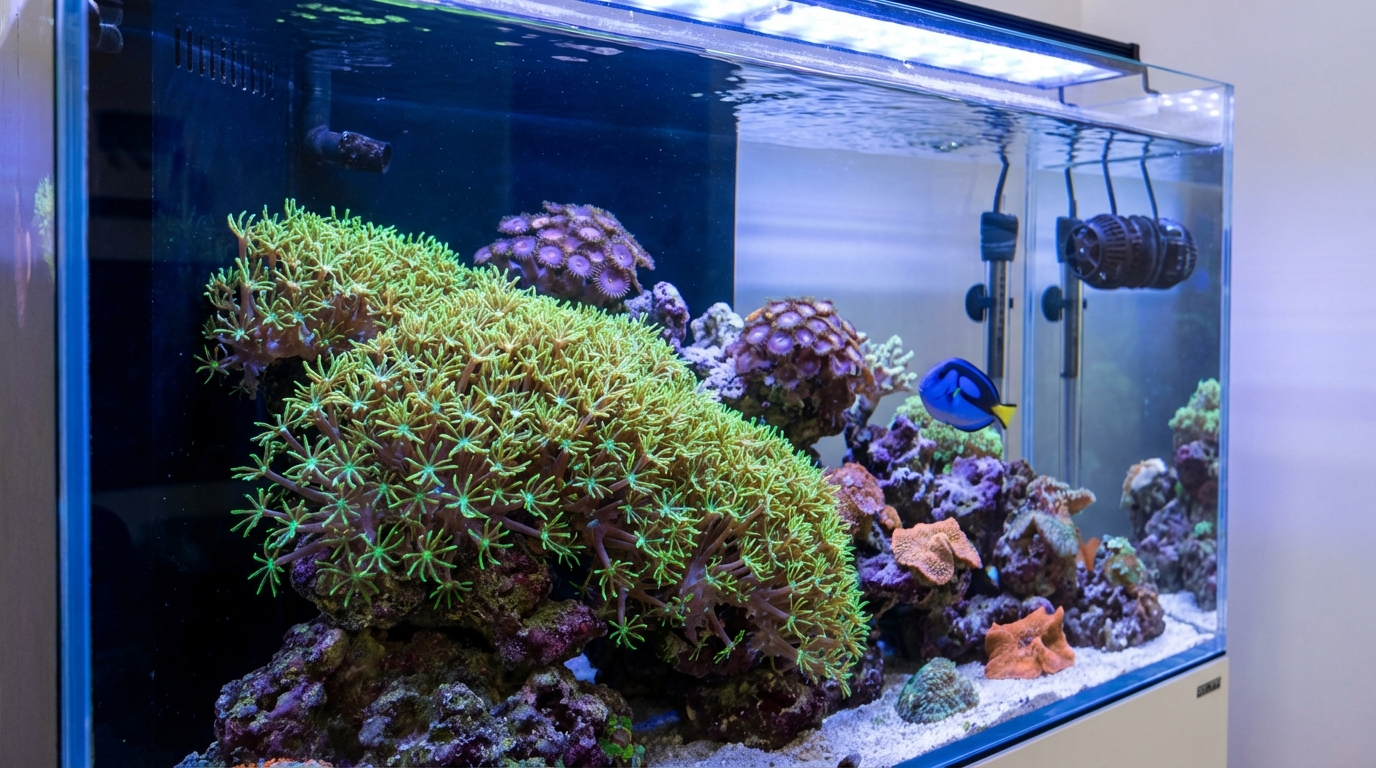
Green Star Polyps (GSP) are one of the easiest ways to add bright color and constant movement to a reef tank. They are hardy, forgiving, and grow quickly, which makes them a strong beginner coral when you manage placement from day one.
What Are Green Star Polyps?
Green Star Polyps (Pachyclavularia violacea) belong to the soft coral family and are native to the Indo-Pacific region. Unlike stony corals that build calcium carbonate skeletons, GSP grows on a purple mat that encrusts surfaces and spreads across rockwork, glass, and even equipment.
Key characteristics include:
- Bright green fluorescent polyps that glow under blue lighting
- Purple encrusting mat that spreads rapidly
- Eight-tentacled polyps with a star-like appearance
- Extremely hardy and tolerant of varying conditions
Ideal Water Parameters for GSP
One reason GSP makes an excellent beginner coral is its tolerance for imperfect water conditions. However, maintaining stable parameters will ensure optimal growth and coloration.
Recommended Parameters
- Temperature: 75-80°F (24-27°C)
- Salinity: 1.024-1.026 specific gravity
- pH: 8.1-8.4
- Alkalinity: 8-12 dKH
- Calcium: 380-450 ppm
- Magnesium: 1250-1350 ppm
- Nitrate: 1-20 ppm (tolerates higher levels)
- Phosphate: 0.03-0.1 ppm
Track your water parameters consistently with the ReefBay app to spot trends and catch issues before they become problems.
Lighting Requirements
GSP is remarkably adaptable to different lighting conditions, making it suitable for almost any tank setup.
PAR Levels
- Optimal: 100-250 PAR
- Acceptable range: 50-350 PAR
Under higher lighting, GSP tends to stay more compact with shorter polyps. Under lower lighting, polyps extend longer as they reach for light. The green fluorescence is most vibrant under blue actinic lighting, which is why many reefers run their blues during viewing hours.
Flow Requirements
Moderate to high flow is ideal for GSP. Proper water movement:
- Prevents detritus from settling on the mat
- Encourages polyp extension and movement
- Improves gas exchange and nutrient delivery
Position your powerheads to create random, turbulent flow rather than direct laminar flow aimed at the coral.
Placement in Your Reef Tank
Strategic placement is crucial with GSP due to its aggressive growth pattern.
Best Placement Options
- Isolated rocks: Place on separate rock islands with sand moats around them
- Back wall: Let GSP create a living green backdrop
- Frag racks: Keep contained on removable structures
- Overflow boxes: Cover unsightly equipment with green carpet
Avoid These Placement Mistakes
- Don't place on your main rockwork unless you want it everywhere
- Keep away from slow-growing corals it could overgrow
- Avoid direct contact with LPS or SPS corals
Controlling GSP Growth
The biggest challenge with GSP isn't keeping it alive—it's controlling its spread. Here are proven methods to manage growth:
Physical Barriers
- Sand moats: Surround GSP rocks with 2+ inches of sand
- Super glue lines: Create borders with thick super glue beads
- Epoxy walls: Build small dams around contained areas
Manual Control
- Scrape unwanted growth with a razor blade or chisel
- Peel back the purple mat from surfaces it's encrusting
- Remove and frag overgrown sections
Natural Control
Some snails and urchins may graze on GSP, though results vary. Lettuce nudibranchs are known GSP predators but are not reef-safe for other corals.
Feeding GSP
GSP is photosynthetic and hosts zooxanthellae algae that provide most of its nutritional needs through light. However, GSP also benefits from:
- Broadcast feeding with phytoplankton
- Amino acid supplements
- Coral foods like Reef-Roids or coral smoothies
While not required, supplemental feeding can enhance growth rate and polyp size.
Common GSP Problems and Solutions
Polyps Won't Open
If your GSP closes up and stays retracted:
- Check for pests like flatworms or nudibranchs
- Verify water parameters are stable
- Reduce direct flow if too intense
- Look for stinging neighbors too close
- Give new frags time to acclimate (can take weeks)
Brown or Pale Coloration
- Increase lighting gradually
- Check nitrates—too low can cause bleaching
- Ensure adequate trace elements
Mat Recession
- Remove dying sections to prevent spread
- Improve water quality with water changes
- Increase flow to affected areas
Fragging GSP
GSP is one of the easiest corals to frag, making it perfect for trading with fellow reefers or selling on the ReefBay marketplace.
Fragging Steps
- Use a razor blade to cut a section of the mat
- Peel the mat off the rock surface
- Attach to a frag plug with super glue or rubber bands
- Place in moderate flow while it attaches
The purple mat will attach to most surfaces within 1-2 weeks.
GSP Compatibility
Due to its aggressive spreading nature, careful tank mate selection is important.
Compatible Tank Mates
- Fish: All reef-safe species
- Other fast-growing soft corals like Xenia
- Mushroom corals (on separate rocks)
- Most invertebrates including shrimp and crabs
Keep Separated From
- Slow-growing SPS corals like Acropora
- Expensive LPS that could get overgrown
- Any coral you want to keep in a specific spot
Where to Buy GSP
Green Star Polyps are readily available and affordable. Browse the GSP listings on ReefBay to find healthy specimens from verified sellers. When selecting GSP:
- Look for fully extended polyps in seller photos
- Choose pieces with intact purple mats
- Ask about the lighting conditions it was grown under
Conclusion
Green Star Polyps are the perfect gateway coral for new reef keepers. Their resilience, stunning appearance, and easy care requirements make them a no-brainer addition to any tank. Just remember to plan for their growth—give them a contained space to thrive, and you'll enjoy a vibrant green carpet that adds life and motion to your reef.
Ready to add GSP to your tank? Browse available Green Star Polyps, then use the ReefBay app to log placement notes, growth speed, and water stability as your colony spreads.
Shop Green Star Polyps
Compare live listings before you buy so you can choose healthy frags with clear polyp extension.