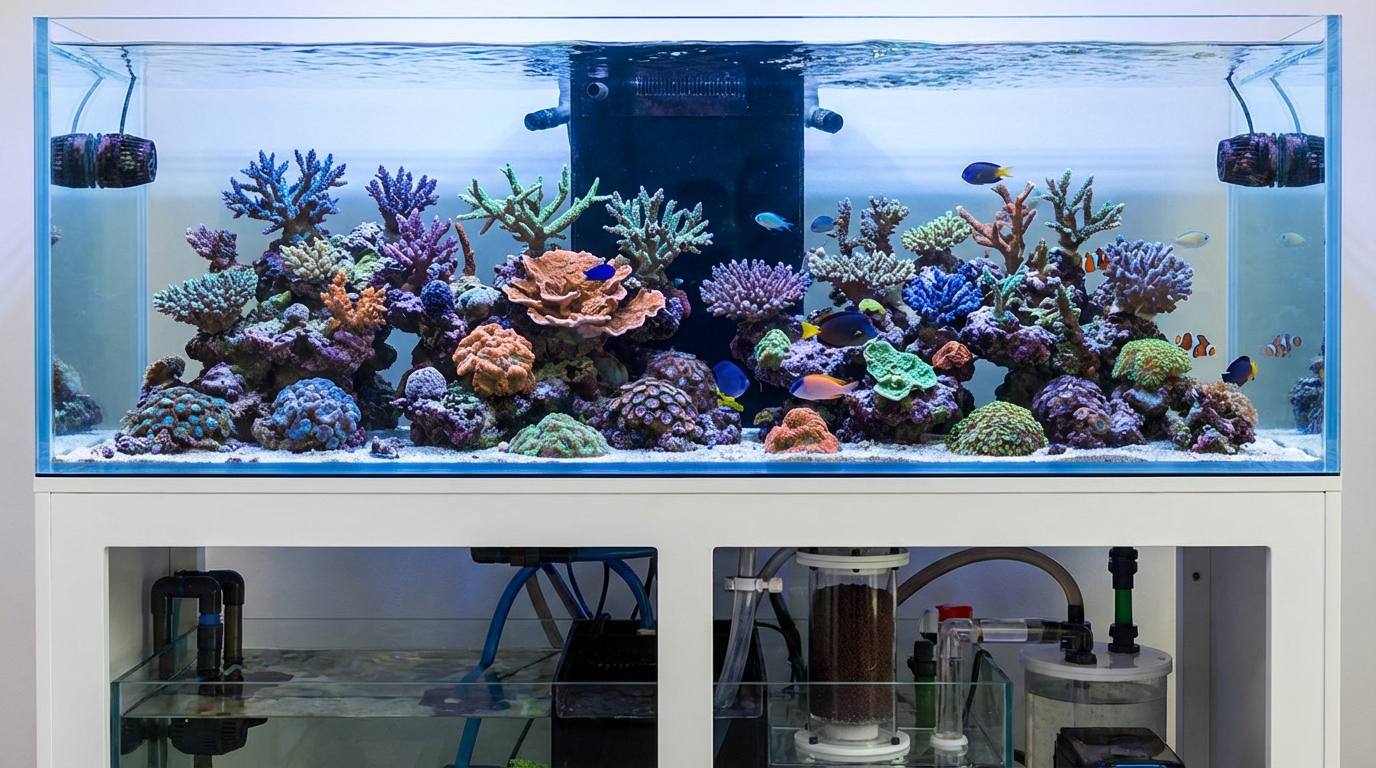
Phosphate is one of the most discussed parameters in reef keeping, and for good reason. While some phosphate is necessary for coral health, elevated levels can trigger algae blooms and stress your corals. This guide covers everything you need to know about managing phosphate in your reef tank.
What is Phosphate and Why Does It Matter?
Phosphate (PO4) is a naturally occurring nutrient that enters your tank through food, tap water, and organic waste. In nature, phosphate levels on coral reefs are extremely low - often undetectable. However, in the closed environment of an aquarium, phosphate can accumulate quickly.
Effects of High Phosphate
- Algae growth - Hair algae, turf algae, and cyano thrive on excess phosphate
- Coral stress - Can inhibit calcification and cause color loss
- Slowed coral growth - Competes with calcium uptake
- Brown corals - Excess nutrients cause zooxanthellae overgrowth
Effects of Ultra-Low Phosphate
Interestingly, phosphate that's too low causes problems too:
- Pale, washed-out coral colors
- Tissue necrosis in SPS corals
- Slow growth despite good parameters
Target Phosphate Levels
The ideal phosphate range depends on your tank type:
- Mixed reef: 0.03-0.10 ppm
- SPS dominant: 0.02-0.08 ppm
- Soft coral/LPS: 0.05-0.15 ppm (more forgiving)
- Fish-only: <0.5 ppm (less critical)
Pro Tip: Consistency matters more than hitting an exact number. Rapid phosphate changes stress corals more than slightly elevated stable levels.
Testing for Phosphate
Accurate testing is essential. Standard hobby test kits often lack the precision needed for reef tanks.
Recommended Testing Methods
- Hanna Ultra Low Range Phosphorus Checker - The gold standard for accuracy
- Red Sea Pro Phosphate Test - Good colorimetric option
- ICP Testing - Laboratory precision for periodic verification
Test phosphate weekly, or more frequently if you're experiencing issues. Track your results over time using the ReefBay app to spot trends.
Sources of Phosphate
Understanding where phosphate comes from helps you control it at the source.
Common Phosphate Sources
- Fish food - The #1 source in most tanks
- Frozen foods - Thaw and rinse in RO water before feeding
- Tap water - Can contain significant phosphate
- Low-quality salt mix - Some contain elevated phosphates
- Decaying organics - Dead fish, uneaten food, detritus
- Activated carbon - Some brands leach phosphate
- Rock and sand - Can absorb and release phosphate over time
Methods to Reduce Phosphate
1. Source Control (Prevention)
The most effective approach is limiting phosphate input:
- Feed sparingly - only what fish consume in 2-3 minutes
- Use high-quality, low-phosphate foods
- Rinse frozen foods before feeding
- Use RO/DI water exclusively
- Maintain your protein skimmer for optimal performance
- Regular maintenance - clean filter socks, vacuum detritus
2. GFO (Granular Ferric Oxide)
GFO is a highly effective phosphate removal media that binds phosphate as water flows through it.
- Use in a media reactor with slow, tumbling flow
- Replace when exhausted (typically every 4-8 weeks)
- Start with less than recommended and adjust
- Rinse thoroughly before use
Caution: GFO can drop phosphate rapidly. If your levels are very high, remove it gradually to avoid shocking corals.
3. Lanthanum Chloride
A liquid phosphate remover that works quickly but requires careful dosing:
- Binds phosphate into a white precipitate
- Must be dosed slowly and carefully
- Can cloud water temporarily
- Good for rapid reduction before GFO maintenance
4. Refugium with Macroalgae
A natural approach that exports phosphate through algae growth:
- Chaetomorpha is the most popular choice
- Harvest regularly to export the absorbed nutrients
- Requires dedicated lighting (reverse daylight cycle ideal)
- Also provides habitat for pods and natural filtration
5. Carbon Dosing
Adding a carbon source (vodka, vinegar, or commercial products) promotes bacterial growth that consumes phosphate:
- Requires a powerful protein skimmer to export bacteria
- Start very slowly and increase gradually
- Can reduce both nitrate and phosphate
- Risk of bacterial bloom if overdosed
6. Algae Scrubber
An alternative to refugiums that grows algae on a screen:
- Highly effective nutrient export
- Requires regular harvesting
- Can be DIY or commercial units
The Ratio Balance: Phosphate and Nitrate
Phosphate and nitrate are linked. The Redfield Ratio suggests maintaining roughly 16:1 nitrate to phosphate. When one is too low relative to the other, corals struggle.
Example: If your phosphate is 0.05 ppm, aim for nitrate around 3-8 ppm. Zero nitrate with measurable phosphate, or vice versa, often causes coral issues.
Common Mistakes
- Chasing zero - Some phosphate is necessary; ultra-low can starve corals
- Dropping too fast - Gradual reduction is safer than rapid changes
- Ignoring the source - Media and dosing only treat symptoms
- Over-dosing GFO - More isn't better; start conservatively
- Not testing regularly - You can't manage what you don't measure
Dealing with Phosphate-Related Algae
If high phosphate has triggered an algae outbreak:
- Address the phosphate source first
- Add appropriate clean-up crew - snails, hermit crabs, sea hares
- Manual removal during water changes
- Reduce photoperiod temporarily
- Be patient - algae will subside as nutrients stabilize
Equipment for Phosphate Management
Essential gear for keeping phosphate in check:
- Protein skimmer - Exports organics before they break down
- Media reactor - For running GFO efficiently
- RO/DI system - Ensures pure water input
- Accurate test kit - Hanna checker recommended
- Quality salt mix - Low nutrient formulations
Conclusion
Phosphate management is about balance, not elimination. Aim for stable, low levels through a combination of source control and export methods. Track your parameters consistently with the ReefBay app to understand your tank's patterns, and make changes gradually.
With the right approach, you can maintain the pristine water quality that allows corals to display their best colors and growth. Browse the ReefBay marketplace for phosphate media, test kits, and everything you need to keep your reef thriving.