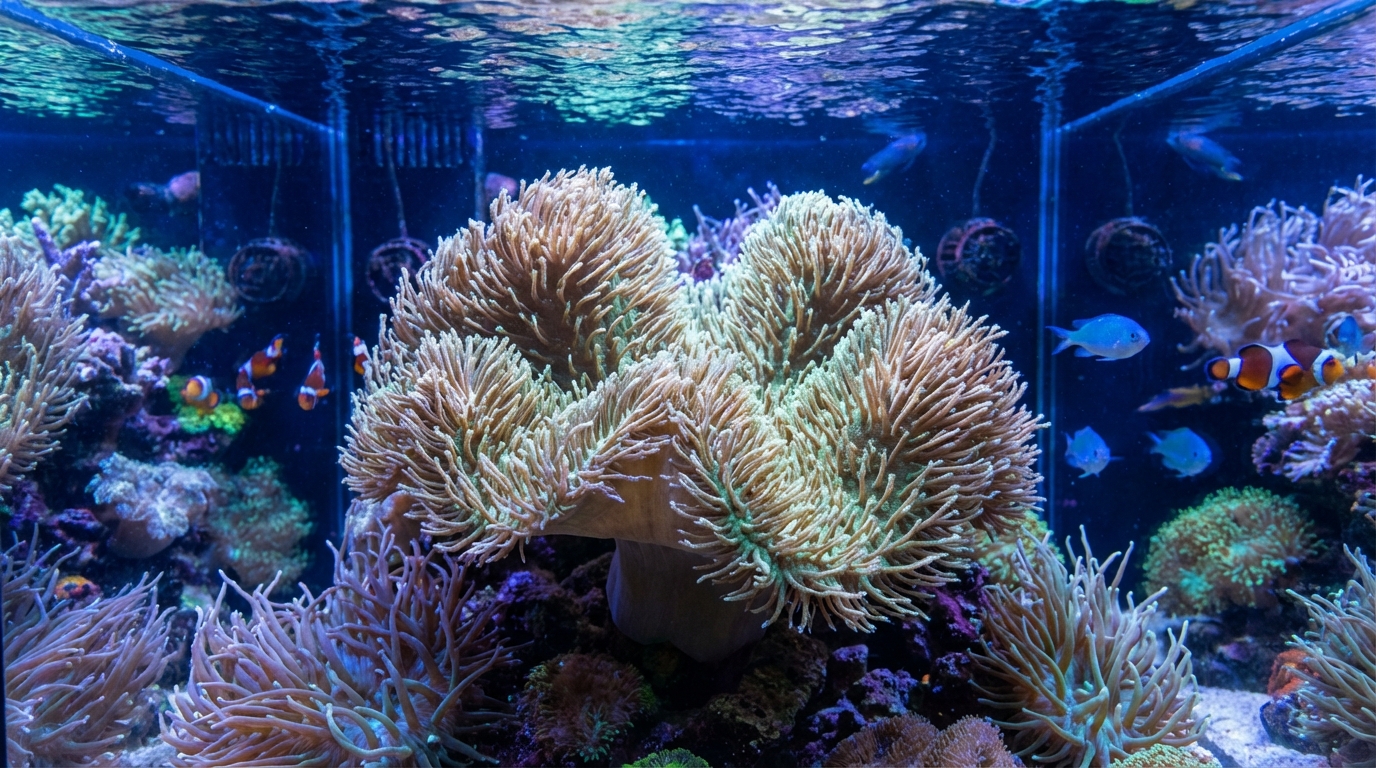
Leather corals are one of the highest-success corals for reef keepers who want movement without constant fragility. This guide gives you a practical setup plan for lighting, flow, placement, and the normal shedding cycle so your leather stays open, healthy, and growing.
What Are Leather Corals?
Leather corals belong to the family Alcyoniidae and include several popular genera like Sarcophyton (toadstool leathers), Sinularia (finger leathers), and Lobophytum (devil's hand corals). They get their name from their thick, leathery texture when their polyps are retracted.
These corals are photosynthetic, hosting zooxanthellae algae that provide most of their nutrition. They're native to the Indo-Pacific region and thrive in a wide range of reef tank conditions.
Popular Leather Coral Species
- Toadstool Leather (Sarcophyton) - The classic leather coral with a mushroom-like cap and long flowing polyps
- Devil's Hand Coral (Lobophytum) - Features thick, finger-like lobes resembling a hand
- Finger Leather (Sinularia) - Branching corals with short polyps
- Colt Coral (Cladiella) - Smaller leathers with delicate, tree-like branching
- Cabbage Leather (Sinularia dura) - Ruffled, lettuce-like appearance
Water Parameters
Leather corals are remarkably tolerant of parameter fluctuations, but they'll look their best with stable conditions:
- Temperature: 75-82°F (24-28°C)
- Salinity: 1.024-1.026 specific gravity
- pH: 8.1-8.4
- Alkalinity: 8-12 dKH
- Calcium: 400-450 ppm
- Magnesium: 1250-1350 ppm
- Nitrate: 5-20 ppm (they actually prefer some nutrients!)
- Phosphate: 0.03-0.1 ppm
Unlike SPS corals, leathers actually appreciate slightly "dirtier" water with measurable nitrates. Ultra-low nutrient systems can cause them to look pale and unhealthy.
Lighting Requirements
Leather corals are highly adaptable to different lighting conditions:
- PAR Range: 50-200 (moderate)
- Light Type: Any reef-capable LED, T5, or metal halide
- Spectrum: Standard reef spectrum works well
While they'll survive in low light, moderate lighting (100-150 PAR) brings out the best coloration and promotes healthy growth. They can also adapt to higher light placements, but introduce them gradually to prevent bleaching.
Flow Requirements
Getting the flow right is crucial for leather coral health:
- Flow Level: Moderate, random/turbulent
- Signs of Too Little Flow: Polyps don't fully extend, detritus settles on surface
- Signs of Too Much Flow: Coral stays closed, tissue irritation, polyps bent flat
Leathers release a waxy coating periodically (more on this below), and good flow helps clear this away. Position them where they receive gentle, indirect flow from multiple directions.
Placement in Your Tank
Consider these factors when placing leather corals:
- Give Them Space: Leathers can grow quite large (12"+ for toadstools) and release compounds that may affect nearby corals
- Stable Substrate: Secure them to rock using gel superglue or let them attach naturally
- Height: Mid-tank placement works well for most species
- Distance from Others: Keep at least 6" from other corals, especially SPS
Allelopathy Warning
Leather corals are known for chemical warfare. They release terpenes and other compounds that can irritate or kill neighboring corals, especially Acropora and other SPS. Running activated carbon helps remove these compounds from the water. If you need carbon options, browse activated carbon on ReefBay.
The Shedding Cycle
One unique behavior of leather corals is periodic shedding. Every few days to weeks, your leather may:
- Retract all polyps completely
- Develop a waxy, film-like coating
- Stay closed for 1-7 days
- Shed the coating (often in one piece)
- Re-extend polyps, looking better than before
This is completely normal and helps the coral clear accumulated debris, algae, and waste. Don't panic when your leather stays closed—it's just housekeeping!
Feeding Leather Corals
While leathers get most of their nutrition from photosynthesis, they can benefit from supplemental feeding:
- Target Feeding: Phytoplankton, reef roids, or coral-specific foods
- Frequency: 1-2 times per week (optional)
- Method: Turn off pumps briefly and use a pipette to deliver food to extended polyps
Honestly, most leathers do fine without target feeding if you maintain good water quality and lighting.
Growth Rate and Fragging
Leather corals are fast growers under good conditions. A small frag can become a dominant colony within a year or two.
How to Frag Leather Coral
- Use a sharp, clean razor blade or scalpel
- Cut cleanly through the cap or stalk
- Let the frag heal in moderate flow for a few days
- Attach to a frag plug using gel glue or rubber bands
- Mother colony will heal within 1-2 weeks
Leathers are extremely resilient to fragging. Both the mother colony and frags typically recover quickly with minimal stress.
Common Problems and Solutions
Leather Won't Open
Possible Causes:
- Normal shedding cycle (wait it out)
- Recent relocation (give it 1-2 weeks to acclimate)
- Poor water quality (test and adjust parameters)
- Too much or too little flow
- Aggressive tankmates nipping at it
Pale or Bleaching
- Light too intense (lower PAR or move coral lower)
- Nutrient levels too low (increase feeding)
- Temperature stress
Brown Jelly Disease
A serious bacterial infection appearing as brown, jelly-like material on the tissue. Act quickly:
- Remove affected areas with a sharp blade
- Dip the coral in iodine-based coral dip
- Improve water flow and quality
- Quarantine if spreading
Best Tankmates for Leather Corals
Leather corals coexist well with:
- Mushroom corals
- Zoanthids
- Other soft corals
- Most LPS (with adequate spacing)
- Reef-safe fish and invertebrates
Be cautious mixing with:
- Sensitive SPS corals (due to allelopathy)
- Other leather species (competition)
- Coral-eating fish (some angels and butterflies)
Why Leather Corals Are Great for Beginners
If you're new to reef keeping, leather corals offer several advantages:
- Forgiving: Tolerate parameter swings that would kill SPS
- Visual Impact: Large, impressive specimens at affordable prices
- Easy to Frag: Share with friends or trade at your local club
- Fast Growth: See noticeable progress within months
- Hardy Shippers: Handle transit stress well when buying online
Shop Leather Corals and Gear
Conclusion
Leather corals deserve a place in almost any reef tank. Their combination of hardiness, beauty, and impressive size makes them enduring favorites in the hobby. Whether you're setting up your first reef or adding variety to an established system, a toadstool or devil's hand leather can become a stunning centerpiece.
Ready to add a leather coral to your tank? Browse our marketplace for leather corals, then track alkalinity, pH, and nutrient stability in the ReefBay app during the first few weeks after placement.