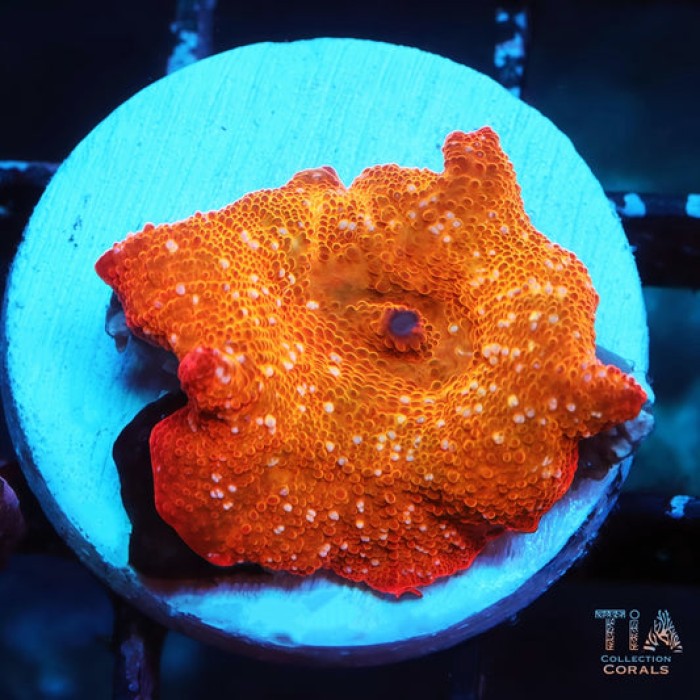
Mushroom corals are often called the "perfect beginner coral" — and for good reason. These hardy, colorful soft corals thrive in conditions that would stress other species, making them ideal for new reef keepers learning the ropes. Whether you're setting up your first reef tank or adding easy-care corals to an established system, this guide covers everything you need to know about keeping mushroom corals happy and healthy.
What Are Mushroom Corals?
Mushroom corals belong to the order Corallimorpharia and share characteristics with both stony corals and anemones. Unlike SPS or LPS corals, they lack a hard calcium carbonate skeleton, making them classified as soft corals. Their flat, disc-shaped bodies with a central mouth give them their distinctive "mushroom" appearance.
The three most common genera you'll encounter in the hobby are:
- Discosoma — The classic mushrooms with smooth or slightly textured surfaces. Available in countless colors including reds, blues, greens, and stunning rainbow varieties.
- Rhodactis — Also called "hairy mushrooms" due to their textured, bumpy surface. Generally larger than Discosoma and equally hardy.
- Ricordea — Features distinctive bubble-like tentacles and vibrant colors. Slightly more demanding than other mushrooms but still beginner-friendly.
Why Mushroom Corals Are Perfect for Beginners
There's a reason experienced reefers recommend mushrooms to newcomers:
- Low light requirements — They thrive in low to moderate lighting that would leave SPS corals starving
- Tolerant of water quality fluctuations — More forgiving of nitrate and phosphate swings than most corals
- No feeding required — While they can capture food, they primarily rely on photosynthesis
- Self-propagating — Mushrooms naturally reproduce by splitting, giving you free corals over time
- Affordable — Common varieties are budget-friendly, with rare morphs available for collectors
Ideal Tank Parameters for Mushroom Corals
While mushrooms are forgiving, providing stable conditions helps them thrive:
Water Chemistry
- Temperature: 76-82°F (24-28°C)
- Salinity: 1.024-1.026 specific gravity
- pH: 8.1-8.4
- Alkalinity: 8-12 dKH
- Calcium: 400-450 ppm
- Magnesium: 1250-1350 ppm
- Nitrate: <20 ppm (they tolerate higher levels than most corals)
Track your parameters consistently using the ReefBay app to catch any trends before they become problems.
Lighting Requirements
Mushrooms prefer low to moderate lighting — typically 50-150 PAR. High-intensity lighting can actually bleach them or cause them to shrivel up. If your mushrooms are:
- Curling or closing up — Light may be too intense. Move them lower or to a shaded area.
- Stretching upward — They may need slightly more light. Gradually move them higher.
- Fully expanded with vibrant colors — You've found the sweet spot!
Flow Requirements
Low to moderate flow works best. Mushrooms should gently sway but not be blasted by direct powerhead output. Too much flow causes them to detach from their substrate and tumble around the tank — stressful and potentially harmful.
Placement and Aquascaping
Strategic placement helps mushrooms thrive while protecting other tank inhabitants:
Best Locations
- Lower rock work — Perfect for filling in shaded areas where other corals struggle
- Overhangs and caves — Natural shade provides ideal lighting conditions
- Sand bed — Some keepers place mushroom rocks directly on the sand
Spacing Considerations
Mushrooms can be mildly aggressive to neighboring corals through chemical warfare. Keep them at least 3-4 inches from LPS and SPS corals. They generally coexist peacefully with other soft corals like zoanthids and leather corals.
Feeding Mushroom Corals
While mushrooms primarily get nutrition through photosynthesis, they can capture food particles:
- Target feeding — Occasionally offer small pieces of mysis shrimp or reef food to accelerate growth
- Broadcast feeding — Mushrooms will capture floating phytoplankton and coral foods
- Fish waste — In well-stocked tanks, mushrooms benefit from ambient nutrients
Feeding isn't required but can boost growth rates and coloration. Once or twice weekly is plenty.
Propagation and Fragging
Mushrooms reproduce naturally and can be fragged easily:
Natural Reproduction
Happy mushrooms split on their own, creating new individuals. You'll often find baby mushrooms appearing around your original colony. These can be left to form a carpet or moved elsewhere.
Manual Fragging
To propagate mushrooms yourself:
- Cut the mushroom in half (or quarters for large specimens) using a sharp blade
- Place the pieces in a low-flow container with rubble
- Within 2-4 weeks, they'll attach to the rubble
- Transfer to the display tank once attached
Some reefers use the "mushroom tumbler" method, letting cut pieces settle naturally in a cup with rubble. Mushrooms are remarkably resilient and regenerate easily.
Common Problems and Solutions
Mushroom Not Opening
If your mushroom stays closed for extended periods:
- Check for pests like flatworms or nudibranches
- Test water parameters — especially salinity and temperature
- Reduce lighting intensity
- Ensure adequate flow without direct blasting
Mushroom Detaching
Mushrooms may detach due to:
- Excessive flow pushing them off their substrate
- Poor water quality causing stress
- Being disturbed by fish or crabs
Simply place detached mushrooms in a low-flow area on rubble and they'll reattach within a few weeks.
Fading Colors
Color loss usually indicates:
- Too much light (bleaching)
- Nutrient deficiency in ultra-low nutrient systems
- Acclimation stress (temporary)
Popular Mushroom Varieties
Ready to start your collection? Here are some favorites:
Beginner-Friendly
- Red Discosoma — Classic, affordable, and stunning under blue LEDs
- Green Hairy Rhodactis — Large, textured, extremely hardy
- Blue Discosoma — Beautiful metallic blue coloration
Collector Varieties
- Bounce Mushrooms — Featuring distinctive bubble-like growths
- Jawbreaker Mushrooms — Multicolored patterns reminiscent of candy
- WWC Bounce — Highly sought-after designer morphs
Browse the ReefBay marketplace to find mushroom corals from trusted sellers.
Tank Mates
Mushrooms coexist peacefully with most reef inhabitants:
Good Tank Mates
- Reef-safe fish like clownfish, gobies, and blennies
- Other soft corals including zoanthids
- Cleaner shrimp and snails
Exercise Caution With
- Large angelfish that may nip mushrooms
- Aggressive corals like galaxea that could sting them
- Certain crabs that may disturb them
Final Thoughts
Mushroom corals offer the perfect entry point into reef keeping. Their hardiness, beauty, and ease of care make them rewarding for beginners while their variety keeps experienced collectors hunting for rare morphs. Start with common varieties to learn the basics, then explore the incredible diversity this coral family offers.
Track your mushroom colony's growth and photograph their progress with the ReefBay app — it's free and helps you monitor your entire reef journey.