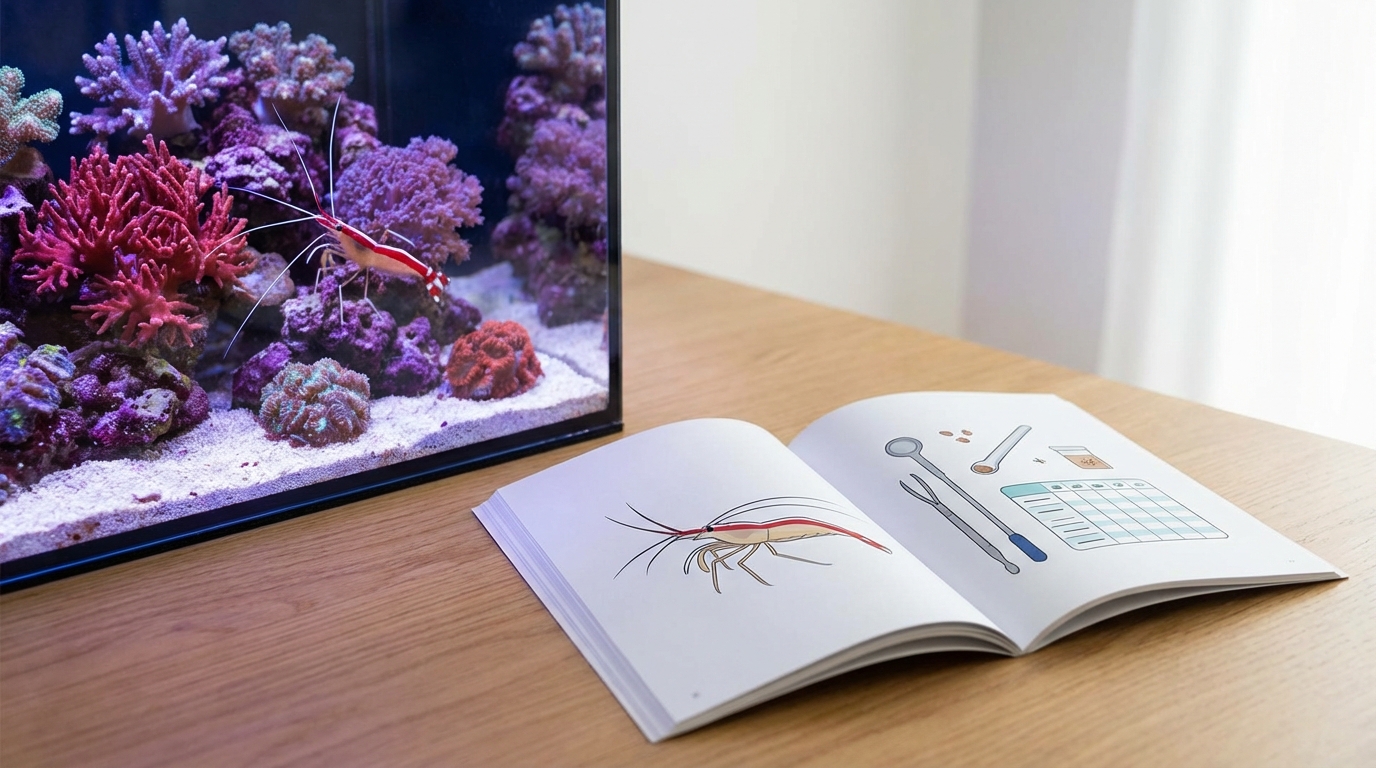
Peppermint shrimp (Lysmata wurdemanni) are one of the most valuable additions to a reef tank's clean up crew. They're best known for eating aiptasia, a common pest anemone that plagues many aquariums. But these attractive, hardy shrimp offer much more than pest control.
Peppermint Shrimp at a Glance
- Scientific Name: Lysmata wurdemanni
- Common Names: Peppermint Shrimp, Caribbean Peppermint Shrimp
- Maximum Size: 2 inches (5 cm)
- Lifespan: 2-3 years
- Care Level: Easy
- Temperament: Peaceful
- Reef Safe: Yes (with caveats)
- Diet: Omnivore, scavenger
Tank Requirements
Peppermint shrimp are adaptable and thrive in typical reef tank conditions:
Water Parameters
- Temperature: 72-78°F (22-26°C)
- Salinity: 1.023-1.025 sg
- pH: 8.1-8.4
- Alkalinity: 8-12 dKH
- Calcium: 400-450 ppm
- Magnesium: 1250-1350 ppm
Tank Size
A single peppermint shrimp can live in tanks as small as 10 gallons, but for a group (which they prefer), aim for 20+ gallons. They need hiding spots, so provide plenty of live rock with caves and crevices.
The Aiptasia Connection
Peppermint shrimp are famous for eating aiptasia — those pesky pest anemones that spread rapidly and sting corals. However, there are important caveats:
Not All Peppermint Shrimp Eat Aiptasia
- True peppermint shrimp (Lysmata wurdemanni) from the Caribbean are the best aiptasia eaters
- Camel shrimp (Rhynchocinetes durbanensis) are often mislabeled as peppermint shrimp but don't eat aiptasia and may nip corals
- Individual variation exists — some peppermints are voracious aiptasia hunters, others ignore them
Tips for Aiptasia Control
- Buy multiple shrimp — Odds are better that at least one will eat aiptasia
- Reduce other food — Hungry shrimp hunt more aggressively
- Be patient — It may take weeks for them to discover and eliminate aiptasia
- Small aiptasia first — They prefer small to medium-sized pest anemones
Feeding
Peppermint shrimp are scavengers and typically find plenty to eat in an established reef tank. However, supplemental feeding ensures optimal health:
- Leftover fish food (flakes, pellets)
- Mysis shrimp
- Brine shrimp
- Chopped seafood (shrimp, fish, clam)
- Reef roids or similar coral foods
Feed 2-3 times per week if the tank is well-established. They'll also graze on detritus, algae, and uneaten food between feedings.
Compatibility
Safe Tank Mates
- Most reef fish (clownfish, tangs, gobies, blennies)
- Other shrimp species (cleaner shrimp, fire shrimp)
- Snails and hermit crabs
- Most corals (SPS, LPS, soft corals)
Avoid Housing With
- Aggressive fish: Triggers, large wrasses, groupers, lionfish
- Arrow crabs: Will hunt and eat peppermint shrimp
- Coral banded shrimp: Aggressive toward other shrimp
- Mantis shrimp: Obvious predator
Coral Safety Note
While generally reef safe, some peppermint shrimp may pick at certain LPS corals (especially open brain corals and acans) if underfed. Keep them well-fed to minimize this risk.
Acclimation
Shrimp are sensitive to water parameter changes. Use drip acclimation over 1-2 hours:
- Float the bag for 15-20 minutes to equalize temperature
- Open the bag and add a drip line from your tank
- Drip tank water until the bag volume has doubled
- Discard half the water and repeat
- Net the shrimp (don't pour bag water into tank) and release
Molting
Peppermint shrimp molt regularly as they grow. During and after molting:
- They hide for 24-48 hours while their new shell hardens
- Leave the old exoskeleton — they may eat it for calcium
- Maintain stable parameters; unstable conditions cause molting problems
- Ensure adequate calcium and iodine for shell formation
Breeding
Peppermint shrimp are relatively easy to breed in captivity. They're protandric simultaneous hermaphrodites — all start male and can develop female organs while retaining male function. Females carry green eggs under their tail for 10-12 days before releasing larvae.
Raising larvae is challenging and requires a separate tank, phytoplankton, and rotifers, but it's been done by dedicated hobbyists.
Common Problems
Won't Eat Aiptasia
Some individuals simply don't eat aiptasia. Try adding more shrimp, reducing feeding, or confirming you have true L. wurdemanni rather than look-alike species.
Hiding All Day
Normal behavior. Peppermint shrimp are nocturnal and prefer to hide during the day. They'll become more visible as they acclimate.
Disappeared After Adding
Check for predators (hidden mantis shrimp, crabs). If parameters are good and no predators exist, they may just be hiding — they're masters at staying out of sight.
Where to Buy
Find healthy peppermint shrimp from verified sellers on the ReefBay marketplace. Look for active shrimp with intact antennae and legs. Avoid any showing white spots or lethargy.
Conclusion
Peppermint shrimp are hardy, attractive, and useful additions to any reef tank. While their aiptasia-eating reputation sometimes overshadows their other qualities, they're valuable scavengers and fascinating creatures to observe. With proper care, they'll thrive for years and help keep your tank clean and pest-free.
Track your clean up crew additions in the ReefBay app and monitor water parameters to ensure optimal conditions for all your invertebrates.