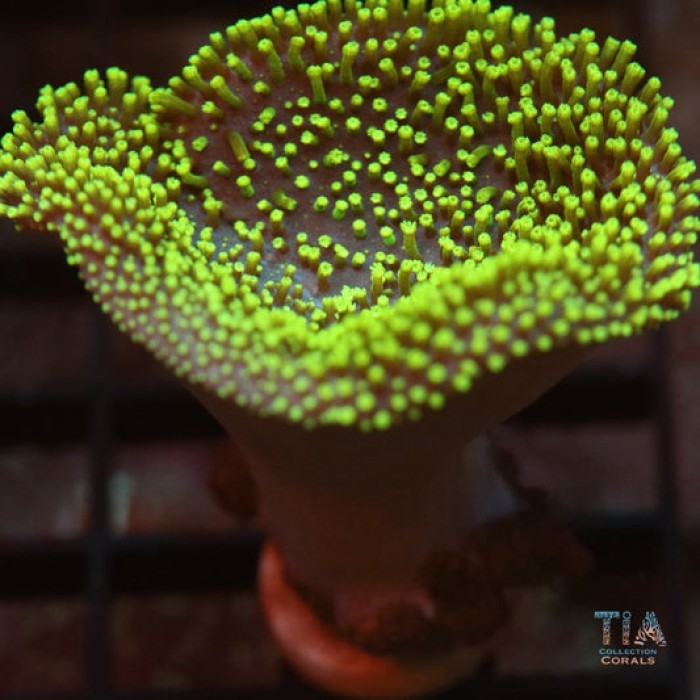
Toadstool corals (Sarcophyton species) are among the most popular and beginner-friendly soft corals in the reef aquarium hobby. With their distinctive mushroom-like shape and flowing polyps, they add movement and visual interest to any tank while being remarkably forgiving of beginner mistakes. If you're looking for a toadstool coral for your reef, this guide will help you succeed.
Species Overview
Toadstool corals belong to the Sarcophyton genus, part of the leather coral family (Alcyoniidae). They're found throughout the Indo-Pacific, where they grow on reef flats and lagoons. Their common name comes from their shape—a thick stalk topped by a cap covered in polyps, resembling a mushroom or toadstool.
Popular Varieties
- Common Toadstool (Sarcophyton glaucum): Tan/brown with white polyps, very hardy
- Yellow Fiji Toadstool: Bright yellow coloration, highly sought after
- Green Toadstool: Green-tinted cap with contrasting polyps
- Long Polyp Toadstool: Extended polyps that wave dramatically in current
Quick Facts
- Scientific Name: Sarcophyton spp.
- Common Names: Toadstool coral, mushroom leather, sarcophyton
- Maximum Size: 12+ inches (30+ cm) in diameter
- Growth Rate: Moderate to fast
- Reef Safe: Yes, but can release toxins (see chemical warfare section)
- Care Level: Easy
Tank Requirements
Toadstool corals are hardy and adaptable, making them ideal for beginners learning the ropes of coral care.
Minimum Tank Size
While toadstools can start small, they grow quickly and need room. A 30-gallon tank is the minimum, but 50+ gallons is preferred as they can reach 12 inches or more in diameter. Account for growth when placing them.
Water Parameters
| Parameter | Ideal Range |
|---|---|
| Temperature | 75-80°F (24-27°C) |
| pH | 8.1-8.4 |
| Salinity | 1.024-1.026 sg |
| Alkalinity | 8-11 dKH |
| Calcium | 400-450 ppm |
| Magnesium | 1250-1350 ppm |
| Nitrate | 5-20 ppm (tolerate higher) |
| Phosphate | <0.1 ppm (tolerate higher) |
Forgiving nature: Toadstools tolerate nutrient levels that would stress SPS corals. They actually benefit from slightly elevated nitrates compared to ultra-low-nutrient systems. Track your levels with the ReefBay app for optimal health.
Lighting Requirements
Toadstools are highly adaptable to different lighting conditions, which is part of what makes them so beginner-friendly.
PAR Recommendations
- Acceptable range: 75-250 PAR
- Optimal range: 100-150 PAR
- Placement: Low to middle tank positions
Lighting Tips
- Start with lower light and gradually increase if desired
- They adapt to various spectrums (T5, LED, metal halide)
- Yellow/green varieties may show better color under bluer light
- Too much light causes bleaching—if the coral pales, move it lower
Flow Requirements
Proper water flow is essential for toadstool health and appearance.
Flow Recommendations
- Intensity: Low to moderate, indirect flow
- Pattern: Variable or gyre-style flow is ideal
- What to watch: Polyps should gently sway, not lie flat or be blasted
Flow helps the coral shed its waxy coating (more on this below) and prevents detritus from settling on the cap. However, too much direct flow will cause the polyps to retract permanently.
Placement in the Tank
Choose your toadstool's position carefully—they grow large and can cause issues with neighbors.
Placement Guidelines
- Position: Lower to middle tank, on rock or sand
- Spacing: Leave 6-8 inches from other corals (more for aggressive species)
- Substrate: Secure to rock; they don't do well placed directly on sand
- Growth planning: Remember they can triple in size within a year
Compatibility Considerations
Toadstools release terpenoid compounds that can inhibit nearby corals, especially SPS. Run activated carbon and allow good spacing to minimize chemical warfare. Don't place directly next to Euphyllia (hammer, torch, frogspawn) or sensitive SPS.
The Shedding Cycle
One of the most alarming things for new toadstool owners is witnessing the shedding cycle. Don't panic—it's completely normal.
What Happens
- The coral retracts all polyps (looks like a closed umbrella)
- A waxy film develops over the cap
- The coral may look dead for days to weeks
- The waxy layer peels off (often helped by flow)
- Polyps extend again, often looking better than before
Why It Happens
- Natural cleaning mechanism to remove algae and debris
- Response to changes in lighting, flow, or water chemistry
- Part of normal growth
- Stress response (move recovery)
Tip: Shedding can last 1-3 weeks. Don't move the coral or try to "help" remove the film. Patience is key.
Feeding
Toadstools are primarily photosynthetic, relying on their zooxanthellae for nutrition. However, they can benefit from supplemental feeding.
Feeding Options
- Phytoplankton: Broadcast feed 1-2x weekly
- Coral foods: Reef Roids, Coral Frenzy, or similar
- Fish waste: They absorb nutrients from the water column
Direct feeding isn't necessary but can accelerate growth. Many hobbyists keep healthy toadstools without ever target feeding them.
Propagation (Fragging)
Toadstools are among the easiest corals to propagate, making them great for trading with fellow reefers.
Fragging Method
- Cut a section: Use a sharp scalpel or razor to slice off part of the cap
- Size: Frags should be at least 1-2 inches for best survival
- Attach: Rubber band or glue to a frag plug or rock
- Recovery: The frag will shed, then attach and grow a new stalk
- Mother colony: The cut will heal within 1-2 weeks
Fragging Tips
- Work outside the tank in a container of tank water
- Use sharp, clean tools for cleaner cuts
- Both the cap and stalk can regenerate into new colonies
- Wait until polyps are retracted to minimize stress
Common Problems and Solutions
Polyps Not Extending
Causes: Shedding cycle, poor water quality, too much direct flow, new tank syndrome
Solutions: Wait (if shedding), test parameters, reduce flow, allow acclimation time
Coral Shrinking or Deflating
Causes: Poor water quality, stress, not enough light, disease
Solutions: Test all parameters, check for pests, ensure adequate lighting, consider dipping
Brown/Dull Coloration
Causes: Excessive nutrients, not enough light, zooxanthellae overgrowth
Solutions: Increase lighting gradually, improve nutrient export, run carbon
Coral Falling Over
Causes: Poor attachment, too much flow, weak stalk
Solutions: Reattach with epoxy or in rock crevice, reduce flow, allow time to strengthen
Chemical Warfare: Running Carbon
Toadstools release terpenes that can inhibit other corals, especially during shedding. Running activated carbon continuously is strongly recommended in any tank containing leather corals.
Carbon Recommendations
- Use high-quality activated carbon (ROX 0.8, Chemi-Pure, etc.)
- Replace every 2-4 weeks
- Increase carbon during and after shedding cycles
- Essential in mixed reefs with SPS corals
Tank Mates
Toadstools are peaceful but their chemical releases and size require careful planning.
Good Tank Mates
- Other soft corals (mushrooms, zoanthids, GSP)
- Most LPS with spacing (hammer, torch, frogspawn)
- Most reef fish (clownfish, tangs, wrasses)
- Clean-up crew (snails, hermits, shrimp)
Challenging Pairings
- SPS corals: Require extra carbon and spacing
- Other leathers nearby: Chemical competition
- Coral-nipping fish: Angels, some butterflies
Where to Buy
When purchasing toadstool corals, look for specimens with a healthy stalk, no visible damage, and polyps that extend (unless in a shedding phase). Browse toadstool corals on the ReefBay marketplace from trusted sellers.
Final Tips for Success
- Don't panic during shedding—it's normal and can last weeks
- Run activated carbon continuously
- Start with lower light and adjust upward
- Leave room for growth—they get big!
- Avoid placing near sensitive SPS
- Use the ReefBay app to track parameters and coral health
Toadstool corals are fantastic beginner corals that reward reefers with impressive growth and beautiful polyp extension. Their forgiving nature makes them perfect for learning coral husbandry, while their size and movement add real impact to any reef tank.