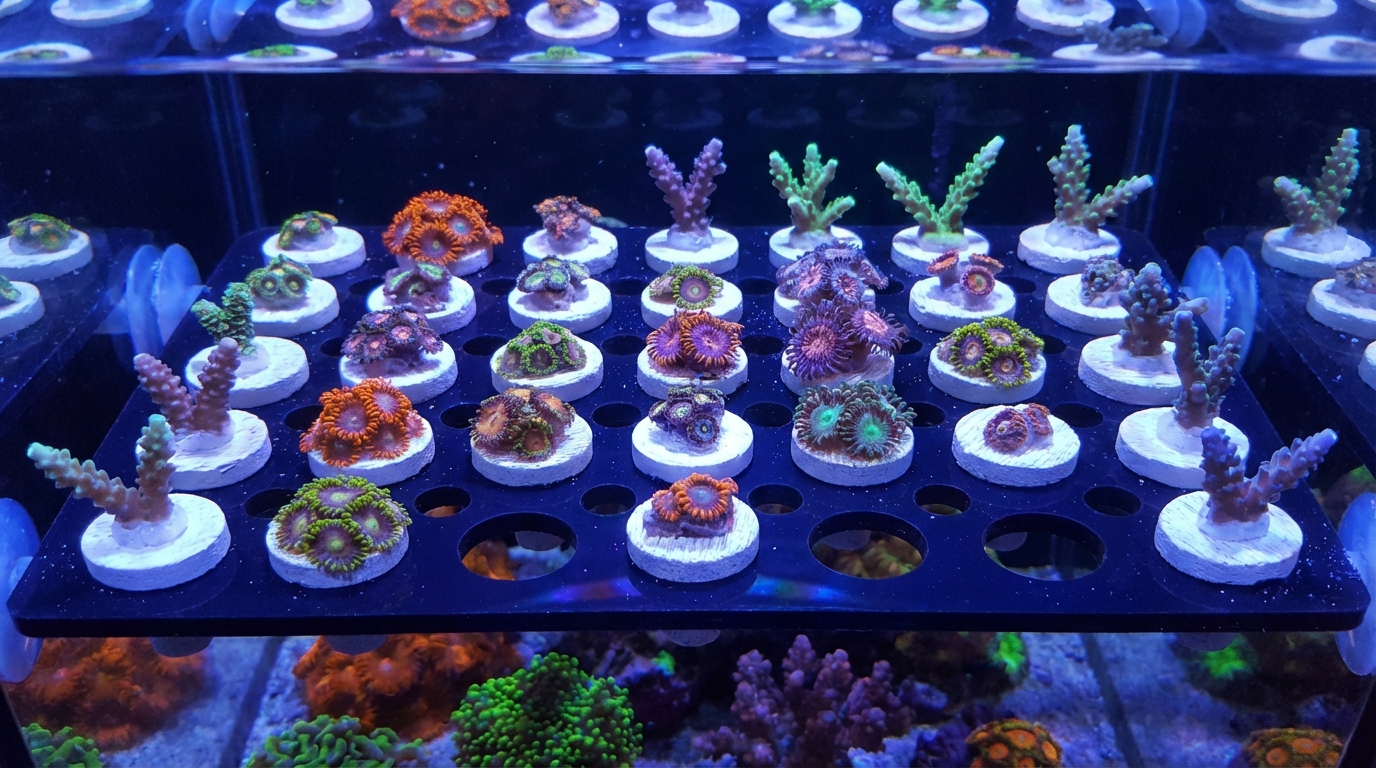
Fragging coral is one of the most rewarding skills in the reef keeping hobby. It allows you to propagate your favorite pieces, share with fellow hobbyists, trade for new specimens, or even start a small coral business. Best of all, it's easier than most beginners think.
What is Coral Fragging?
Fragging (short for fragmenting) is the process of cutting or dividing a coral colony into smaller pieces, each of which can grow into a new colony. It's essentially cloning your coral through asexual reproduction.
Essential Fragging Tools
Before you start, gather these supplies:
Cutting Tools
- Bone cutters - For SPS branching corals only
- Razor blade or scalpel - For soft corals and mushrooms
- Diamond band saw - For precise SPS cuts (optional, advanced)
- Dremel with diamond blade - Versatile cutting option
Mounting Supplies
- Frag plugs - Ceramic or plastic mounting bases
- Frag discs - Flat bases for encrusting corals
- Super glue gel - Reef-safe cyanoacrylate
- Two-part epoxy - For larger pieces or rock mounting
Safety & Dipping
- Coral dip solution - Removes pests before fragging
- Gloves - Protect hands from coral toxins (especially zoanthids!)
- Safety glasses - Prevent splashes in eyes
- Clean container - For holding frags during process
⚠️ Safety Warning: Palytoxin
Zoanthids and palythoas can contain palytoxin, one of the most toxic substances known. Always frag these corals underwater, wear gloves and eye protection, and never boil or burn them. If you feel ill after handling, seek medical attention and mention palytoxin exposure.
Fragging Different Coral Types
Soft Corals
Soft corals like leathers, toadstools, and sinularias are among the easiest to frag.
- Use a sharp razor blade or scalpel
- Cut cleanly through the stalk or body
- Allow the frag to heal for 30-60 minutes before mounting
- Attach to frag plug with rubber bands or toothpicks (they self-attach)
- Place in low flow until attached (1-2 weeks)
Mushroom Corals
Mushrooms can be fragged by cutting them into pie-shaped wedges. Each piece with a portion of the mouth will grow into a new mushroom. Place pieces in a container with rubble and cover with mesh - they'll attach within a week.
Zoanthids and Palythoas
Zoanthids grow in connected colonies on a mat. To frag:
- Identify a natural break point between polyp clusters
- Use a razor or bone cutters to separate
- Glue the mat directly to a frag plug
- They spread quickly once established
LPS Corals (Euphyllia, Duncan, etc.)
Branching LPS like torch, hammer, and duncan corals frag easily:
- Use a Dremel with diamond blade to cut through the skeleton
- Cut through the skeleton, not the tissue
- Glue the cut end to a frag plug
- Place in moderate flow to recover
SPS Corals (Acropora, Montipora, etc.)
SPS corals require more care but are highly rewarding to propagate:
- Use bone cutters for small branches or a band saw for colonies
- Make clean cuts to minimize stress
- Glue cut end to plug immediately
- Place in established area with good flow
- Expect 1-2 weeks before new growth appears
The Fragging Process: Step by Step
- Prepare your workspace - Clean area, tank water in containers, tools ready
- Dip the parent coral - Remove pests before cutting
- Make your cuts - Quick, clean cuts minimize stress
- Dip the frags - Second dip treats any exposed tissue
- Mount to plugs - Use appropriate glue or epoxy
- Cure the glue - Let super glue set for 30 seconds before submerging
- Place in recovery area - Lower light, moderate flow initially
Frag Recovery Tips
- Reduce lighting - Start at 50% intensity for the first week
- Lower flow - Prevent frags from blowing off plugs
- Maintain stable parameters - Stressed corals need consistency
- Don't over-feed - Normal feeding schedule is fine
- Watch for infection - Brown jelly or recession means problems
Common Fragging Mistakes
- Cutting too small - Frags need enough tissue to survive
- Fragging stressed corals - Only frag healthy, established colonies
- Skipping the dip - Pests spread easily through fragging
- Using regular super glue - Get reef-safe gel formula
- Rushing recovery - Give frags time to heal before moving
Building Your Frag Collection
Once you master fragging, you can:
- Trade frags with local reefers
- Sell extras on marketplaces like ReefBay
- Create a dedicated frag tank for grow-out
- Back up rare pieces in case of tank crashes
Ready to Start?
The best coral to practice on is whatever's thriving in your tank. Start with hardy soft corals or zoanthids before attempting expensive SPS. Browse corals on ReefBay to grow your collection, and track your coral growth with the ReefBay app.