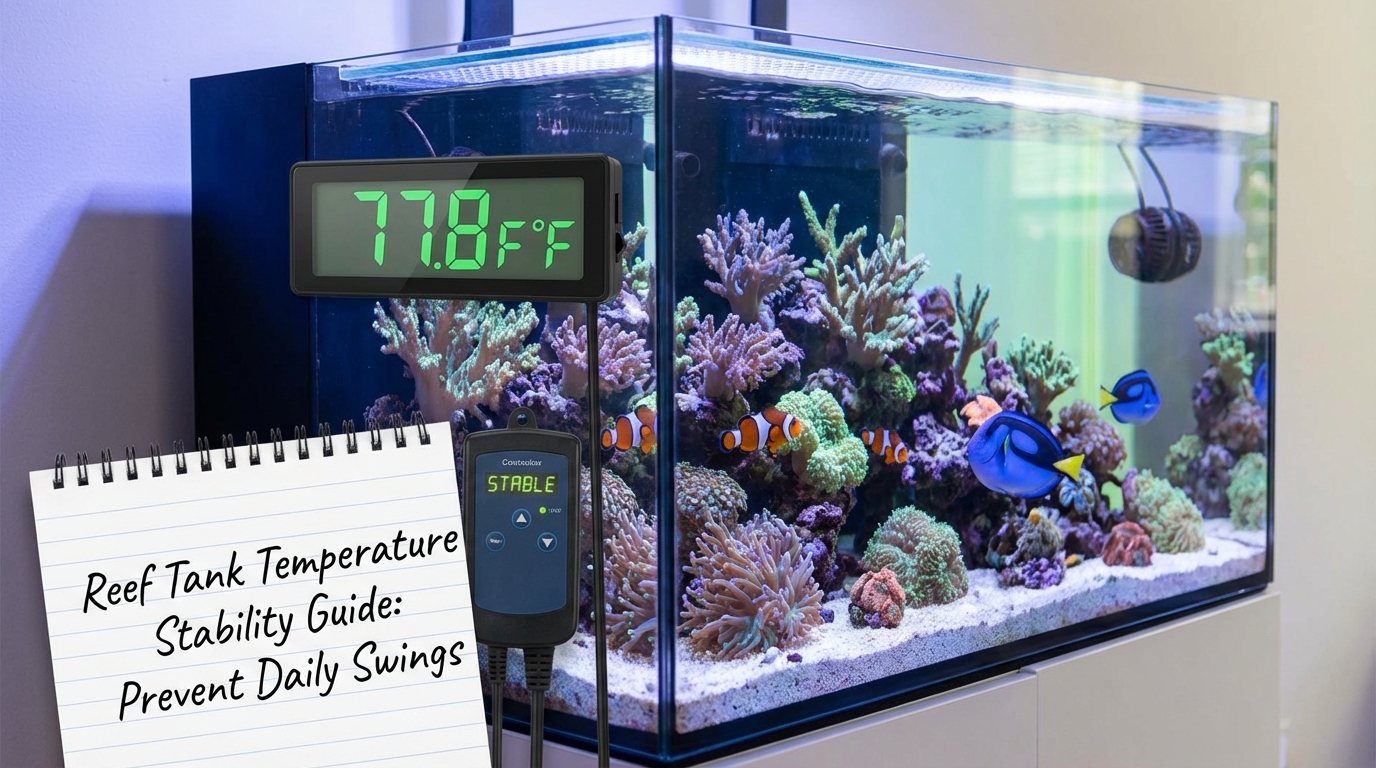
Why temperature stability matters
Reef tanks do best with stable temperature, usually 77-79°F. Quick swings stress fish, reduce coral polyp extension, and can trigger disease outbreaks. The goal is not chasing one exact number; it is keeping daily change under about 1°F.
Set up heating correctly
- Use two smaller heaters instead of one large unit.
- Place heaters in high-flow areas like the sump return section.
- Set heater thermostats slightly above controller setpoint as backup.
If your system runs cool at night, verify wattage and consider an insulated sump cabinet.
Control daytime heat spikes
Lighting, pumps, and room temperature can push tanks too warm by late afternoon. Start with low-cost cooling:
- Clip-on sump fan with evaporation top-off support
- Improve stand ventilation
- Shift peak light intensity away from hottest hours
If your tank still exceeds 80°F regularly, use a dedicated chiller sized for total water volume.
Monitor and automate
Use a controller for alarms and trend tracking. Pair this with a reliable thermometer you manually verify weekly. Track highs and lows in the ReefBay app so you can see seasonal drift and react early.
Livestock and equipment links
When heat stress affects sensitive corals, review hardier options in the marketplace such as zoa, toadstool, and hammer. For gear upgrades, compare heater and fan listings from reef keepers and shops.
Quick checklist
- Target range: 77-79°F
- Max daily swing: ≤1°F
- Use redundant heating + active cooling
- Log trends weekly and before/after equipment changes
Stable temperature is one of the fastest ways to improve coral color and consistency in any reef system.