
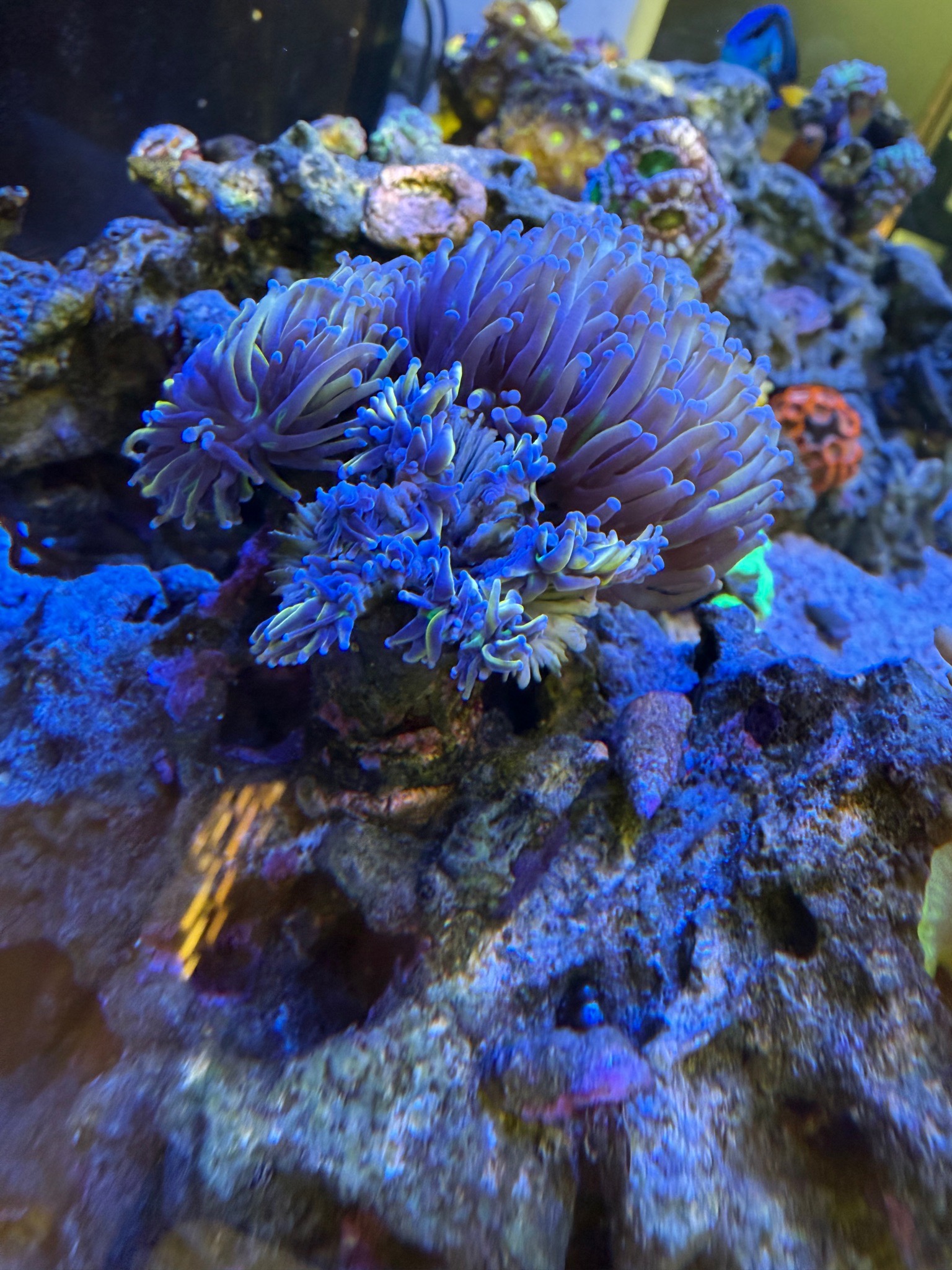
Sto avendo a che fare con nutrienti non equilibrati e sto cercando di tenere i nitrati alti. Pensavo fosse solo una vasca sporca, ma non so se sono diatomee. Se potete aiutarmi voi, fatemi sapere.
Been dealing with unbalanced nutrients and trying to keep nitrates up . I thought I was just dealing with a dirty tank but idk if this is diatoms if you guys can help me out
Commenti
Accedi per lasciare un commento
Ancora nessun commento
Inizia tu la conversazione.

Aumenta il flusso dell’acqua, un movimento superficiale non abbastanza circolazione.
Raise your water flow a surface movement not enough circulation
 @brother5of5
20d
Le diatomee di solito compaiono se aggiungi una roccia nuova, o sabbia o qualcosa del genere. Di recente ho aggiunto un medicinale che ha azzerato nitrati e fosfati, e ho avuto una grossa esplosione di alghe. Cyano, più un po' di roba marrone sconosciuta. Ho alzato parecchio il flusso in tutta la vasca e ho riportato i nutrienti a posto. E ho rimosso manualmente un po' di quella roba. È sparita. Il flusso è fondamentale. Alzalo.
Diatoms usually comes if you add a new rock, or sand or something like that. I recently added medication that bottomed out my nitrate and phos too and I had a huge algae bloom. Cyano, plus some unknown brown gunk. I cranked up my flow hard throughout the tank and got nutrients back on track. And manually removed some of the gunk. It went away. Flow is key. Crank it up.
@WILMER
20d
Quindi è una MP40 in una vasca da 32 gallon, non so qual è l'impostazione ideale per la dimensione della vasca
So it’s a MP40 in a 32 gallon tank idk what’s the sweet setting for the size of the tank
@brother5of5
20d
Quella è la parte difficile. Pensavo di essere nel mio punto ideale. Ma dopo l'esplosione, nell'arco di qualche giorno ho portato tutte le mie pompe di movimento al 100 e non è morto niente tranne le alghe. Gli sbalzi dei nutrienti fanno più male ai coralli. Però ho ridotto il flusso una volta sparite le alghe, ma sono ancora a una potenza di flusso doppia rispetto a prima dell'esplosione. E sembra che tutto stia bene. Quindi penso di essere stato troppo titubante con il flusso. Controlla solo i coralli. Cerca i segnali che indicano troppo flusso. E alzalo.
That’s the hard part. I thought I was in my sweet spot. But after the bloom, over a few days I turned all my powerheads to 100 and nothing died except the algae. The nutrient swings hurt the corals more. But I’ve dialed flow back once the algae was gone but im still at double flow power than I was before the bloom. And things seem happy. So I think I’ve been too hesitant with flow. Just watch corals. Look for their too much flow warning signs. And crank it up.
@WILMER
20d
Grazie, apprezzo le info
Thank you appreciate the info
@brother5of5
20d
Sì amico, buona fortuna! Continua a lottare! Tornerai al top.
Yeah man good luck! Keep up the fight! You’ll get back on top.
@WILMER
20d
Mi serviva, grazie
Needed that, thanks
@brother5of5
20d
Be’, un’altra cosa che sto imparando in questo momento che può aiutarti è la luce. La mia vasca grande sta riprendendosi bene, ma la mia vasca piccola viene continuamente invasa dalla green hair algae. Guerre di alghe, amico. La mia ricerca, però, è che coralli e anemoni amano soprattutto lo spettro blu e violetto. E le alghe amano i rossi, i verdi e i gialli. Quindi non ho ancora prove. Ma sto provando un trattamento con luce blu, abbinato a più movimento in vasca nella mia vasca piccola. Le alghe riescono comunque a sopravvivere con la luce blu. Però potrebbe rallentarle. Non sto eliminando tutti gli altri colori. Li sto solo abbassando un po’. Un’altra cosa da tenere a mente.
Well another thing im learning right now that may help you is light. My big tank is bouncing back nicely but my little tank is constantly getting over run with green hair algae. Algae wars man. My research though is that corals and nems mostly love the blue and violet spectrum of light. And algae likes reds greens and yellows. So I don’t have proof yet. But im trying a blue light treatment, combined with extra flow in my small tank. Algae can still survive on blue. But it may slow it down. I’m not cutting out all the other colors. But tuning them down some. Just another thing to think about.
 @wcj_ink
20d
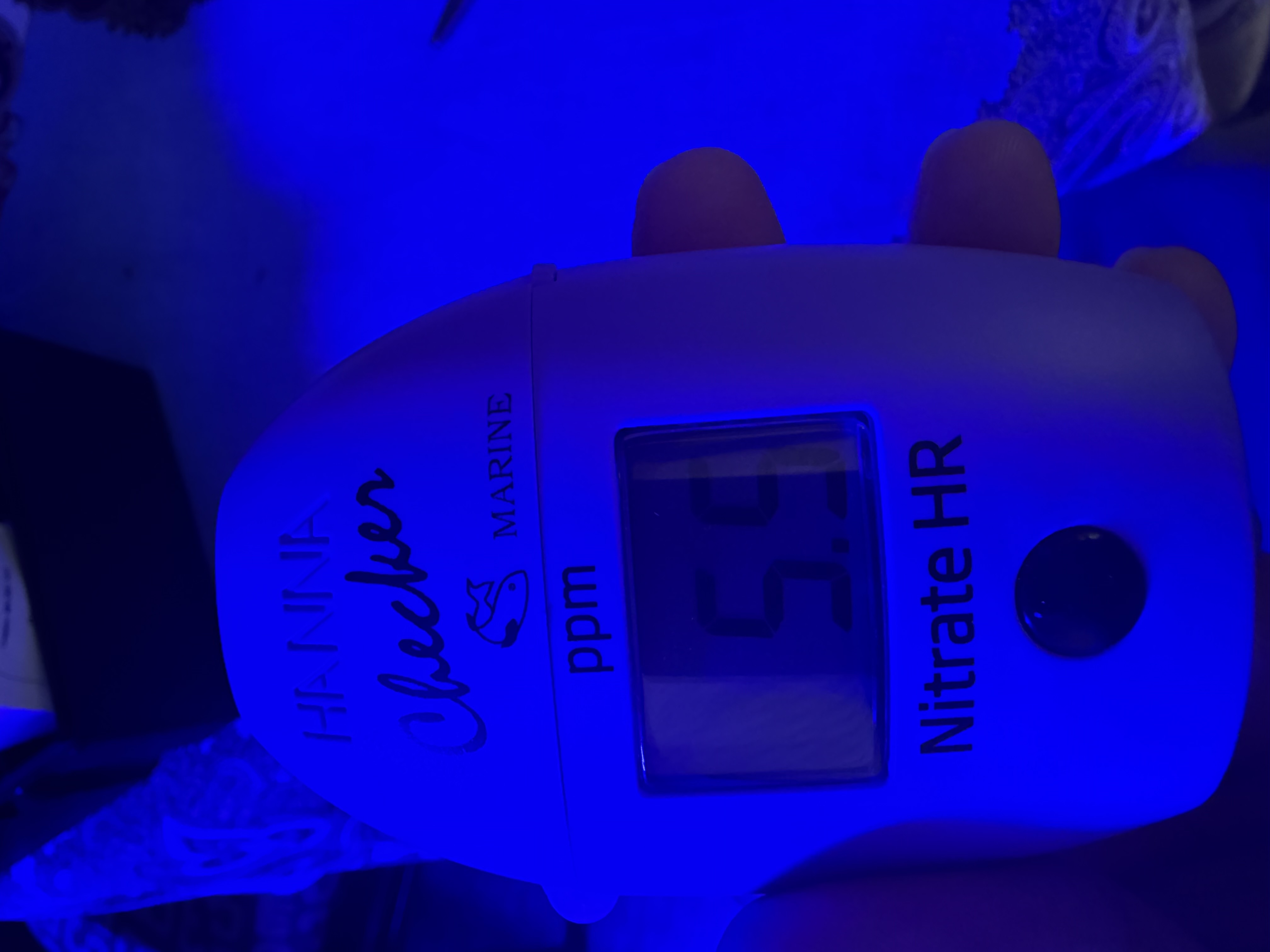
Can you post up your parameters?
@WILMER
20d
 @WILMER
20d
My phosphates are at 0.03
@WILMER
20d
Non ho fatto un cambio d'acqua da quasi un mese
Haven’t done a water change close to a month
@wcj_ink
20d
Non sono sicuro di quanto sia vecchia la tua vasca, ma se è nuova potresti dover aspettare che passi la brutta fase, ma i WC sono fondamentali; anche se i tuoi parametri sono a posto, potresti avere carenza di altri oligoelementi nell'acqua che controllano le infestazioni. Io farei 3 x 10% cambi d'acqua ogni 4 giorni, aspirando via il più possibile dal substrato, e poi tornerei ai miei normali cambi d'acqua settimanali del 20%. Se non cambia nulla, valuterei altre opzioni, ma per la mia esperienza cambi d'acqua programmati con un buon sistema rodi risolvono quasi ogni problema
Bot sure how old your tank is but if it’s new then you might have to wait out the ugly stage but WCs are key, even if your parameters are in check you may be lacking other trace minerals in your water that control outbreaks, I would do 3 x 10% water changes every 4 days while siphoning out as much I can from the substrate and then go back to my regular 20% weekly water changes. If that doesn’t change anything I would look into other options but in my experience scheduled water changes with a good rodi system will fix almost any problem
@WILMER
20d
Quindi una vasca di circa 3-4 anni, facevo un cambio d'acqua settimanale e poi ho mollato e non sono stato costante. Poi ho iniziato a inseguire i numeri, quindi se faccio i cambi d'acqua pesanti, ogni quanto devo fare i cambi d'acqua e di quanto per un 32 AIO.
So about a 3-4 year old tank, I was doing a weekly water change and then I fell off and wasn’t consistent. Then I started chasing numbers, so if I do the heavy water changes how often do I do water changes and how much for a 32 AIO.
@WILMER
20d
Perché quello che ho notato anche io è che stavo togliendo tutti i miei nitrati con il mio cambio d'acqua settimanale
Because what I also noticed was I was stripping all my nitrates from my weekly water change
@wcj_ink
20d
Se allenti coi wc, è una discesa e inseguire i valori ti farà impazzire e ti farà sprecare soldi in prodotti che non ti servono. Ok, quindi adesso abbiamo una vasca dello stesso volume, io ho appena ricominciato l'hobby con un 32 biocube… quindi i miei cambi d'acqua mi tolgono anche i nitrati, così li integro con una dose giornaliera di brightwells neonitro. Al momento sto facendo cambi d'acqua ogni settimana e doso 5ml di neonitro al giorno, ogni vasca è diversa quindi continua a controllare i nitrati ogni giorno finché non arrivi al dosaggio giornaliero che vuoi.
Once you slack on wcs it’s a downhill slope and chasing numbers will drive you insane and waste money on products you don’t need. Okay so we have the same volume tank rn I just started back up into the hobby with a 32 biocube…so my water changes strip my nitrates away as well so i supplement that with a daily dose of brightwells neonitro. Im currently doing water changes every week and dose 5ml of neonitro daily, every tank is different so keep testing your nitrates daily until you reach your desired daily dosage.
@WILMER
20d
Fai un cambio d'acqua del 10% ogni settimana?
You do a 10% water change weekly?
@wcj_ink
20d
Sì, faccio cambi d'acqua da 5g ogni settimana e un cambio d'acqua da 10g ogni mese, cioè ogni 4ª volta
Yes I do, 5g water changes every week and 10g water change every month which is every 4th time
@WILMER
20d
È interessante, perché? Il cambio d'acqua da 10g
That’s interesting why’s that? The 10g water change
@wcj_ink
20d
Mah, è solo quello che faccio 🤣 a dirti la verità andrà benissimo con i wc da 5g ogni settimana
Idk it’s just what I do 🤣 to tell you the truth it will be fine with the 5g wcs weekly
@WILMER
20d
Grazie per l'aiuto. Ti farò sapere come va la mia vasca, apprezzo davvero tutto l'aiuto
Thanks for the help. I’ll let you know how my tanks is doing appreciate all the help
@wcj_ink
20d
Certo amico! Tieni solo una manutenzione regolare e andrai alla grande, l'ho imparato a mie spese. In bocca al lupo!!
Ofc man! Just keep that regular maintenance up and you’ll be good, I learned that lesson the hard way. Good luck with it!!
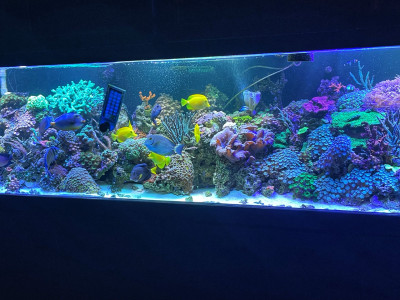
Vuoi che il tuo flusso sia appena sufficiente da spostare leggermente la sabbia per creare una piccola conca, e poi il passo successivo sarebbe il cleanup crew
You want your flow just enough that it slightly blows the sand to make a small pocket and next would be cleanup crew
 @vetteguy53081
13d
Le diatomee sono un'alga bruna che di solito compare in una vasca che ha appena completato il ciclo, ma possono comparire anche in una vasca reef già avviata e sembrano brutte, ma nella maggior parte dei casi sono innocue e si nutrono principalmente di silicati, oltre che di composti organici disciolti, fosfati e nitrati. L'acqua di rubinetto può contenere silicati ed è un buon modo per avere una fioritura se la usi per preparare il sale o per sostituire l'acqua evaporata dalla vasca. Usare un'unità RODI aiuta, anche se puoi comunque avere diatomee con un'unità RODI se la cartuccia che rimuove i silicati è scaduta. Le diatomee sono di solito innocue e possono essere eliminate una volta che la loro fonte di cibo è sparita. Per infestazioni importanti potresti prendere in considerazione un blackout di tre giorni. Si eliminano facilmente dal vetro con una mag float, mentre un turkey baster o uno spazzolino da denti possono raggiungere altre aree della vasca. Preparati al fatto che possano ristabilirsi rapidamente dopo la pulizia, perché è probabile che possano ricomparire e ricrescere. Per prevenirne il ritorno, fai cambi d'acqua regolari, tieni pulito il fondo, non sovralimentare la vasca, assicurati che il tuo schiumatoio funzioni a un livello ottimale e tieni puliti regolarmente filter socks e spugne. Alcuni organismi pulitori che aiutano a controllarle sono: Cerith snails, Nerite snails e Trochus snails, e anche le Astraea snails sono efficaci nel rimuovere le diatomee.
Diatoms are a brown algae that typically appear in a tank which has just completed its cycle but they can also appear in an established reef tank and looks ugly but in most cases are harmless and feed mainly off of silicates as well as dissolved organic compounds, phosphate and nitrates. Tap water can contain silicates and is a good way to get a bloom if you use it to mix salt or to replace water that evaporated from the tank. Using an RODI unit helps, although you can still get diatoms with an RODI unit if the cartridge that removes silicates becomes expired. Diatoms are typically harmless and can be beaten once their food source is gone. For major outbreaks you may want to consider a three day blackout. They are easily wiped from the glass with a mag float, a turkey baster or a toothbrush can cover other areas of the tank. Be prepared for them to re-establish themselves quickly after a cleaning as they are likely to be able to reappear and have re-growth rates. To prevent their return, do regular water changes, keep the bedding clean, don’t overfeed tank, ensure your skimmer is running at an optimal level and keep filter socks and sponges clean on a regular basis. Some cleaner crew to help control it are : Cerith snails, Nerite snails and Trochus snails and also Astraea snails are effective at removing diatoms.

Sembra che potrebbero essere diatomee, soprattutto se la vasca è ancora nuova. Controllerei prima i livelli di nitrati e fosfati e eviterei di fare troppi cambiamenti tutti insieme.
Looks like it could be diatoms, especially if the tank is still new. I’d check nitrate and phosphate levels first and avoid making too many changes at once.
Accedi per partecipare alla conversazione.

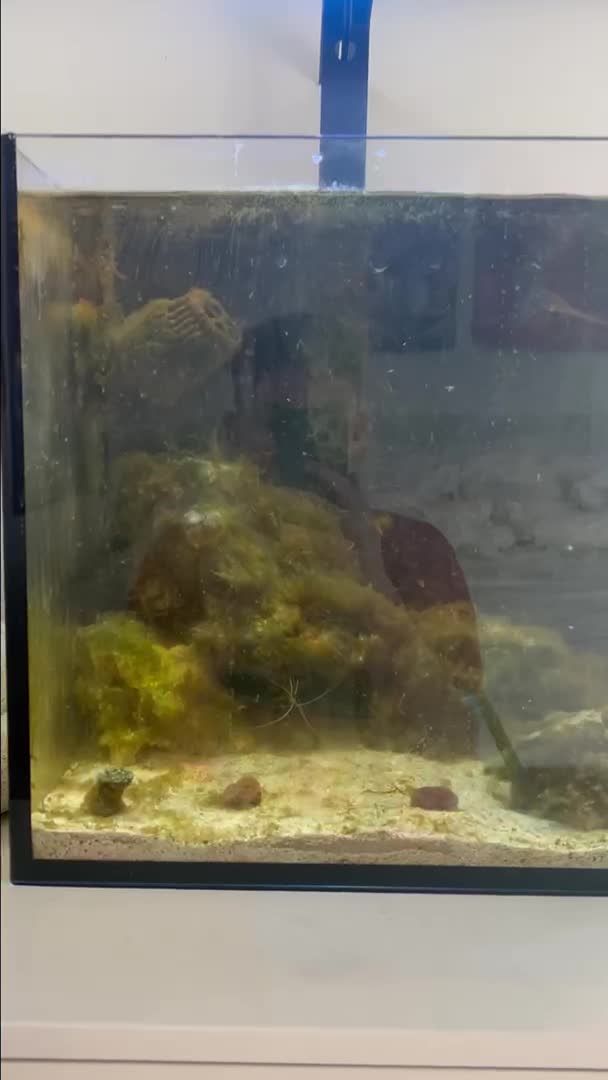
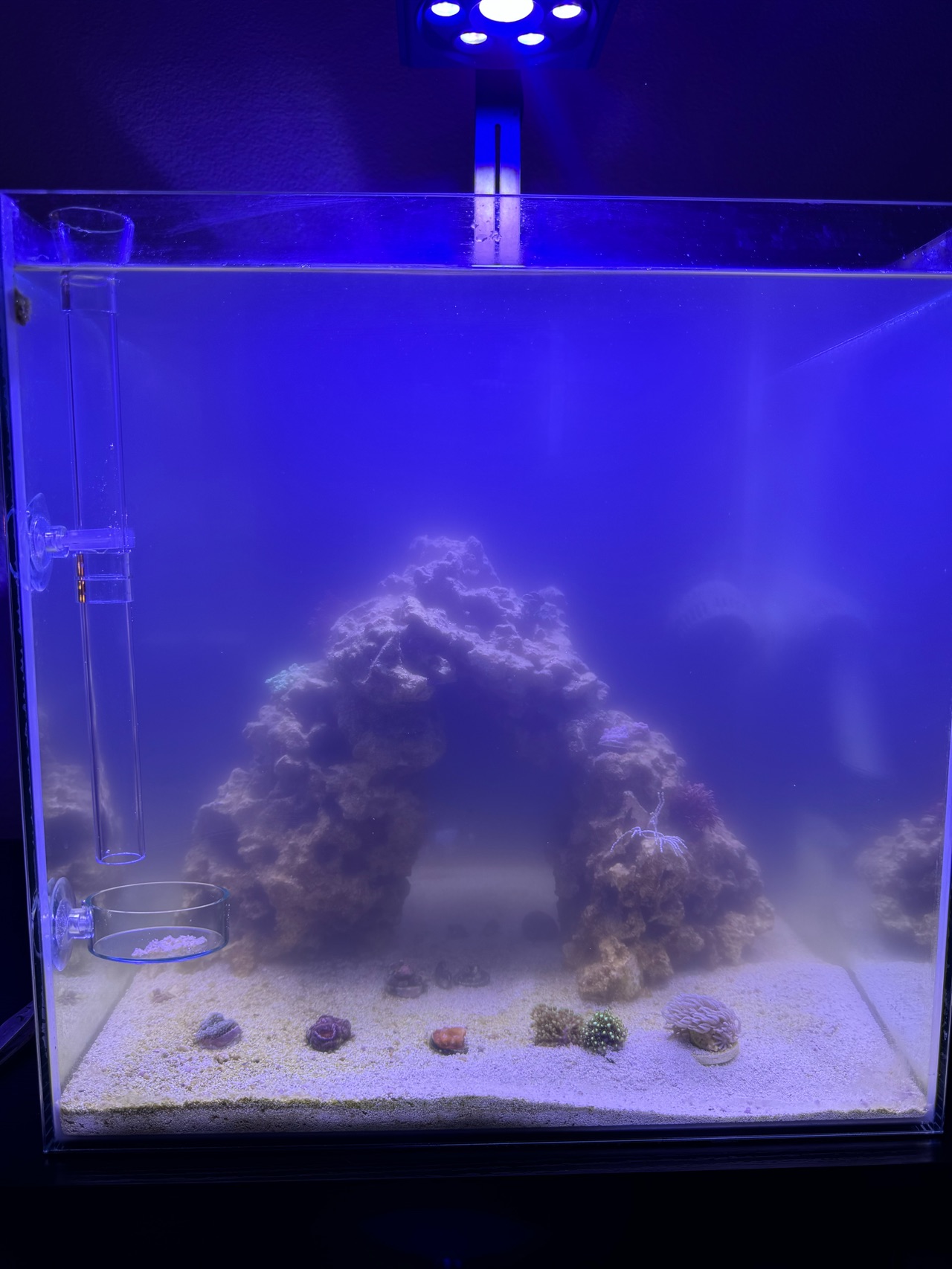





Potrebbe essere più delle diatomee
Could be more than diatoms
Cos’altro potrebbe essere? Come posso scoprirlo
What else could it be? How can I find out
Potrebbero essere anche dinos o ciano. Il modo migliore è un microscopio economico se puoi, oppure posta una foto ravvicinata
Could be dinos or cyano too. Best way is a cheap microscope if you can, or post a close