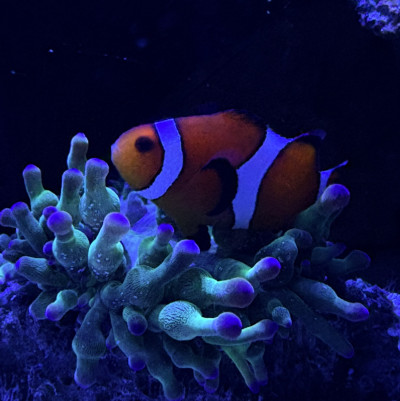
🐠🪸 Meu Primeiro Aquário Marinho – Projeto Reef DIY
Meu primeiro aquário marinho, já funcionando há 6 meses! Estou aprendendo tudo sozinho e projetei e montei pessoalmente o sump, modifiquei o gabinete e instalei todo o sistema elétrico sozinho, incluindo iluminação interna, três tomadas protegidas, disjuntores e um monitor de consumo de energia.
O equipamento inclui duas luzes AI Hydra 32 HD, um skimmer Bubble Magus, bombas Jebao, um aquecedor de 100 W, refugium, bubble trap, TPA automática DIY e sensores, além de 35–40 kg de live rock.
Atualmente abriga 16–17 peixes, caranguejos, um camarão, um ouriço-do-mar e caracóis.
🌊 Meu sonho é criar um reef lindo cheio de corais coloridos. Ainda estou aprendendo, então qualquer conselho é bem-vindo! 🙏🪸
🐠🪸 My First Marine Aquarium – DIY Reef Project
My first marine aquarium, now running for 6 months! I’m learning everything on my own and personally designed and built the sump, modified the cabinet, and installed the entire electrical system myself, including internal lighting, three protected power outlets, circuit breakers and an electricity consumption monitor.
Equipment includes two AI Hydra 32 HD lights, a Bubble Magus skimmer, Jebao pumps, a 100 W heater, refugium, bubble trap, DIY automatic top-off and sensors, plus 35–40 kg of live rock.
Currently home to 16–17 fish, crabs, a shrimp, a sea urchin and snails.
🌊 My dream is to create a beautiful reef full of colorful corals. I’m still learning, so any advice is welcome! 🙏🪸
Comentários
Entre para deixar um comentário
Nenhum comentário ainda
Seja o primeiro a começar a conversa.

Quantos galões tem o seu aquário? Eu tenho um breeder de 60g com 7 peixes pequenos, 2 ouriços, alguns caracóis, um camarão limpador, uma estrela-do-mar que cata a areia, uma lesma-do-mar, uma anêmona bubble tip que não parece estar muito bem, e vários corais moles, alguns indo bem e outros nem tanto. Um amigo me disse para não colocar mais peixes porque já estou com excesso de habitantes. Estou?
How many gallons is your tank? I have a 60g breeder with 7 smaller fish, 2 urchins, a few snails, a cleaner shrimp, a sand sifting star, a sea slug, a bubble tip anemone that doesn’t look like it feels too good, and a number of soft corals, some doing well and some not so much. A friend told me not to ad anymore fish as I’m over stocked as it is. Am I?
@AngyReef
16d
Oi! Tenho um aquário de 230 litros (cerca de 61 galões americanos) e um sump de 100 litros (cerca de 26 galões americanos). Tenho cerca de 16 peixes, além de: * 1 Bubble Tip Anemone (Entacmaea quadricolor) * 1 estrela-do-mar * 2 camarões * 1 caranguejo * 2 ermitões * 1 ouriço-do-mar * Vários corais moles e alguns corais LPS/SPS. Ainda sou iniciante no hobby, mas todos os meus peixes estão bem, e meus corais também! Anêmonas são as mais difíceis de manter. Já perdi duas, porque são bem sensíveis. Já perdi alguns corais por falta de experiência, mas estou aprendendo aos poucos. Você precisa manter os níveis de magnésio, cálcio, salinidade e fosfato sob controle. Esses são alguns dos primeiros parâmetros que podem causar estresse em corais e anêmonas se estiverem fora de equilíbrio.
Hi! I have a 230-litre aquarium (about 61 US gallons) and a 100-litre sump (about 26 US gallons). I have around 16 fish, plus: * 1 Bubble Tip Anemone (Entacmaea quadricolor) * 1 starfish * 2 shrimp * 1 crab * 2 hermit crabs * 1 sea urchin * Several soft corals and a few LPS/SPS corals. I’m still a beginner in the hobby, but all my fish are doing well, and so are my corals! Anemones are the most difficult to keep. I’ve already lost two, as they are really sensitive. I’ve lost a few corals due to my lack of experience, but I’m gradually learning. You need to keep magnesium, calcium, salinity, and phosphate levels under control. These are some of the first parameters that can cause stress to corals and anemones if they are out of balance.
Obrigado. Eu também sou iniciante. Meu aquário está montado e funcionando há 11 meses. Tenho certeza de que alguns dos meus parâmetros estão fora. Todos os peixes estão indo muito bem. Alguns corais estão bem, mas outros estão claramente estressados. Eu não tenho sump, então tudo é uma montagem simples. Aprendendo dia após dia. Meu amigo é perfeccionista e se considera um expert em água salgada, então 🤷♀️. Vou ganhar algumas e perder outras, é a natureza do hobby. Você aprende algo novo sobre isso todos os dias.
Thank you. I am also a beginner. My tank has been up and running for 11 months. I’m sure some of my parameters are off. All fish are doing great. Some corals are doing good but some are obviously stressed. I don’t have a sump so everything is a simple set up. Learning day by day. My friend is a perfectionist and considers himself an expert on saltwater so 🤷♀️. I will win some and lose some, it’s the nature of the hobby. You learn something new about it everyday.
@AngyReef
16d
No começo eu também não tinha sump. Eu tinha um skimmer interno da Tunze. Mas aí eu percebi como era difícil manter um aquário sem sump. Decidi trocar o móvel mantendo o mesmo aquário, sem fazer nenhum furo no vidro. Usei uma Tunze Overflow Box 1074/2 para drenar a água do aquário para o sump, e uma bomba de retorno para mandar a água de volta para o aquário. Foi um divisor de águas! Fica muito mais fácil manter os parâmetros da água estáveis, e você pode usar mídia para remover fosfato em um reator, o que é muito mais difícil de gerenciar sem sump. Eu recomendaria considerar essa modificação no futuro. Se você não quiser trocar o aquário, pode usar uma overflow box externa como a minha sem precisar fazer nenhum furo no aquário. ☺️✌️
I didn’t have a sump at first either. I had an internal Tunze protein skimmer. But then I realized how difficult it was to manage an aquarium without a sump. I decided to change the cabinet while keeping the same aquarium, without drilling any holes in the glass. I used a Tunze Overflow Box 1074/2 to drain the water from the aquarium into the sump, and a return pump to pump the water back into the tank. It was a game changer! It’s much easier to keep the water parameters stable, and you can use phosphate-removing media in a reactor, which is much more difficult to manage without a sump. I’d recommend considering this modification in the future. If you don’t want to replace your aquarium, you can use an external overflow box like mine without having to drill any holes in the tank. ☺️✌️
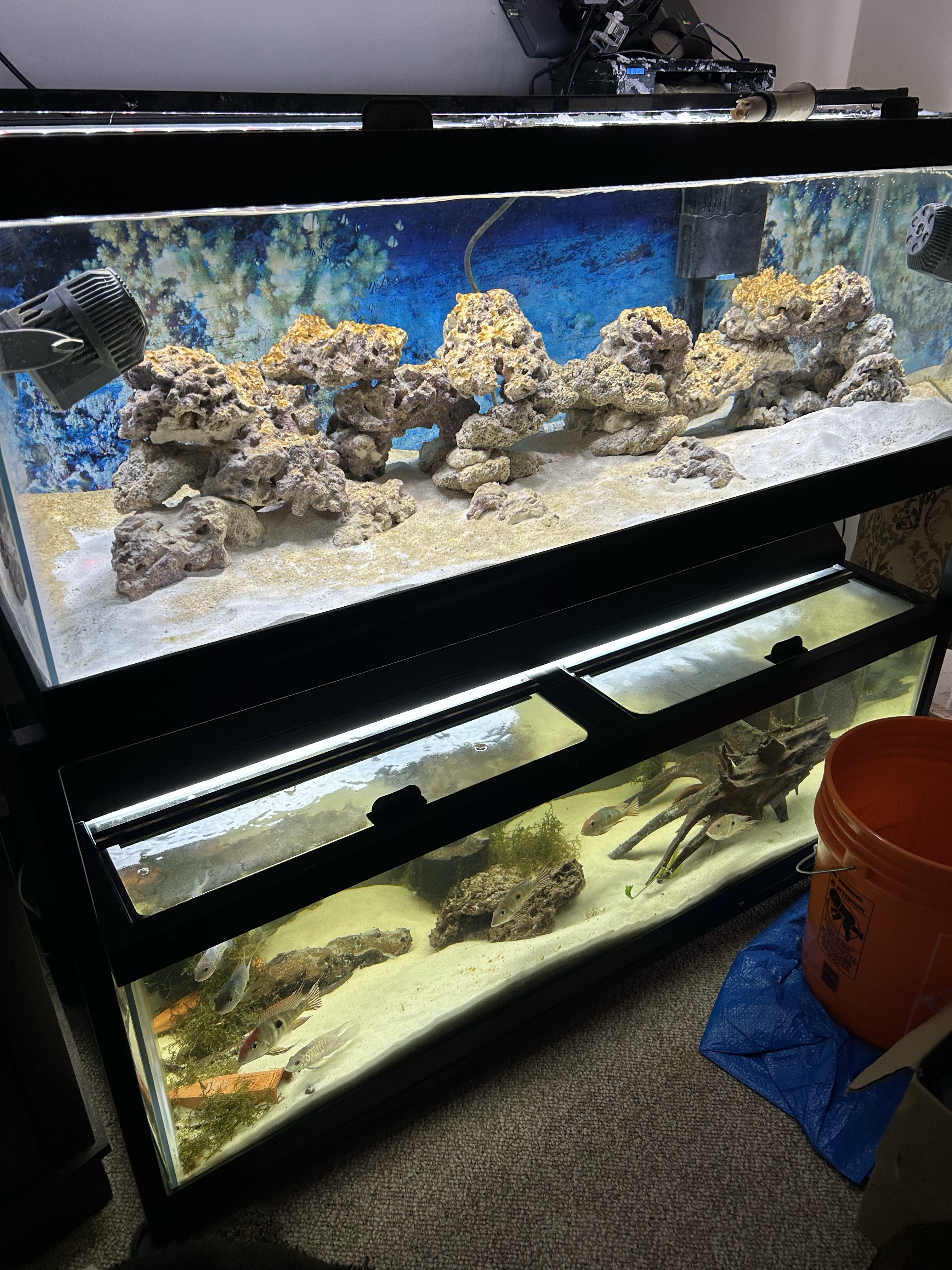
Comprei um sump usado de 30g, mas preciso furar meu aquário. A montagem que você tem é legal, mas já ouvi dizer que essa montagem pode inundar se faltar energia. Também não tenho certeza de como eu montaria, já que meu aquário é um conjunto empilhado de dois breeders de 60g. A foto é de antes de eu colocar qualquer coisa nele. O aquário de cima é água salgada, o de baixo é água doce.
I bought a 30g used sump but need to get my tank drilled. The set up you have is nice but I’ve heard that that set up can flood if the power goes out. Also not sure how I’d set it up since my tank is a stack set of two 60g breeders. The pic is before I had anything in it. Too tank is saltwater, bottom tank is freshwater.
@AngyReef
15d
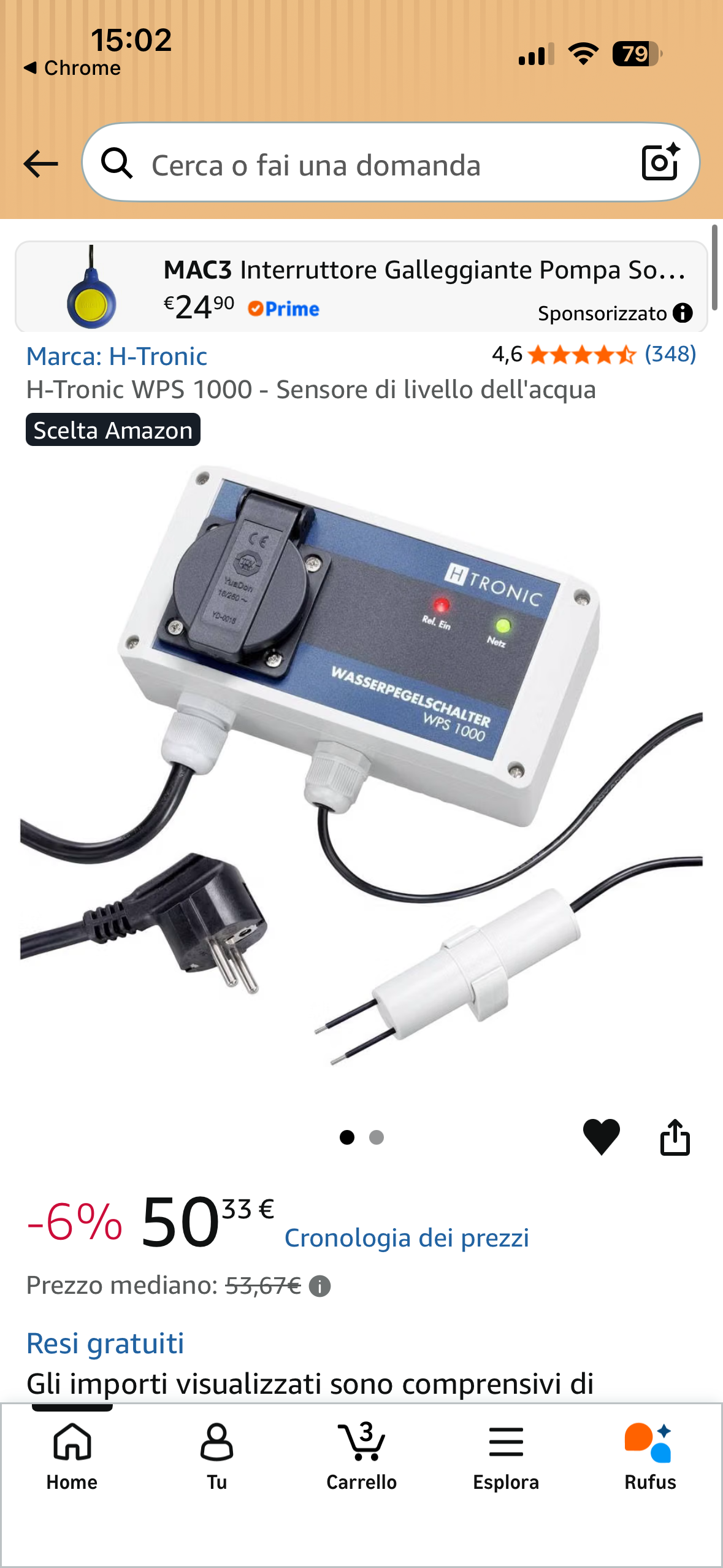
Nada de inundar a casa! 😂 Se acabar a energia, a bomba de retorno desliga. A água continua drenando para o sump, mas há capacidade extra suficiente para coletar o restante da água até que o nível de água no aquário principal baixe o suficiente para o overflow parar de drenar. Em caso de falta de energia, o nível da água no sump sobe no máximo 4 cm. (Já testei isso.) No entanto, se o overflow por algum motivo entupir e parar de drenar água para o sump, a bomba de retorno continuaria bombeando água para o aquário principal, criando risco de inundação. Mas, com a minha montagem, isso é praticamente impossível porque instalei um sensor de boia chamado WPS 1000. Quando o sensor entra em contato com a água, ele aciona um circuito elétrico que corta imediatamente a energia da bomba de retorno. A bomba só volta a ligar quando o nível da água cai abaixo dos dois contatos do sensor. Projetei todo o sistema para proteger tanto contra falta de energia quanto contra entupimentos. 🤣 Agora posso dormir tranquilo! 😎
No flooding the house! 😂 If the power goes out, the return pump shuts off. Water continues to drain into the sump, but there is enough spare capacity to collect the remaining water until the water level in the main tank drops low enough for the overflow to stop draining. In the event of a power outage, the water level in the sump rises by a maximum of 4 cm. (I’ve already tested it.) However, if the overflow somehow gets clogged and stops draining water into the sump, the return pump would continue pumping water into the main tank, creating a risk of flooding. But with my setup, that’s practically impossible because I’ve installed a float switch called the WPS 1000. When the sensor comes into contact with water, it triggers an electrical circuit that immediately cuts power to the return pump. The pump won’t start again until the water level drops below the sensor’s two contacts. I’ve designed the whole system to protect against both power outages and blockages. 🤣 Now I can sleep peacefully! 😎
Uau! Montagem incrível. Talvez eu tenha que dar uma olhada nisso. Valeu. 😊
Wow! Sweet setup. Might have to look into that. Thanks. 😊
Entre para participar da conversa.





Setup DIY seriamente impressionante!
Seriously impressive DIY setup!