10 Common Reef Tank Mistakes Beginners Make (And How to Avoid Them)
New to reef keeping? Learn the most common mistakes that doom beginner tanks and how to set yourself up for success from day one.
Quick answer
Beginner reef tanks usually fail from a few avoidable mistakes: skipping the nitrogen cycle, stocking too fast, choosing hard fish first, ignoring water quality, and chasing numbers instead of stability. Wait 4 to 8 weeks to cycle, add livestock slowly, quarantine new arrivals, test weekly, and favor steady parameters over perfect ones.
Starting a reef tank is exciting, but it's also one of the most challenging hobbies in the aquarium world. The good news? Most failures come from the same handful of mistakes—and they're all avoidable if you know what to watch for.
We've compiled the most common beginner errors we see, along with practical advice on how to sidestep each one. Whether you're just starting or struggling with a tank that won't cooperate, this guide will help you get on track.
1. Skipping the Nitrogen Cycle
This is the number one tank killer. New aquarium owners often add fish and corals the same week they fill the tank with water, not realizing that beneficial bacteria need weeks to establish.
What happens: Ammonia and nitrite spike to toxic levels, killing livestock in a matter of days.
The fix: Be patient. A proper cycle takes 4-8 weeks. Use a bacterial starter, add an ammonia source (pure ammonia or fish food), and test regularly until ammonia and nitrite both read zero consistently. Only then is your tank ready for its first inhabitants.
2. Adding Too Much, Too Fast
Once the cycle completes, the temptation to stock up is overwhelming. But adding multiple fish and corals at once overwhelms your tank's biological filtration.
What happens: Mini-cycles occur as bacteria struggle to catch up, stressing everything in the tank.
The fix: Add one or two specimens at a time, then wait 2-3 weeks before adding more. This gives your biological filter time to adjust. Track your additions and parameters with the ReefBay app to avoid overcrowding.
3. Choosing the Wrong First Fish
That gorgeous moorish idol or powder blue tang catches your eye, but these are expert-level fish that rarely survive in beginner tanks.
What happens: Difficult fish die quickly, often spreading disease to hardier tank mates in the process.
The fix: Start with beginner-friendly fish like clownfish, chromis, or gobies. Once your tank is stable for 6+ months, you can consider more challenging species.
4. Ignoring Water Quality
Many beginners never buy a test kit, or test once during setup and then forget about it. In reef tanks, water quality isn't just important—it's everything.
What happens: Parameters slowly drift out of range, causing mysterious coral deaths and algae outbreaks.
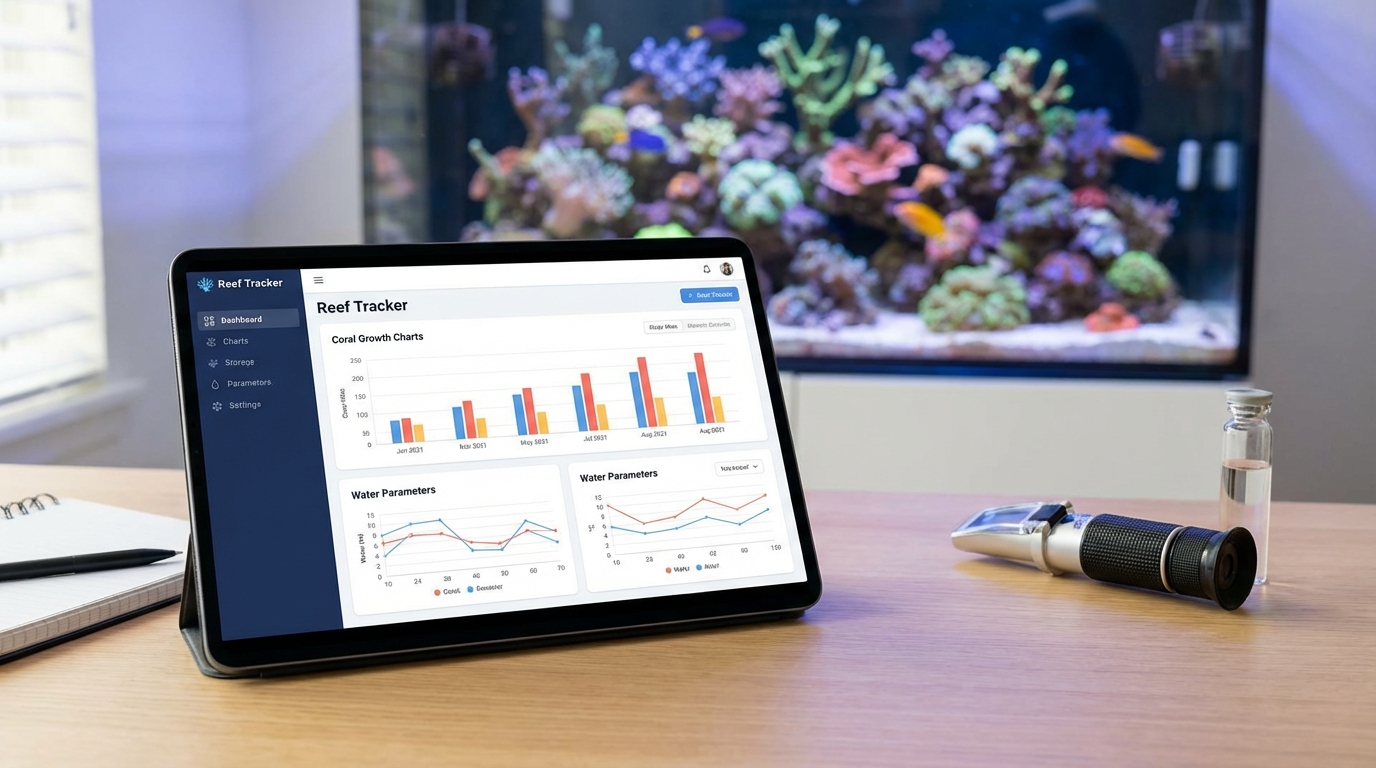
The fix: Test weekly at minimum. Monitor alkalinity, calcium, magnesium, nitrate, and phosphate. Log your results to spot trends before they become problems. The ReefBay app makes this easy with automatic trend tracking and alerts.
5. Poor Equipment Choices
Trying to save money by buying the cheapest equipment often costs more in the long run when it fails or performs poorly.
What happens: Cheap heaters malfunction (killing everything overnight), weak lights can't support corals, and undersized skimmers can't keep up with bioload.
The fix: Invest in quality where it counts: heaters, lighting, and protein skimmers. A $30 heater failure can kill $1,000+ worth of livestock. Buy the best you can afford for critical equipment.
6. Insufficient Flow
Beginners often underestimate how much water movement a reef tank needs. Poor flow leads to dead spots where detritus accumulates and algae thrives.
What happens: Cyano bacteria blooms, corals don't thrive, and debris settles everywhere.
The fix: Aim for 20-40x tank turnover from your powerheads. Position them to create random, chaotic flow throughout the tank. Adjust placement until there are no dead spots.
7. Overfeeding
It's easy to overfeed when you love watching your fish eat. But excess food decays, driving nutrient levels sky-high.
What happens: Nitrate and phosphate levels rise, fueling nuisance algae and harming corals.
The fix: Feed only what your fish can consume in 2-3 minutes. In most tanks, once daily is plenty. Use high-quality foods and consider target-feeding corals rather than broadcast feeding.
8. Not Quarantining New Additions
Skipping quarantine is like playing Russian roulette with your tank. One infected fish can wipe out everything you've built.
What happens: Ich, velvet, or other diseases spread through your entire system. Corals can bring pests like flatworms or nudibranches.
The fix: Set up a simple quarantine tank (even a 10-gallon works). Quarantine all new fish for 30+ days and dip all new corals before adding them to your display tank.
9. Chasing Numbers Instead of Stability
New reefers often panic when their alkalinity reads 7.8 instead of 8.5 and start dosing aggressively to "fix" it. This usually makes things worse.
What happens: Wild parameter swings stress corals far more than slightly off values. Rapid pH or alkalinity changes can kill corals in hours.
The fix: Prioritize stability over perfect numbers. If your alkalinity is consistently at 7.5 and your corals are thriving, don't change it. Make any adjustments slowly—no more than 0.5 dKH per day for alkalinity.
10. Giving Up Too Soon
Reef keeping has a steep learning curve. Many beginners quit after their first major setback, not realizing that almost every experienced reefer has had similar disasters.
What happens: A crash or disease outbreak convinces you the hobby isn't for you.
The fix: Learn from failures. Join communities, ask questions, and understand that setbacks are part of the journey. Most successful reefers have killed their share of livestock along the way—the key is learning what went wrong and improving.
Setting Yourself Up for Success
Reef keeping doesn't have to be frustrating. By avoiding these common mistakes, you'll give yourself the best chance at building a thriving tank:
- Be patient – Good things take time in reef tanks
- Test regularly – Data helps you catch problems early
- Start simple – Hardy fish and easy corals build confidence
- Invest wisely – Quality equipment pays for itself
- Keep learning – The hobby evolves and so should you
Ready to stock your tank the right way? Browse ReefBay's marketplace for livestock from trusted sellers, and use the ReefBay app to track your tank's progress. Happy reefing!