First 90 Days of a Reef Tank: What to Expect and What Not to Panic About
A practical week-by-week roadmap for new reef keepers: what is normal, what is risky, and exactly how to stay stable through the first 90 days.
Quick answer
The first 90 days of a reef tank are mostly about patience and stability: keep salinity at 1.025 to 1.026, run lights low or off in week 1, expect diatoms and nuisance algae in weeks 2 to 6, and add livestock slowly only after repeat stable tests. Avoid panic dosing and overfeeding.
The first 90 days in a reef tank are where most beginners either build confidence or burn out. The good news: most of what looks scary early on is normal. This article breaks down the four early phases, where the source video is right, what beginners still miss, and how to avoid expensive overreactions.
Source: ReefBay YouTube video, First 90 Days of a New Reef Tank: What to Expect.
What the source gets right
- Week 1 is deceptively clean. Crystal-clear water does not mean biologically mature rock.
- Weeks 2-6 are usually ugly. Diatoms and nuisance algae are common while microbial balance forms.
- Stability beats speed. Overcorrecting with random chemicals usually prolongs problems.
- Growth comes later. Coral growth and coralline often appear after consistency, not quick fixes.
What is missing or risky
- No concrete test cadence: beginners need specific checkpoints for ammonia, nitrite, nitrate, and salinity.
- Underspecified feeding risk: overfeeding in month one can explode algae pressure.
- No clear “when to add coral” gate: wait for trend stability, not a single “good” test day.
90-day phase guide with actions
Phase 1 (Days 1-7): Settle and monitor
- Target salinity: 1.025-1.026 and keep it stable.
- Keep lights low/off while bacteria establish.
- Do not rush fish/coral additions.
Phase 2 (Weeks 2-6): Ugly stage management
- Expect brown film and possible green algae.
- Run conservative photo period and avoid panic dosing.
- Keep weekly water changes consistent.
Phase 3 (Weeks 6-10): Stabilization
- Track how quickly algae returns after cleaning.
- Add livestock slowly only after repeat stable tests.
- Focus on consistency, not perfect numbers.
Phase 4 (Week 12+): Early growth
- Look for better polyp extension and early coralline.
- Adjust maintenance based on trend data, not guesses.
Beginner checklist (copy this)
- Log salinity and temperature daily for the first month.
- Test ammonia/nitrite/nitrate on a schedule (same days each week).
- Keep lighting conservative during ugly-stage spikes.
- Perform weekly water changes without skipping.
- Feed lightly and remove uneaten food.
- Add livestock one step at a time.
- Review trend data weekly before making adjustments.
ReefBay workflow that makes this easier
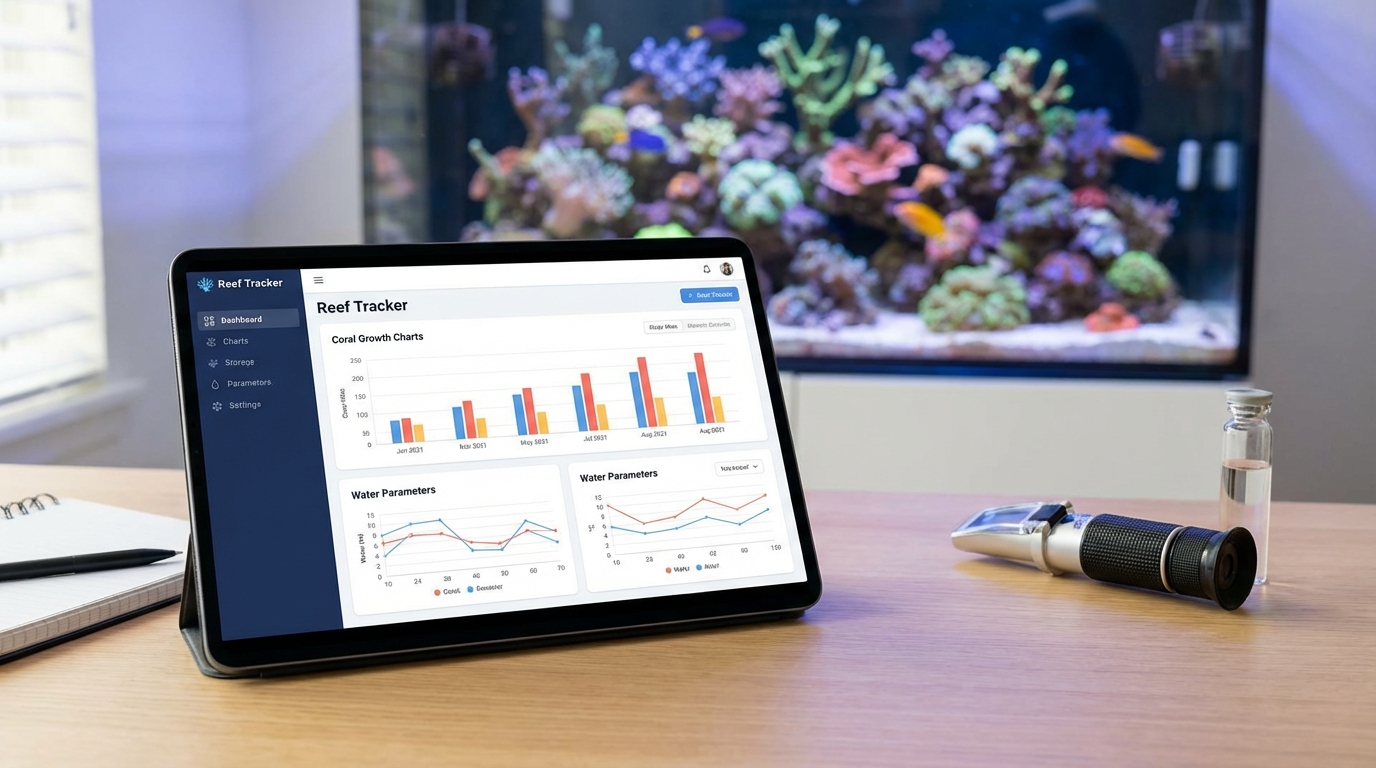
Use ReefBay to stay disciplined: track parameters, compare trends, and ask AI-guided husbandry questions before making major changes. You can also source beginner-friendly livestock through the ReefBay marketplace and keep planning inside the ReefBay app.
Bottom line
The first 90 days are less about “winning fast” and more about letting biology mature while you stay consistent. If you avoid panic moves, your tank will usually reward patience.