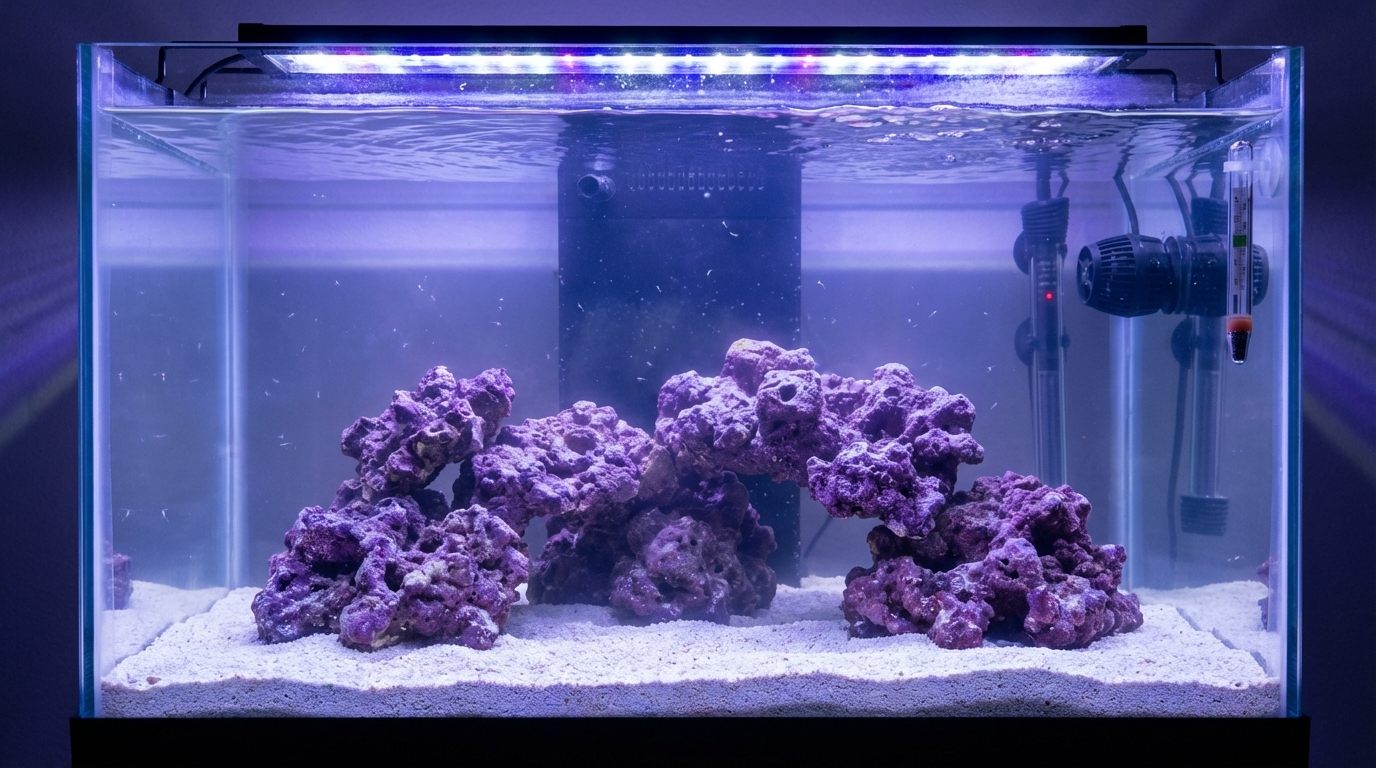
Understanding the Nitrogen Cycle in Your Reef Tank: A Beginner's Guide
Learn how the nitrogen cycle works in saltwater aquariums, why it's critical for coral and fish health, and how to properly cycle a new reef tank. A complete guide for beginners.
Quick answer
The nitrogen cycle in a reef tank is the process that turns toxic ammonia from fish waste and decaying food into nitrite, then into less harmful nitrate through beneficial bacteria. A new tank is typically cycled in 4 to 8 weeks, and it is ready when ammonia and nitrite read 0 ppm and nitrate is present.
The nitrogen cycle is the single most important biological process to understand before starting a reef tank. It's the invisible foundation that keeps your corals, fish, and invertebrates alive. Get it wrong, and you'll face constant battles with ammonia spikes, fish deaths, and coral losses. Get it right, and you'll have a stable, thriving reef for years to come.
What Is the Nitrogen Cycle?
The nitrogen cycle is a biological process where beneficial bacteria convert toxic fish waste (ammonia) into less harmful compounds. In nature, this happens constantly in oceans, lakes, and rivers. In your reef tank, you need to cultivate these same bacteria to create a safe environment for your livestock.
Here's the simple version:
- Ammonia (NH₃) → Produced by fish waste, uneaten food, and decaying organic matter
- Nitrite (NO₂) → Bacteria convert ammonia to nitrite (still toxic)
- Nitrate (NO₃) → Different bacteria convert nitrite to nitrate (much less toxic)
Both ammonia and nitrite are extremely toxic to marine life even in tiny amounts. Nitrate is tolerated at higher levels but still needs to be managed.
The Bacteria That Make It Work
Ammonia-Oxidizing Bacteria
The first group of beneficial bacteria (primarily Nitrosomonas species) colonize your rock, sand, and filter media. They "eat" ammonia and produce nitrite as a byproduct. These bacteria need oxygen-rich water and surfaces to attach to.
Nitrite-Oxidizing Bacteria
The second group (primarily Nitrospira and Nitrobacter species) consume nitrite and convert it to nitrate. These typically establish a few weeks after the ammonia-oxidizers and complete the cycle.
How to Cycle a New Reef Tank
"Cycling" a tank means establishing these bacterial colonies before adding livestock. Here's how:
Method 1: Fishless Cycling (Recommended)
- Set up your tank with saltwater, live rock, sand, and equipment
- Add an ammonia source – pure ammonia drops, a piece of raw shrimp, or fish food
- Test regularly – You'll see ammonia spike, then nitrite spike, then both drop to zero while nitrate rises
- Wait for completion – When ammonia and nitrite read 0 ppm and nitrate is present, you're cycled
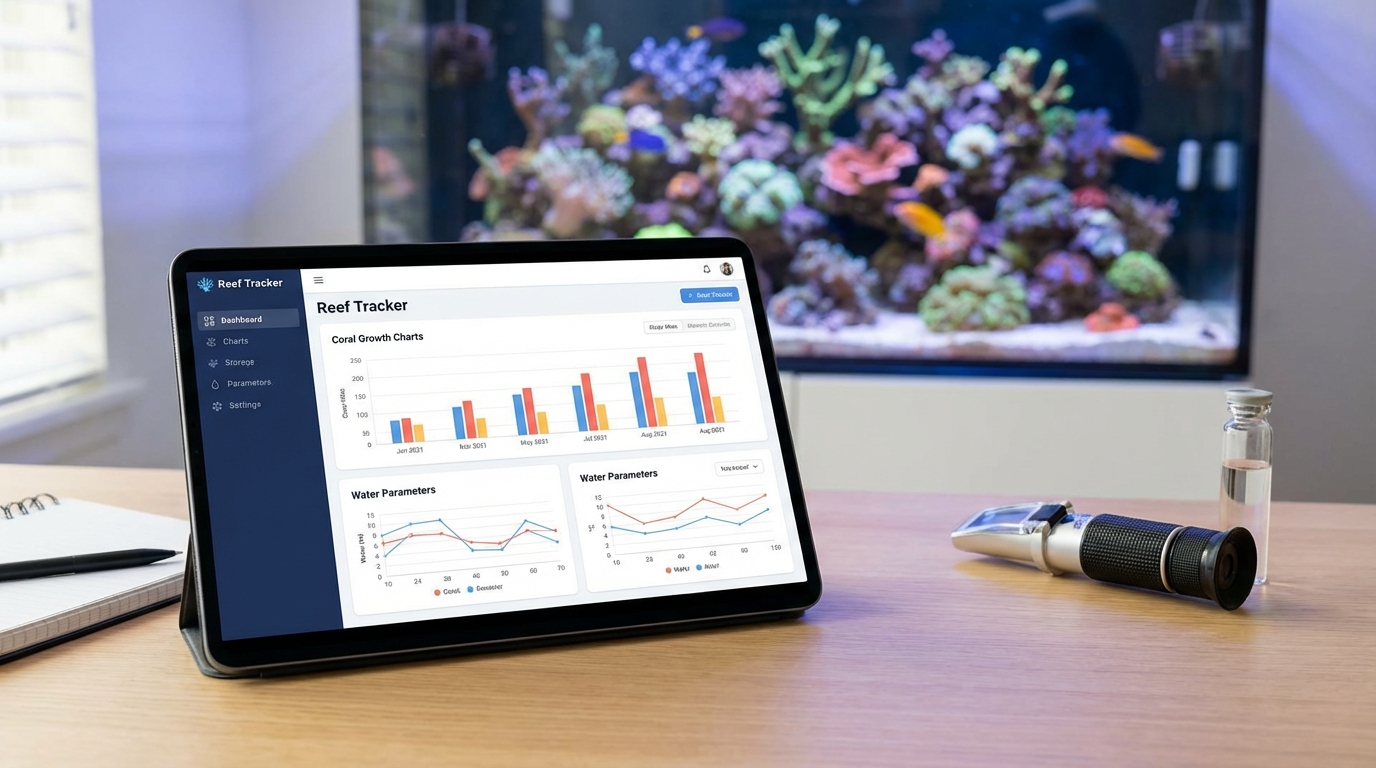
This process typically takes 4-8 weeks. Track your progress with the ReefBay app to visualize the cycle and know exactly when it's safe to add livestock.
Method 2: Live Rock and Bacteria
Quality live rock comes pre-colonized with beneficial bacteria. Adding bottled bacteria products (like Dr. Tim's or Brightwell Aquatics) can jumpstart the process. This can reduce cycling time to 2-4 weeks, but you still need to test and confirm completion.
Signs Your Tank Is Cycling
- Week 1-2: Ammonia rises (this is normal and expected)
- Week 2-3: Ammonia peaks, nitrite begins rising
- Week 3-4: Ammonia drops, nitrite peaks
- Week 4-6: Nitrite drops, nitrate accumulates
- Cycle complete: Ammonia 0, Nitrite 0, Nitrate present
What Happens If You Skip Cycling?
Adding fish or corals to an uncycled tank is one of the most common beginner mistakes. Here's what happens:
- Fish produce ammonia immediately upon introduction
- Without bacteria, ammonia builds up rapidly
- At just 0.5 ppm, fish begin showing stress
- At 1-2 ppm, gill damage and death occur within days
- Corals may survive longer but will brown out and eventually die
This is often called "New Tank Syndrome" and is completely preventable by properly cycling first.
Managing Nitrate Long-Term
Once cycled, your tank continuously produces nitrate. Unlike ammonia and nitrite, nitrate doesn't directly kill fish at moderate levels, but elevated nitrate (above 20-40 ppm for most reefs) can:
- Fuel nuisance algae growth
- Stress SPS corals
- Reduce coral coloration
- Inhibit coral growth
Ways to Control Nitrate
- Water changes – The most reliable method, replacing 10-20% weekly
- Refugiums – Growing chaetomorpha or other macroalgae exports nutrients
- Protein skimmers – Remove organics before they become nitrate
- Carbon dosing – Vodka or commercial products feed denitrifying bacteria
- Deep sand beds – Create anaerobic zones where denitrification occurs
Testing Is Essential
You cannot see ammonia, nitrite, or nitrate. The only way to know your levels is testing. Get a quality test kit (API or Salifert are popular choices) and test regularly:
- During cycling: Every 2-3 days
- First few months: Weekly
- Established tank: Every 1-2 weeks for nitrate; check ammonia/nitrite if livestock dies unexpectedly
Log your results in the ReefBay app to track trends over time. Watching your numbers helps you catch problems before they become disasters.
Common Mistakes to Avoid
- Adding fish too soon – Wait for the full cycle to complete
- Adding too many fish at once – Even a cycled tank can only handle gradual bioload increases
- Over-cleaning – Don't replace all filter media at once; you'll remove beneficial bacteria
- Trusting "instant" products blindly – They help but don't eliminate the need to test
- Ignoring die-off – If live rock arrives with dead material, it will cause an ammonia spike
Conclusion
The nitrogen cycle is the invisible engine that makes reef keeping possible. Patience during the initial cycle pays dividends for years—your livestock depends on the bacterial colonies you're cultivating. Take the time to do it right, test regularly, and you'll have a stable foundation for a thriving reef ecosystem.
Ready to start your reef journey? Browse live rock and cycling supplies on ReefBay, and download the ReefBay app to track your cycle from day one.