
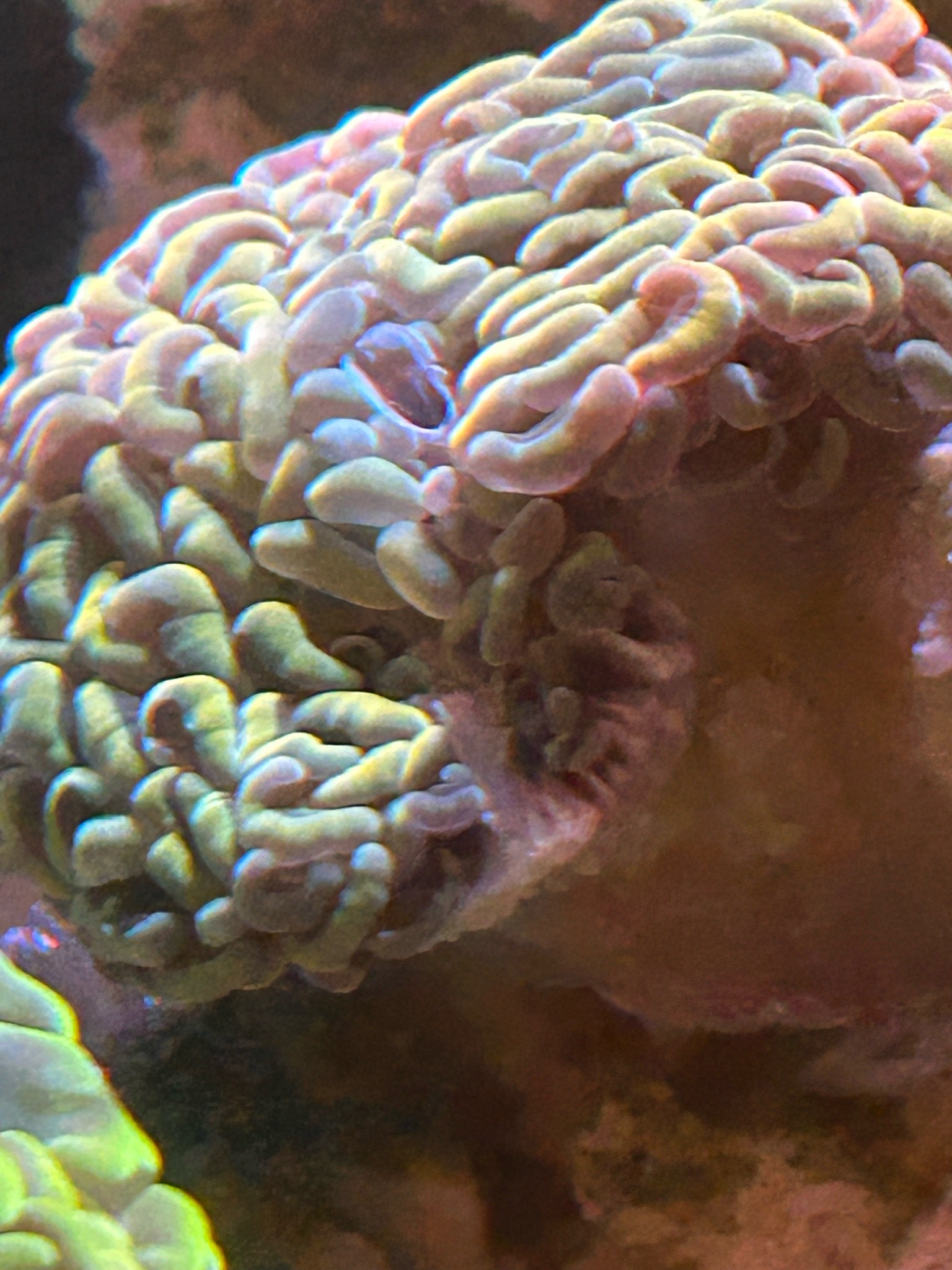
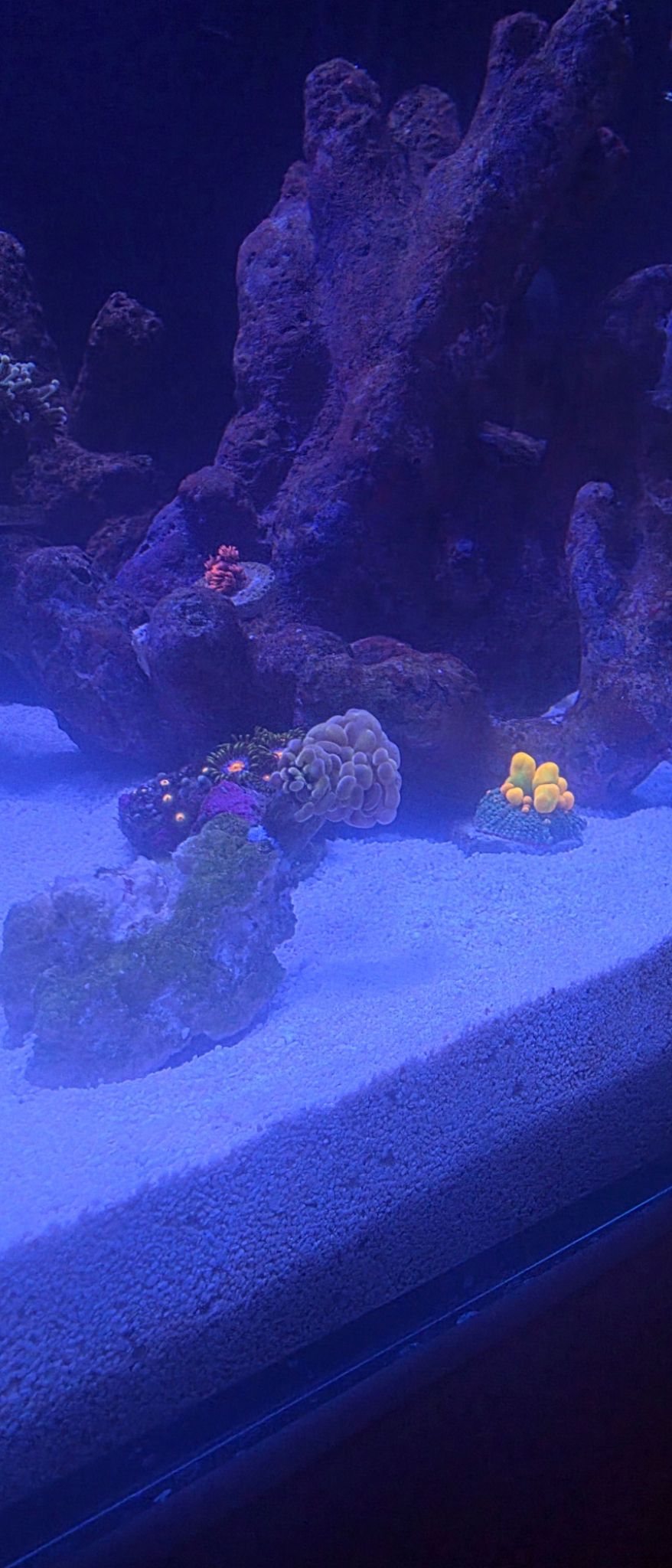
hola a todos. Me gustaría saber si esto es RTN? Y si sí, ¿qué se puede hacer? Mis parámetros están dentro del rango: KH 8.3, Ca 457, Mg 1535, NO3 11, PO4 0.05, pH 8.4, Temp 24, Salinity 1.027. Agradecería su ayuda.
ello everyone. I’d like to know if this is RTN? And if so, what can be done? My parameters are within range: KH 8.3, Ca 457, Mg 1535, NO3 11, PO4 0.05, pH 8.4, Temp 24, Salinity 1.027. I would appreciate your help.
Comentarios
Inicia sesión para dejar un comentario
Todavía no hay comentarios
Sé el primero en iniciar la conversación.
 @jasmine_ilands
14h
Los números no son tu problema, y esa es la parte molesta. KH 8.3, Ca 457, PO4 0.05, NO3 11 es un acuario que está funcionando. RTN no se preocupa por eso. Se mueve en horas, no en semanas, y normalmente empieza en un punto: una zona sin flujo, una unión de pegamento nueva, una picadura de un vecino, o un golpe al manipularlo. Así que las preguntas que de verdad deciden esto: - ¿El borde blanco avanza mientras lo ves? Toma una foto ahora y otra en una hora. Si lo blanco está más grande, es RTN y actúas hoy. - ¿El tejido se desprende en láminas o hilos? Esa es la señal. Una mancha pálida lenta es distinto, eso es STN y tienes tiempo de buscar la causa. Si es RTN: corta la parte sana, a una pulgada arriba de la línea, hasta llegar a esquelet o limpio, y monta eso. Da por perdido el tramo afectado. Usa carbón nuevo y haz un cambio de agua del 20 por ciento por la muerte del tejido, no para perseguir ningún número. Una cosa de tu lista que volvería a revisar: salinidad 1.027. Si eso es un hidrómetro de brazo basculante, podría estar mucho más alta de lo que crees. Refractómetro calibrado antes de confiar en eso. No doses nada para arreglar esto. Cambiar alk o Ca en medio del evento lo hace más rápido. Y sube las dos fotos, las reviso.
The numbers aren't your problem, and that's the annoying part. KH 8.3, Ca 457, PO4 0.05, NO3 11 is a working tank. RTN doesn't care. It moves in hours, not weeks, and it usually starts at a point: a spot with no flow, a fresh glue joint, a sting from a neighbour, or a nick from handling. So the questions that actually decide this: - Is the white edge advancing while you watch it? Take a photo now and one in an hour. If the white is bigger, it's RTN and you act today. - Does tissue peel off in sheets or strings? That's the tell. A slow pale patch is different, that's STN and you have time to look for the cause. If it's RTN: cut the healthy part off, an inch above the line, into clean skeleton, and mount that. Assume the affected section is lost. Run fresh carbon and do a 20 percent water change for the die-off, not to chase any number. One thing in your list I'd double check: salinity 1.027. If that's a swing-arm hydrometer it could be a lot higher than you think. Calibrated refractometer before you trust it. Don't dose anything to fix this. Changing alk or Ca mid-event makes it faster. And post the two photos, I'll look.
@aviram
12h
Corté uno de ellos, y por ahora parece que la propagación se detuvo; hice el corte un poco arriba del tejido vivo. En cuanto al coral en sí, se desintegró por completo en solo unas pocas horas. Hice un cambio de agua del 15% y empecé a usar STN/RTN-X. Espero no despertar mañana con nuevas sorpresas y que la propagación a otros corales se detenga.
I cut one of them, and for now, it seems the spread has stopped; I made the cut slightly above the living tissue. As for the coral itself, it completely disintegrated within just a few hours. I performed a 15% water change and started using STN/RTN-X. I hope I won’t wake up to any new surprises tomorrow and that the spread to other corals will halt.
Inicia sesión para unirte a la conversación.






Primero revisa si se propaga rápido
Check if it spreads fast first