
Día 2. A las 8:30am. Bajé y me fui a la alacena y cuando vi los frascos noté que la parte de abajo de los frascos estaba más verde que la de arriba. Revuelvo los frascos con una cuchara larga. Todavía no puedo notar la diferencia en el verde con respecto a ayer. Pero sí vi algunos copépodos bailando por ahí. Sigámosle. 🙂
Day 2. At 8:30am. I came downstairs and went into the pantry and when I looked at the jars I found the bottom of the jars was darker green than the top. I stir the jars with a long spoon. Can't tell the difference in green yet from yesterday. But I did see some copepods dancing around. Let's keep it going. 🙂
Comentarios
Inicia sesión para dejar un comentario
Todavía no hay comentarios
Sé el primero en iniciar la conversación.
Entonces, por todos los videos que he estado viendo, puede que necesites agregar un poquito más de flujo al fitoplancton para que no se asiente en el fondo. Y tu cultivo de copépodos se va a poner más clarito en color conforme los copépodos se lo comen.
So from all the videos, I’ve been watching you may need to add a little bit more flow on the phytoplankton to keep it from settling on the bottom. And your copepod culture will get lighter in color as copepods eat it.
@javier813
1y
Sí.. gracias.. creo que sí necesito más flujo. 🙂
Yes.. thank you.. I think I do need more flow. 🙂
¿Cómo estás iluminando tus canisters?
How are you lighting up your canisters?
@javier813
1y
Hola... creo que me fui un poco de más con la luz. Pero compré una lámpara de 4000 lúmenes 3 ft T bulb light. Me costó $15 dólares en Home Depot. También tenían una de 2 ft. Pero no podía creer que eran $25 dólares por la de 2 ft..🤣🤣🤣🤣 sí soy bien barato.. me fui por la de 3ft..🙂🙂🤭
Hi... I think I went a little overboard with light. But I brought 4000 lumens 3 ft T bulb light. It was $15 dollars at Home Depot. They also had a 2 ft light. But I couldn't believe it was $25 dollars for a 2 ft light..🤣🤣🤣🤣 yes I'm a cheapo.. got the 3ft..🙂🙂🤭
No eres barato si este es tu hobby! Todos me preguntan cómo le hago para pagar ese hobby. Y cuando les digo que tengo más de 11, o sea como cerca de $12,000, se espantan.
You’re not a cheapo if this is your hobby! Everybody asks me how do you afford that hobby? And when I tell them I’m over 11 even maybe closer to $12,000 a freak out.
@javier813
1y
Sí... se siente exactamente así..🤣🤣🤣 pero el hobby está bien chido. Me gusta ver cómo esos organismos y los peces prosperan. Son unas mascotas bien interesantes..🤣🤣
Yes... It feels just like that..🤣🤣🤣 but the hobby is cool. I like to watch how these organisms and fish thrive. They are some interesting pets..🤣🤣
Entonces mi pregunta para ti es esta. ¿Empezaste a dosificar esto a tu acuario y viste un cambio significativo en los corales? ¿O lo haces para combatir algún problema como las diatomeas, que es por eso que lo estoy haciendo para pelear con las diatomeas usando fitoplancton? Porque tengo un amigo que tiene un acuario de 400 galones que no dosifica fitoplancton para nada y su acuario está precioso.
So my question to you is this. Did you start dosing this to your aquarium and see it added a significant change to the corals? Or are you doing it to combat an issue such as diatoms which is why I’m doing it trying to fight the diatoms with phytoplankton? Because I have a friend that has a 400 gallon tank that doesn’t dose phytoplankton at all and his tank is beautiful.
@javier813
1y
Buena pregunta.. todavía no lo he dosificado. Planeo empezar el próximo fin de semana. Tengo un acuario de 125 galones. Lo que yo veía en mi tanque era GHA. Ahora el fosfato lo tengo bajo control y el GHA ya desapareció. Pero ahora el siguiente problema es que visualmente noto que mis corales ya no están tan esponjosos. Tengo nitratos altos y estoy limpiando caracoles vermítidos a mano. Entonces mis pensamientos con los nitratos es dosificar el fitoplancton para ayudar con eso y ojalá ayudar a que mis corales tengan algo de comida natural. Y que mis copépodos también ayudan con los corales y con mis peces. Ojalá sí haga diferencia.
Good question.. I haven't dose this yet. I'm planning to start next weekend. I have a 125 gallon tank. My visual issue that was in my tank was the GHA. Now my phosphate is under control and the GHA is gone. But now my next issue is that I'm visually noticing that my corals are not as fluffy. I have high nitrates and I'm cleaning out vermidit snails by hand. So my thoughts with the nitrates is to dose the phyto to help with that and hopefully help my corals have some natural food. And that my copepods help with the corals and my fish as well. I hope it makes a difference.
Bueno, mi razonamiento es que tengo un bloom de diatomeas porque tengo un poco de silicato en el agua. Parte de la forma de combatir las diatomeas es agregar un poquito más de resina de aniones (Anion resin) a mi resina mixed bed. Pero he escuchado que el fitoplancton y las diatomeas se comen lo mismo, así que si sigo dosificando fitoplancton, las diatomeas van a terminar muriéndose de hambre.
Well, my reasoning is I have a diatom bloom because I have a little bit of silicate in my water. Part of the way to combat the diatoms is to add an additional bit of extra Anion resin to my mixed bed resin. But I have heard that phytoplankton and diatoms eat the same thing so if I keep dosing phytoplankton, the diatoms will end up starving.
@javier813
1y
Entendido... qué bueno saberlo. Espero que tus diatomeas se controlen. ¿Usas sistema de agua RODI? Leí que ayuda a mantener los silicatos fuera del agua.
Understood... Good to know this. I hope your diatoms get under control. Do you use RODI water system? I read that it helps keep silicates out of water.
Sí, sí uso una unidad de RODI. Pero cuando la resina se acaba, ya no evita que los silicatos pasen a través de la resina. Entonces una vez que el medidor de TDS marque algo que no sea 0, empiezas a dejar pasar problemas a través de la membrana. Por desgracia, mi LFS me dijo “oh puedes usar agua de 1 TDS, no pasa nada”. Pues por eso ya no trato con mi LFS. Porque normalmente ese poquito que se cuela es silicato. Así que me saco entre 42 y 45 galones de agua con TDS cero por cambio de cartucho. Entonces cuando se acerca el final, tengo que estar bien al pendiente del medidor de TDS en mi RODI. Entonces por eso, en cierto sentido, mezclar tu agua en un bote de basura de 55 galones no necesariamente es lo mejor. Yo solo tengo un bote de 20 galones, pero eso también significa que solo tuve 20 galones de agua contaminada. Y desafortunadamente, tuve dos tandas de agua afectadas por los silicatos porque solo hago un ICP test cada dos meses.
Yes, I do use an RODI unit. But when the resin runs out it no longer keeps silicates from passing through the resin. So once the TDS meter reads anything other than 0 you start letting issues through the membrane. So unfortunately, my LFS said “oh you can use 1 TDS water no problem”.Well that’s why I don’t deal with my LFS any longer. Because that little bit that gets through is usually silicate. So I get anywhere from 42 to 45 gallons of zero TDS water per cartridge change. So when it gets toward the end, I have to be extra observant of the TDS meter on my RODI unit. So that’s why in a sense mixing your water up in a 55 gallon trashcan isn’t necessarily the best. I only have a 20 gallon trashcan, but that also means I only had 20 gallons of tainted water. And unfortunately, I had two batches of water affected by the silicates because I only do an ICP test every other month.
Y ahora es mucho más difícil sacar el silicato del acuario que simplemente tirar 20 galones de agua contaminada por el drenaje.
And now it’s a whole lot harder to get the silicate out of the aquarium than it is to just pour 20 gallons of tainted water down the drain.
@javier813
1y
Entendido.. bueno.. sigamos peleando contra esos silicatos. Va a tardar un poco. Mantente al pendiente...🙂
Understood.. well.. let's keep fighting those silicates. It will take some time. Stay on top of it...🙂
Inicia sesión para unirte a la conversación.

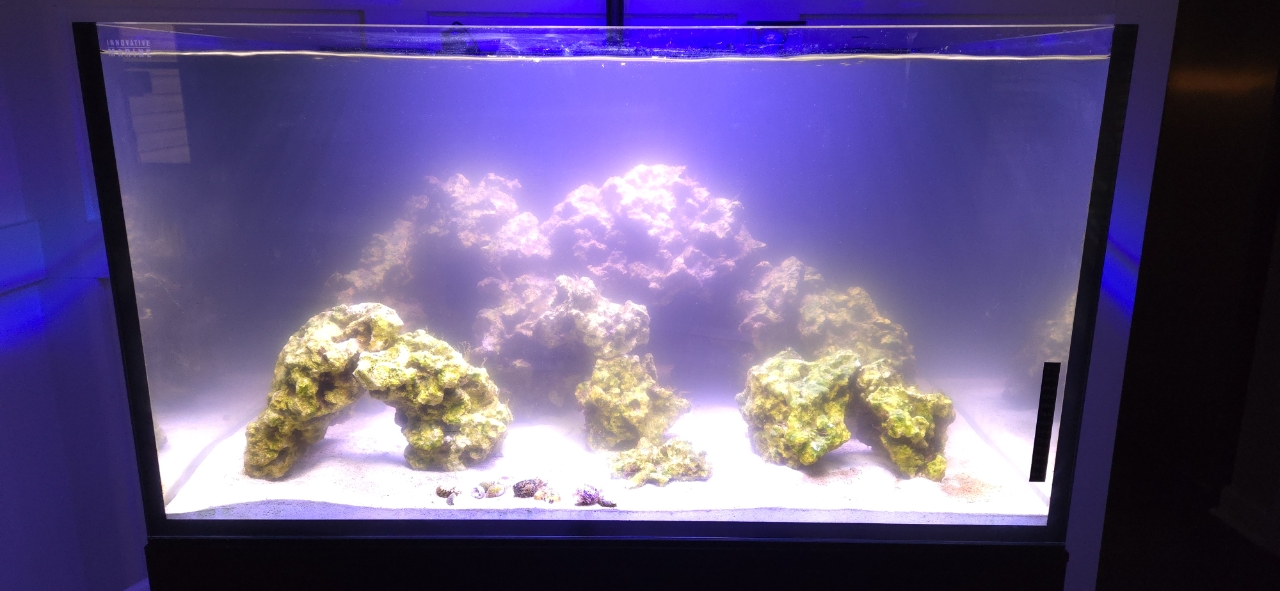
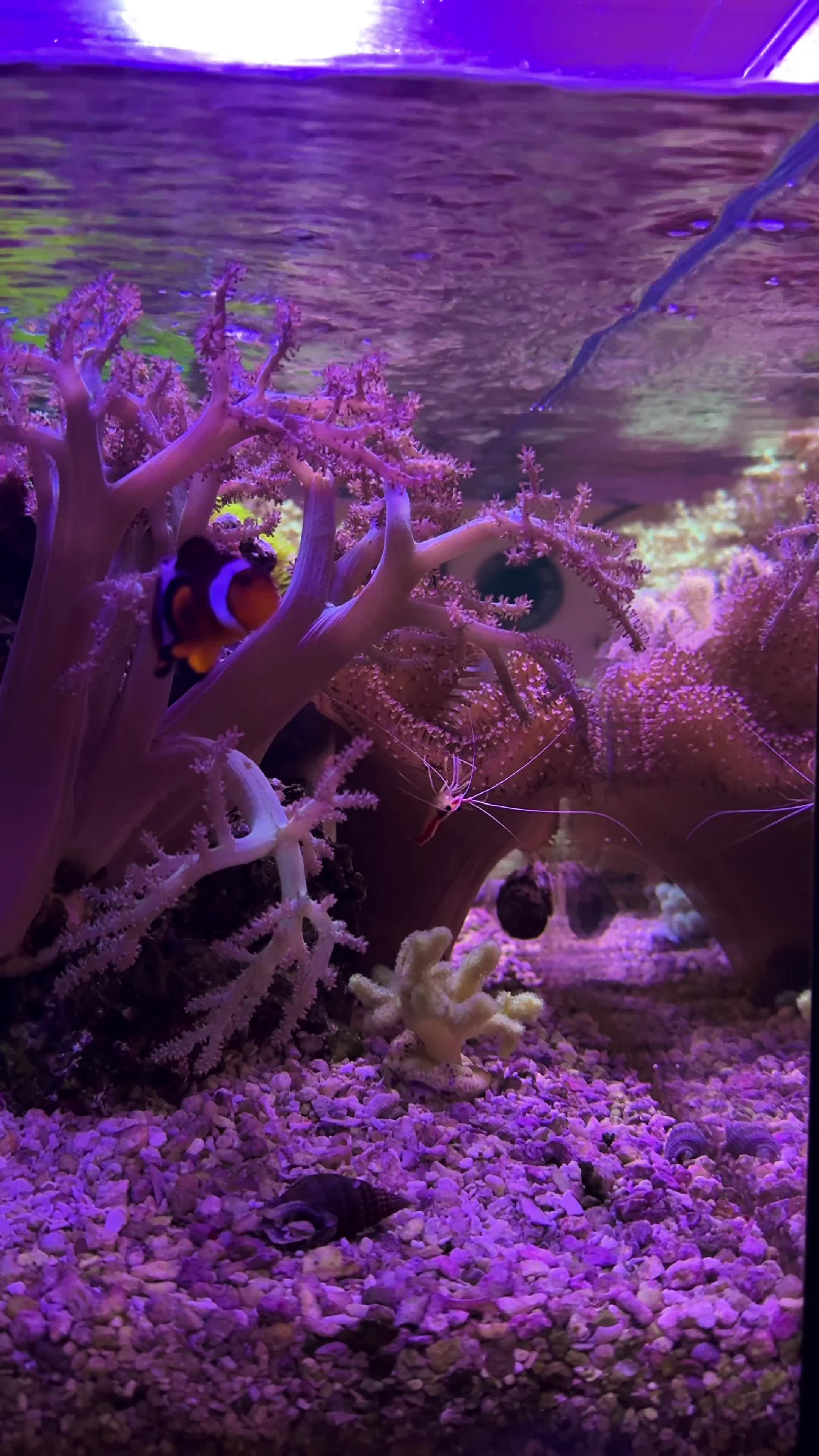
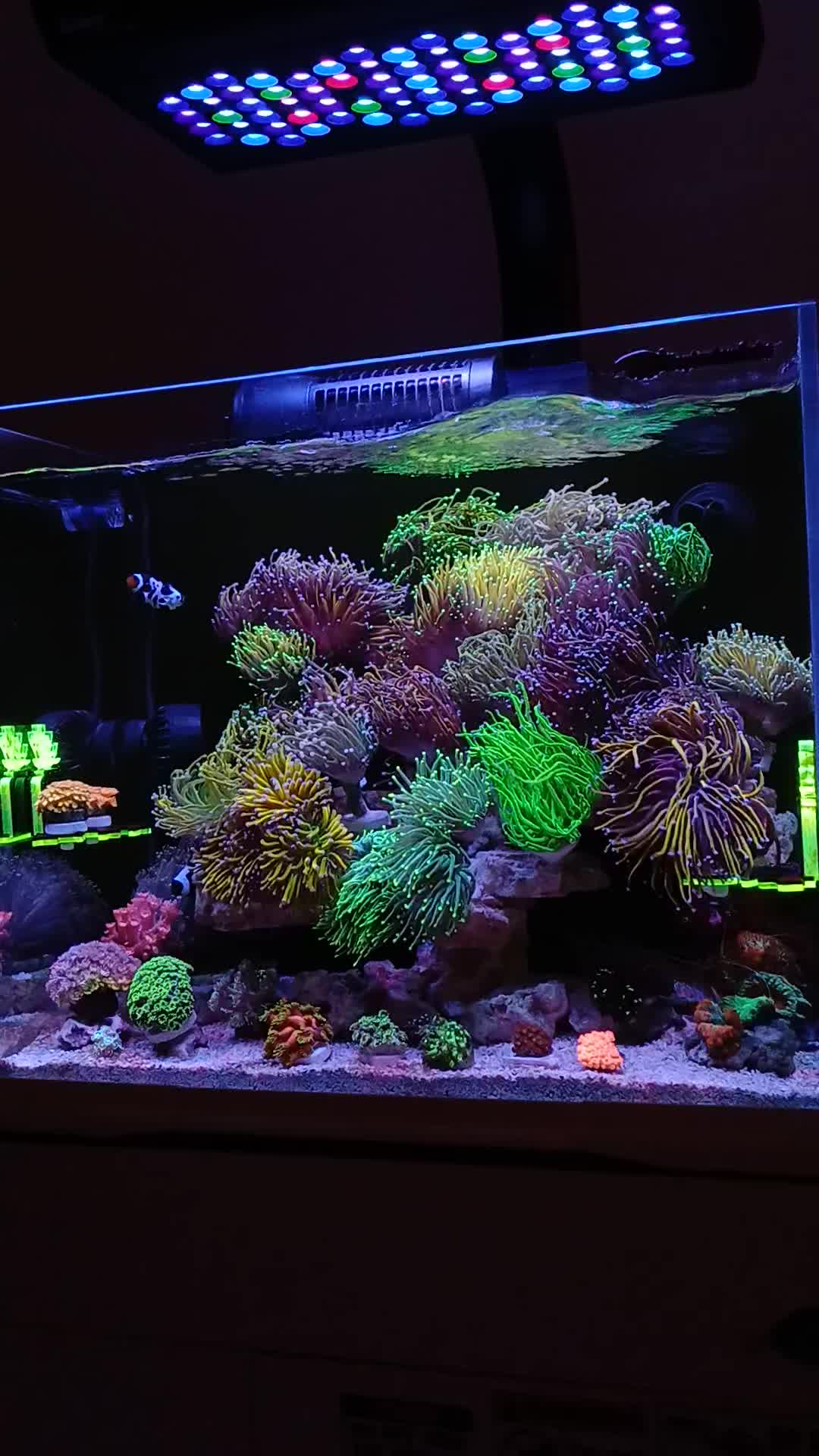



Haha mira cómo van esas pods! Green juice magic
Haha look at those pods go! Green juice magic