Are Bristle Worms Good or Bad for My Reef Tank?
Quick Answer
Most bristle worms are beneficial scavengers that eat detritus, uneaten food, and dead organisms in your reef tank. Only fireworms (a specific type) are harmful and should be removed. A few bristle worms are a sign of a healthy ecosystem.
Most bristle worms are beneficial—they're nature's clean-up crew, scavenging detritus, uneaten food, and dead organisms. New reefers often panic when they see these segmented worms crawling through their rocks at night, but they're typically a sign of a healthy, functioning ecosystem.
Common Bristle Worms vs. Fireworms
The distinction between beneficial bristle worms and harmful fireworms is crucial:
Common Bristle Worms (Beneficial)
- Usually 1-4 inches long (rarely larger)
- Pink, gray, or tan coloration
- Short, fine bristles along their sides
- Nocturnal scavengers that hide in rockwork
- Eat dead/dying organisms, detritus, uneaten food
- Population self-regulates based on available food
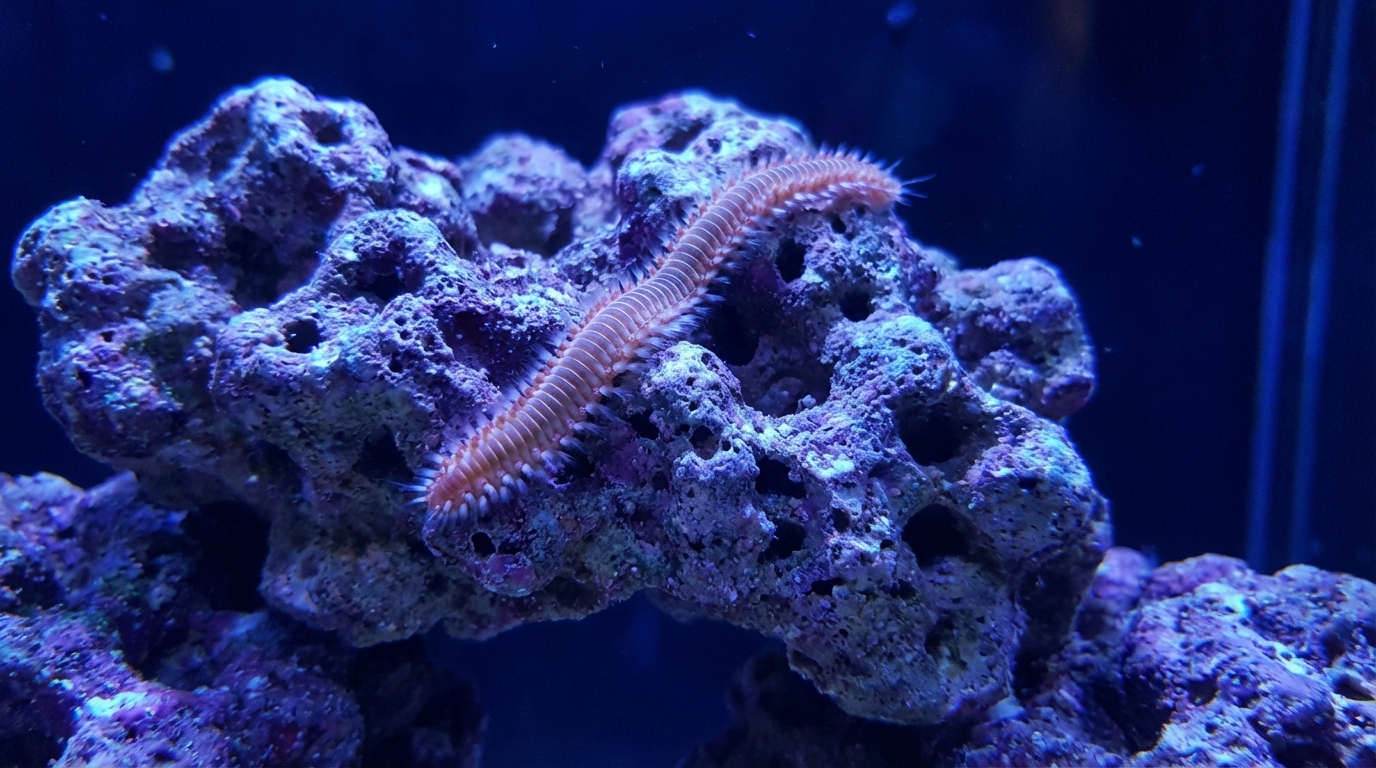
Fireworms (Harmful)
- Can grow 6+ inches
- Bright red/orange coloration with white tufts
- Long, visible bristles that stand out from the body
- Will actively prey on corals, clams, and anemones
- Bristles cause painful stings if touched
- Should be removed when identified
Why You Should Keep Common Bristle Worms
- Detritus removal: They consume rotting material that would otherwise spike nutrients
- Aeration: Burrowing activity helps oxygenate substrate
- Early warning: Population explosions indicate overfeeding or dead livestock
- Part of biodiversity: A varied microfauna population indicates tank health
When to Be Concerned
Population explosion: If you suddenly see hundreds of bristle worms, you're likely overfeeding or have a dead fish/invert hiding somewhere. Address the food source—don't blame the worms.
Very large specimens (6+ inches): Could be fireworms. Look for bright coloration and prominent bristles. If in doubt, trap and remove the individual to examine it.
How to Remove Problem Worms
If you've identified fireworms or simply have too many bristle worms, here are your options:
Commercial Traps
Bristle worm traps work by luring worms with bait into a one-way entrance. Place at night when they're most active.
DIY Trap
A plastic bottle with small holes and bait (shrimp or fish) left overnight works surprisingly well.
Natural Predators
- Arrow crabs: Effective bristle worm hunters
- Coral banded shrimp: Will catch smaller worms
- Certain wrasses: Six-line wrasse, melanurus wrasse
- Dottybacks: Aggressive worm hunters (but also aggressive to tankmates)
Handling Bristle Worms Safely
If you need to handle bristle worms:
- Never touch with bare hands—the bristles embed in skin and cause irritation
- Use tweezers or tongs
- If stung, use tape to pull bristles from skin, then treat with hydrocortisone
Bottom Line
Common bristle worms are your friends. They indicate a healthy tank with good biodiversity. Only fireworms (large, brightly colored, with prominent bristles) should be removed. A few bristle worms keeping your sandbed and rockwork clean is exactly what you want in a thriving reef.
Was this helpful?