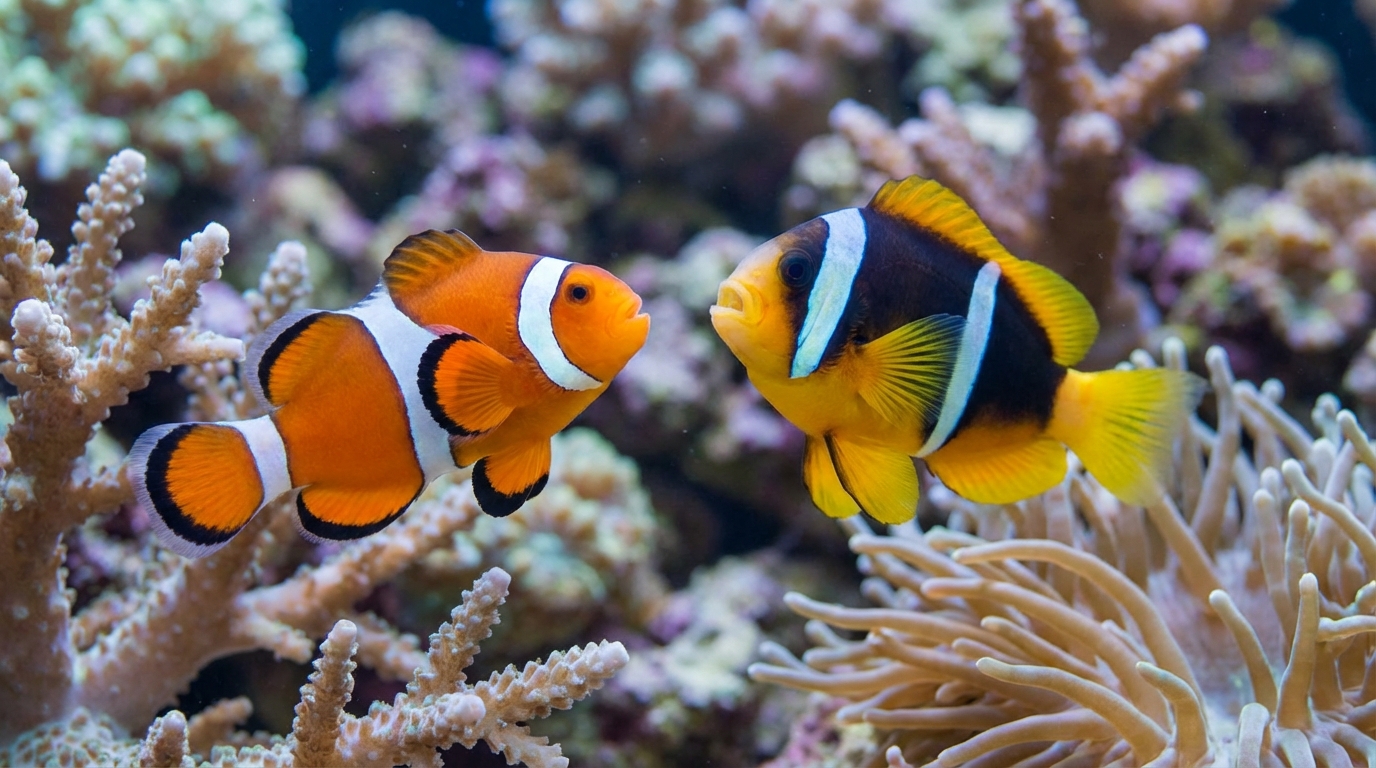
Can I Keep Multiple Clownfish Species Together in the Same Tank?
Quick Answer
Find out if you can keep different clownfish species together in the same reef tank. Learn why mixing clownfish usually fails and better alternatives.
One of the most common questions from reef keepers is whether they can mix different clownfish species. The short answer is: it's generally not recommended.
Why Mixing Clownfish Species Fails
- Territorial aggression - Clownfish view all other clownfish as competition, regardless of species
- Dominance battles - The largest female will try to dominate or kill other clownfish
- Constant stress - Even without visible fighting, subordinate fish live in chronic stress
- Hybridization concerns - Different species may attempt to pair, producing hybrid offspring
What Usually Happens
When you mix clownfish species, you'll typically see:
- Initial chasing and fighting within hours
- One fish claiming a territory (usually an anemone or corner)
- The subordinate fish constantly hiding and not eating
- Possible injury or death of the weaker fish
Exceptions (Rare)
Some reefers have successfully kept multiple species, but it requires:
- Very large tanks (180+ gallons)
- Multiple anemones far apart from each other
- Lots of hiding spots and territories
- Introducing all fish simultaneously
- Careful monitoring for weeks
Even with these conditions, success is not guaranteed.
Better Alternatives
- Keep a mated pair - One male and one female of the same species
- Different tank mates - Choose other reef-safe fish instead
- Separate tanks - If you want multiple species, keep them in different aquariums
Bottom Line
While beautiful, different clownfish species are best appreciated in separate setups. Stick to one species per tank for the health and happiness of your fish.
Looking for the perfect clownfish pair? Browse captive-bred clowns from trusted sellers on the ReefBay marketplace.
Was this helpful?