Do I Need an RO/DI System for My Reef Tank?
Quick Answer
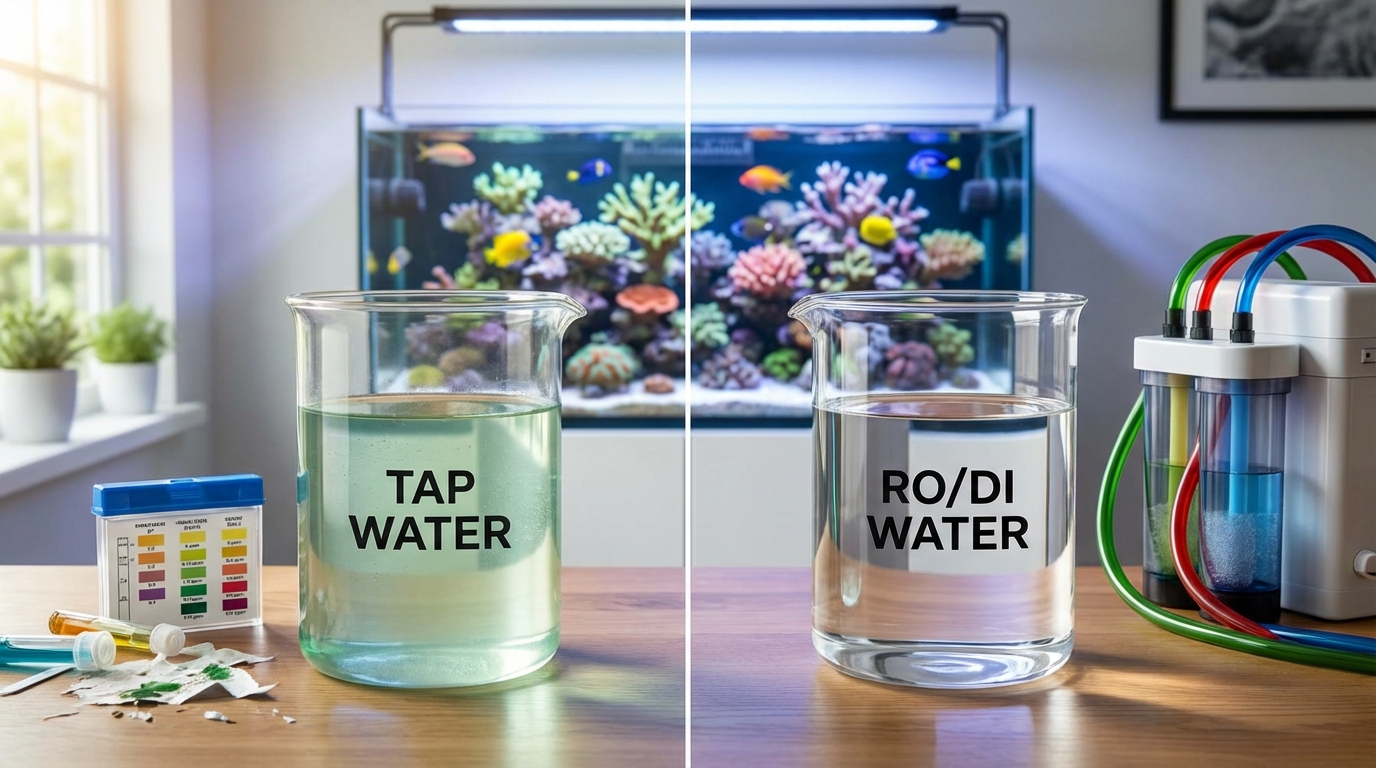
Yes, an RO/DI system is highly recommended for reef tanks. It removes chlorine, heavy metals, phosphates, and silicates from tap water that can harm corals and fuel algae growth.
Yes, an RO/DI (Reverse Osmosis/Deionization) system is one of the best investments you can make for a successful reef tank. While it's technically possible to keep a reef without one, using purified water dramatically increases your chances of success and reduces many common problems.
What Does an RO/DI System Remove?
Tap water contains many substances that are harmful to reef inhabitants or fuel nuisance algae:
- Chlorine and chloramine: Toxic to fish and invertebrates
- Heavy metals: Copper, lead, and zinc can kill invertebrates
- Phosphates: Fuel algae growth and inhibit coral coloration
- Silicates: Feed diatoms and brown algae
- Nitrates: Already present in many municipal water supplies
- TDS (Total Dissolved Solids): Various impurities that accumulate over time
Why RO/DI Matters for Reef Tanks
Reef aquariums require extremely stable, high-quality water. Here's why RO/DI is crucial:
Algae Control
Many reefers struggle with nuisance algae despite doing everything "right." Often, the culprit is phosphates and silicates in their tap water. Even low levels accumulate with water changes and evaporation top-off.
Coral Health
Corals are sensitive to heavy metals and other contaminants. Using pure water as your base gives you complete control over what goes into your tank.
Consistent Parameters
Tap water quality varies seasonally and by location. Spring runoff, water main repairs, and treatment changes can introduce new contaminants. RO/DI water is consistently pure.
Can I Just Use Dechlorinator?
Dechlorinators neutralize chlorine and chloramine, but they don't remove phosphates, silicates, heavy metals, or other dissolved solids. You might get away with treated tap water in a fish-only tank, but reef tanks need the purity that only RO/DI provides.
Alternatives to Owning an RO/DI System
If you can't install an RO/DI system right now, consider these options:
- Buy RO/DI water: Many fish stores sell purified water by the gallon
- Grocery store water: Look for "purified" water with 0 TDS (check the label)
- Water delivery services: Some reef clubs or delivery services offer bulk RO/DI water
Long-term, owning your own system is more economical. A basic 4-stage RO/DI unit costs $100-200 and produces water for just pennies per gallon.
What Size RO/DI System Do I Need?
For most home aquariums, a 75-100 GPD (gallons per day) system is sufficient. Larger tanks or those requiring frequent water changes may benefit from 150+ GPD systems. Remember that actual production depends on water pressure and temperature.
Maintenance Requirements
RO/DI systems require periodic filter changes:
- Sediment filter: Every 6-12 months
- Carbon block: Every 6-12 months
- RO membrane: Every 2-4 years
- DI resin: When TDS meter reads above 0 (frequency varies)
Track your maintenance schedule with the ReefBay app to ensure you're always producing pure water.
The Bottom Line
An RO/DI system isn't just nice to have—it's essential equipment for serious reef keeping. It eliminates one of the biggest variables that can cause problems and gives you a pure foundation to build upon. Your corals, fish, and invertebrates will thank you!
Was this helpful?