How Do I Control Red Cyano Bacteria in My Reef Tank?
Quick Answer
Red cyano is usually caused by excess nutrients and low flow. Fix it by increasing water circulation, reducing feeding, and manually removing it during water changes.
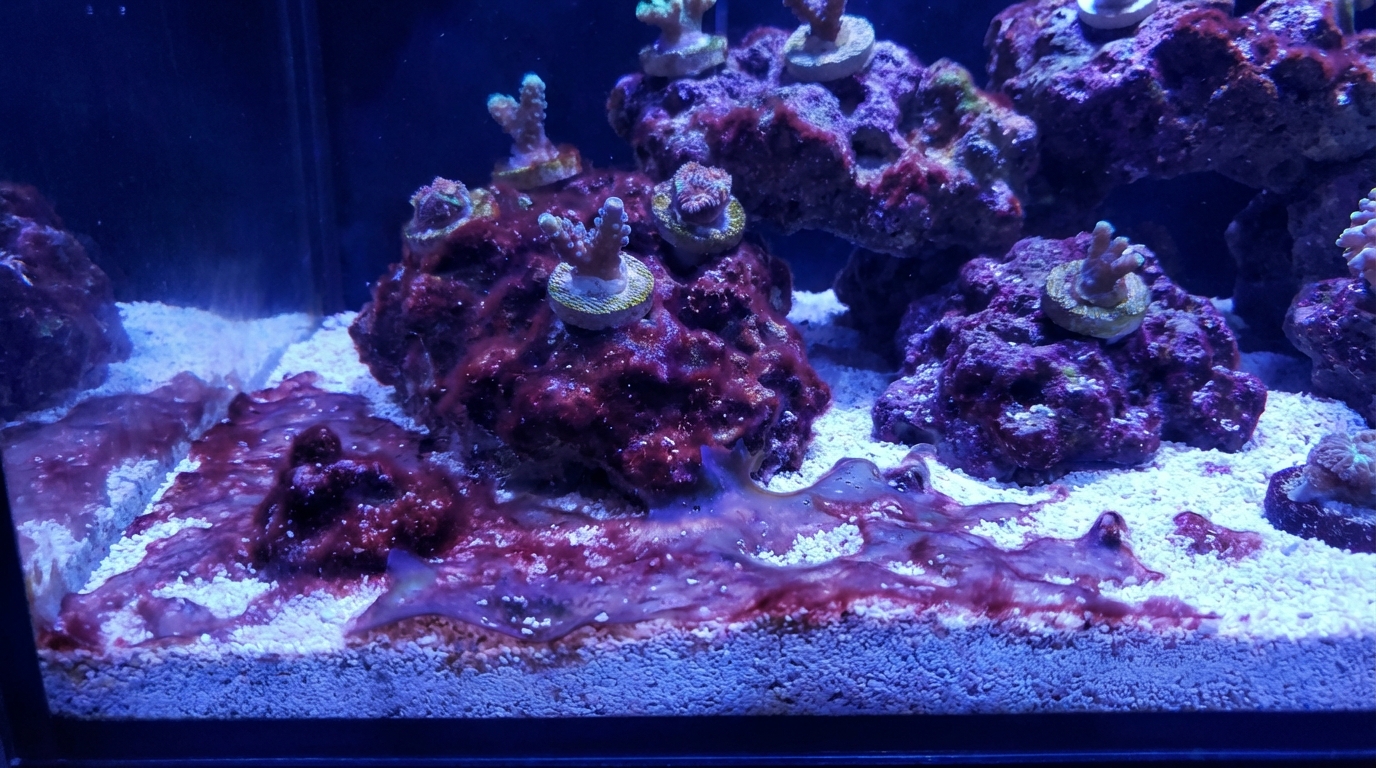
Red cyanobacteria (cyano) is one of the most frustrating problems reef keepers face. Despite its name, cyano isn't actually algae—it's a photosynthetic bacteria that forms slimy red or purple mats across your sand, rocks, and even corals. The good news? It's completely controllable with the right approach.
Why You Have Cyano
Cyano thrives when these conditions exist together:
- Excess nutrients – Elevated phosphates and nitrates feed cyano growth
- Low water flow – Dead spots where water doesn't circulate well
- Old lighting – Bulbs past their prime emit spectrum shifts cyano loves
- Overfeeding – Uneaten food breaks down into nutrients
- Dirty filter media – Trapped organics leaching back into water
Step-by-Step Cyano Elimination
1. Increase Water Flow
Cyano hates movement. Add a powerhead or reposition existing ones to eliminate dead spots. Target areas where cyano accumulates most—usually the sandbed and lower rockwork.
2. Manual Removal
During water changes, siphon out as much cyano as possible. Use a turkey baster to blast it off rocks before siphoning. Don't just stir it up—remove it from the tank entirely.
3. Reduce Feeding
Cut back feeding to once daily and only what fish consume in 2 minutes. Consider fasting one day per week. Less food means fewer nutrients fueling cyano.
4. Test and Address Nutrients
Check phosphate and nitrate levels. Ideally:
- Phosphate: 0.03-0.1 ppm
- Nitrate: 5-10 ppm
If elevated, increase water changes, run GFO media, or add a refugium with chaeto algae to outcompete the cyano. Track your parameters over time with the ReefBay app to identify patterns.
5. Clean Your Filtration
Replace or rinse filter socks weekly. Clean protein skimmer cups. Old, dirty media becomes a nutrient source rather than removing nutrients.
6. Consider Chemical Treatments
Products like Chemiclean or Red Slime Remover work by starving cyano of oxygen. They're effective but treat the symptom, not the cause. Only use after addressing the underlying issues, or cyano will return.
Prevention Going Forward
Once you've beaten cyano, keep it away by:
- Maintaining strong, varied water flow
- Keeping up with regular water changes
- Not overfeeding your fish
- Running an efficient protein skimmer
- Replacing bulbs on schedule (every 9-12 months for T5s)
A healthy clean-up crew also helps by consuming organics before they break down. Cerith snails and nassarius snails are particularly good at keeping sandbeds clean.
Cyano is annoying, but it's also a signal that something in your tank needs attention. Fix the root cause and you'll have a cyano-free reef.
Was this helpful?