How Do I Prevent and Treat Marine Velvet Disease?
Quick Answer
Marine velvet (Amyloodinium ocellatum) is a deadly parasitic infection that attacks fish gills and skin. Prevent it by quarantining all new fish for 30+ days, and treat outbreaks with copper or chloroquine phosphate in a hospital tank.
Marine velvet (Amyloodinium ocellatum) is one of the most deadly fish diseases in the saltwater aquarium hobby. This parasitic dinoflagellate attacks the gills and skin of fish, and it kills faster than marine ich—often within 24-72 hours of visible symptoms appearing. Early detection and proper quarantine procedures are critical for prevention.
Identifying Marine Velvet
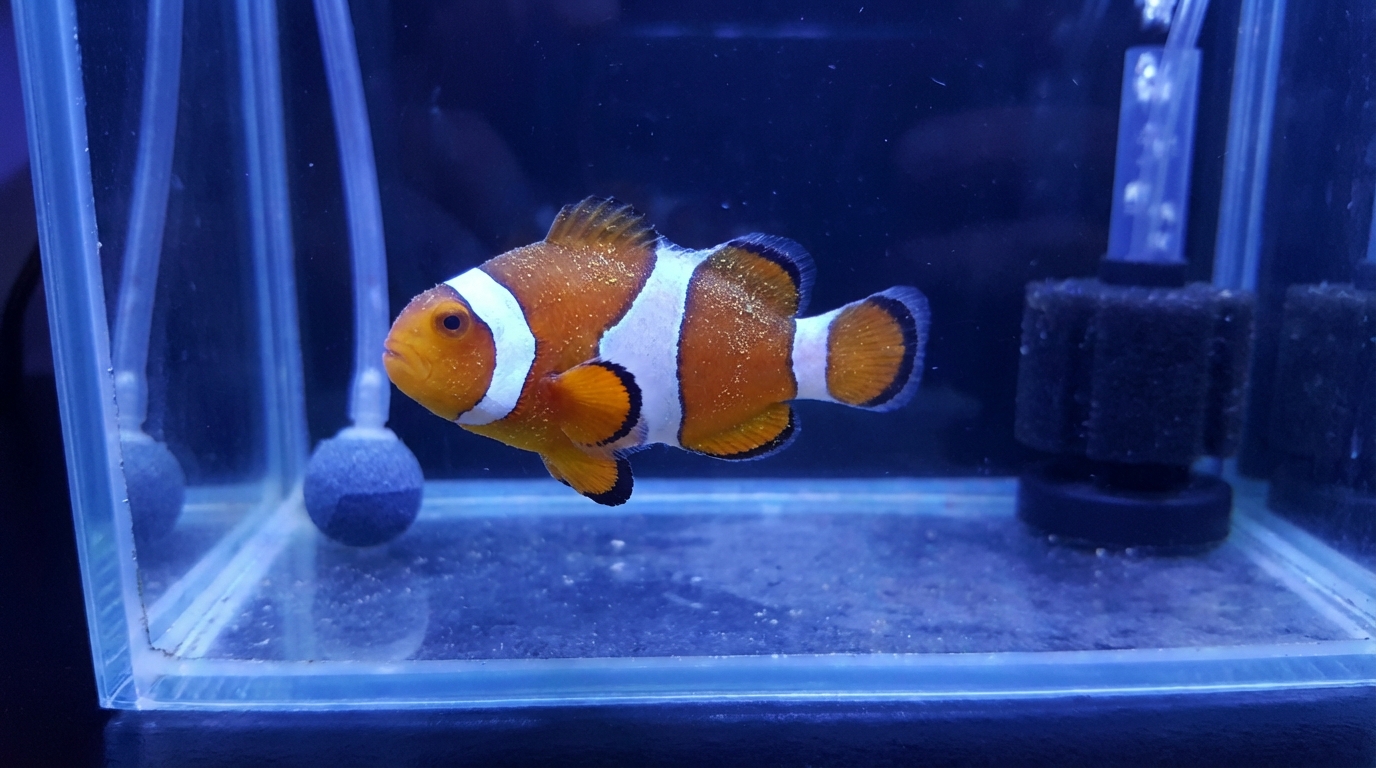
Velvet can be difficult to spot early, which makes it so dangerous. Look for these signs:
- Fine dusty or velvety appearance on skin (smaller spots than ich, giving a "dusted" look)
- Gold, rust, or yellowish tint on the body when viewed at an angle
- Rapid breathing or gasping (gills are primary attack site)
- Flashing/scratching against rocks and substrate
- Lethargy and loss of appetite
- Clamped fins
- Cloudy eyes in advanced cases
Important: By the time you see the dust-like coating, the infection is already severe. If multiple fish are gasping at the surface or near powerheads, suspect velvet immediately.
Velvet vs. Ich: Key Differences
- Spot size: Velvet appears as fine dust; ich shows larger distinct white spots
- Speed: Velvet kills in days; ich progresses over weeks
- Color: Velvet often has gold/rust tint; ich is pure white
- Primary attack: Velvet targets gills first; ich affects whole body
- Lethality: Velvet has near 100% mortality without treatment; ich is more survivable
Treatment Options
Critical: Never treat velvet in your display tank. Most effective medications will kill corals, invertebrates, and beneficial bacteria. All treatment must occur in a hospital/quarantine tank.
Copper Treatment (Most Common)
- Move all fish to a hospital tank immediately
- Dose therapeutic copper (Copper Power, Cupramine, or similar) to 2.0-2.5 ppm
- Maintain copper levels consistently—test twice daily
- Continue treatment for 30 days minimum
- Keep display tank fallow (fish-free) for 76+ days to break the parasite lifecycle
Chloroquine Phosphate
An alternative for copper-sensitive fish or when copper fails:
- Dose at 40mg/L (150mg/gallon)
- Less stressful than copper for many species
- Degrades in light—keep tank dark or cover
- Maintain for 30 days
Tank Transfer Method (Not Recommended for Velvet)
While tank transfer works for ich, velvet's faster lifecycle makes it unreliable. Stick with copper or chloroquine for velvet.
Prevention: The 72-Day Quarantine
Prevention is far easier than treatment. All new fish should be quarantined before entering your display:
- Minimum quarantine: 30 days observation
- Recommended: 76+ days (covers velvet's full lifecycle)
- Prophylactic copper: Many reefers treat all new fish with copper during quarantine regardless of symptoms
- Observation only: Watch for any signs of illness before adding to display
Setting Up a Quarantine Tank
See our quarantine tank setup guide for detailed instructions. Basics include:
- Bare-bottom tank (easier to clean and medicate)
- PVC fittings for hiding spots (no porous rock that absorbs medication)
- Heater and filter (sponge filter ideal)
- Testing kit and copper test kit
Display Tank: The Fallow Period
If velvet has been in your display tank, you must keep it fish-free to eliminate the parasite:
- 76 days minimum at 76-78°F
- Corals and invertebrates are unaffected and can remain
- The parasite cannot survive without a fish host for this duration
- Do NOT add any fish during this period—even briefly
Survival Rates
Without treatment, velvet has near 100% mortality. With prompt copper or chloroquine treatment:
- Fish caught early: 70-80% survival
- Advanced infections (visible dust coating): 30-50% survival
- Fish already gasping: Very low survival
Key Takeaways
- Quarantine everything—this is the single most important prevention step
- Act fast—velvet kills in days, not weeks
- Never medicate your display—use a hospital tank
- Keep the display fallow for 76+ days after an outbreak
- Test copper daily—levels that are too low or too high can fail treatment
For more on fish health, see our ich treatment FAQ and quarantine FAQ.
Was this helpful?