What Causes RTN (Rapid Tissue Necrosis) in Corals?
Quick Answer
RTN is caused by bacterial infection, often triggered by stress from parameter swings, physical damage, or poor water quality. Tissue peels away from the skeleton rapidly, often overnight.
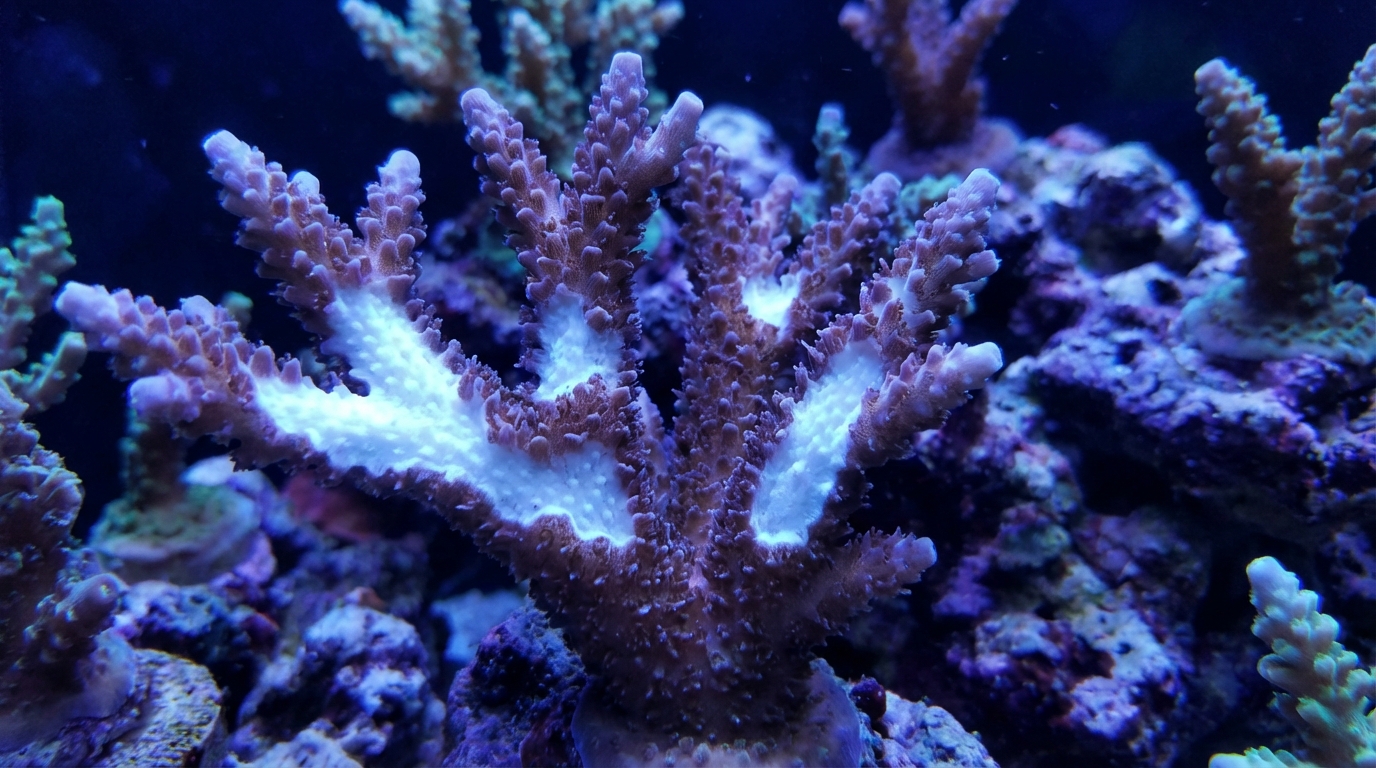
Rapid Tissue Necrosis (RTN) is a devastating coral disease that can kill an entire colony within hours. The tissue literally melts off the skeleton, spreading quickly from the point of origin.
What Causes RTN?
RTN is caused by bacteria (primarily Vibrio species) that attack coral tissue. However, the bacteria are opportunistic—they only take hold when the coral is already stressed. Common triggers include:
- Parameter swings: Rapid changes in alkalinity, pH, temperature, or salinity
- Physical damage: Nicks, scrapes, or breaks in coral tissue
- Poor water quality: Elevated ammonia, nitrite, or extreme nutrient levels
- Shipping stress: New corals weakened from transport
- Chemical burns: Direct contact with aggressive corals or contaminated water
- Temperature shock: Especially from heater malfunctions
RTN vs. STN (Slow Tissue Necrosis)
- RTN: Tissue loss occurs within hours. The white skeleton is exposed rapidly.
- STN: Tissue recedes slowly over days or weeks. More time to intervene.
Signs of RTN
- Tissue peeling away from skeleton in sheets
- Exposed white skeleton spreading rapidly
- Slimy, mucus-like film over dying tissue
- Often starts at base or damaged area and spreads upward
Emergency Treatment
- Remove immediately: Take the coral out of the tank to prevent spread to other corals.
- Frag ahead of the necrosis: If you have a band saw or dremel, cut off healthy sections at least 1 inch ahead of the tissue loss line.
- Dip in iodine solution: Betadine or Lugol's solution (brief dip) may help disinfect cut surfaces.
- Isolate frags: Place rescued frags in a separate system or quarantine if possible.
Warning: RTN spreads fast. By the time you notice it, you may only have hours to save fragments.
Prevention
- Stable parameters: Track with the ReefBay app and dose carefully
- Quarantine new corals: Observe new arrivals before adding to display
- Dip all new corals: Use a coral dip to reduce bacterial load
- Avoid rapid changes: Make adjustments gradually over days
- Don't overfeed: Excess nutrients fuel bacterial growth
While RTN is often fatal for the affected colony, quick action can save healthy portions through fragging. Prevention through stable husbandry is always the best approach.
Was this helpful?