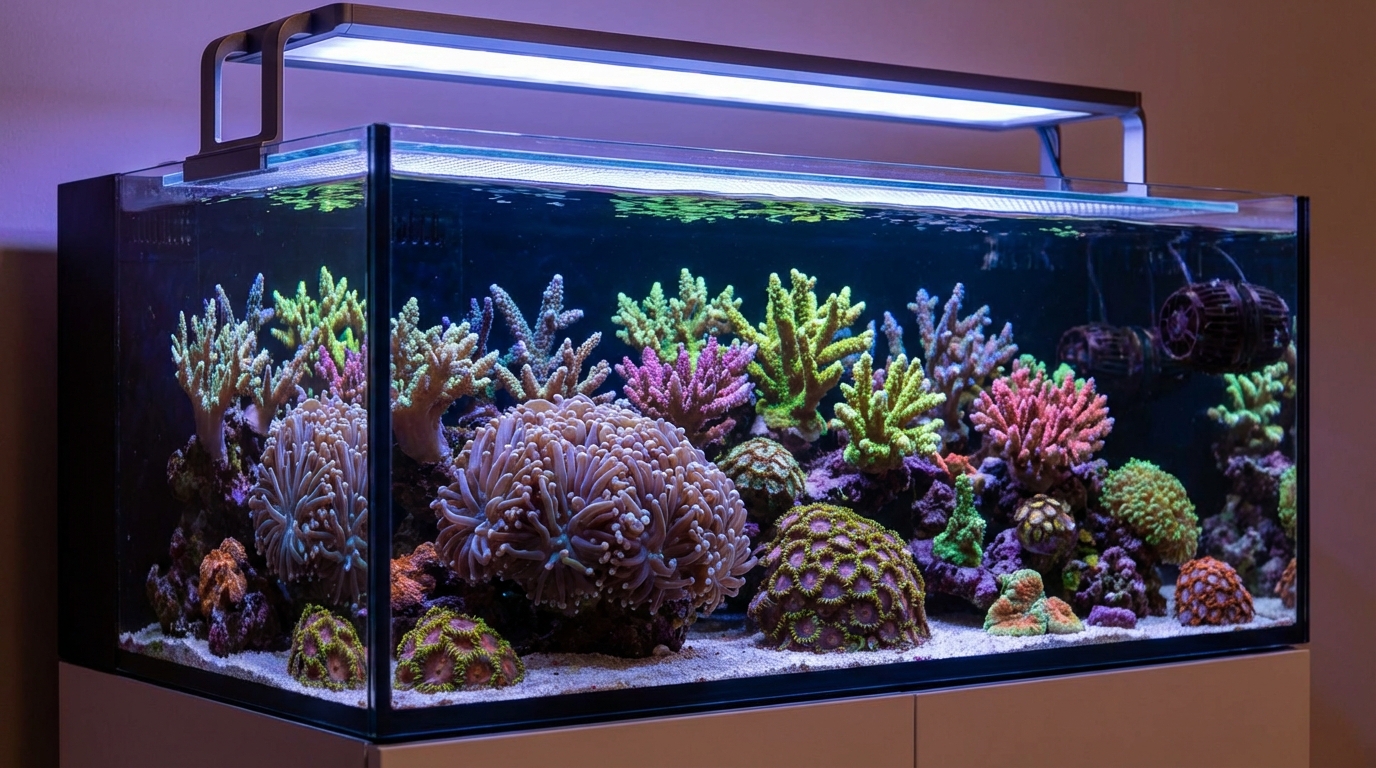
Why Isn't My Coral Extending Its Polyps?
Quick Answer
Corals retract their polyps due to stress, poor water quality, incorrect lighting, or flow issues. Check your parameters, reduce lighting intensity, and ensure appropriate flow for the coral species.
Corals retract their polyps as a stress response. If your coral has been closed for more than a day, something in your tank environment is likely off. Here are the most common causes and how to fix them.
Common Reasons for Polyp Retraction
1. Water Quality Issues
This is the most common cause. Check these parameters immediately:
- Temperature: Should be 76-80°F for most corals
- Salinity: 1.024-1.026 SG
- Alkalinity: 8-11 dKH (sudden drops are especially harmful)
- Nitrate: Below 10 ppm for SPS, below 20 ppm for LPS/soft corals
- Phosphate: Below 0.1 ppm
- pH: 8.1-8.4
Track your parameters over time with the ReefBay app to catch gradual changes before they cause problems.
2. Lighting Issues
- Too much light: New corals need time to acclimate. Reduce intensity or raise the light
- Too little light: Coral may be stretching toward light source
- Wrong spectrum: Ensure proper blue/white balance for your coral type
3. Flow Problems
- Too much flow: Polyps get "blown away" and stay retracted
- Too little flow: Detritus settles on coral, irritating it
- Direct flow: Avoid powerheads pointed directly at corals
4. Recent Changes
- New coral addition (normal acclimation period)
- Moved coral to new location
- Added new fish or coral
- Changed lighting schedule
- Large water change
5. Pests or Predators
- Check for flatworms, nudibranchs, or other pests
- Inspect at night with a flashlight for nocturnal feeders
- Look for fish nipping (angelfish, butterflyfish)
What to Do
- Test your water immediately and correct any issues
- Don't move the coral – additional stress makes things worse
- Reduce lighting to 50% intensity for a few days
- Check flow – adjust powerheads if needed
- Wait 48-72 hours – corals often recover on their own
When to Worry
If polyps don't return within 3-5 days and you notice tissue recession, browning, or white skeleton, the coral may be dying. At that point, consider:
- Dipping the coral to remove pests
- Moving to a recovery area with lower light/flow
- Fragging healthy portions to save the coral
Prevention is key – maintain stable parameters and track them regularly with the ReefBay app. Browse healthy corals from verified sellers to add to your tank.
Was this helpful?