Quarantine Calculator CTA
Before each batch, estimate meds, volume, and timeline with the ReefBay Quarantine Calculator. If you are in the app, open /app/calc-quarantine to log each observation day and keep treatment consistent.
Build a simple quarantine workflow to reduce pests and disease before adding corals or invertebrates to your display reef.
A beginner coral and invert quarantine station can be simple: isolate new additions, inspect them daily, and track any pests or disease before they reach the display tank. Use a separate workflow for each batch, estimate treatment volume and timeline, and log each observation day so treatment stays consistent.
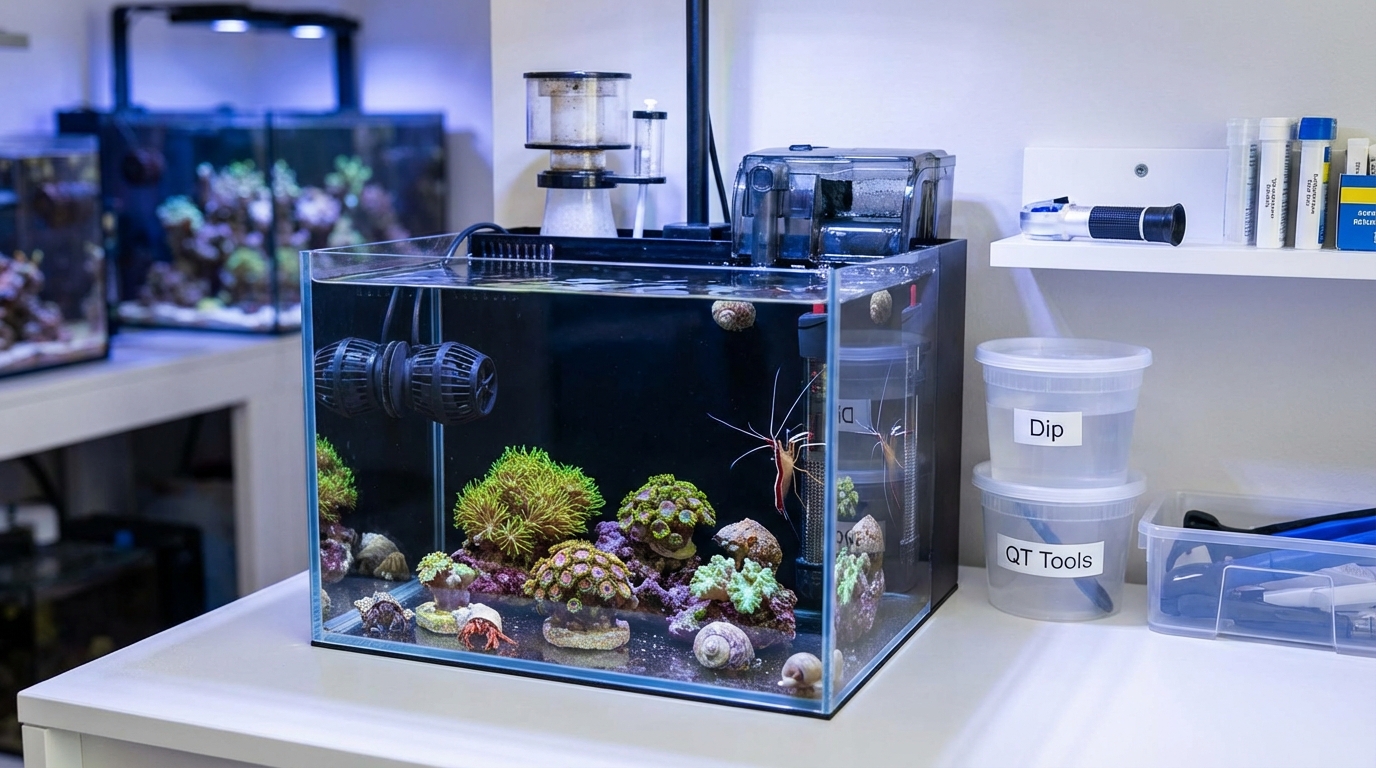
Before each batch, estimate meds, volume, and timeline with the ReefBay Quarantine Calculator. If you are in the app, open /app/calc-quarantine to log each observation day and keep treatment consistent.
Download the ReefBay app to track your tank parameters, browse coral for sale, and connect with fellow reefers.
Step-by-step guide to cycling your new reef tank. Learn the nitrogen cycle, testing schedule, and wh...
Step-by-step quarantine workflow to reduce pests and disease before adding livestock to your display...


Create an account to contribute to the community

Scan to download the app
Scan the QR code with your phone to download the app
Available on iOS and Android