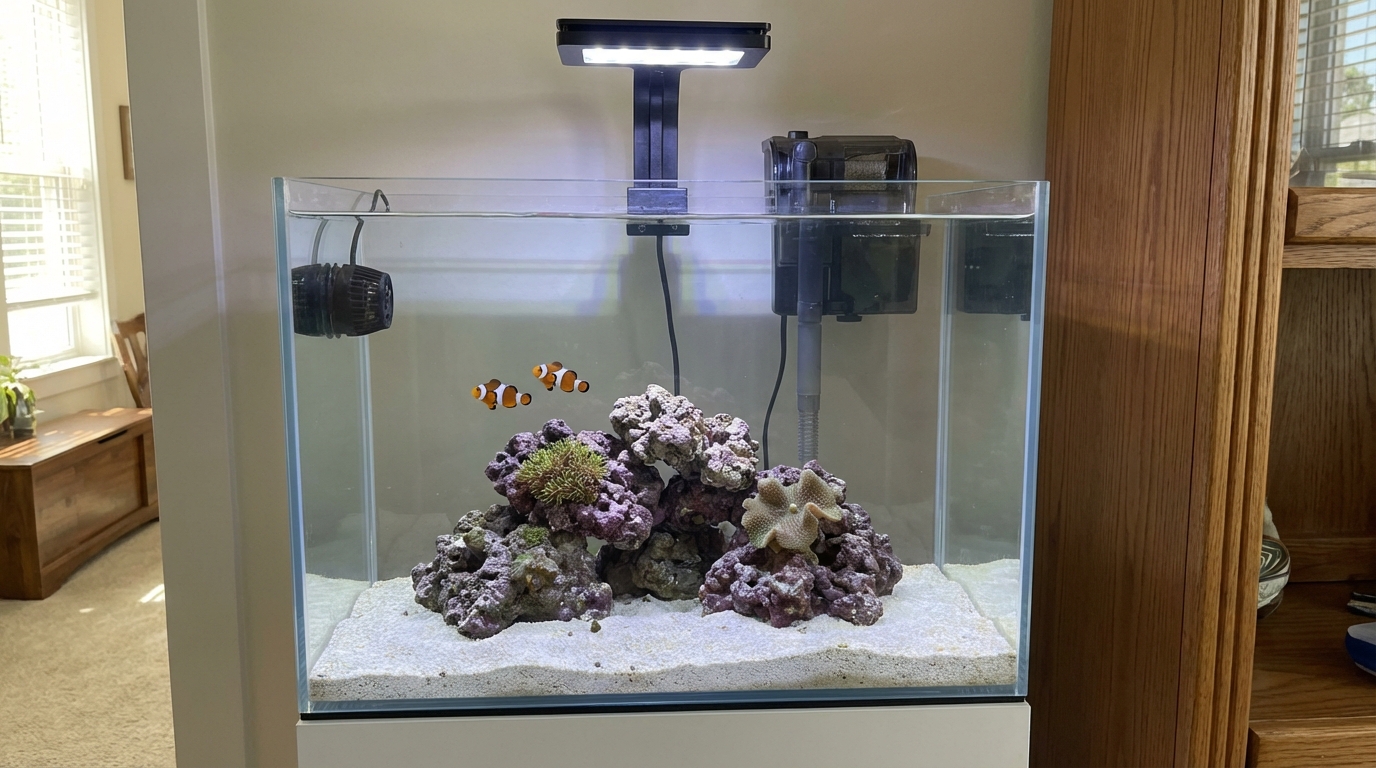
What does a beginner reef tank really cost?
A realistic beginner reef setup usually lands between $900 and $2,500 depending on tank size, equipment quality, and livestock pace. The key is to budget in phases so you can avoid rushed purchases and expensive mistakes.
Starter budget ranges (20-40 gallon reef)
- Tank and stand: $200-$700
- Lighting: $150-$500
- Flow and filtration: $150-$500
- Heater and controller basics: $40-$200
- RO/DI, salt, and test kits: $120-$350
- Rock, sand, and bacteria cycle supplies: $120-$400
- First fish and cleanup crew: $120-$350
- First beginner coral additions: $80-$300
If you want to buy livestock slowly and safely, browse current listings by category in the ReefBay coral marketplace and fish listings.
Monthly running costs to plan for
Most beginner reef tanks cost about $60-$200 per month after setup.
- Salt and water: $15-$40
- Power use: $10-$35
- Food and dosing: $10-$40
- Consumables: $10-$40
- Livestock upgrades: $15-$80
Where beginners overspend
1) Buying livestock before tank stability
Most early losses come from rushing. Let the tank stabilize, then add fish and coral gradually.
2) Chasing cheap equipment that fails fast
A failed heater or weak light usually costs more in livestock loss than the initial savings.
3) Skipping test kits and routine tracking
Testing alkalinity, nitrate, and phosphate prevents panic spending on random fixes. Use the ReefBay app to track values and trends.
Simple phased buying plan
- Phase 1: Tank, stand, RO/DI, salt, heater, and flow
- Phase 2: Lighting, test kits, and cleanup crew
- Phase 3: Hardy fish and beginner coral like zoa and hammer
- Phase 4: Optional upgrades such as skimmer and controller
Final budget target
For most new reefers, a healthy first-year target is $1,500-$3,500 total including setup and operating costs. Budgeting by phase keeps your tank stable and your spending predictable.
Ready to plan your stocking list? Start with one-word searches like goby, shrimp, and anemone to compare real listings.
Beginner cost-control checklist
- Pick a target tank size early. Switching from a 20 gallon plan to a 40 gallon plan late in the process usually doubles equipment cost.
- Buy used hardware carefully. Used tanks, pumps, and lights can save money, but test all equipment before adding livestock.
- Keep a livestock reserve. Set aside 10-15% of your budget for quarantine, medication, or emergency replacement gear.
- Automate only where it matters. A reliable ATO and heater controller often provide better value than expensive non-essential add-ons.
- Track recurring costs monthly. Salt, filter media, food, and dosing supplements are small expenses that add up fast.
Sample 6-month spend plan
Month 1: tank, stand, rock, sand, heater, and flow. Month 2: lighting and test kits. Month 3: cleanup crew and first hardy fish. Months 4-6: add coral slowly while monitoring nutrient stability. This staged approach protects both your budget and livestock health.
Common first-year upgrade decisions
After your tank stabilizes, decide whether to invest in a skimmer, doser, or controller based on measurable need, not social media pressure. If nutrients stay balanced and coral growth is steady, delaying upgrades can be the best budget move.