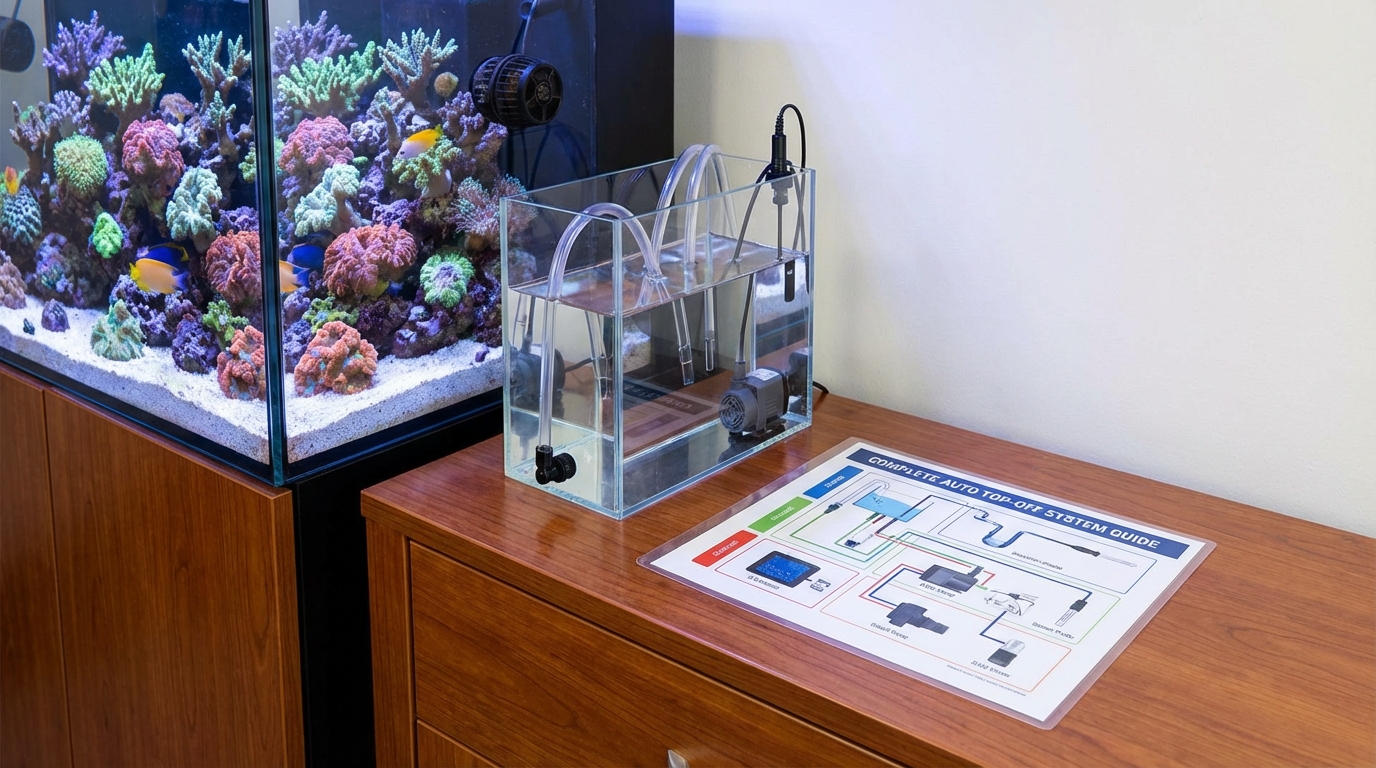
An Auto Top-Off (ATO) system is one of the most valuable investments you can make for your reef tank. By automatically replacing water lost to evaporation with fresh RO/DI water, an ATO maintains stable salinity—critical for the health of your corals and fish.
Why You Need an ATO System
Water evaporates from your reef tank every day. When water evaporates, salt stays behind, causing salinity to rise. Without consistent top-offs, your tank can experience:
- Salinity swings: Corals and fish are stressed by fluctuating salinity
- Equipment damage: Pumps can run dry and burn out
- Heater issues: Exposed heaters can crack or overheat
- Daily maintenance burden: Manual top-offs are tedious and easy to forget
An ATO solves all these problems by automatically adding fresh water whenever levels drop.
How ATO Systems Work
Most ATO systems use a simple but effective design:
- Sensor – Detects when water level drops below a set point
- Controller – Processes the signal and activates the pump
- Pump – Moves fresh RO/DI water from a reservoir into your sump
- Safety features – Prevents overfilling in case of sensor failure
Types of Sensors
- Optical sensors: Use light to detect water level. More reliable, less prone to buildup
- Float switches: Mechanical float that rises and falls with water. Simple but can stick
- Dual sensors: Primary and backup sensor for added safety
Best ATO Systems by Budget
Budget-Friendly ($30-80)
AutoAqua Smart ATO Micro: Compact, reliable optical sensor with simple setup. Perfect for nano tanks and budget-conscious reefers.
- Single optical sensor
- Good for tanks up to 50 gallons
- Basic but reliable
Mid-Range ($80-150)
Tunze Osmolator 3155: Industry workhorse with excellent build quality. Dual sensors (optical + safety float) provide redundancy.
- Optical sensor + mechanical backup
- Proven reliability
- Works with larger reservoirs
XP Aqua Duetto: Feature-rich with dual optical sensors and smart alerts.
- Dual optical sensors
- Smartphone alerts for issues
- Great value for features
Premium ($150+)
Neptune Systems ATK (Apex Tank Kit): Integrates with Apex controller ecosystem. Ideal for serious hobbyists who want full automation.
- Dual optical sensors
- Full Apex integration
- App monitoring and alerts
Installation Tips
Sensor Placement
- Install in your sump, not the display tank
- Choose a calm area away from return flow and skimmer bubbles
- Mount at your desired water level – not too high or low
- Keep sensors clean – salt creep affects readings
Reservoir Setup
- Use a container sized for your evaporation rate (typically 1-2 gallons/day)
- Keep the reservoir covered to prevent contamination
- Position below sensor level or use a pump rated for the lift height
- Only use RO/DI water – never tap water or saltwater
Safety Precautions
- Use an ATO with dual sensors or a float switch backup
- Set a maximum run time to prevent flooding
- Check sensors weekly for buildup or debris
- Keep pump intakes clear
Common ATO Problems and Solutions
ATO Not Turning On
- Check sensor for salt buildup – clean with vinegar
- Verify power connections
- Test sensor manually by raising/lowering
ATO Running Continuously
- Sensor may be dirty or misaligned
- Check for leaks in tubing
- Verify reservoir has water
ATO Flooding Tank
- Primary sensor stuck – always use dual sensors
- Set maximum pump run time in controller
- Use a reservoir smaller than your sump’s overflow capacity
Track Your Top-Offs
Many reefers track how much water their ATO adds daily. This helps spot changes in evaporation rate (which can indicate issues with lids, HVAC, or equipment).
Use the ReefBay app to log your top-off amounts and track trends over time.
Conclusion
An ATO system is essential reef tank equipment that pays for itself in peace of mind and stable water parameters. Whether you choose a budget-friendly option or a premium integrated system, the key is consistent, automated top-offs with proper safety measures.
Ready to automate your top-offs? Browse reef equipment on ReefBay or download the ReefBay app to track your tank’s parameters and maintenance.