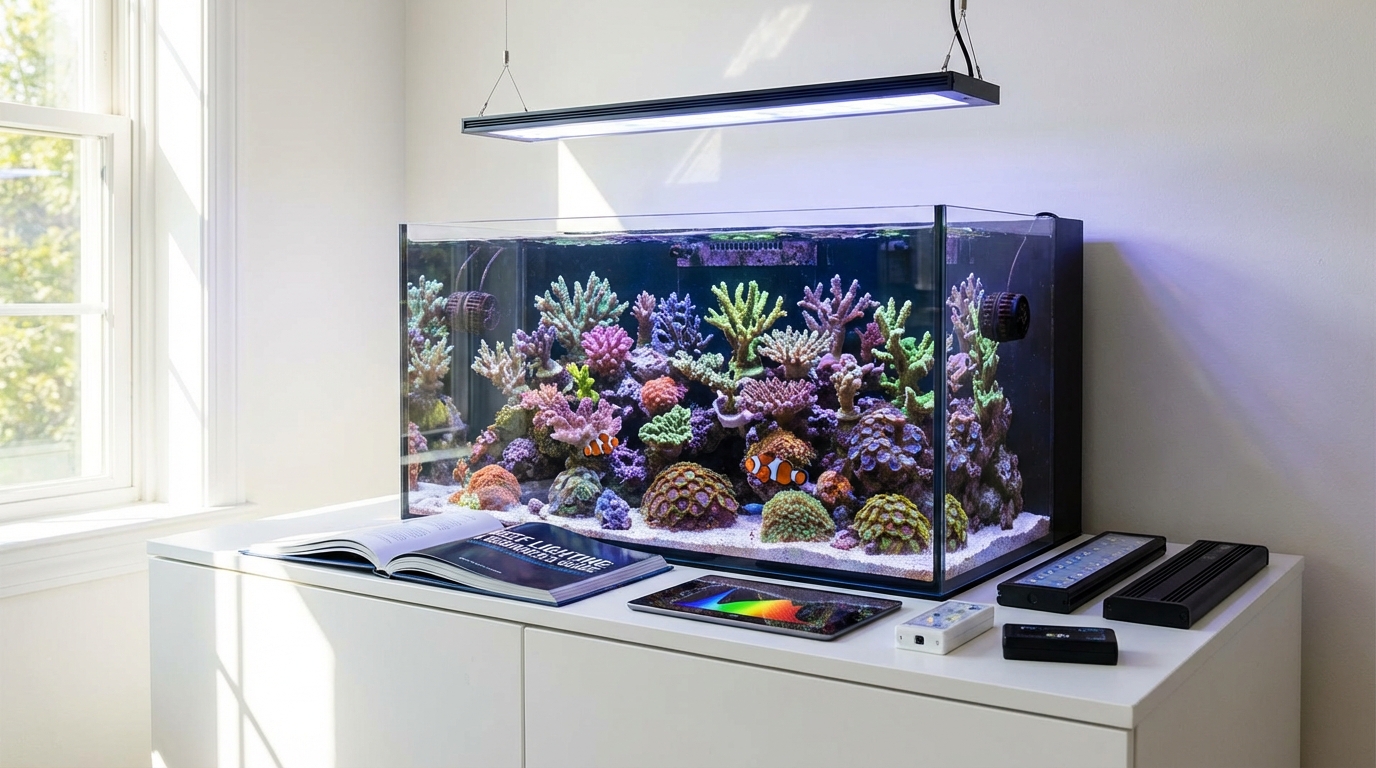
Lighting is one of the most critical factors in a successful reef aquarium. It powers photosynthesis in corals and other photosynthetic organisms, directly affecting their health, growth, and coloration. This guide covers everything beginners need to know about reef lighting.
Why Lighting Matters in a Reef Tank
Corals contain symbiotic algae called zooxanthellae that require light to produce energy through photosynthesis. Without adequate lighting, corals will slowly starve and lose their vibrant colors. Different coral species have evolved under varying light conditions, so understanding your livestock's needs is essential.
LED vs T5 Fluorescent: The Great Debate
LED Lighting
LED fixtures have revolutionized reef keeping with their energy efficiency, longevity, and programmability. Modern LEDs can produce the full spectrum corals need while using a fraction of the electricity of older technologies.
- Pros: Energy efficient, long lifespan (50,000+ hours), highly customizable spectrum and intensity, generates less heat
- Cons: Higher upfront cost, can create harsh shadows, requires proper programming
T5 Fluorescent
T5 tubes remain popular among serious reef keepers for their even light spread and proven track record with demanding corals.
- Pros: Even light distribution, no shadows, proven results with SPS corals, lower initial cost
- Cons: Higher operating costs, bulbs need replacement every 9-12 months, generates more heat
Hybrid Systems
Many advanced hobbyists use hybrid fixtures combining LED and T5, getting the best of both worlds: the shimmer and efficiency of LEDs with the even coverage of T5s.
Understanding PAR (Photosynthetically Active Radiation)
PAR measures the light intensity available for photosynthesis, measured in micromoles per square meter per second (μmol/m²/s). Different corals thrive at different PAR levels:
- 50-100 PAR: Mushrooms, zoanthids, and most soft corals
- 100-200 PAR: LPS corals like torch corals, hammers, and frogspawn
- 200-350 PAR: Most SPS corals including Montipora
- 300-500+ PAR: Light-demanding Acropora species
A PAR meter is an invaluable tool for ensuring your corals receive appropriate light levels. Track your parameters and lighting schedule with the ReefBay app to maintain optimal conditions.
Light Spectrum for Reef Tanks
Corals use light across the visible spectrum, but certain wavelengths are particularly important:
- Blue light (420-480nm): Penetrates water deeply, drives photosynthesis, enhances fluorescence
- White light (6500K-20000K): Provides natural appearance, aids in viewing coral colors
- UV/Violet (380-420nm): Enhances fluorescent proteins in corals
Most reef keepers prefer a color temperature between 14,000K and 20,000K for the ideal balance of coral health and aesthetics.
Photoperiod: How Long Should Lights Be On?
A consistent photoperiod mimics natural conditions and helps establish a healthy circadian rhythm for your tank inhabitants.
- Recommended photoperiod: 8-10 hours of full intensity lighting
- Ramp up/down: 1-2 hours of gradual increase and decrease simulates sunrise and sunset
- Moonlights: Optional low-intensity blue lighting at night can encourage natural behaviors
Popular Reef Lighting Brands
Several manufacturers have earned excellent reputations in the reef community:
- Ecotech Marine Radion: Premium LED fixtures with excellent spectrum and control
- AI Hydra: Great balance of performance and price
- Kessil: Known for excellent color blending and shimmer
- Red Sea ReefLED: Designed specifically for their reef systems
- ATI: Industry-leading T5 fixtures
Browse reef lighting equipment in our ReefBay shop to find the perfect fixture for your setup.
Tips for New Reef Keepers
- Start low, go slow: New corals need time to acclimate to your lighting. Start at 50-70% intensity and gradually increase over 2-4 weeks.
- Position matters: Place light-demanding corals higher in the tank, shade-loving species lower or under overhangs.
- Consistency is key: Use timers to maintain a consistent schedule. Corals thrive on routine.
- Watch for signs: Bleaching, color loss, or tissue recession can indicate too much light. Polyp extension and vibrant colors suggest happy corals.
Conclusion
Proper lighting is fundamental to reef keeping success. Whether you choose LED, T5, or a hybrid system, understanding PAR levels, spectrum, and photoperiod will help your corals thrive. Start with quality equipment from trusted brands, take time to learn your specific corals' needs, and use tools like the ReefBay app to track and optimize your reef's environment.