⚠️ Important Note for New Tanks: We don't recommend running a protein skimmer on a brand new reef tank. Skimmers can bottom out your nitrates too quickly, which often leads to nuisance algae like cyanobacteria and dinoflagellates. You likely won't need a skimmer until your tank is 6 months to a year old—typically once your nitrates consistently exceed 5 ppm and water changes alone can't bring them under control. That's the ideal time to start using a protein skimmer.
A protein skimmer is arguably the most important piece of equipment for a successful reef aquarium after your filtration and lighting. This guide covers everything you need to know about protein skimmers—from how they work to choosing the right size for your tank.
What is a Protein Skimmer?
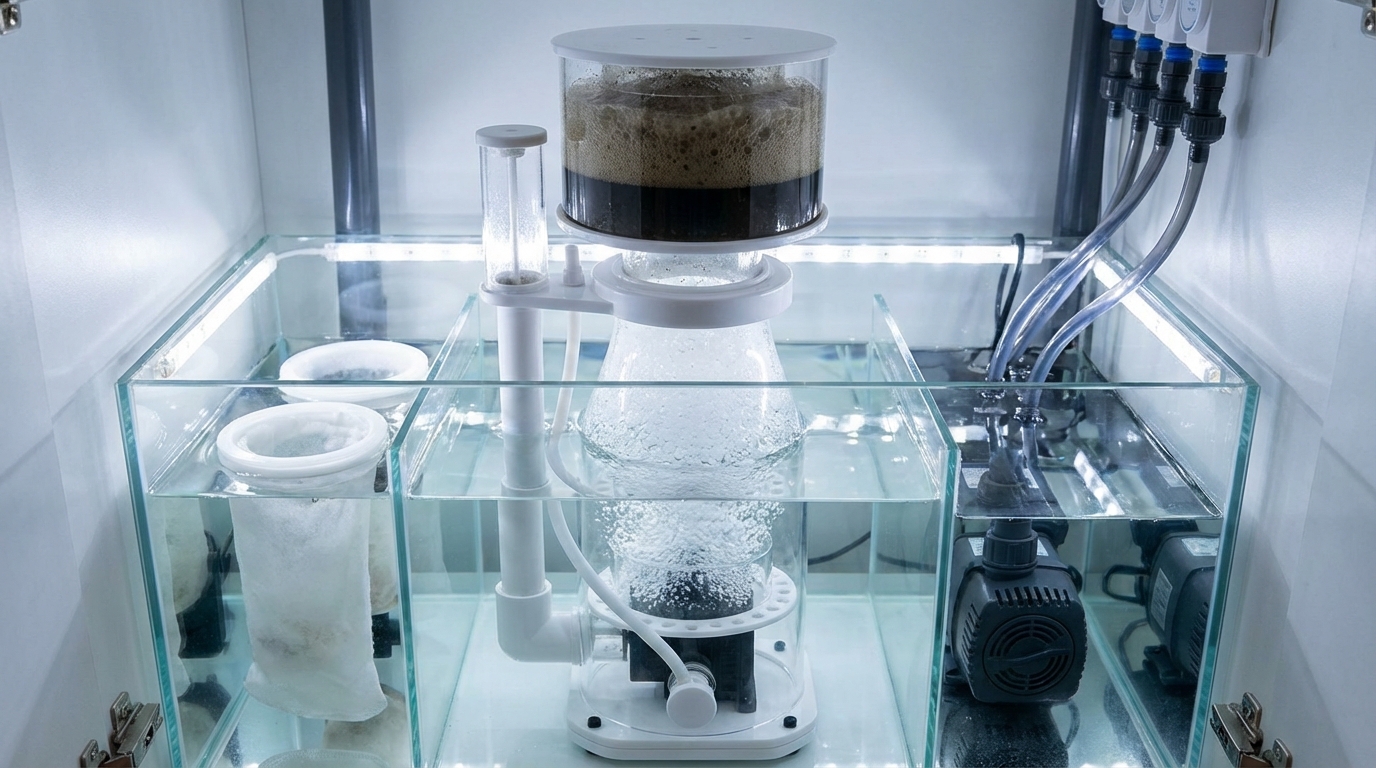
A protein skimmer (also called a foam fractionator) removes dissolved organic compounds from your aquarium water before they break down into harmful ammonia and nitrate. Think of it as a mechanical way to export waste from your system.
How Protein Skimmers Work
Protein skimmers use tiny air bubbles to attract and remove organic molecules from the water:
- Air injection: A pump mixes air with water to create millions of tiny bubbles
- Contact time: Organic molecules stick to the bubble surfaces in the reaction chamber
- Foam collection: Bubbles rise and overflow into a collection cup as "skimmate"
- Export: You empty the collection cup, physically removing waste from the system
Why You Need a Protein Skimmer
Benefits for Your Reef Tank
- Reduced nitrates: Removes organic waste before it breaks down
- Improved water clarity: Removes dissolved yellowing compounds
- Better oxygenation: Adds oxygen to the water through air injection
- Stable pH: Helps maintain consistent pH by exporting acids
- Healthier corals: Cleaner water means happier coral and fish
Track how your water parameters improve with skimming using the ReefBay app to log your nitrate and phosphate levels over time.
Types of Protein Skimmers
Hang-On-Back (HOB) Skimmers
Perfect for tanks without sumps. They hang on the back of your display tank and are easy to install and maintain.
- Best for: Tanks under 75 gallons without sumps
- Pros: Easy setup, no sump required
- Cons: Visible on tank, less efficient than in-sump models
In-Sump Skimmers
The most popular choice for serious reef keepers. Sits inside your sump for a clean look.
- Best for: Any tank with a sump
- Pros: More efficient, hidden from view, larger capacity
- Cons: Requires a sump, takes up sump space
External Skimmers
Stand outside the sump and connect via plumbing. Great for large systems.
- Best for: Large tanks 200+ gallons
- Pros: Highest capacity, doesn't use sump space
- Cons: Complex installation, higher cost
Sizing Your Protein Skimmer
Golden rule: Always oversize your skimmer. It's better to have more capacity than you need.
General Sizing Guidelines
- Lightly stocked: Skimmer rated for actual tank volume
- Moderately stocked: Skimmer rated for 1.5x tank volume
- Heavily stocked: Skimmer rated for 2x+ tank volume
- SPS dominant: Oversize significantly for pristine water
Factors Affecting Skimmer Size
- Bioload (number and size of fish)
- Feeding frequency and amount
- Coral types (SPS require cleaner water)
- Other filtration methods used
Setting Up Your Protein Skimmer
Initial Setup Steps
- Install according to manufacturer instructions
- Set water level in sump to recommended height
- Start with the outlet valve fully open (wet skim setting)
- Allow 24-48 hours break-in time
- Gradually adjust for optimal foam production
Break-In Period
New skimmers take time to "break in." During this period:
- Expect erratic behavior and micro-bubbles
- Don't adjust settings frequently
- Allow oils and residues to wash off pump components
- Full break-in takes 1-2 weeks
Tuning Your Protein Skimmer
Understanding Skim Types
- Wet skim: Light-colored, watery skimmate; removes more but diluted waste
- Dry skim: Dark, thick skimmate; concentrated waste removal
- Optimal: Tea-colored skimmate; balanced approach for most tanks
Adjustment Tips
- Raise water level in reaction chamber for wetter skim
- Lower water level for dryer skim
- Adjust gate valve or outlet in small increments
- Wait several hours between adjustments to see effects
Maintenance Schedule
Weekly Tasks
- Empty collection cup (more often if it fills quickly)
- Wipe down collection cup and neck
- Check for proper bubble production
Monthly Tasks
- Clean collection cup with vinegar solution
- Inspect airline tubing for buildup
- Check pump inlet for debris
Quarterly Tasks
- Deep clean entire skimmer body
- Soak venturi in vinegar to remove calcium deposits
- Inspect and clean pump impeller
- Replace worn airline tubing
Common Skimmer Problems & Solutions
Micro-Bubbles in Display
Causes: Air leaks, improper sump water level, new skimmer break-in
Solutions: Check all connections, adjust water level, add filter socks, wait for break-in
Skimmer Overflowing
Causes: Sump level too high, additives in water, water change
Solutions: Lower sump level, wait 24 hours after adding supplements
No Foam Production
Causes: Clogged venturi, pump issues, low bioload, break-in period
Solutions: Clean venturi and air intake, check pump, give it time
Top Protein Skimmer Brands
While skimmers aren't typically sold on ReefBay marketplace, you can find great deals on local pickup through the app. Popular trusted brands include:
- Reef Octopus: Great value and performance
- Nyos: Premium German engineering
- Bubble Magus: Budget-friendly options
- Skimz: Innovative designs
- Vertex: High-end professional grade
Final Thoughts
A protein skimmer is an investment in your reef's long-term health. While they require some learning to dial in properly, the benefits of cleaner water, lower maintenance, and healthier livestock make them essential for serious reef keeping.
Remember to track your water parameters with the ReefBay app to see the improvements your skimmer makes. And for live foods, corals, and other livestock, browse the ReefBay marketplace from trusted sellers.