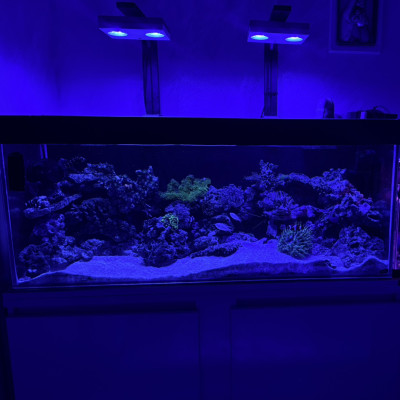
Hulp nodig met mijn Sarcophyton leerkoraal
Hoi allemaal! Ik ben op zoek naar advies over mijn Sarcophyton leerkoraal.
Hij is al ongeveer een maand niet open gegaan en heeft zijn poliepen niet uitgestrekt. Het koraal is nog steeds zacht als je het aanraakt en beweegt natuurlijk mee met de waterstroom, maar er beginnen groene plekken te groeien die op algen lijken op het oppervlak.
Ik heb gemerkt dat er een laagje op de bovenkant van het koraal vormt. Ik heb het één keer voorzichtig verwijderd, maar het lijkt opnieuw te ontstaan.
Al mijn andere koralen in de buurt doen het goed, maar deze Sarcophyton is nog steeds niet open gegaan.
Heeft iemand iets soortgelijks meegemaakt? Waardoor kan dit komen, en wat raden jullie aan om te doen zodat hij herstelt?
Alle advies wordt zeer gewaardeerd. Bedankt!
Need help with my Sarcophyton leather coral
Hi everyone! I’m looking for some advice about my Sarcophyton leather coral.
It hasn’t opened or extended its polyps for about a month. The coral is still soft to the touch and moves naturally with the water flow, but green patches that look like algae are starting to grow on its surface.
I’ve noticed that a film forms on the top of the coral. I gently removed it once, but it seems to be forming again.
All my other corals nearby are doing well, but this Sarcophyton still hasn’t opened.
Has anyone experienced something similar? What could be causing this, and what would you recommend I do to help it recover?
Any advice would be greatly appreciated. Thank you!
Reacties
Log in om een reactie achter te laten
Nog geen reacties
Start als eerste het gesprek.
Log in om mee te praten.
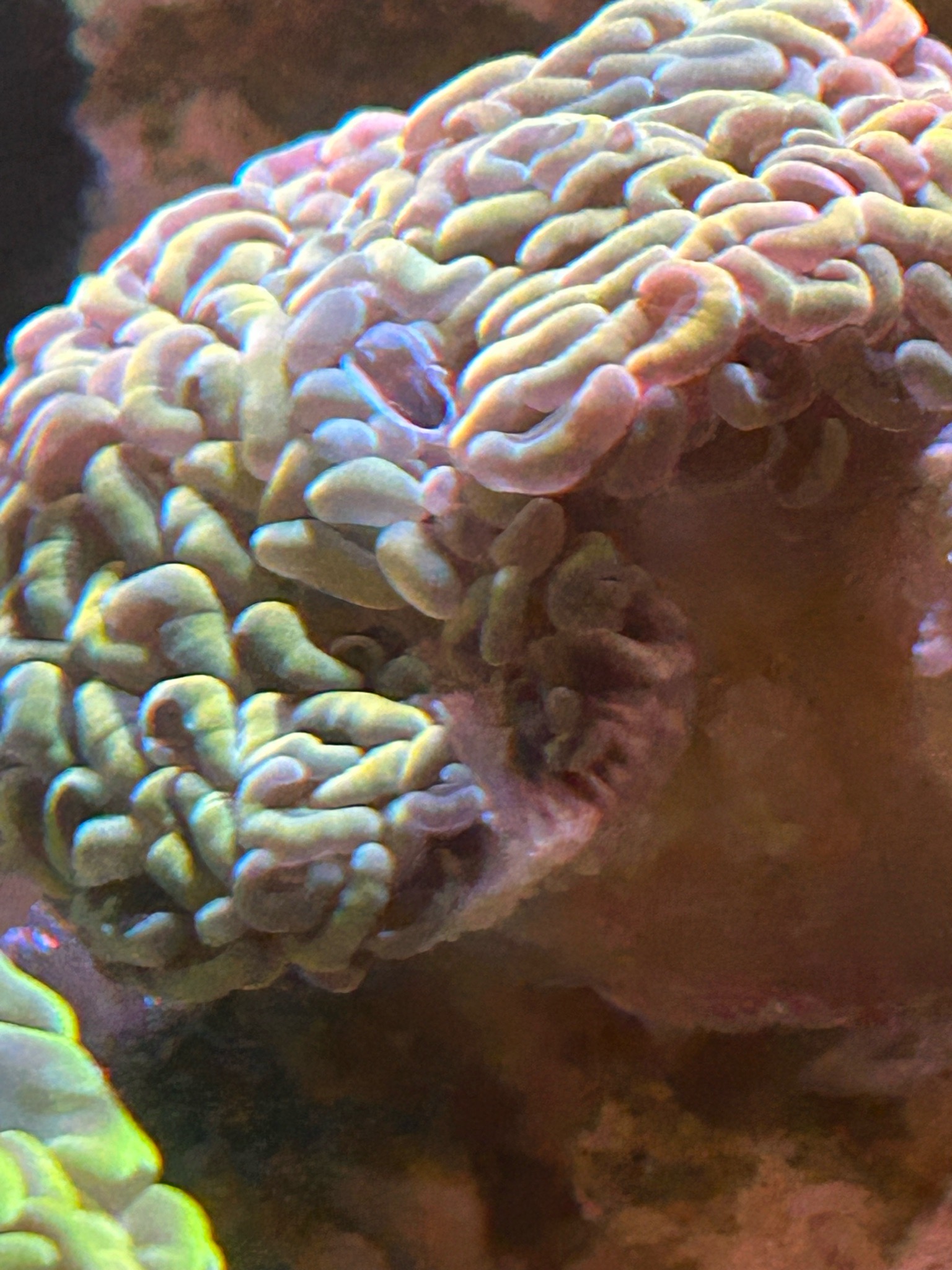
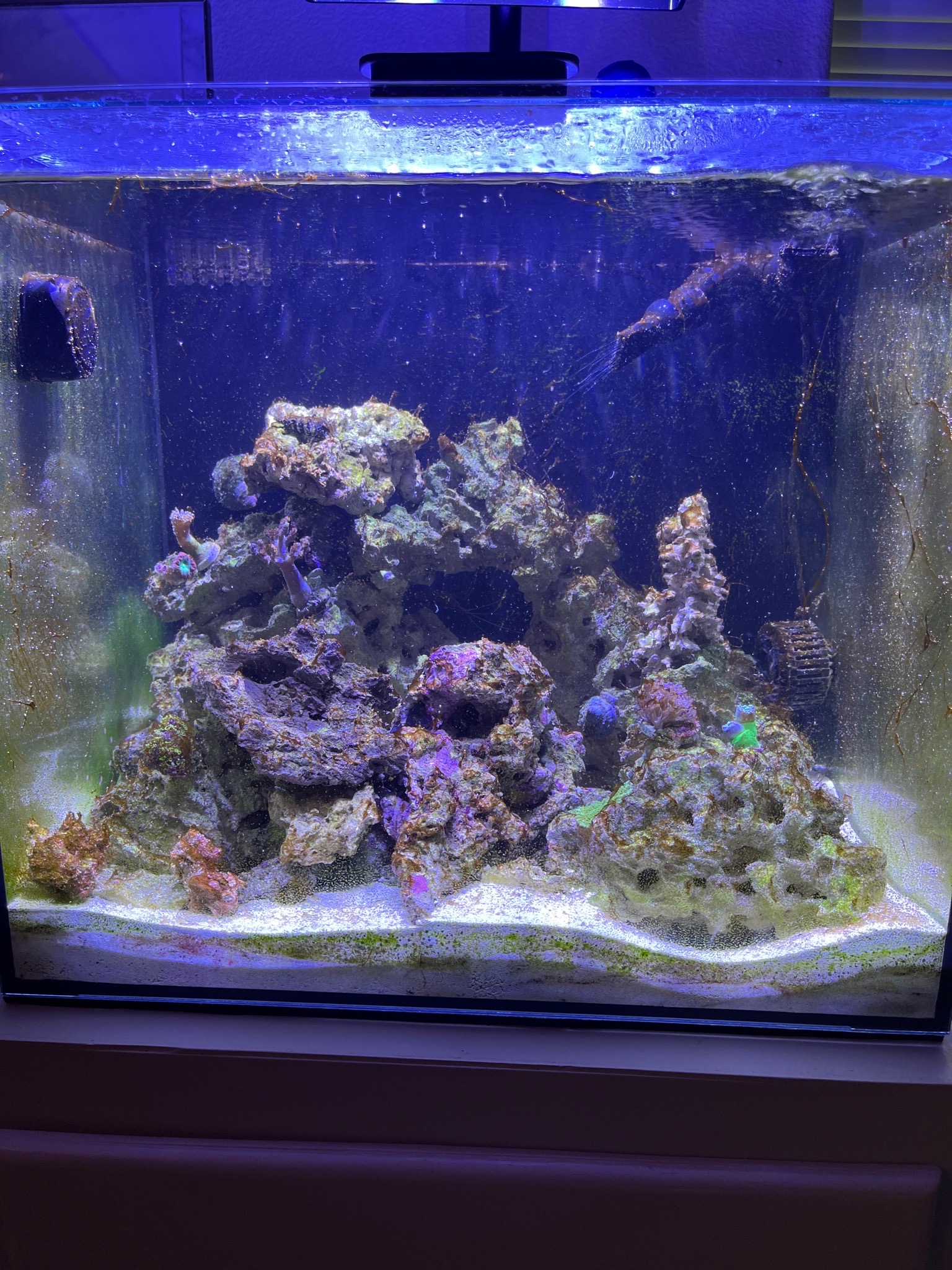
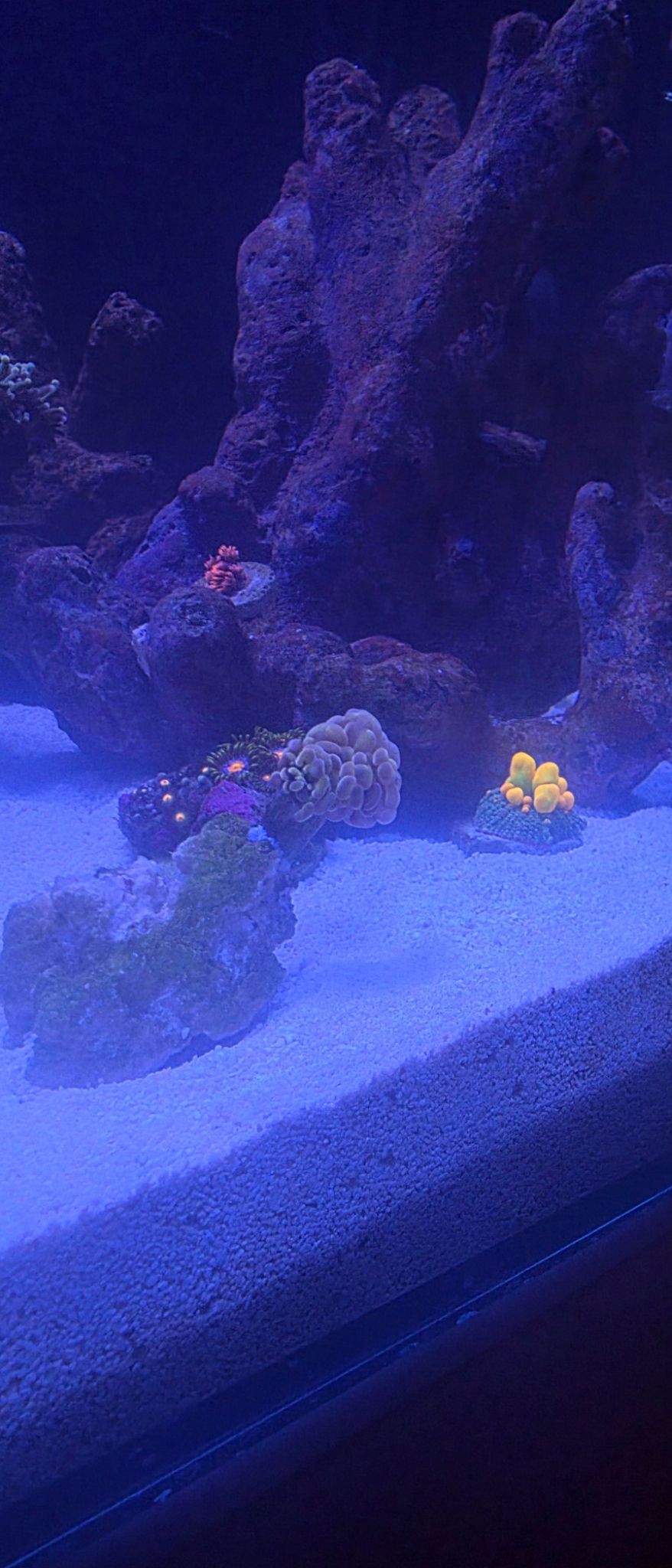



Opgesloten afwerp-slijm (wasachtige glans & algenophoping): Het mechanisme: lederkoralen trekken regelmatig samen en produceren een wasachtige, glanzende laag slijm om opgehoopt afval, epifytische algen en detritus af te stoten. Het probleem: als de waterbeweging over de kroon te zwak is, kan het koraal deze laag niet afwerpen. Die blijft vastzitten aan het weefsel, verstikt het oppervlak en zorgt ervoor dat opportunistische microalgen (de zichtbare groene plekken) grip krijgen. Terwijl het koraal vastzit in een afwerpcyclus, kan het geen poliepen uitstrekken om te eten of efficiënt te fotosynthetiseren, waardoor de groei stopt. Allelopathie en contact met vechttentakels: De nabijheid van de tentakels van de Euphyllia ernaast triggert een defensieve terugtrekking. Lederkoralen zullen weigeren uit te zetten wanneer ze geïrriteerd worden door netelcellen of oprukkende vechttentakels. Nutriënten-/jodiumbehoefte: Zachte koralen zoals Sarcophyton verbruiken sporenelementen (vooral opgeloste organische stoffen en jodium) tijdens het afwerpen en weefseluitzetting. Systemen met nul nutriënten (ultra-lage nutriënten) leiden vaak tot langdurig terugtrekken. Directe actiepunten 1. Spoel het oppervlak: Gebruik een turkey baster om zachtjes water direct over de kroon te blazen, zodat de loslatende film en groene algenlaag loskomen zonder levend weefsel te scheuren. 2. Verhoog direct de stroming: Stel de dichtstbijzijnde powerhead bij of verplaats het koraal naar een plek met sterkere, multidirectionele stroming zodat het oppervlaktweefsel zichtbaar rimpelt. 3. Zorg voor 6" ruimte: Verplaats het koraal weg van de Euphyllia om steken en chemische stress te elimineren. 4. Controleer de waterchemie: Bevestig dat de soortelijke massa stabiel is op 1.025–1.026 en dat nitraten comfortabel tussen 5–15 ppm liggen om de weefseluitzetting van zachte koralen te ondersteunen.
Trapped Shedding Mucus (Wax Sheen & Algae Build-Up): The Mechanism: Leather corals regularly contract and produce a waxy, glossy layer of mucus to slough off built-up waste, epiphytic algae, and detritus. The Issue: If water movement across the crown is too weak, the coral cannot cast this layer off. It remains glued to the tissue, suffocating the surface and allowing opportunistic microalgae (the visible green patches) to take hold. While locked in a shed cycle, the coral cannot extend polyps to feed or photosynthesize efficiently, halting growth. Allelopathy and Sweeper Contact: The proximity of the neighboring Euphyllia tentacles triggers defensive retraction. Leather corals will refuse to expand when irritated by nematocysts or encroaching sweeper tentacles. Nutrient / Iodine Demand: Soft corals like Sarcophyton consume trace elements (particularly dissolved organics and iodine) during shedding and tissue expansion. Zero-nutrient (ultra-low nutrient) systems often lead to extended sulking. Immediate Action Steps 1. Baste the Surface: Use a turkey baster to gently puff water directly across the crown to help lift the peeling film and green algae layer without tearing live tissue. 2. Increase Flow Immediately: Adjust the nearest powerhead or relocate the coral into an area with stronger, multi-directional flow so the surface tissue visibly ripples. 3. Ensure 6" Clearance: Move the coral away from the Euphyllia to eliminate stinging and chemical stress. 4. Inspect Water Chemistry: Confirm specific gravity is stable at 1.025–1.026 and nitrates sit comfortably between 5–15 ppm to support soft coral tissue expansion.
100%!!!!
Heel erg bedankt!! Ik volg je advies!! 🙂↕️✌️
Thank you so much!! I’ll follow your advice!! 🙂↕️✌️