Banggai Cardinalfish Care Guide: Tank Size, Diet & Captive-Bred Tips
Learn Banggai Cardinalfish care: 30+ gallon setups, daily feeding, peaceful stocking, captive-bred vs wild-caught choices, and mouthbrooding tips for reef tanks.
Quick answer
Banggai Cardinalfish care centers on a mature 30+ gallon peaceful reef, moderate flow, caves and ledges, and 2 to 3 small carnivore feedings daily with mysis, brine shrimp, frozen foods, and pellets. Choose captive-bred fish when possible, quarantine new arrivals, and expect mild aggression once a pair forms.
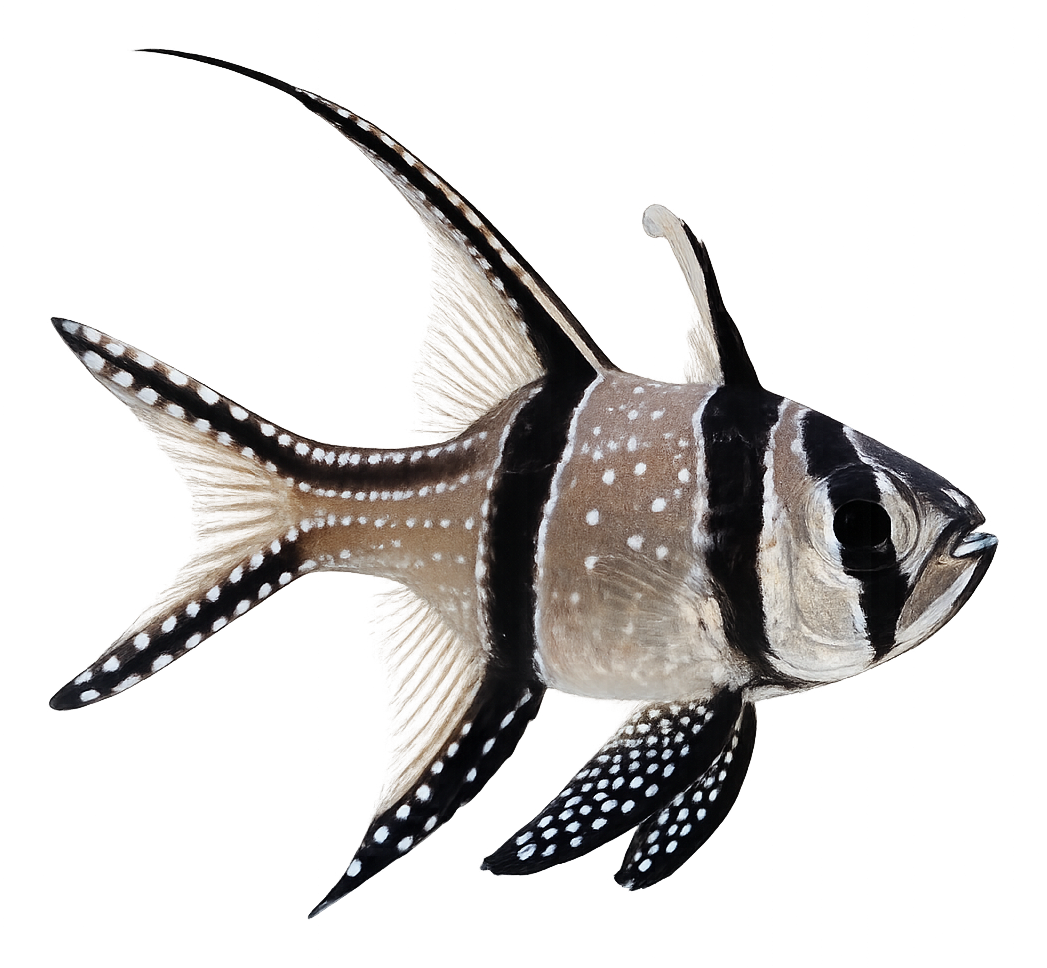
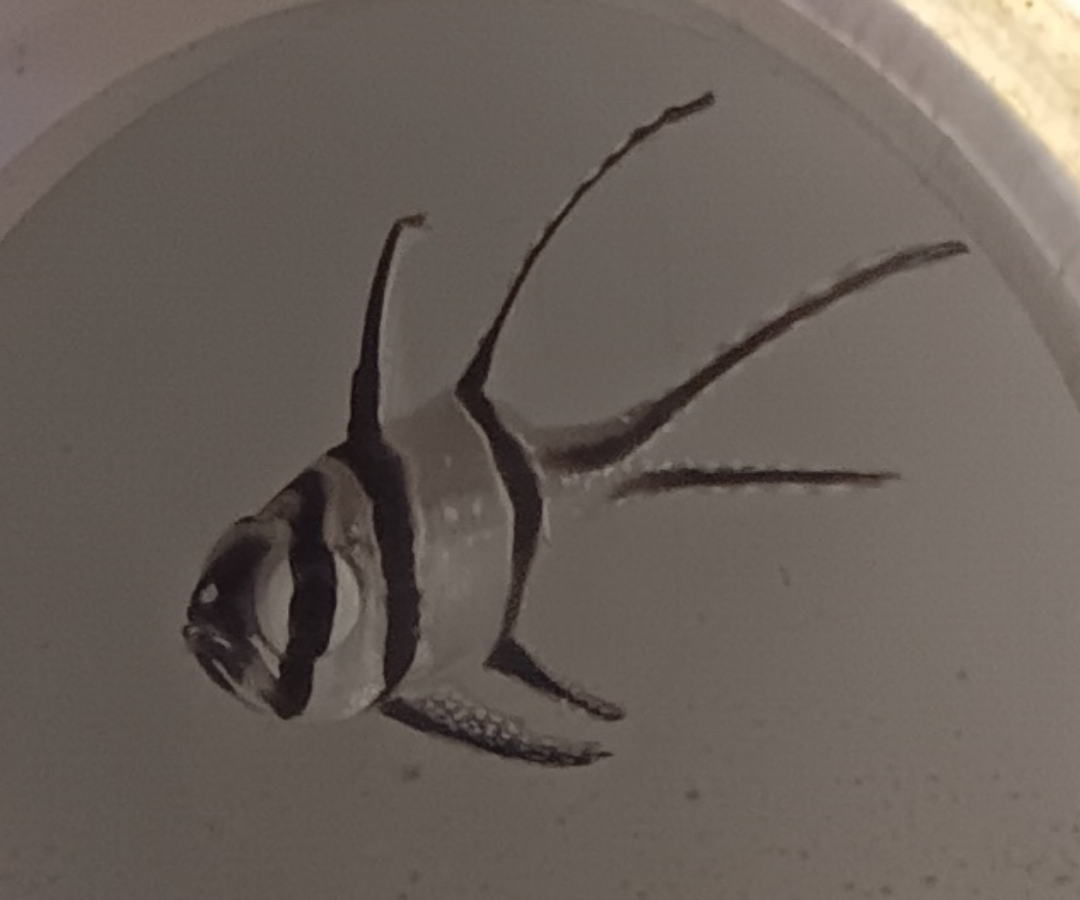
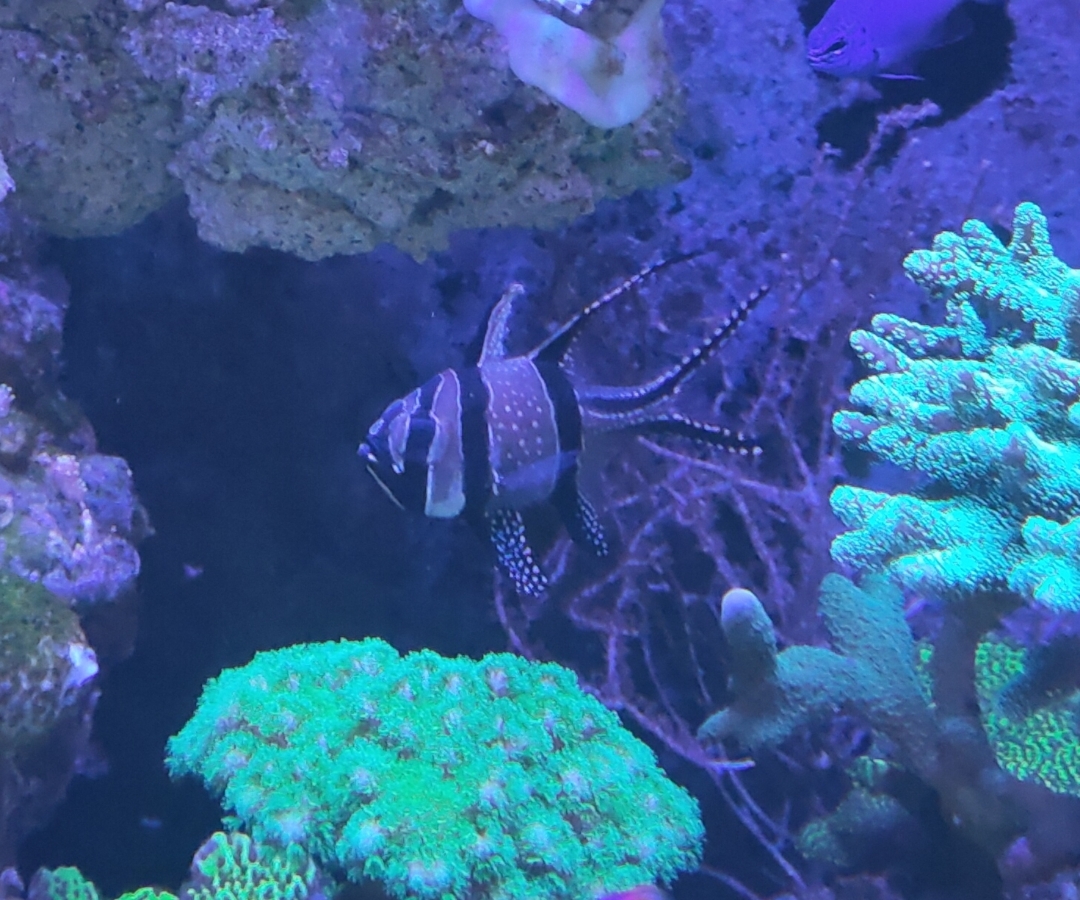
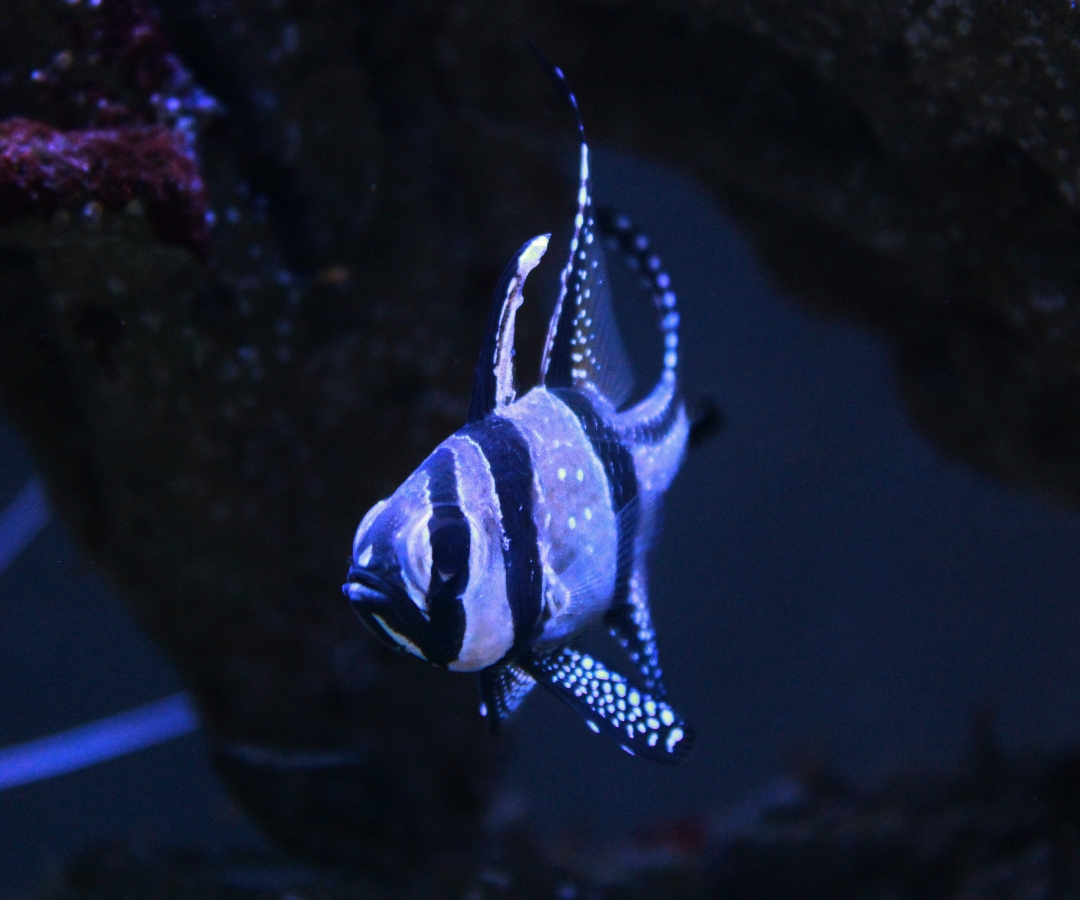
The Banggai Cardinalfish (Pterapogon kauderni) is one of the most recognizable beginner-friendly marine fish you can add to a peaceful reef. A distinctive, deep-bodied cardinalfish with silver-grey flanks, three bold black vertical bars, iridescent white spotting, and long trailing tasseled fins that give it a hovering, almost weightless swimming style. It stays relatively small (about 3.0 inches), accepts prepared foods when captive-bred, and is reef-safe with corals.
This guide covers tank size, diet, stocking, captive-bred vs wild-caught choices, and the mouthbrooding behavior that makes Banggais a realistic home-spawning project. When you are ready to buy, cross-check listings in the ReefBay marketplace against the care targets below.
Quick care snapshot
- Scientific name: Pterapogon kauderni
- Also called: Banggai Cardinal, Longfin Cardinalfish, Kaudern's Cardinalfish, Highfin Cardinalfish
- Category: Cardinalfish
- Origin: Banggai Archipelago, Indonesia (Western Pacific)
- Care level: moderate
- Temperament: peaceful toward other species; may bicker with conspecifics once a pair forms
- Reef-safe: yes with corals; inverts with caution
- Suggested tank: mature 30+ gallons
- Max size: about 3.0 inches
- Social: small group
- Diet: carnivore — mysis, brine shrimp, frozen and live foods, prepared pellets
- Best buy: captive-bred specimens whenever possible
Tank size, aquascape, and flow
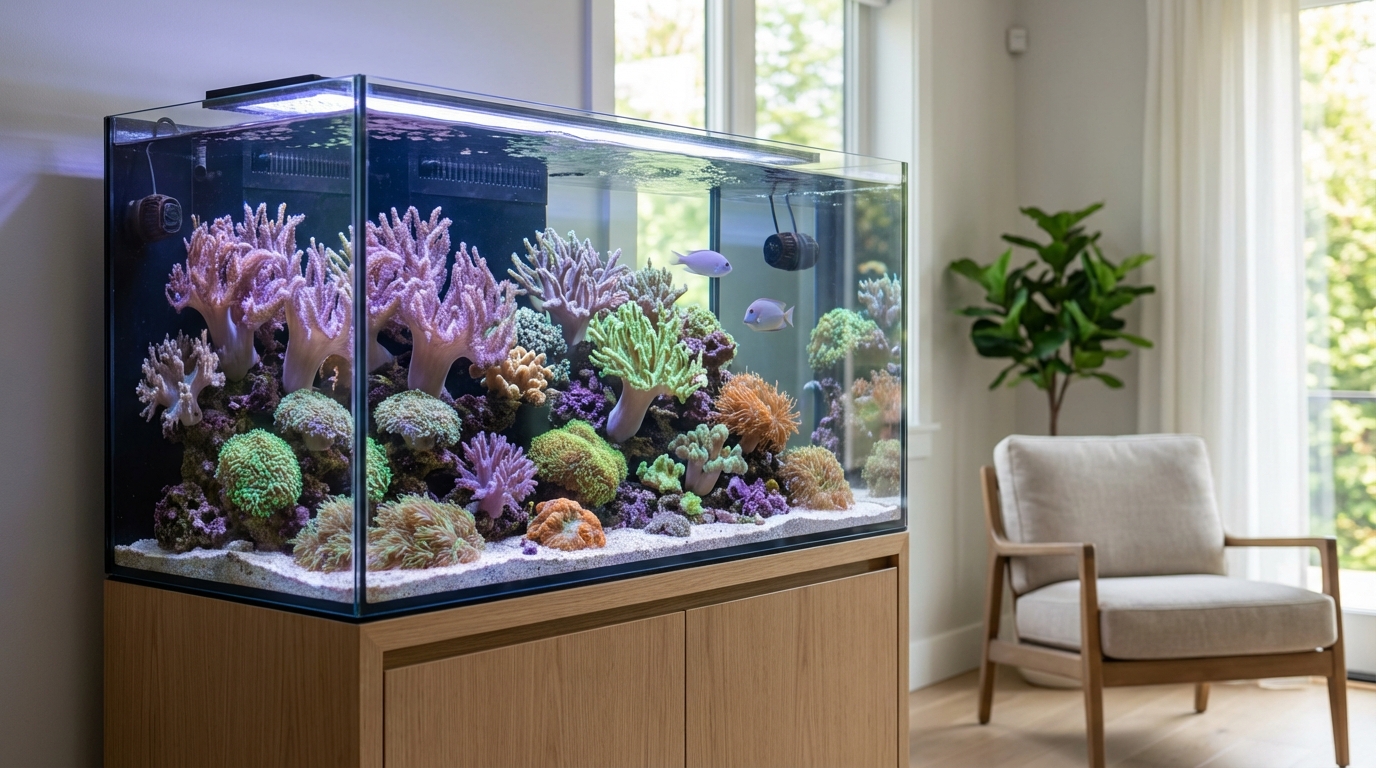
Plan for a mature system of about 30 gallons or larger. Banggais are not constant open-water cruisers like tangs. They prefer rockwork, overhangs, and shaded caves with modest flow where they can hover and retreat.
- Provide caves and ledges so shy fish can settle after lights-on
- Keep flow moderate near their preferred hangouts; blast zones push them into stress hiding
- Jump risk is low for this species, but a lid still helps during acclimation nights
- Add them after the tank is cycled and parameters are boringly stable
In a nano under 30 gallons, a single fish or a bonded pair is the safer call. In larger tanks, a small stable group can work if you introduce them together and watch for bullying once a pair forms.
Diet and feeding schedule
Banggai Cardinalfish do best on a carnivore diet: carnivore — mysis, brine shrimp, frozen and live foods, prepared pellets. Offer small portions several times a day rather than one heavy feed.
- Offer small portions 2–3 times daily
- Target mid-water feeding so shy individuals get a share
- Wean captive-bred fish onto pellets early; keep frozen foods in rotation for condition
- If tankmates are faster (wrasses, chromis), use a feeding stick or temporary feeding station near their cave
Thin fish and faded spotting usually mean food competition or insufficient feed frequency—not “mystery disease” first.
Captive-bred vs wild-caught (buy this first)
Wild Banggai Cardinalfish come from a tiny natural range in the Banggai Archipelago, Indonesia, and have faced heavy collection pressure historically. Captive-bred fish are notably hardier and better acclimated to aquarium foods and shipping stress.
- Prefer captive-bred or aquaculture labels in the ReefBay marketplace
- Ask sellers about quarantine, feeding response, and whether the fish are already eating frozen or pellets
- Skip bargains that look emaciated, clamped, or refuse food on arrival videos
Buying captive-bred is both a husbandry upgrade and the more responsible stocking choice for this species.
Compatibility and stocking tips
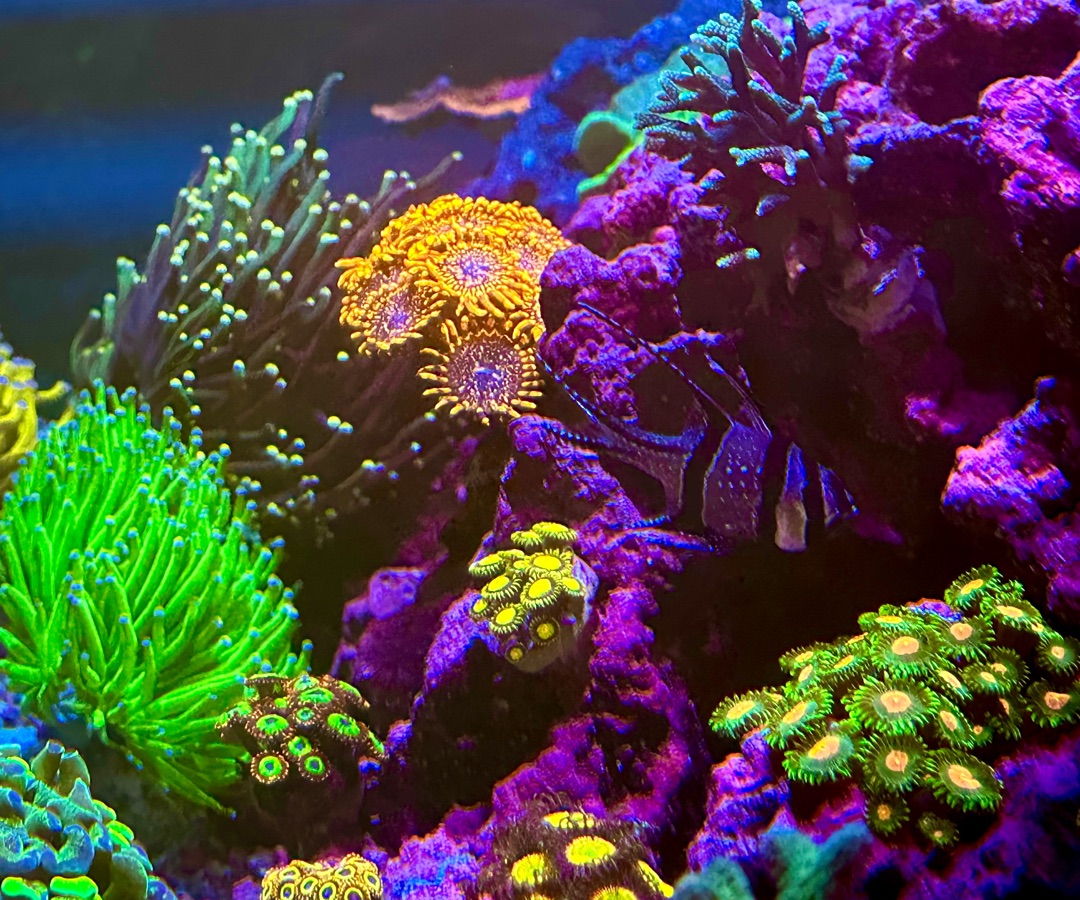
Banggais are peaceful toward other species and safe around corals. The friction is usually with other Banggais after a pair bonds. Treat ornamental shrimp with caution.
- Good neighbors: clownfish, firefish, gobies, chromis, peaceful wrasses, most LPS/soft coral tanks
- Watch closely: other cardinalfish in small tanks; large aggressive predators; tiny ornamental shrimp
- Pair strategy: introduce two juveniles together, or buy a known pair; avoid dropping a third adult into a bonded duo in a small tank
- Quarantine: still QT new fish—peaceful does not mean disease-proof
Breeding: male mouthbrooding at home
Males mouthbrood the eggs, which is one reason Banggais are among the easier marine fish to spawn in a home aquarium. You may see a male with a bulging throat and reduced appetite while carrying.
- Stable pairs in peaceful tanks often spawn without special cues
- Do not force-feed a brooding male; keep water quality excellent
- If you want to raise fry, plan a separate rearing box or tank before the male releases freelancing juveniles
Even if you never pull fry, watching mouthbrooding is one of the best “wow” behaviors in a mixed reef.
Common problems and quick fixes
- Hiding all day: normal at first; add caves, reduce bullying, feed near shelter
- Weight loss: increase feed frequency; reduce competition; confirm QT parasites if wasting continues
- Intraspecific fighting: remove the subordinate fish or upgrade space; do not keep a crowd in a 20-gallon
- Sudden deaths after add: check salinity/temp match, drip acclimation, and whether the fish ate before shipping
Buying checklist before you click purchase
- Confirm captive-bred when available
- Match tank size (30+ gallons mature) and peaceful tankmates
- Plan 2–3 small daily feeds (mysis, brine, pellets)
- Have a quarantine plan ready
- Compare active listings and seller reputation in ReefBay before you commit
Ready to shop? Open the Banggai Cardinalfish taxon page in ReefBay, compare seller photos next to care notes, and browse the marketplace for captive-bred stock.