Bicolor Blenny Care Guide: Tank Size, Diet, Algae Grazing & Jump Risk
Learn Bicolor Blenny (Ecsenius bicolor) care: 30+ gallon setups, algae and nori diet, jump-proof lids, reef-safe-with-caution stocking, and what to check before you buy on ReefBay.
Quick answer
Bicolor Blenny (Ecsenius bicolor) is a peaceful, territorial 4-inch herbivorous blenny that does best in a mature 30+ gallon tank with abundant live rock, caves, and a tight lid. Feed nori, spirulina, herbivore pellets, and frozen herbivore blends regularly, and watch for occasional nipping of SPS corals or clam mantles.
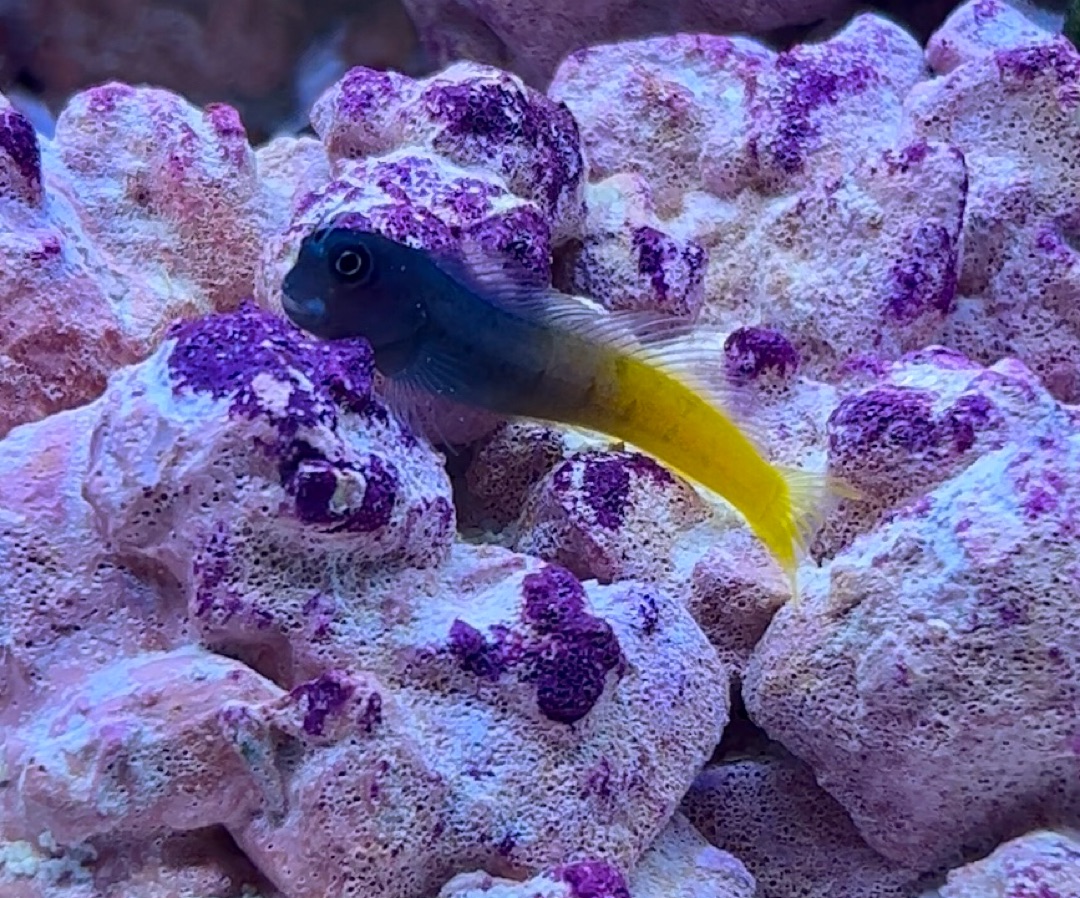
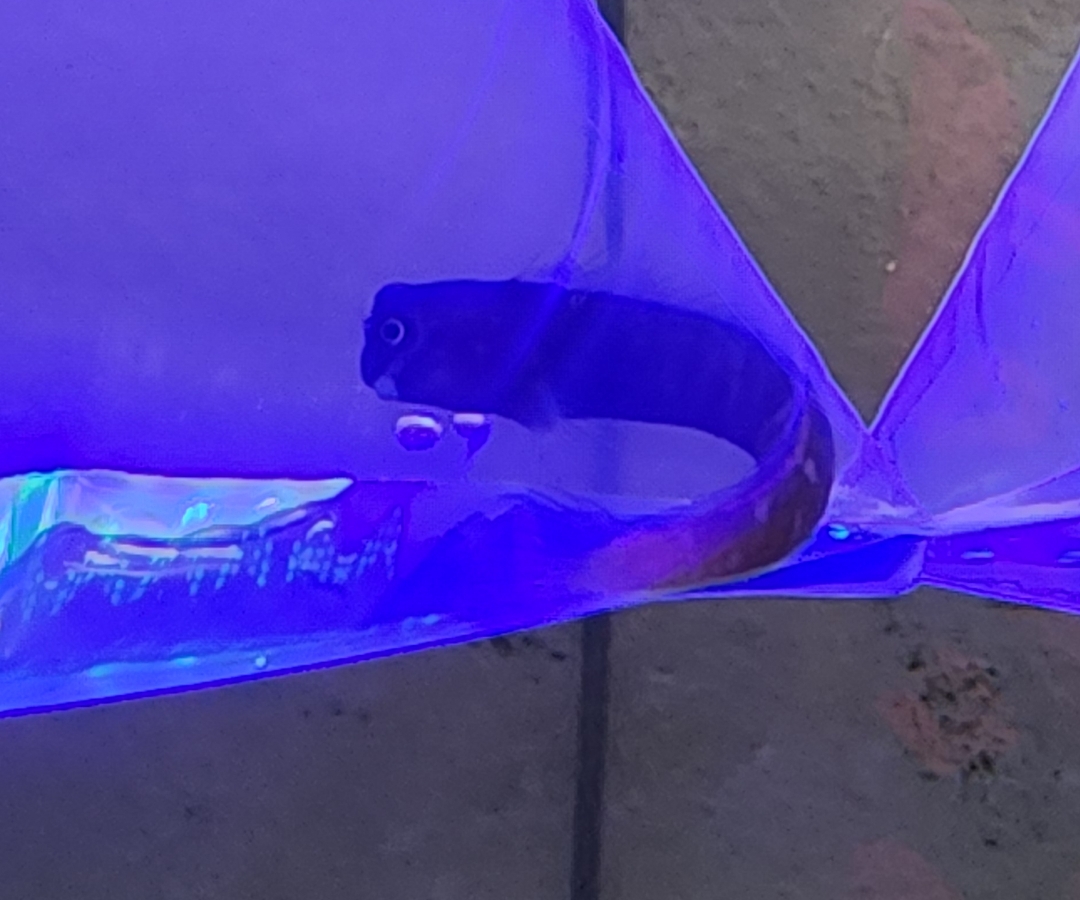
The Bicolor Blenny (Ecsenius bicolor) is a small combtooth blenny with a striking two-tone body: the front half dark blue to brown, the rear half bright orange-yellow, plus large expressive eyes on a blunt head. It perches on rock, hops from ledge to ledge, and spends much of the day grazing film and filamentous algae. Peaceful toward most tankmates, it still claims territory against other blennies, gobies, and dartfish in tight spaces.
This guide covers tank size, diet, jump risk, reef-safe-with-caution stocking, and what to check before you buy. When you are ready to shop, compare seller photos and care notes on the ReefBay taxon page and marketplace listings against the targets below.
Quick care snapshot
- Scientific name: Ecsenius bicolor
- Also called: Bicolor Blenny, Two-color Blenny, Bicolor Combtooth Blenny
- Category: Blenny
- Origin: Indo-Pacific reefs (shallow rock and rubble zones)
- Care level: easy to moderate
- Temperament: peaceful toward most species; territorial with similar body shapes
- Reef-safe: with caution — may nip small-polyped stony corals and clam mantles
- Suggested tank: mature 30+ gallons with abundant live rock
- Max size: about 4 inches
- Social: usually solitary; one per tank unless the system is large
- Diet: herbivore/omnivore — film algae, nori, spirulina, and herbivore preparations
- Jump risk: yes — use a tight-fitting lid
Tank size, aquascape, and jump risk
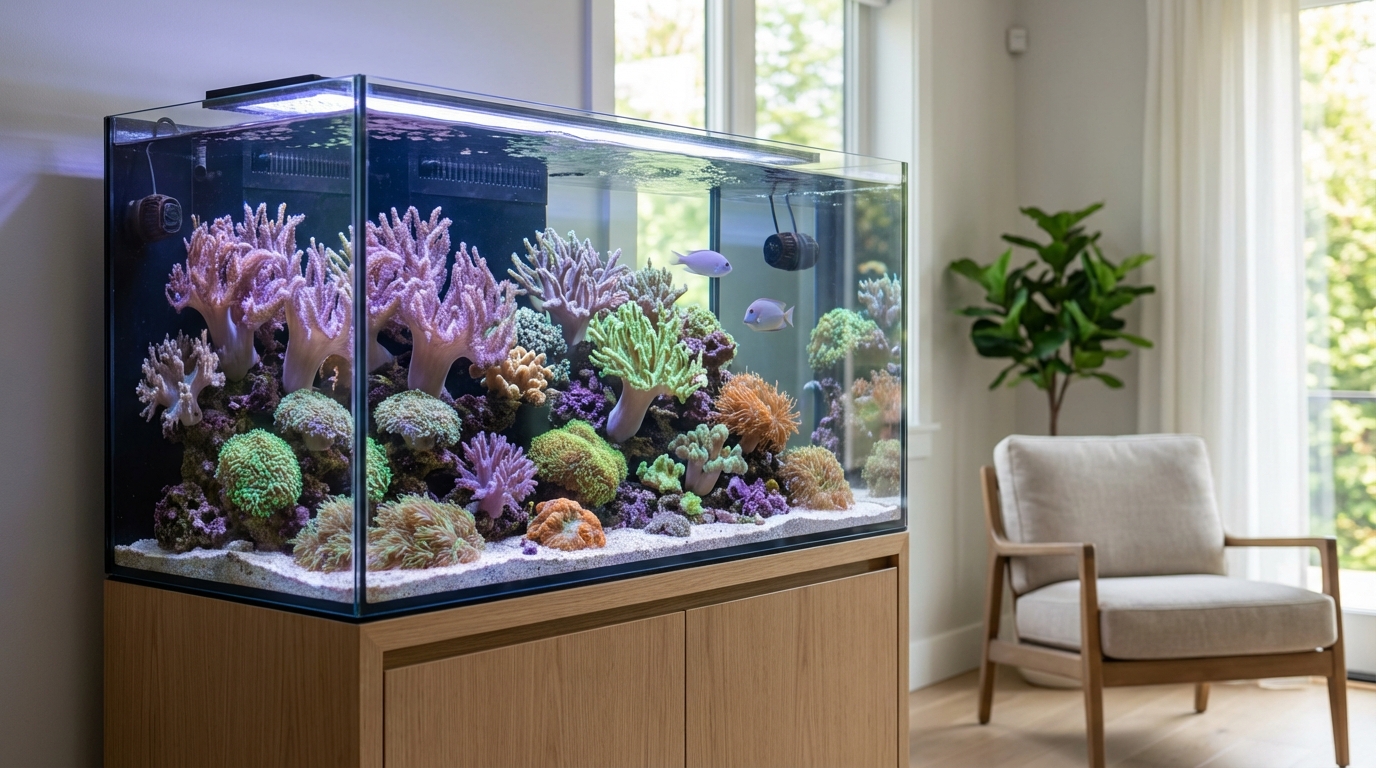
Plan for a mature system of about 30 gallons or larger with plenty of live rock, crevices, and perching ledges. Bicolor Blennies are hoppers, not open-water cruisers. They need holes and overhangs to claim as home base.
- Stack rock with caves and ledges so the fish can perch and dart into cover
- Leave some open film-algae surfaces for natural grazing in established tanks
- Jump risk is real — combtooth blennies bolt when startled; a tight lid or mesh top is non-negotiable
- Add them after the tank is cycled and parameters are stable
In a nano under 30 gallons, a single specimen is the safer call. Do not stack multiple blennies or similar bottom-dwellers unless the footprint is large and rockwork creates clear territories.
Diet and feeding schedule
Bicolor Blennies graze film and filamentous algae all day, but a mature rockscape alone is rarely enough once the fish is settled. Supplement with algae-based foods so they do not turn to coral tissue or clam mantles out of hunger.
- Offer nori, seaweed clips, or herbivore gel foods several times a week
- Rotate spirulina flakes, herbivore pellets, and frozen herbivore blends
- In new or ultra-clean tanks, feed more often until natural film returns
- Watch body condition: a sunken belly means increase plant-based feeds before blaming “mystery nipping”
Thin, listless fish usually need more grazing opportunity or less competition from tangs and other herbivores—not a random medication first.
Reef-safe with caution
Many keepers call the Bicolor Blenny reef-safe, and plenty of mixed reefs keep one without drama. The caution flag is honest: some individuals nip small-polyped stony corals and clam mantles, especially when underfed or in sparse rockscapes.
- Best fit: fish-only-with-live-rock, soft coral, or LPS-heavy tanks with thick film algae
- SPS and clams: monitor closely for the first weeks; remove the fish if nipping starts
- Keep them well fed on nori and herbivore foods to reduce opportunistic picking
Compatibility and stocking tips
Temperament toward other species is generally peaceful. Friction shows up with lookalikes that share the same rock ledges.
- Good neighbors: clownfish, chromis, peaceful wrasses, cardinalfish, most soft/LPS community fish
- Watch closely: other blennies, dartfish, and gobies in small tanks; large aggressive predators
- One-per-tank rule: unless you have a large reef with broken sightlines, keep a single Bicolor
- Quarantine: still QT new fish—peaceful does not mean disease-proof
Common problems and quick fixes
- Missing after lights-on: normal at first; add more caves and reduce open-water traffic near their perch
- Jumping: confirm the lid seals; cover return notches and probe holes
- Coral or clam nipping: increase nori and herbivore feeds; if it continues, rehome to a FOWLR or soft-coral tank
- Fighting with another blenny: separate them; do not force two combtooths into a 30-gallon
- Weight loss: boost plant-based feeds and check for competition from tangs
Buying checklist before you click purchase
- Confirm a mature 30+ gallon tank with live rock and a tight lid
- Plan regular nori / herbivore feeds—not “algae only forever”
- Decide whether your SPS or clam collection can tolerate a caution-level blenny
- Have a quarantine plan ready
- Compare active listings, seller photos, and recent community shots in ReefBay before you commit
Ready to shop? Open the Bicolor Blenny taxon page in ReefBay, compare seller photos next to care notes, and browse the marketplace for healthy stock.