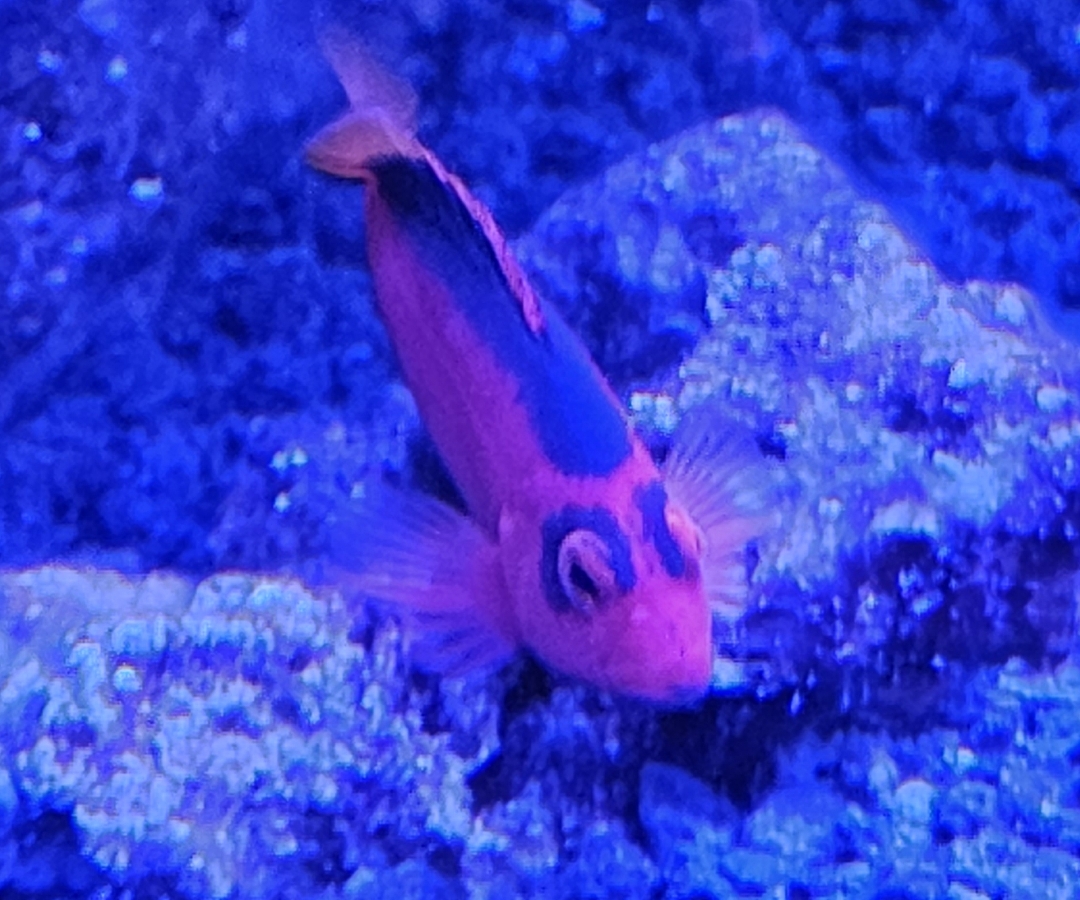
Flame Hawkfish Care Guide: Tank Size, Diet, Shrimp Risk & Jump Lids
Learn Flame Hawkfish (Neocirrhites armatus) care: 30+ gallon tanks, meaty carnivore diet, shrimp and invert caution, semi-aggressive perch behavior, jump lids, and what to check before you buy on ReefBay.
Quick answer
Flame Hawkfish (Neocirrhites armatus) are hardy, semi-aggressive perchers that fit best in a 30+ gallon tank with caves, ledges, branching rock or SPS, and a tight lid. They are carnivores that eat mysis, krill, chopped seafood, and other meaty foods 1 to 2 times daily, but they will hunt ornamental shrimp and may harass gobies and blennies.
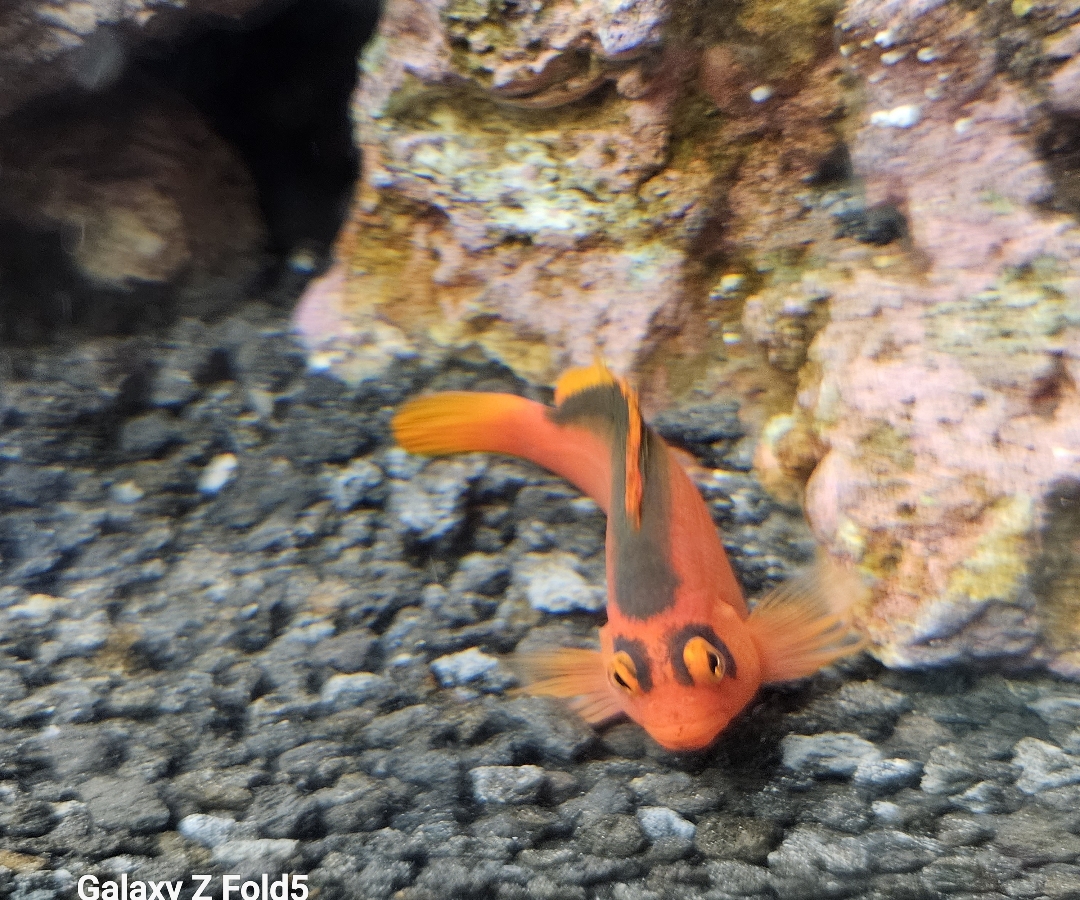
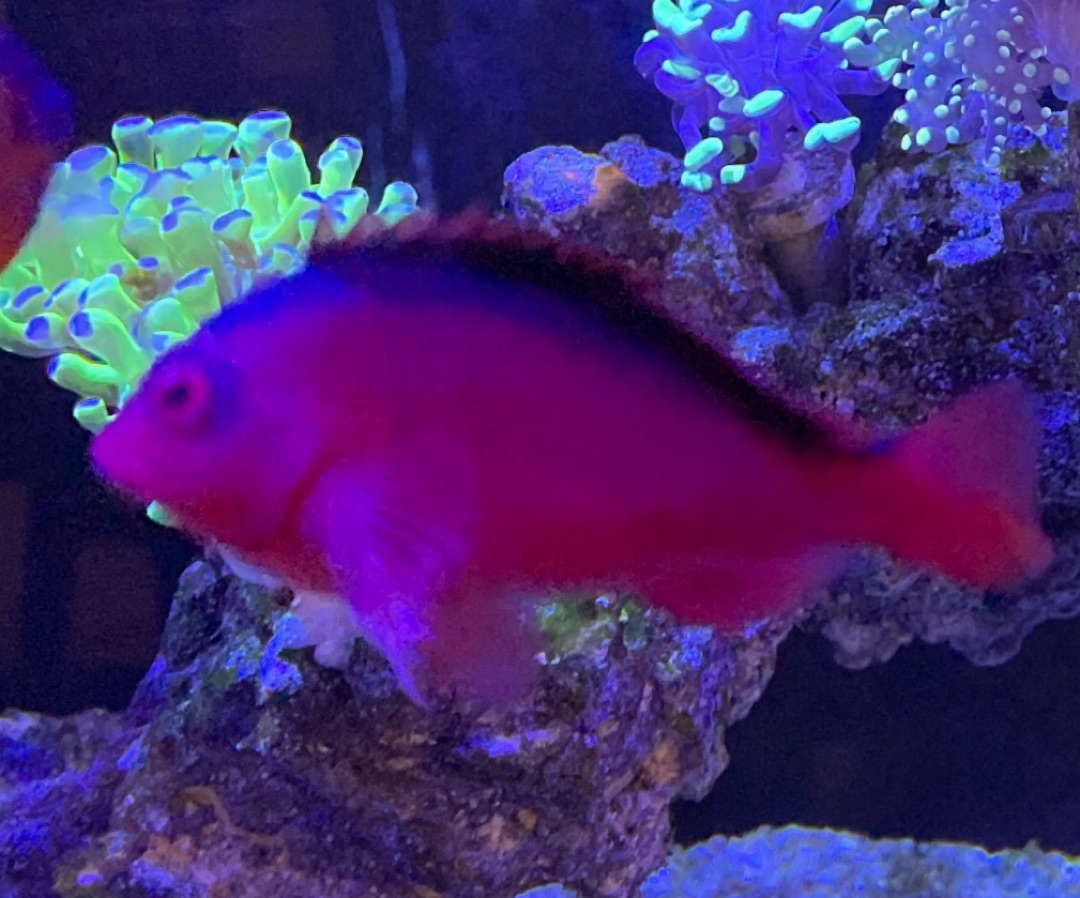
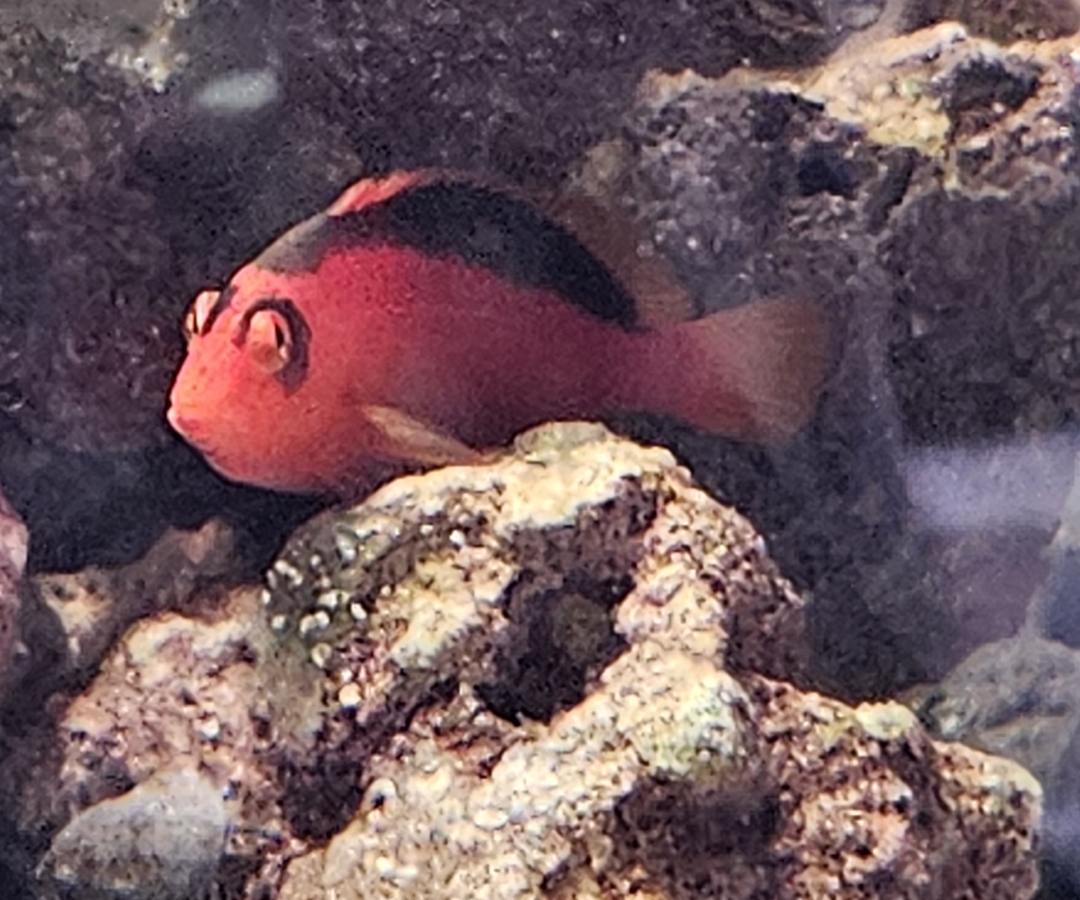
The Flame Hawkfish (Neocirrhites armatus) is a stout, vivid scarlet perching fish with a black band along the dorsal base and dark rings around the eyes. It rarely tops 3.5 inches, spends the day propped on live rock and branching SPS on thickened pectoral rays, and darts out to snatch meaty foods. Hardy and personable, it is also territorial toward gobies, blennies, and other small bottom-dwellers—and it will hunt ornamental shrimp.
This guide covers tank size, diet, invert safety, jump risk, and a practical buying checklist. When you are ready to purchase, compare live listings in the ReefBay marketplace against the care targets below.
Quick care snapshot
- Scientific name: Neocirrhites armatus
- Also called: Brilliant Hawkfish, Scarlet Hawkfish, Bloodred Hawkfish, Red Hawkfish
- Category: Hawkfish
- Origin: Western and Central Pacific reefs
- Care level: easy
- Temperament: semi-aggressive; claims rock perches and may harass similar bottom fish
- Reef-safe: with caution — usually coral-safe, but may pick at small ornamental shrimp and tiny crustaceans
- Invert-safe: with caution — shrimp are on the menu
- Suggested tank: 30+ gallons with caves, ledges, and branching rock or SPS
- Max size: about 3.5 inches
- Social: solitary — typically one per tank
- Diet: carnivore — mysis, krill, chopped seafood, frozen and prepared meaty foods
- Jump risk: yes — use a tight-fitting lid
Tank size, aquascape, and lids
Plan for a rock-scaped system of about 30 gallons or larger. Flame Hawkfish are ambush perchers, not open-water cruisers. They need stable ledges, caves, and coral branches where they can sit, watch, and launch short feeding strikes.
- Build multiple elevated perches and shaded caves before introduction
- Leave clear sight lines along the rock so it can claim a home ledge without constantly cornering tankmates
- Use a tight-fitting lid or screen top—hawkfish are confirmed jumpers, especially when startled or during acclimation
- In nano tanks under 30 gallons, territory fights with gobies and blennies get harder to manage
If your dream tank is a shrimp-heavy clean-up crew display, reconsider. If you want a bold scarlet “statue” on the rockwork and can skip ornamental shrimp, a Flame Hawkfish is a standout centerpiece.
Diet and feeding schedule
Flame Hawkfish are carnivores. They do best on frequent meaty meals rather than sparse grazing. Thin fish usually mean competition at feeding time or food that drifts past their perch too fast.
- Feed meaty foods (mysis, enriched brine, krill, chopped seafood, quality carnivore blends) 1–2 times daily in small portions
- Target food near their preferred perch so mid-water speedsters do not steal every bite
- Vary frozen and prepared items so they stay interested and filled out
- Ask sellers for recent feeding video—hawkfish that already strike frozen foods settle in faster
Captive-acclimated fish that eat prepared foods on ReefBay listings are worth prioritizing over “looks pretty, never seen eating” impulsives.
Reef-safe with caution (shrimp and small inverts)
Most Flame Hawkfish leave corals alone and perch harmlessly on SPS branches. The real risk is small ornamental shrimp and tiny mobile crustaceans. Cleaner shrimp, sexy shrimp, and dwarf shrimp are classic hawkfish snacks once the fish decides they fit in its mouth.
- Higher risk: ornamental shrimp, tiny crabs, and very small snails or pods you hoped to keep as a showpiece population
- Lower risk: established coral-only rockwork without prized shrimp; larger hermits and snails often ignored
- Mitigation: skip shrimp if you keep a Flame, feed the hawkfish well, and do not assume “reef-safe” means invert-safe
Compatibility and temperament
Semi-aggressive for a hawkfish means it may chase gobies, blennies, dartfish, and other perch competitors off prime ledges. Introduce it with a plan for who owns which caves, or add it later in the stocking order when territories are already set.
- Often works: clownfish, peaceful wrasses, anthias or chromis in larger tanks, many mid-water fish that do not contest rock perches
- Risky: watchman gobies, clown gobies, scooter/dragonets, ornamental shrimp, and other hawkfish in small-to-medium tanks
- One per tank: default to a single Flame Hawkfish unless you have a large reef and experience
- Quarantine: still QT—new hawkfish can carry parasites even when color looks perfect
Buying checklist on ReefBay
Before you tap Buy on a Flame Hawkfish listing, verify:
- Clear, recent photos or video showing body thickness, alert eyes, and active perching
- Seller notes on diet (frozen/prepared meaty foods) and quarantine history
- Your tank is 30+ gallons, has a secure lid, and you are not relying on ornamental shrimp
- You are not already stocking a territorial bottom-perch fish that will fight for the same ledges
Browse current Flame Hawkfish listings in the ReefBay marketplace, then match the fish to the tank you actually run—not the tank you wish you had.
Common mistakes to avoid
- Keeping a Flame in an open-top tank without a lid
- Adding prized cleaner or sexy shrimp “just to see”
- Stocking it with a watchman goby pair in a small footprint and hoping they share
- Buying a thin fish with no feeding proof
Done right, a Flame Hawkfish is one of the most vivid, interactive perchers you can keep. Stock patiently, feed meaty foods, lid the tank, skip the shrimp, and use ReefBay listings to compare healthy, well-documented fish before you commit.