Lawnmower Blenny Care Guide: Tank Size, Diet, Algae Grazing & Jump Risk
Learn Lawnmower Blenny (Salarias fasciatus) care: 30+ gallon setups, algae and nori diet, jump-proof lids, reef-safe-with-caution notes, solitary stocking, and what to check before you buy on ReefBay.
Quick answer
A Lawnmower Blenny needs a mature 30+ gallon tank with plenty of live rock, caves, and a tight lid because it can jump. Feed film algae plus nori and herbivore pellets or flakes, keep one per tank in most homes, and treat it as reef-safe with caution around soft corals and clams.
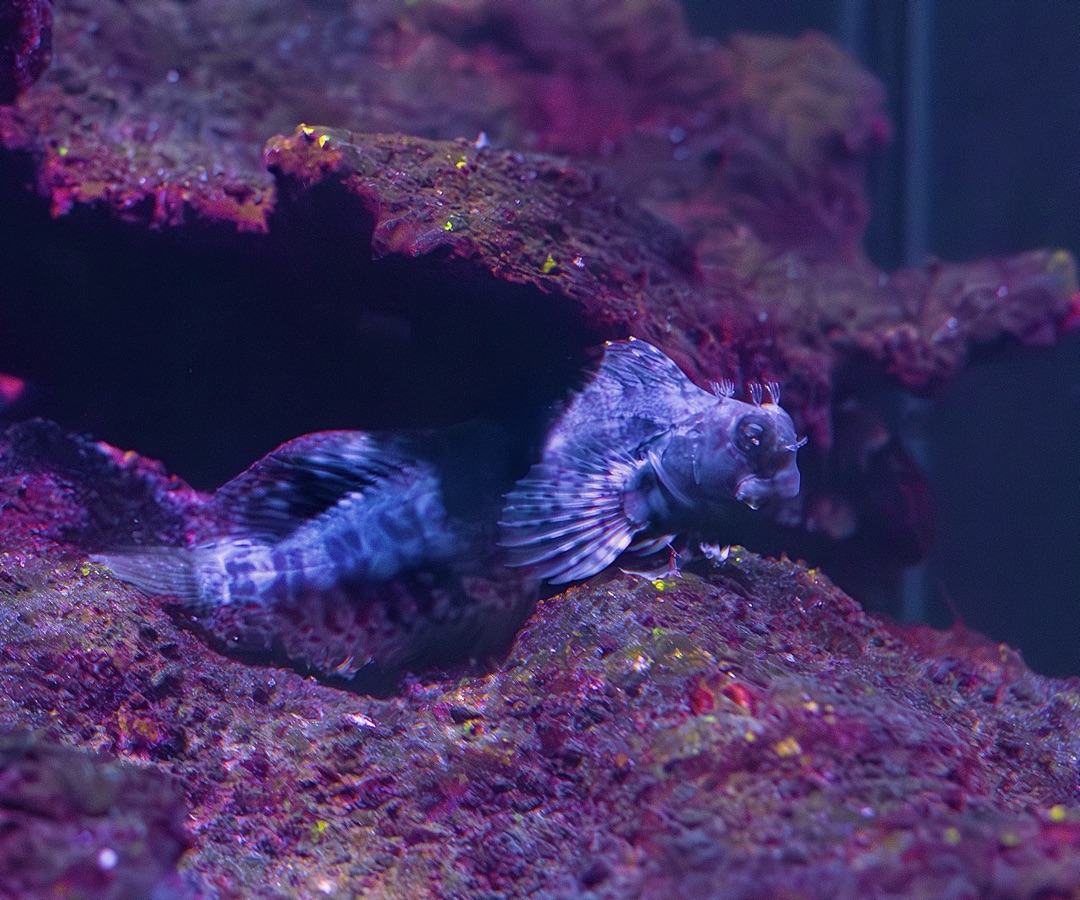
The Lawnmower Blenny (Salarias fasciatus) is a stocky combtooth blenny that earns its nickname by scraping film algae and detritus off rock, glass, and sand. Olive to mottled brown with dark bars, pale spots, and a fringed head crest, it can darken or lighten quickly to match the aquascape. It stays around 5.5 inches, prefers a mature system with plenty of rock, and is a popular algae-grazer for peaceful mixed reefs—with a few caveats around territorial behavior and soft coral nipping.
This guide covers tank size, diet, jump risk, reef-safe notes, stocking order, and what to verify before you buy on ReefBay.
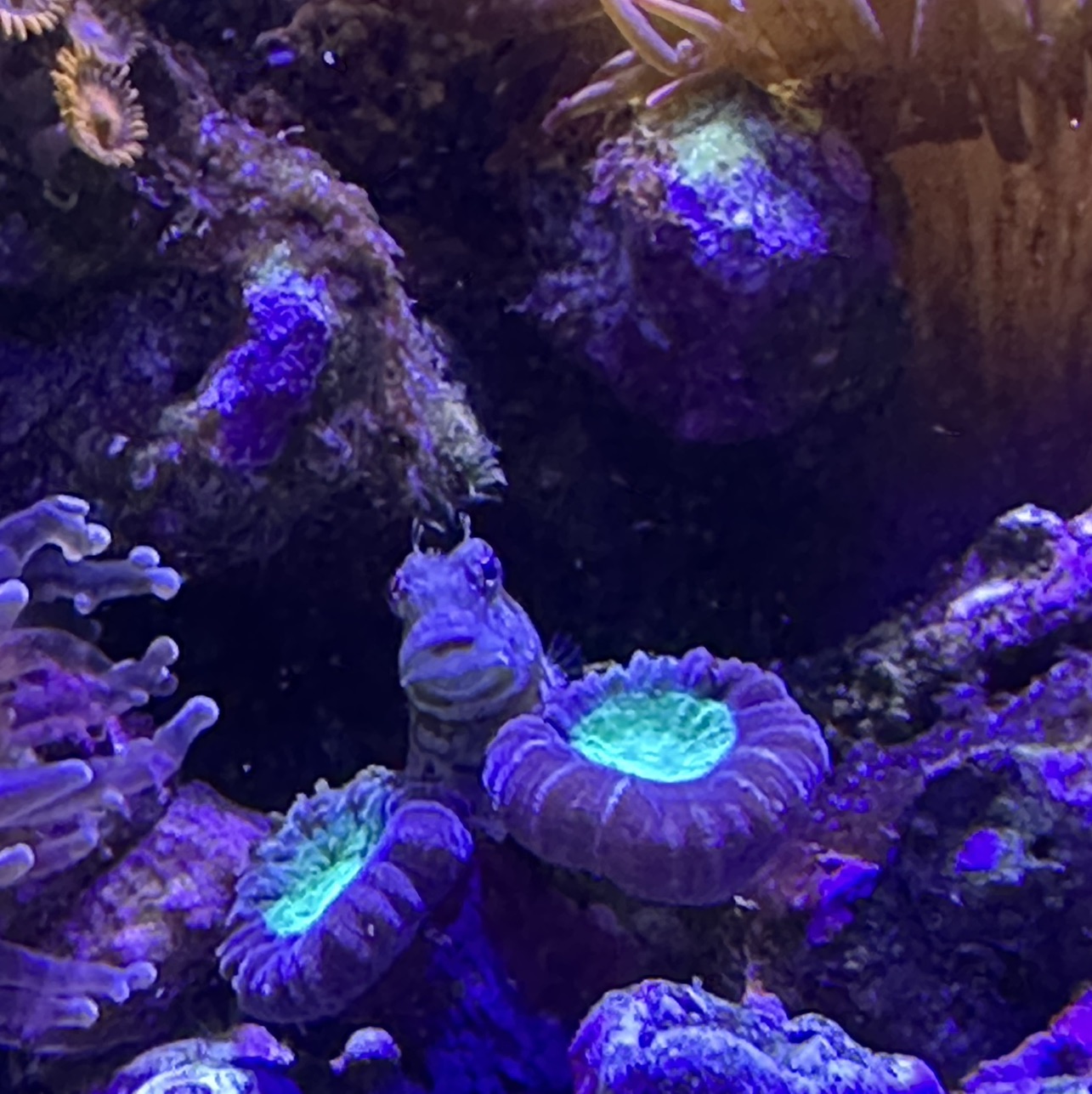
Quick care snapshot
- Scientific name: Salarias fasciatus
- Also called: Algae Blenny, Jeweled Rockskipper, Jeweled Blenny, Sailfin Blenny, Banded Blenny, Rock Skipper
- Category: Blenny
- Origin: Indo-Pacific (Red Sea and East Africa to Samoa)
- Care level: easy
- Temperament: peaceful toward most fish; territorial toward other blennies and similarly shaped bottom dwellers
- Reef-safe: with caution (may nip soft corals, zoanthids, or clam mantles when algae runs low)
- Suggested tank: mature 30+ gallons
- Max size: about 5.5 inches
- Social: solitary (one per tank unless a very large system)
- Diet: herbivore/detritivore — film algae, nori, herbivore pellets
- Jump risk: yes — use a tight lid
Tank size, aquascape, and jump risk
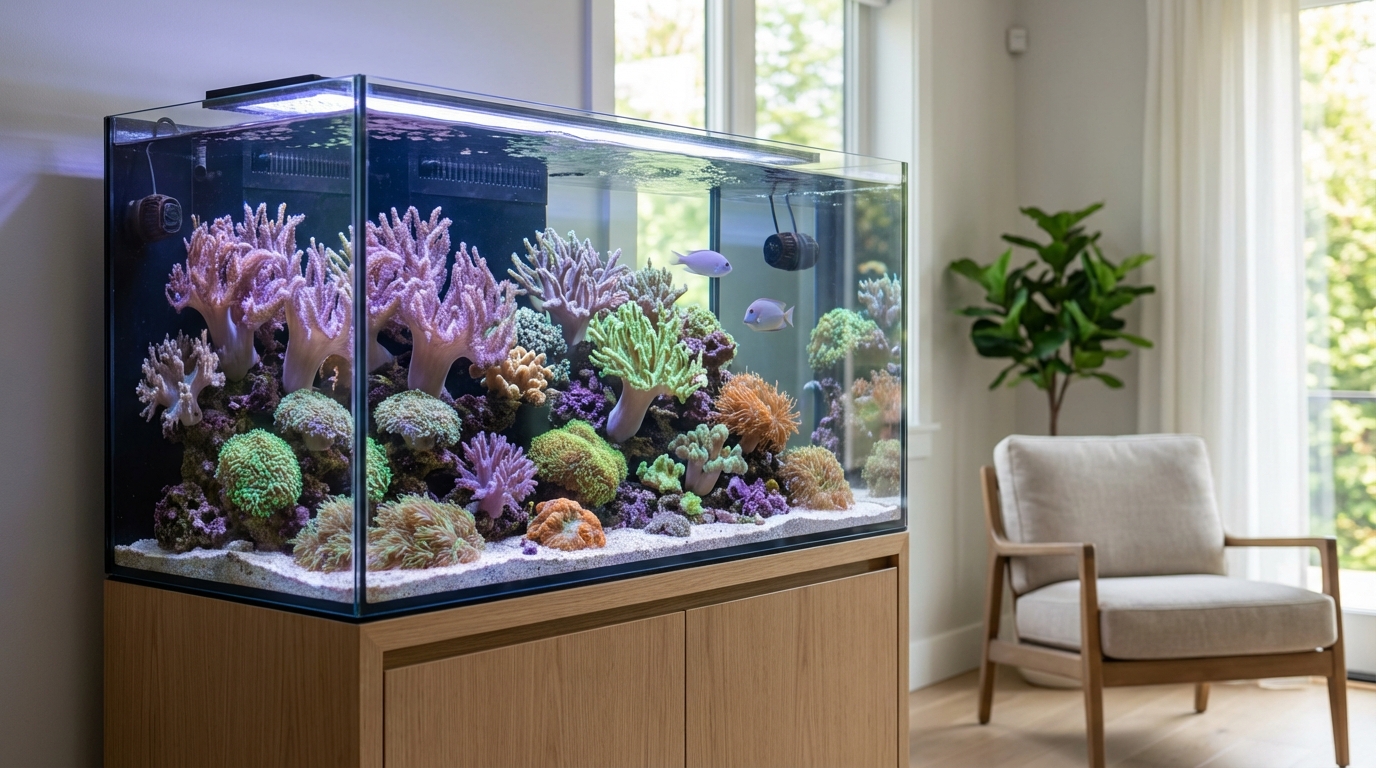
Plan for a mature 30+ gallon system with ample live rock and established film algae. Lawnmower Blennies are not open-water cruisers; they hop, perch, and graze across rock faces and the sand line.
- Build caves, ledges, and rubble so the fish can claim a “home rock”
- Keep one Lawnmower Blenny per tank in most home systems; they become territorial toward look-alikes
- Jump risk is real — combtooth blennies can launch through open tops and overflow gaps; use a full canopy or mesh lid
- Add them after the tank is cycled and microalgae is present, not into a sterile new setup
In nanos under 30 gallons, a single specimen can work if algae production stays high and tankmates are peaceful. Larger tanks give more grazing surface and reduce coral-nipping pressure when natural foods run short.
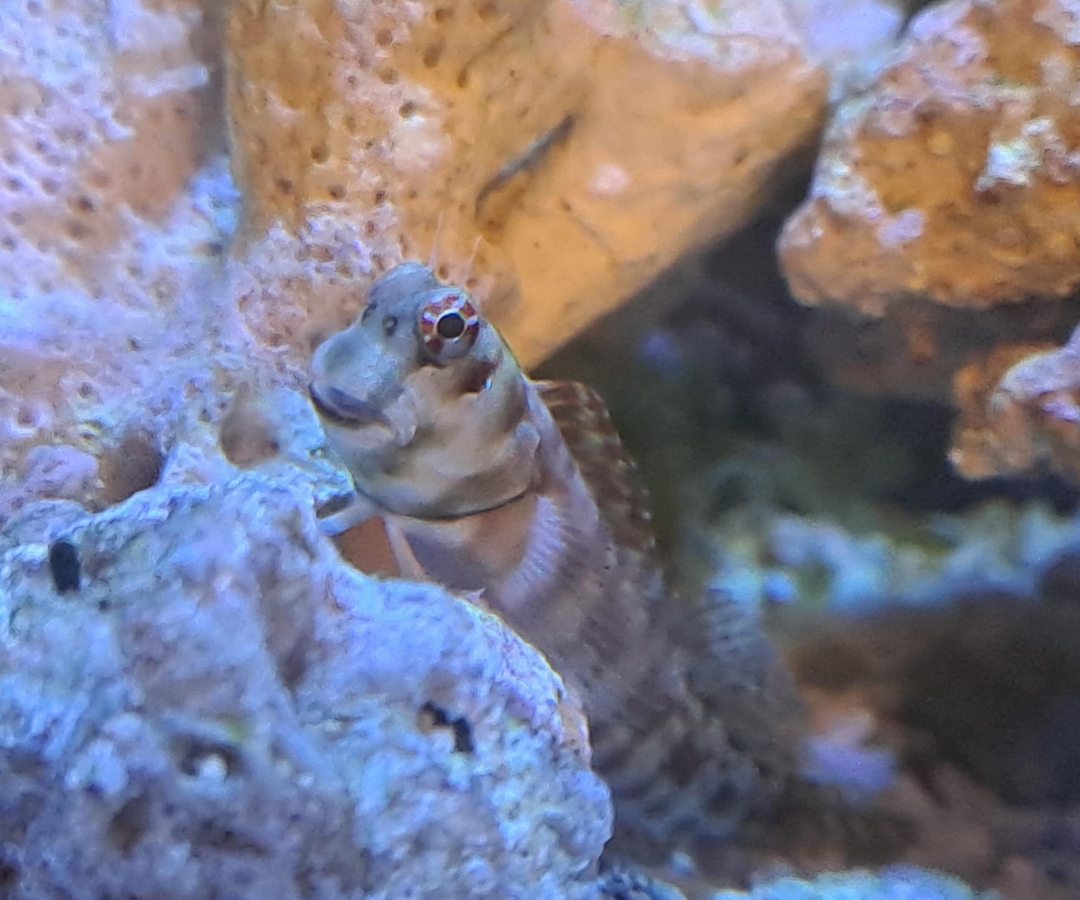
Diet and feeding schedule
Lawnmower Blennies are herbivore/detritivores: film algae, nori, and herbivore pellets. Do not rely on “they’ll eat the algae” alone—especially in newer or heavily cleaned tanks.
- Offer dried nori or seaweed sheets on a clip several times a week
- Feed spirulina/herbivore pellets or flakes daily so the fish is not forced onto coral polyps
- Leave some rock surfaces ungroomed; over-cleaning removes their primary forage
- If body condition thins or the fish starts picking at soft coral, increase prepared greens immediately
Thin midsections and frantic glass-scraping usually mean insufficient algae or competition from other grazers—not mystery disease first.
Reef-safe notes (with caution)
Corals are usually fine while natural film algae is abundant. Problems show up when the buffet disappears: some individuals nip zoanthids, soft coral tips, or clam mantles. Treat “reef-safe” as with caution, not a guarantee.
- Best in tanks with mature rock and steady algae growth
- Watch soft corals and clams for the first weeks after introduction
- Have a backup herbivore feeding plan ready before algae bottoms out
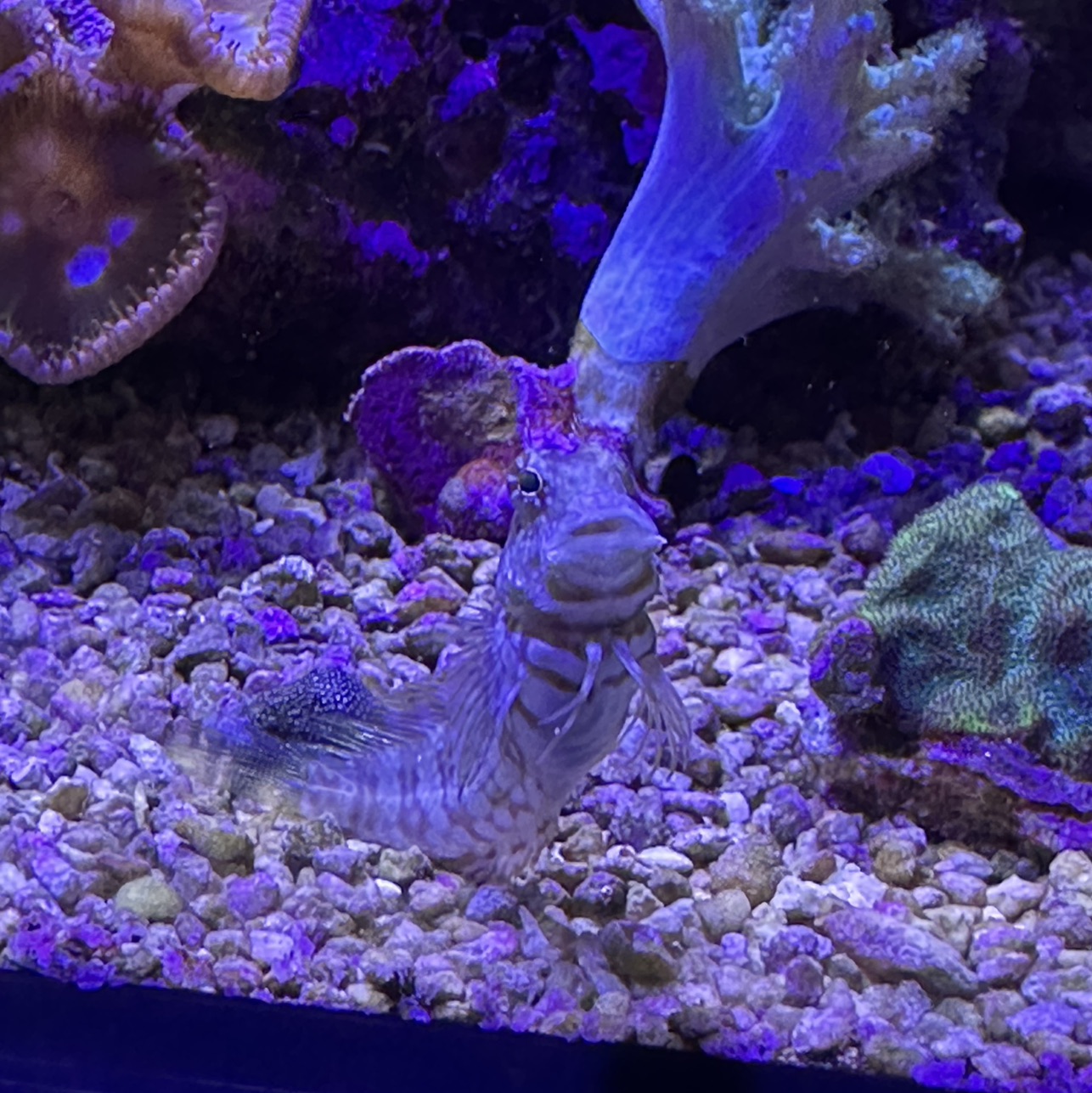
Compatibility and stocking tips
Peaceful toward most mid-water fish, but territorial toward other blennies, many gobies, and similarly shaped bottom dwellers. Invert-safe with typical cleanup crews; venomous: no.
- Good neighbors: clownfish, chromis, peaceful wrasses, cardinalfish, most LPS/soft and mixed reefs with algae present
- Avoid or watch closely: other Lawnmower/combtooth blennies, aggressive dottybacks, large predators, and overcrowded nano rock piles
- Stocking order: add the Lawnmower after the tank is mature; introduce look-alike bottom dwellers with caution or skip them
- Quarantine: still QT new fish—easy care does not mean disease-proof
Buying checklist on ReefBay
Before you buy a Lawnmower Blenny listing, verify:
- Clear recent photos or video showing full body, breathing, and feeding response
- Active grazing or interest in nori/pellets (not listless hiding only)
- Seller notes on quarantine, ship method, and whether the fish is already eating prepared greens
- Your lid situation and whether your tank has enough mature rock/algae for a grazer
- No second similarly shaped blenny already claiming the same rockwork
Browse live Lawnmower Blenny listings in the ReefBay marketplace, compare local sellers, and match the fish to a mature 30+ gallon system with a jump-proof top.
FAQ
Will a Lawnmower Blenny clean my glass forever? It helps with film algae, but it is not a substitute for feeding greens or for tanks without natural algae growth.
Can I keep two? Usually no in home tanks—they fight. One per system is the default.
Do they need a lid? Yes. Jump risk is documented for this group; use a tight cover.