Naso Tang vs Blonde Naso Tang: Visual Differences, Size & Care
Compare the Naso Tang and Blonde Naso Tang side by side: learn the yellow top-fin visual cue, adult size, temperament, diet, tank requirements, and how their ranges and scientific names differ.
Quick answer
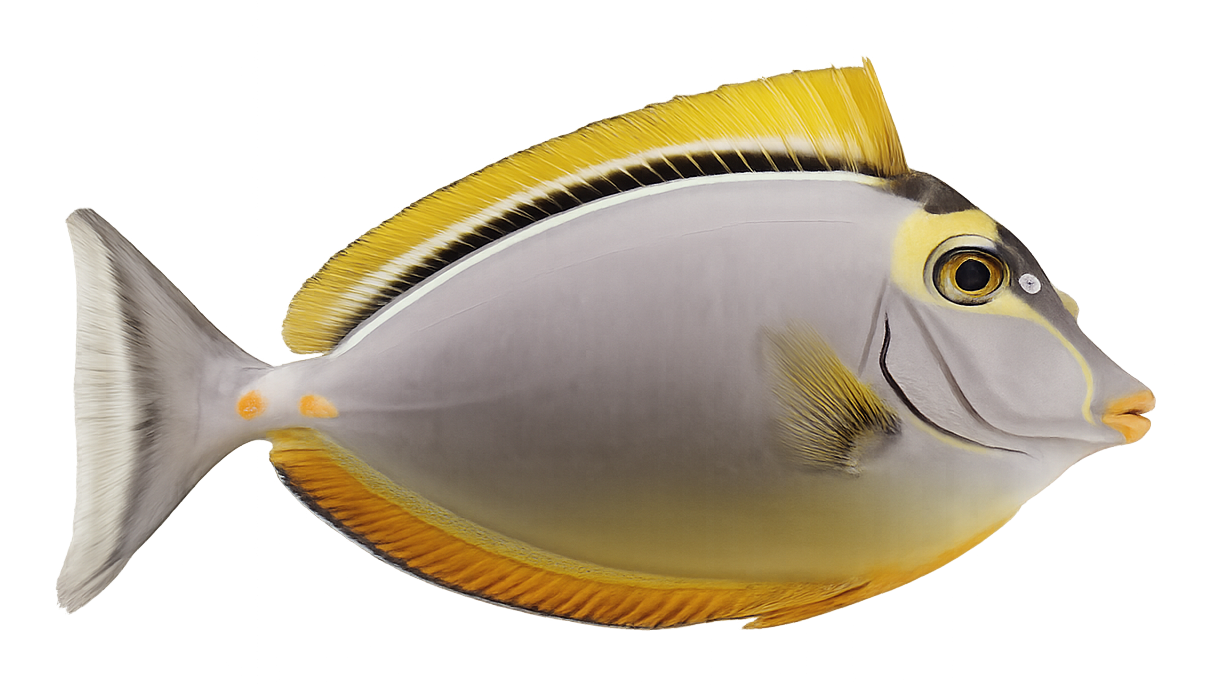
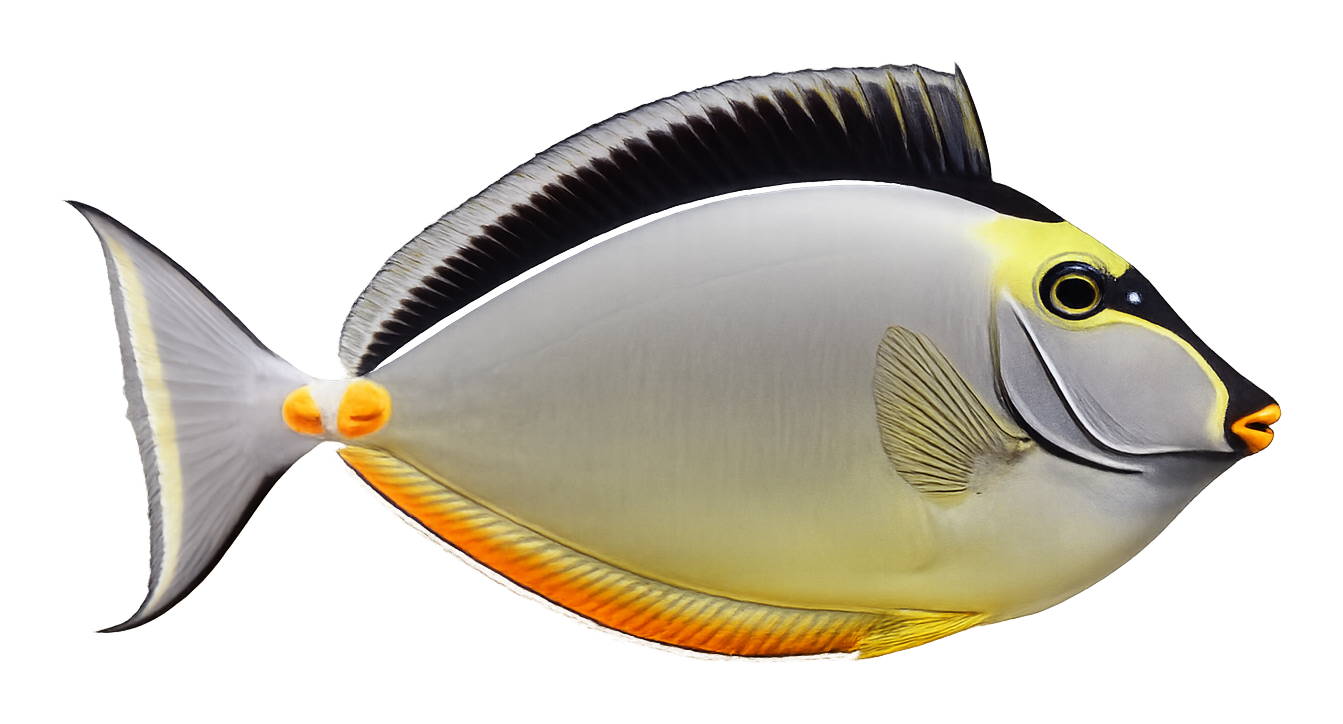
The Blonde Naso Tang is Naso elegans and is marked by a bright yellow dorsal fin, yellow lips, and yellow-accented peduncle spines, while the regular Naso Tang is Naso lituratus with a black dorsal fin, orange lips, and a gray-brown body mask. Both reach about 18 inches and need at least a 180-gallon mature reef system.
Naso Tang versus Blonde Naso Tang
These two unicornfish are close relatives, and both can be called “Naso tang in casual talk. The taxon records identify different species: the regular Naso Tang is Naso lituratus, while the Blonde Naso Tang is Naso elegans. Both are large, active grazers for mature reef systems.
The quickest visual difference
Look at the top fin. The Blonde Naso Tang has a bright yellow dorsal (top) fin, yellow lips, and orange peduncle spines set in yellow patches. Its body is dark bluish-grey with black face marks. The regular Naso Tang is more gray-brown, with a black-and-yellow face mask, bright orange lips, a black dorsal fin, and two orange blades at the tail base. Blonde Naso is also described as hornless.
Size and tank
Neither fish belongs in a small aquarium. Both records list an adult maximum of 18 inches and a minimum of 180 gallons. They are moderate-care, reef-safe, semi-aggressive, and solitary. Plan for long open lanes, strong flow, high oxygen, pristine water, and a tight lid.
Keep one Naso-type tang per system unless the aquarium is exceptionally large. Both fish are herbivores that need constant grazing material. Offer nori, dried seaweed, macroalgae, and marine algae foods. The Blonde Naso record advises algae sheets several times daily to help prevent a thin belly and head erosion in underfed fish. A varied feed plan supports their bright colors.
Range and ID notes
The regular Naso Tang comes from the Pacific Ocean and eastern Indian Ocean. The Blonde Naso Tang is recorded from the Indian Ocean and Red Sea. Mature males of both species can grow long lyre-tail streamers, so tail shape alone is not a sure ID. Compare the dorsal fin and body palette first, then confirm the scientific name when buying. Ask for the scientific name on an invoice if a store uses “Naso tang for both fish.
Community images
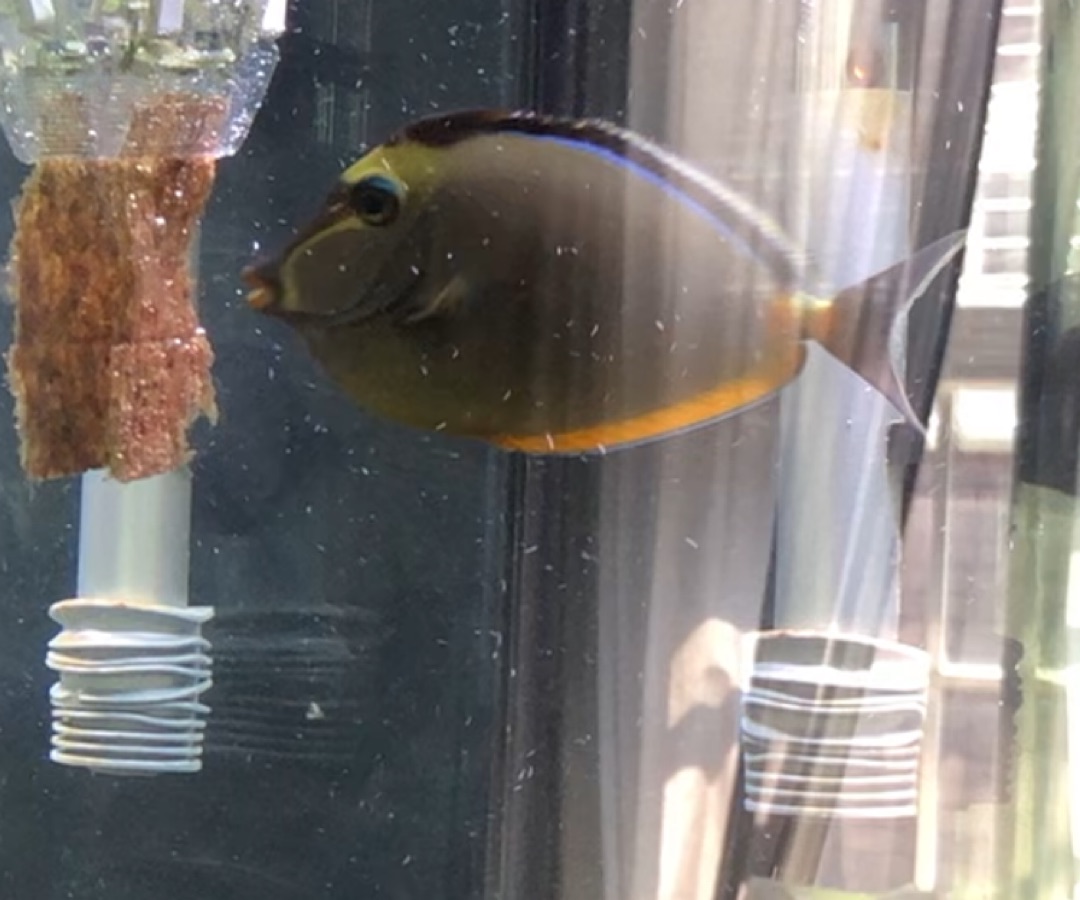
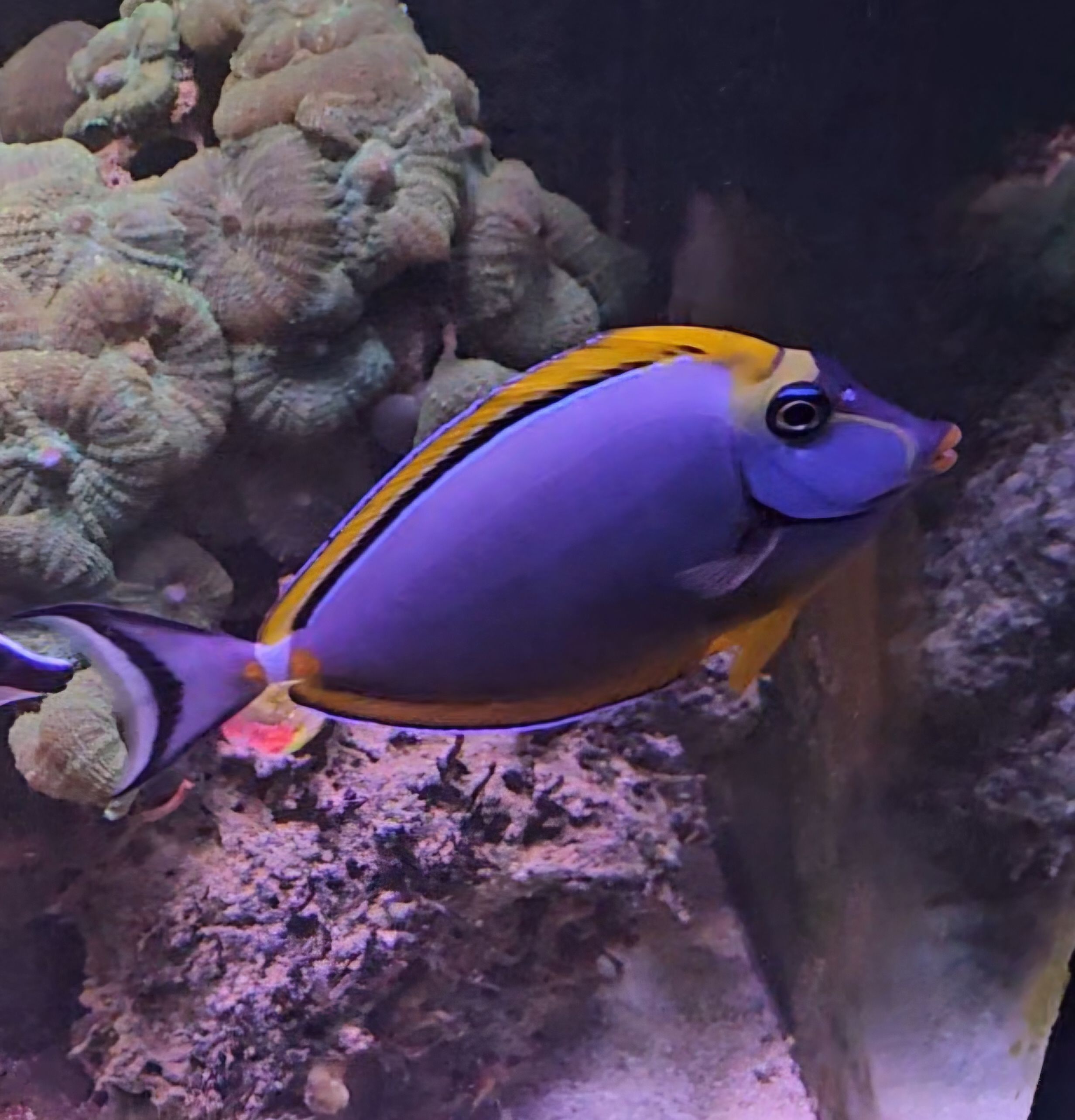
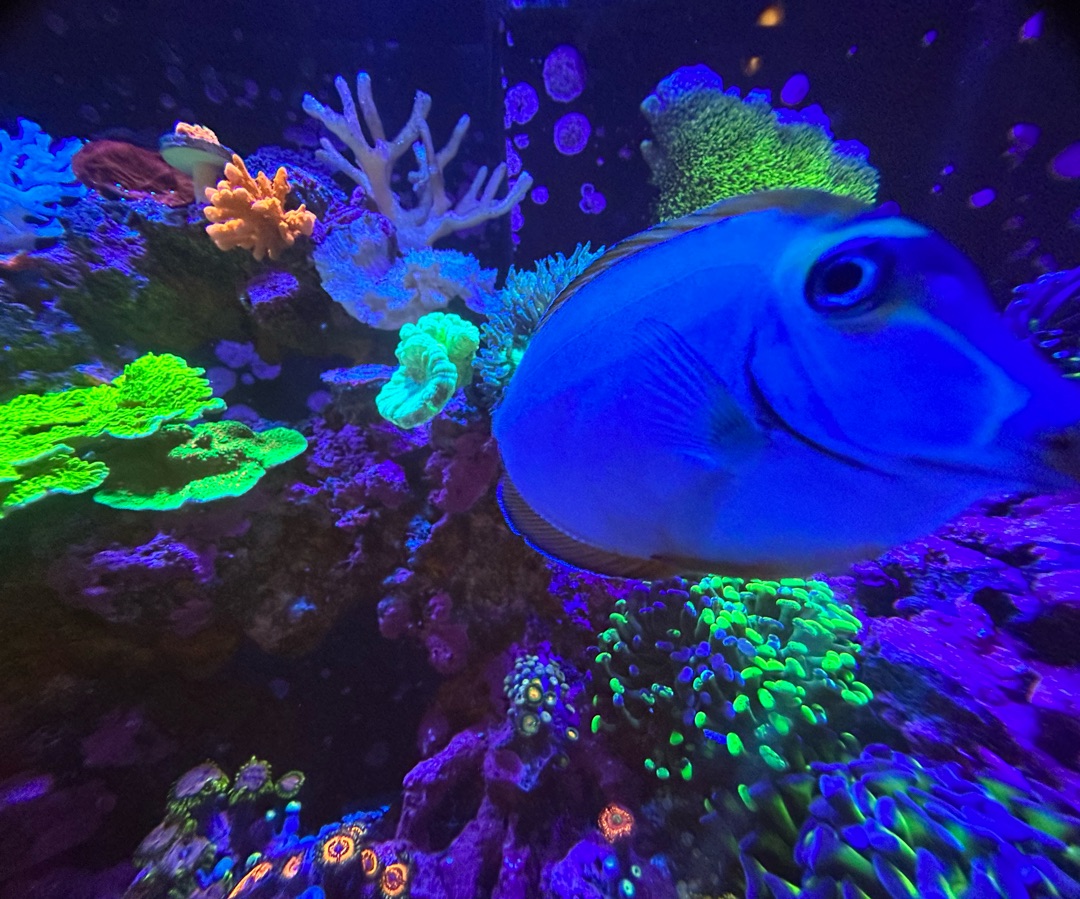
Bottom line: a vivid yellow dorsal fin and yellow accents indicate the Blonde Naso Tang; a black dorsal fin, orange lips, and gray-brown pattern indicate the regular Naso Tang. Plan either fishs aquarium around its adult size, not the juvenile in the shop.