Reef Tank Water Parameters for Beginners: The Numbers That Actually Matter
New to reefing? Start with the water parameters that matter most: salinity, temperature, alkalinity, calcium, magnesium, nitrate, and phosphate. Here’s a simple target chart and testing schedule that keeps your tank stable without overcomplicating chemistry.
Quick answer
Beginners should focus on stable salinity at 1.025-1.026 specific gravity, temperature at 77-79°F, alkalinity at 8-10 dKH, calcium at 400-450 ppm, magnesium at 1,250-1,400 ppm, and nitrate and phosphate at detectable but controlled levels. Keep ammonia and nitrite at 0 after cycling, and prioritize stability over perfect numbers.
Why parameter chasing burns beginners out
Most first reef tanks do not fail because someone missed a perfect number. They fail because salinity swings, temperature is unstable, or livestock is added before the system can handle it. You do not need a chemistry degree to succeed. You need a short list of targets, a cheap testing habit, and the discipline to change one thing at a time.
This guide is the practical starter chart: what to measure, what “good enough” looks like, how often to test, and when to ignore the noise. Use it as your baseline, then refine once your tank is stable and your goals get more specific (softies vs LPS vs SPS).
The beginner parameter targets
Aim for stability inside these ranges rather than daily perfection:
- Salinity: 1.025–1.026 specific gravity (about 35 ppt)
- Temperature: 77–79°F (25–26°C)
- Alkalinity (dKH): 8–10 dKH for most beginner mixed reefs
- Calcium: 400–450 ppm
- Magnesium: 1,250–1,400 ppm
- pH: roughly 7.8–8.3 (watch trend more than a single reading)
- Ammonia / nitrite: 0 after the cycle
- Nitrate: often 5–20 ppm is workable for many mixed reefs (species dependent)
- Phosphate: commonly kept low but detectable; ultra-zero is not required for every tank
If you only memorize three things: keep salinity and temperature boringly stable, and do not chase alkalinity with big swings.
What to test (and how often)
Every day (quick visual check)
- Temperature (controller or reliable thermometer)
- Equipment running (return, heaters, ATO if you have one)
- Livestock behavior and appetite
At every water change
- Salinity of the display and of the new saltwater before it goes in
- Temperature match between new water and the tank
Weekly once the tank is established
- Alkalinity
- Nitrate
- Phosphate
Every 1–2 weeks (or more if you dose)
- Calcium
- Magnesium
During a cycle, test ammonia and nitrite every couple of days until both stay at zero. After that, those tests become troubleshooting tools, not daily chores.
Salinity: the parameter that quietly wrecks tanks
Evaporation raises salinity. Topping off with saltwater (instead of fresh RO/DI) raises it further. A hydrometer that is slightly off can leave you “stable” at the wrong value for months.
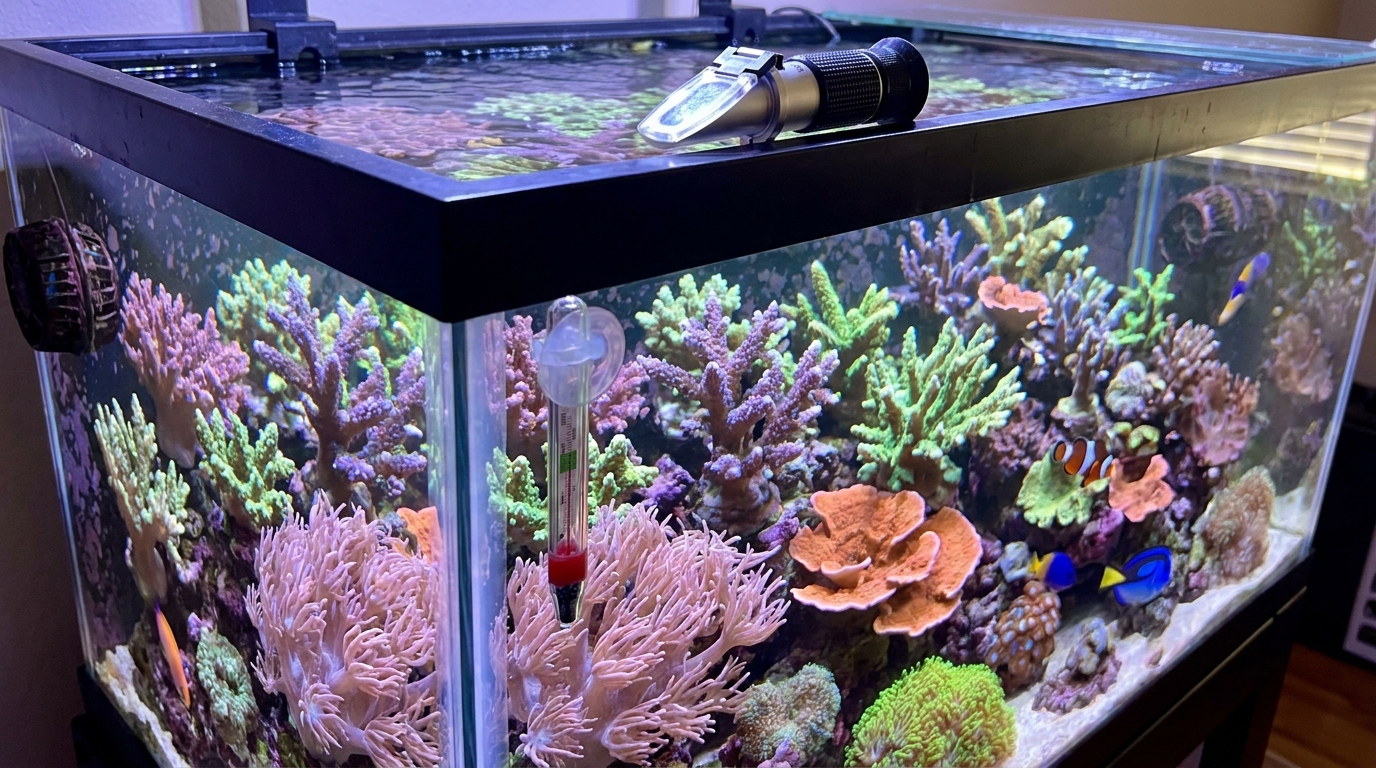
Use a refractometer and calibrate it with real calibration fluid on a schedule. Replace evaporated water with RO/DI only. Mix new saltwater to target salinity before water changes, and verify it—do not assume the bucket is correct because the salt scoop “looked right.”
Alkalinity, calcium, and magnesium (keep them simple)
Corals consume alkalinity and calcium as they grow. Magnesium helps keep those two from precipitating out of solution. For beginners:
- Test before you dose.
- Correct large deficits slowly over days, not in one dump.
- Prefer small, consistent maintenance dosing over weekend catch-up swings.
- If alkalinity is crashing while calcium looks fine (or the reverse), re-check your test kits and verify magnesium before adding more supplements.
Many new reefers do fine with water changes alone until coral demand rises. You do not need a full dosing system on day one.
Nutrients: low is good, zero is not always better
Nitrate and phosphate fuel nuisance algae, but they also support coral coloration and growth in many systems. Starving a tank to “lab zero” can backfire—pale corals, dino outbreaks, or fragile stability. Track trends. If algae is exploding, look at export (skimming, water changes, clean-up crew, feeding) before you panic-dose random binders.
A 30-day beginner chemistry plan
- Week 1: Confirm salinity method, calibrate tools, log temperature daily.
- Week 2: Establish a weekly alkalinity / nitrate / phosphate routine and write the numbers down.
- Week 3: Add calcium and magnesium checks. Only start light dosing if tests show clear consumption.
- Week 4: Review your logs. If anything is swinging hard, fix process (mixing, top-off, testing) before buying more equipment.
Common mistakes to avoid
- Changing five parameters the same day after reading a forum thread
- Trusting an uncalibrated salinity tool
- Dosing without testing
- Ignoring temperature stability while obsessing over a 5 ppm calcium difference
- Adding livestock while ammonia or nitrite is still detectable
Track it in ReefBay
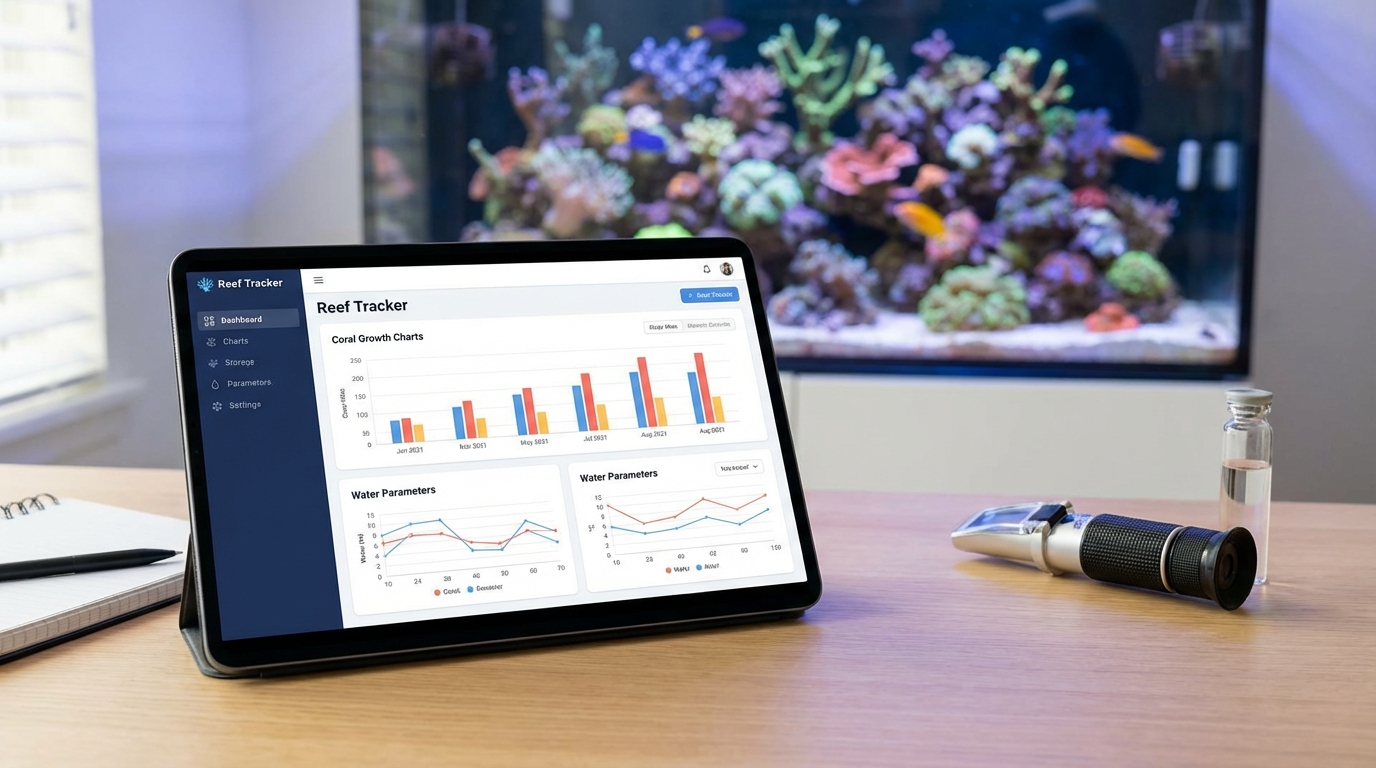
The fastest way to learn your tank is a log you actually keep. Use ReefBay to record parameters over time, spot slow drifts before corals show stress, and plan maintenance around real trends—not guesswork. When you are ready to add livestock or gear, browse the marketplace with a clearer picture of what your system can support.
Bottom line
Master salinity, temperature, and a simple weekly test loop first. Keep alkalinity steady. Dose only when numbers prove you need it. Stability beats perfection—and a boring parameter chart is how thriving reefs start.