Six Line Wrasse Care Guide: Tank Size, Diet, Jump Risk & Temperament
Learn Six Line Wrasse (Pseudocheilinus hexataenia) care: 30+ gallon setups, carnivore diet, jump-proof lids, semi-aggressive temperament, stocking order, and what to check before you buy on ReefBay.
Quick answer
Six Line Wrasses do best in a mature 30+ gallon reef with dense live rock, a tight-fitting lid, and a carnivore diet of mysis, brine, pellets, and other meaty foods. They stay about 4 inches long, are reef-safe with corals, but can be semi-aggressive, especially toward small, shy fish and other wrasses.
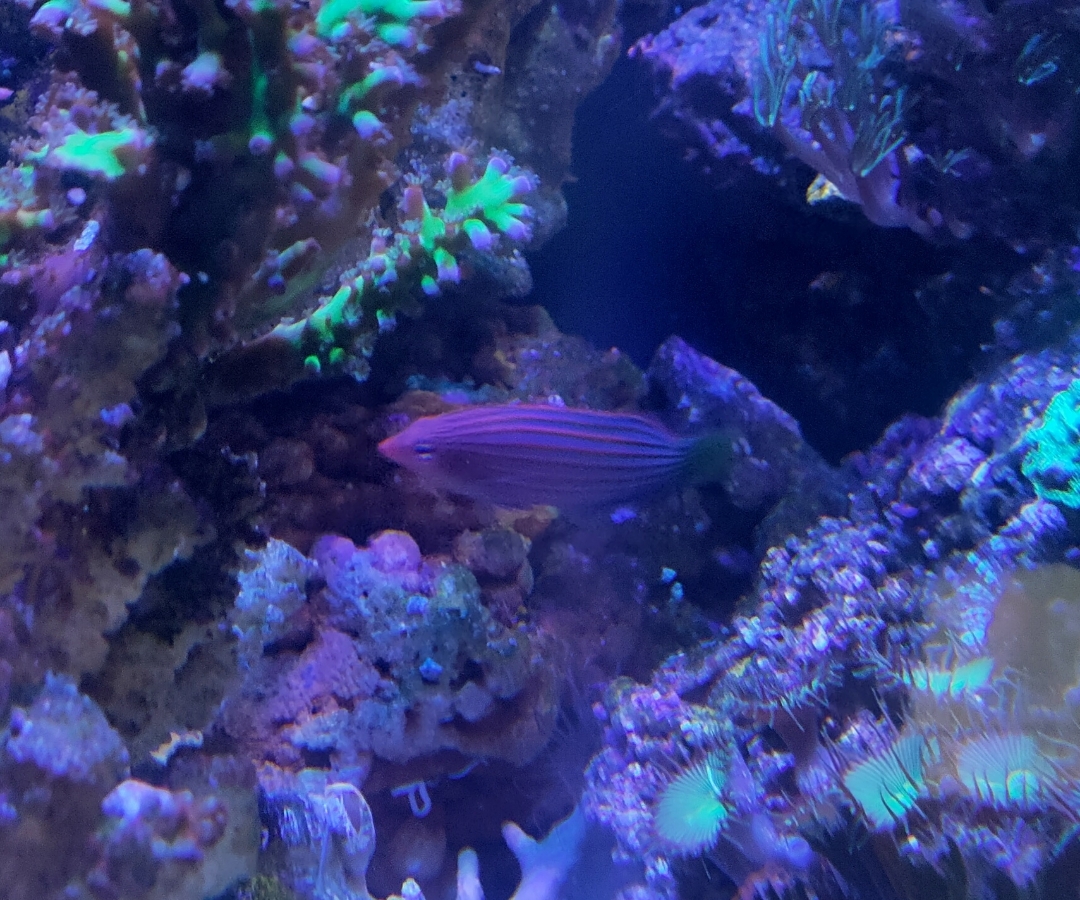
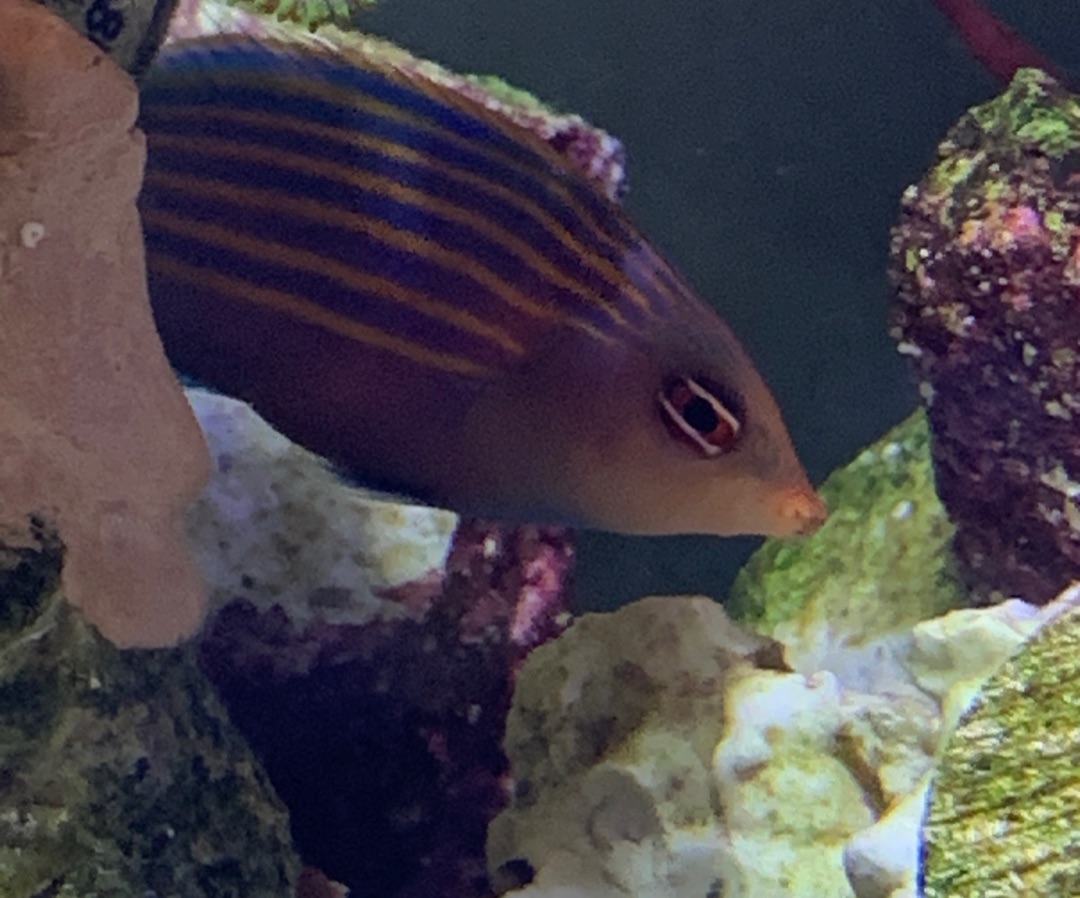
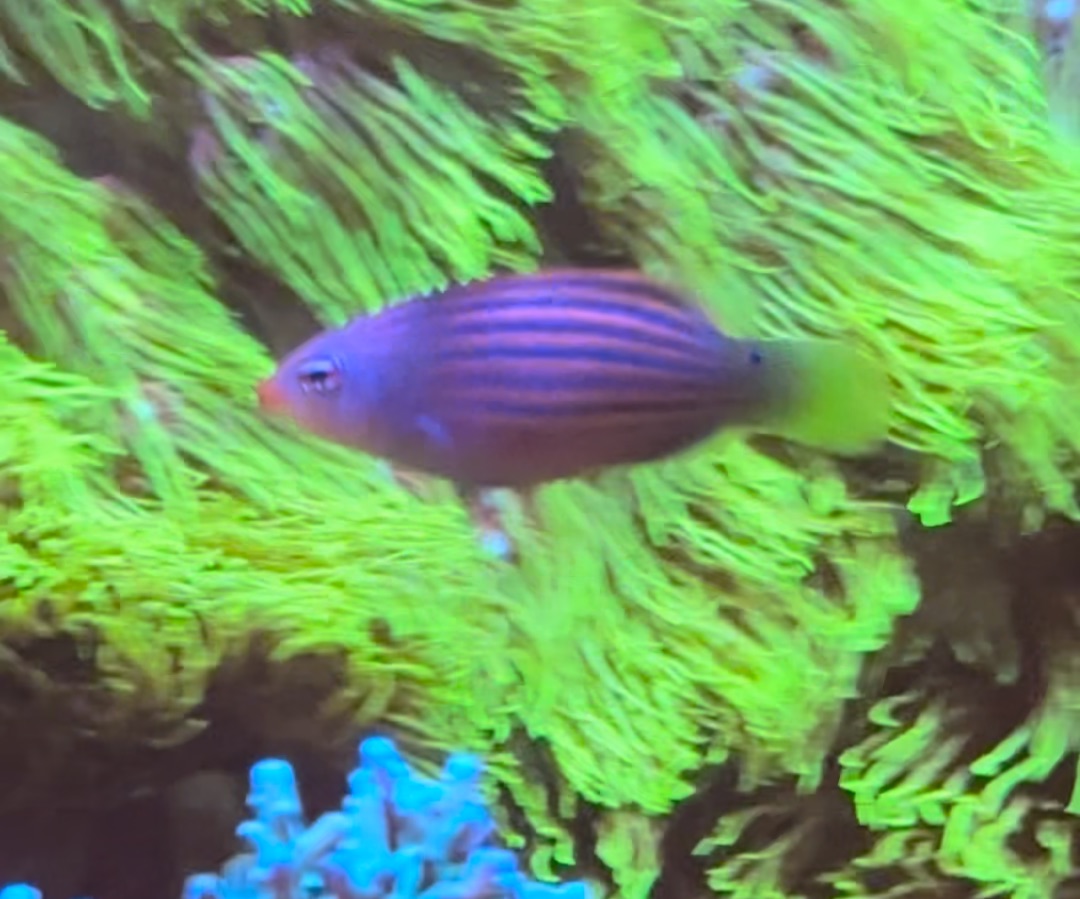
The Six Line Wrasse (Pseudocheilinus hexataenia) is a small, hyperactive reef favorite: a purple-to-orange body crossed by six bold blue-and-orange horizontal stripes, green cheeks, and a false eyespot near the tail. Also sold as the Sixline, Sixstripe, Six-Banded, or Pyjama Wrasse, it stays around 4 inches, ignores corals and clams, and spends the day weaving live rock for tiny crustaceans.
This guide covers tank size, carnivore diet, jump-proof lids, semi-aggressive temperament, and stocking order so you can keep one healthy long-term without bullying tankmates. When you are ready to buy, compare seller photos and QT notes in the ReefBay marketplace against the care targets below.
Quick care snapshot
- Scientific name: Pseudocheilinus hexataenia
- Also called: Sixline Wrasse, Sixstripe Wrasse, Six-Banded Wrasse, Sixbar Wrasse, Six Stripe Wrasse, Pyjama Wrasse
- Category: Wrasse
- Origin: Indo-Pacific (Red Sea to the Tuamotus)
- Care level: easy
- Temperament: semi-aggressive can bully smaller, shy fish and other wrasses in tight quarters
- Reef-safe: yes with corals; inverts with caution
- Suggested tank: mature 30+ gallons
- Max size: about 4.0 inches
- Social: solitary (one per tank unless a very large system)
- Diet: carnivore — mysis, brine, prepared meaty foods, plus live-rock micro-crustaceans, flatworms, and pyramidellid snails
- Jump risk: yes — tight-fitting lid required
Tank size, aquascape, and a must-have lid
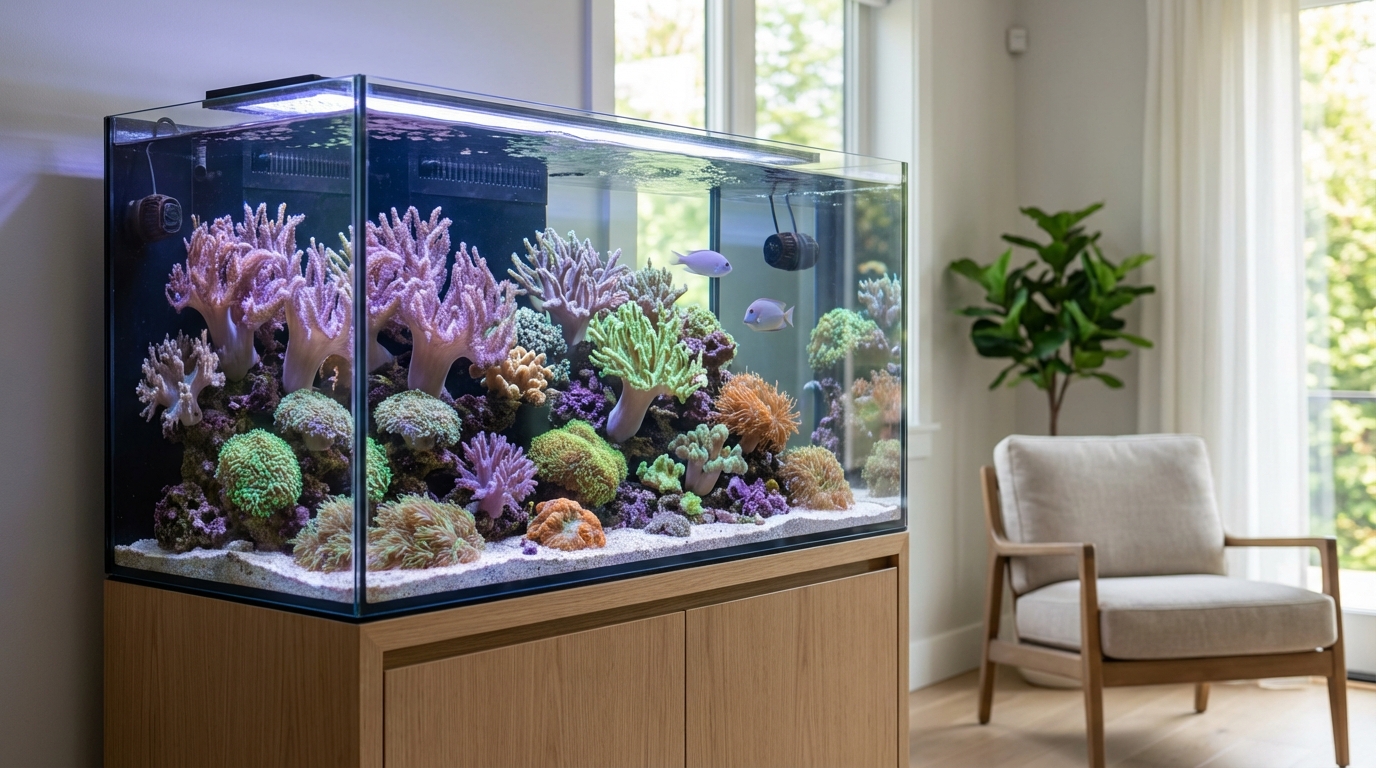
Plan for a mature system of about 30 gallons or larger. Six Lines are constant rock-weavers, not open-water cruisers. They need live rock with crevices for foraging and night refuge, and they are notorious jumpers when startled or chasing food.
- Provide dense live rock with caves and tunnels for foraging and sleeping
- Use a tight-fitting lid or mesh top — jump risk is real for this species
- Keep moderate flow through the rockwork; they will use the entire vertical structure
- Add them last (or near last) so they do not establish dominance over every new arrival
In a nano under 30 gallons, a single Six Line can still work if rockwork is excellent and tankmates are not tiny or timid — but bullying risk rises fast in tight water.
Diet and feeding schedule
Six Line Wrasses do best on a carnivore diet: mysis, brine, prepared meaty foods, plus whatever micro-crustaceans they hunt on live rock. Many hobbyists also keep them for occasional flatworm or pyramidellid snail cleanup, but treat that as a bonus — not a substitute for feeding.
- Offer meaty frozen or prepared foods 1–2 times daily
- Target feed near rockwork if aggressive tankmates outcompete them at the surface
- Keep live rock mature so they can forage between meals
- Do not rely on pest control only” thin fish need more frequent feeds
A constantly hunting Six Line that still looks thin usually means competition or too little meaty food, not “mystery disease first.
Temperament, bullying, and stocking order
Care level is easy, but temperament is semi-aggressive. One Six Line is the standard rule. In small tanks they may harass gobies, firefish, smaller wrasses, and other shy rock-dwellers once they claim the aquascape.
- Good neighbors: clownfish, larger peaceful wrasses (in bigger tanks), tangs, angels that ignore them, most LPS/soft coral setups
- Watch closely: firefish, small gobies, other Pseudocheilinus, tiny ornamental shrimp
- Stocking order: introduce the Six Line last whenever possible
- Quarantine: still QT — easy care does not mean disease-proof
Reef-safe notes and inverts
Six Lines are reef-safe with corals and clams. Invert safety is with caution — small ornamental shrimp and tiny snails can be at risk, especially in lean tanks where the wrasse is hunting hard.
- Corals and larger snails are usually fine
- Keep prized cleaner shrimp and dwarf shrimp well-established before adding a Six Line, or skip them
- Do not expect a Six Line to “solve” every flatworm outbreak alone
Common problems and quick fixes
- Missing after lights-out: normal — they sleep in rock crevices; confirm with a flashlight gently
- Jumped out: add/secure a lid immediately; check for aggression or startle events
- Bullying tankmates: rearrange rock, add visual breaks, or rehome the Six Line if a nano cannot support them
- Weight loss: increase meaty feeds; reduce competition; confirm QT parasites if wasting continues
Buying checklist before you click purchase
- Confirm a mature 30+ gallon reef with dense live rock and a tight lid
- Plan to add this wrasse last relative to shy rock-dwellers
- Stock meaty frozen/prepared foods (mysis, brine, pellets)
- Have a quarantine plan ready
- Compare active listings and seller reputation in ReefBay before you commit
Ready to shop? Open the Six Line Wrasse taxon page in ReefBay, compare seller photos next to care notes, and browse the marketplace for healthy stock.