Yellow Watchman Goby Care Guide: Tank Size, Diet, Shrimp Partner & Jump Risk
Learn Yellow Watchman Goby (Cryptocentrus cinctus) care: 30+ gallon setups, sand-bed burrows, meaty diet, optional pistol-shrimp partnership, jump-proof lids, reef-safe stocking, and what to check before you buy on ReefBay.
Quick answer
Yellow Watchman Gobies grow to about 4 inches and do best in a mature 30+ gallon reef with a 2 to 3 inch sand bed, rock set on a firm base, and a tight lid. Feed meaty mysis, brine, chopped seafood, or pellets 1 to 2 times daily; a pistol shrimp partner is optional.
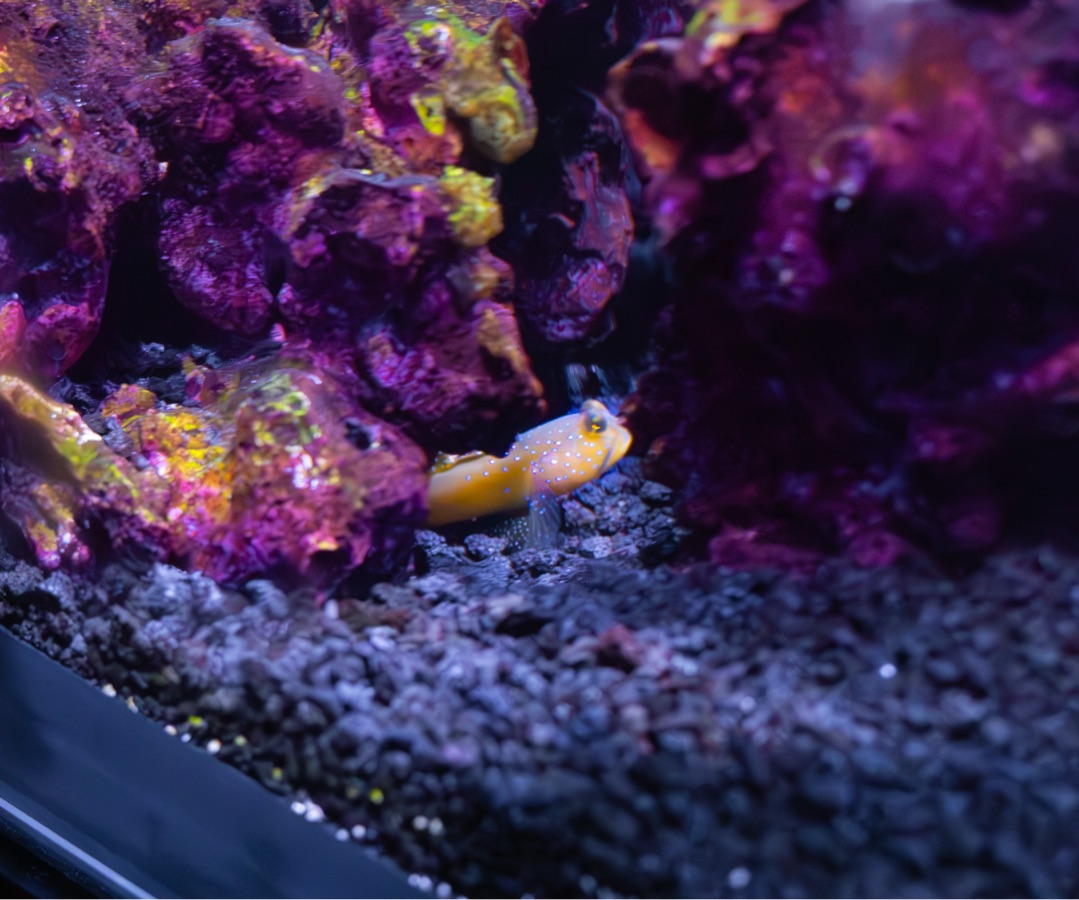
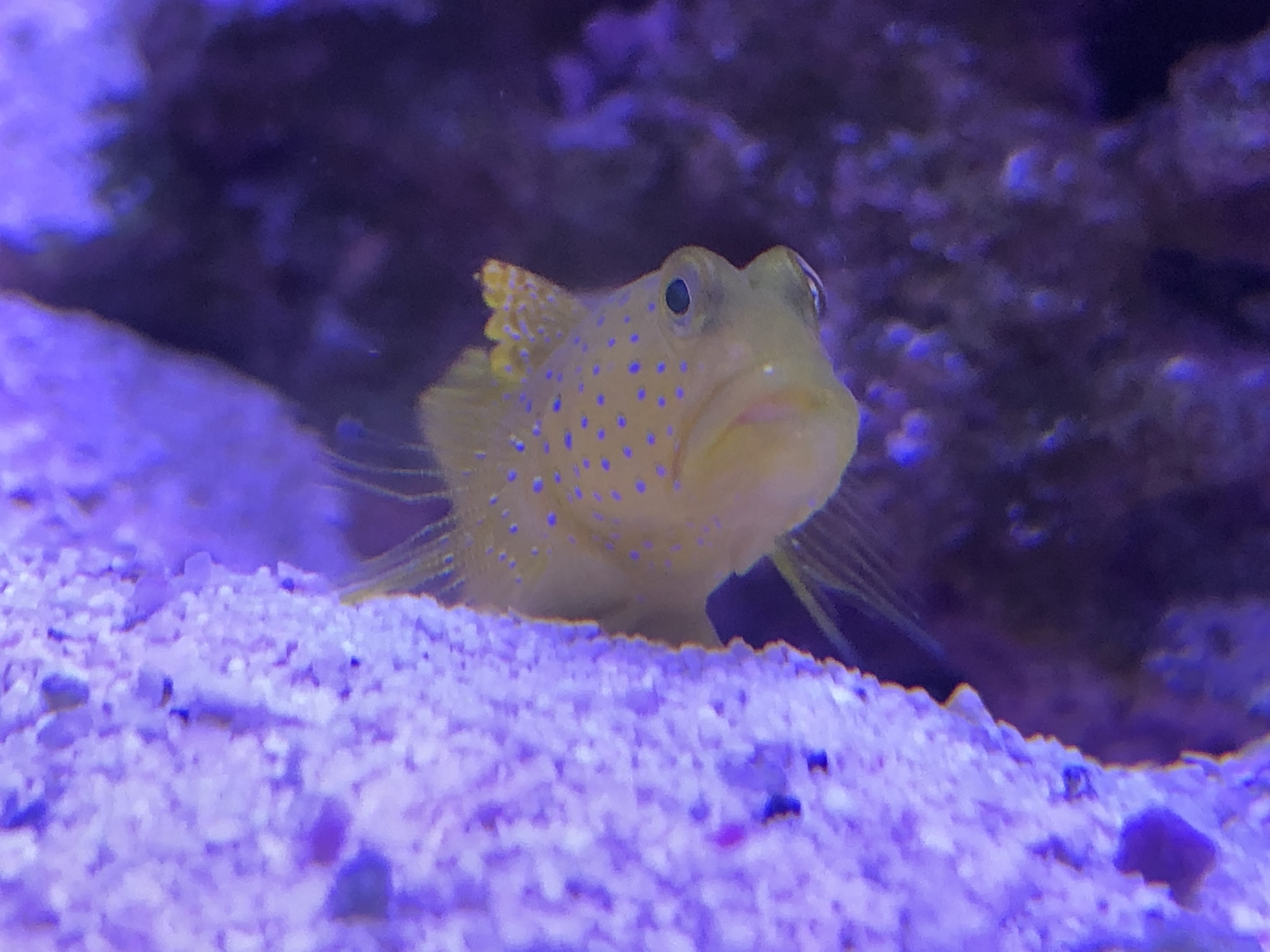
The Yellow Watchman Goby (Cryptocentrus cinctus) is a stout shrimp goby famous for perched “sentry” duty at a sand burrow—and for its optional partnership with an Alpheus pistol shrimp. Most specimens are bright yellow with fine electric-blue speckles on the head and fins (a gray-white barred phase also shows up), a frowning face, and a habit of hovering at the tunnel mouth. Adults reach about 4 inches, stay peaceful with dissimilar fish, and are a staple personality fish for mixed reefs with a real sand bed.
This guide covers tank size, sand and aquascape, diet, shrimp pairing, jump risk, stocking tips, and what to verify before you buy on ReefBay.
Quick care snapshot
- Scientific name: Cryptocentrus cinctus
- Also called: Yellow Watchman, Yellow Prawn Goby, Yellow Shrimp Goby, Banded Prawn Goby, Sulphur Goby
- Category: Goby
- Origin: Western Pacific
- Care level: easy
- Temperament: peaceful toward unrelated fish; territorial toward other burrowing gobies
- Reef-safe: yes with corals and most inverts
- Suggested tank: mature 30+ gallons
- Max size: about 4.0 inches
- Social: solitary (one watchman per burrow territory in most home tanks)
- Diet: carnivore — meaty frozen mysis, brine, and prepared pellets
- Jump risk: yes — use a tight lid
Tank size, sand bed, and aquascape
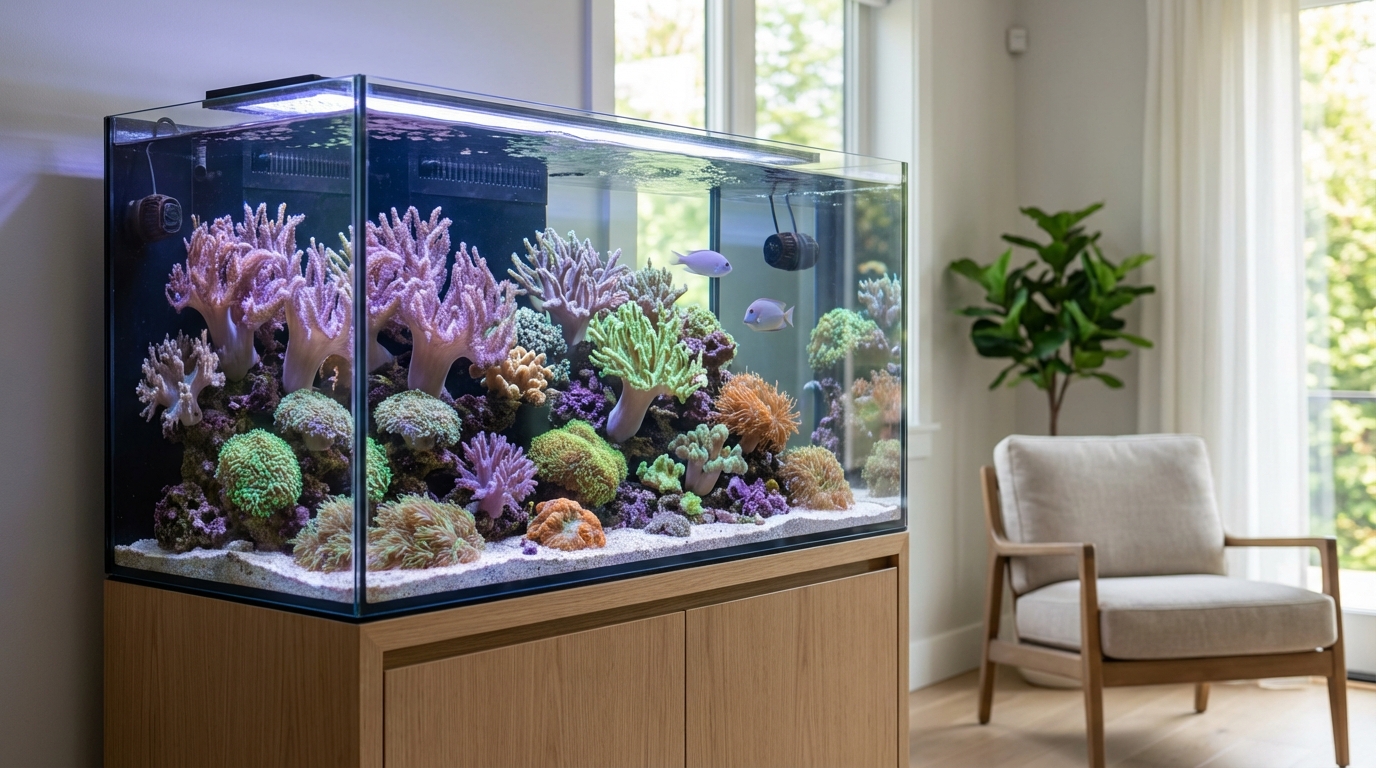
Plan for a mature 30+ gallon system with a soft sand bed and rockwork that cannot be undermined. Watchman gobies dig and maintain a burrow; if rock sits only on sand, tunnels can collapse and stress both the fish and your aquascape.
- Use roughly 2–3 inches of sand (or a rubble/sand mix) so the fish can excavate a stable home
- Set primary rock structures on the glass or a firm base, then backfill sand—do not perch heavy rock solely on soft substrate
- Leave open sand patches near the front or mid-tank for the burrow entrance; watchmen like a clear “sentry” view
- Jump risk is real when startled—run a full canopy or tight mesh lid, including overflow gaps
- Add them after the tank is cycled and parameters are stable, not into a bare sterile setup
In smaller systems under 30 gallons, a single specimen can work if the sand bed is deep enough and tankmates are peaceful. Larger tanks give more territory and reduce friction with other sand-sifting or burrowing species.
Diet and feeding schedule
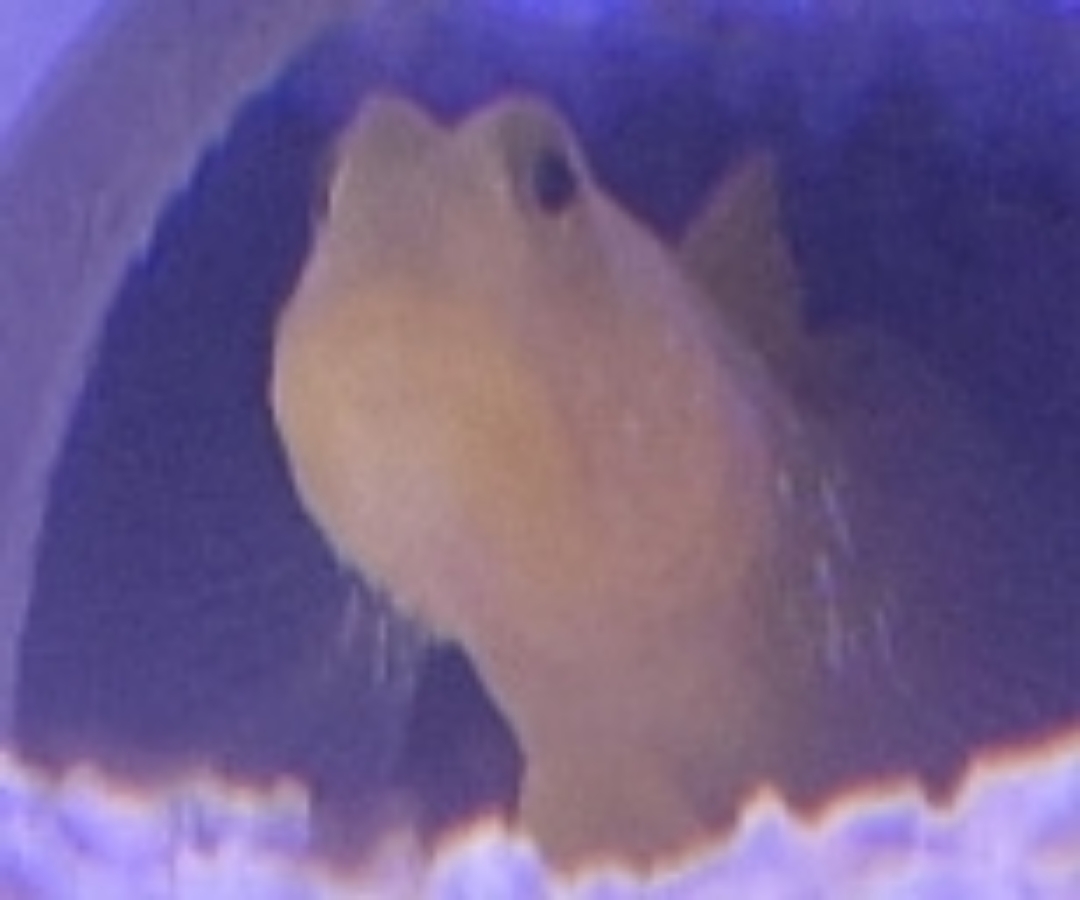
Yellow Watchman Gobies are carnivores that do best on meaty frozen and prepared foods: mysis, enriched brine, finely chopped seafood, and small sinking pellets. They often feed at or near the burrow entrance rather than roaming the whole water column.
- Offer small portions 1–2 times daily (more often during acclimation)
- Target food near the burrow so shy individuals do not lose every bite to wrasses or chromis
- Wean onto pellets early; keep frozen foods in rotation for condition and color
- If a pistol shrimp partner is present, feed where both can share leftovers without burying coral
Thin fish, faded yellow, or constant hiding usually mean food competition, a collapsed burrow, or bullying—not “mystery disease” first.
Pistol shrimp partners (optional but classic)
Many keepers pair a Yellow Watchman with a compatible Alpheus pistol shrimp. The shrimp digs; the goby stands watch and shares the burrow. A shrimp is optional—the goby thrives alone—but the duo is one of the best natural behaviors you can keep in a home reef.
- Introduce the goby first so it claims a burrow site, then add a size-appropriate pistol shrimp
- Keep only one watchman goby per small-to-medium tank to avoid burrow wars
- Avoid aggressive sand-sifters and large predatory wrasses that harass the pair at the tunnel mouth
- Expect more excavation after pairing; secure rock bases before the shrimp remakes the landscape
Compatibility and stocking tips
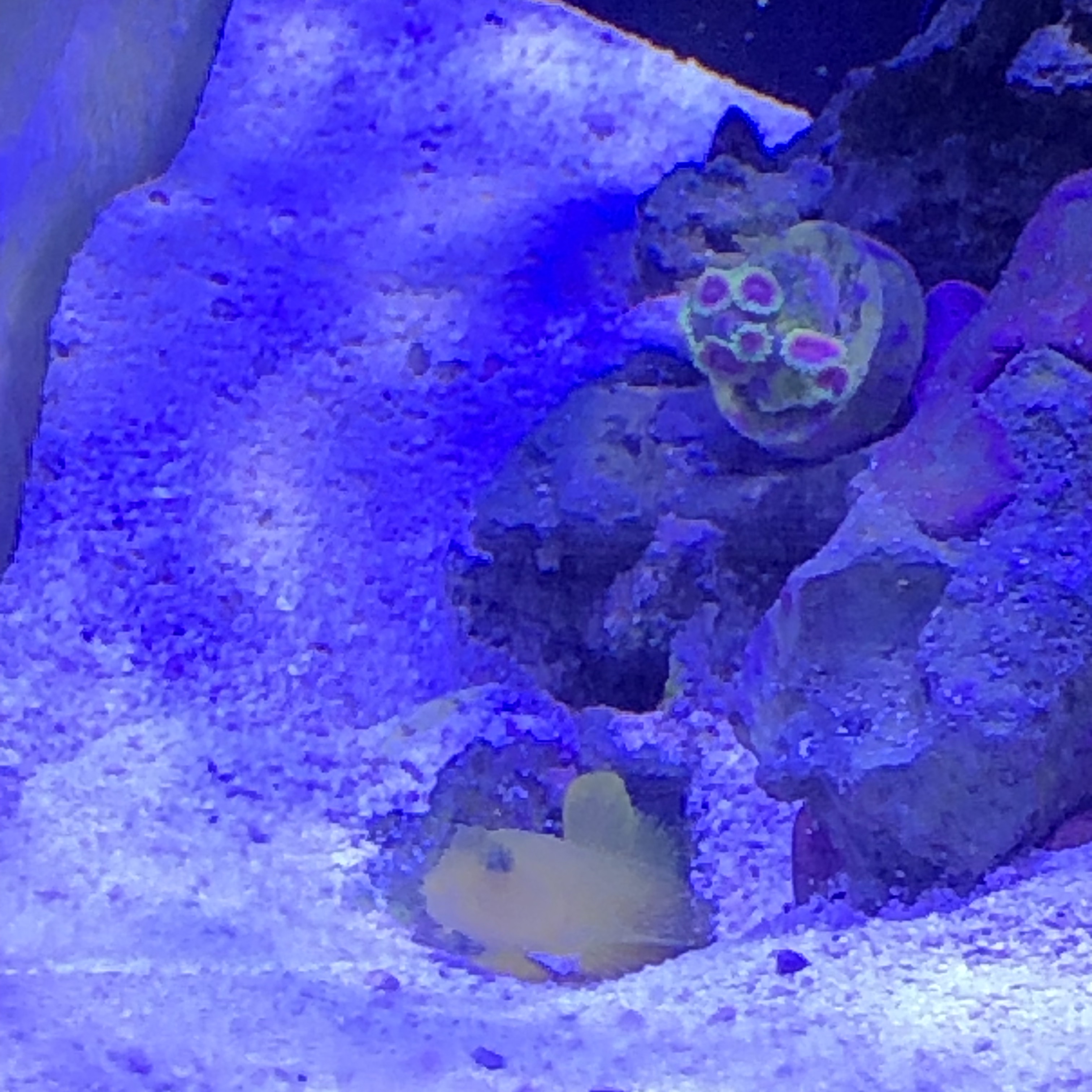
Yellow Watchman Gobies are reef-safe with corals and generally peaceful with unrelated fish. Friction is most common with other burrowing gobies, very aggressive diggers, and tankmates that sit on the same sand patch all day.
- Good neighbors: clownfish, firefish, chromis, peaceful wrasses, most LPS/soft coral tanks, optional pistol shrimp
- Watch closely: other watchman/prawn gobies in small tanks; large sand-sifting wrasses; triggerfish and other diggers that collapse burrows
- Stocking order: add the watchman before more assertive sand-dwellers when possible
- Quarantine: still QT new fish—peaceful does not mean disease-proof
Common problems and quick fixes
- Hiding all day: normal at first; confirm a usable burrow, reduce bullying, feed at the entrance
- Collapsed rock or sand slides: reset rock on glass/base plates; deepen sand only where digging is allowed
- Intraspecific fighting: one watchman per territory in most home tanks—remove the subordinate or upgrade space
- Sudden jump deaths: close lid gaps; reduce night startles during acclimation
Buying checklist before you click purchase
- Confirm a 30+ gallon mature tank with 2–3 inches of sand and rock set on a firm base
- Plan a tight-fitting lid (jump risk)
- Match diet: meaty frozen foods plus pellets, targeted near the burrow
- Decide whether you want a pistol shrimp partner and have a quarantine plan ready
- Compare active listings and seller reputation in ReefBay before you commit
Ready to shop? Open the Yellow Watchman Goby taxon page in ReefBay, compare seller photos next to care notes, and browse the marketplace for healthy stock.