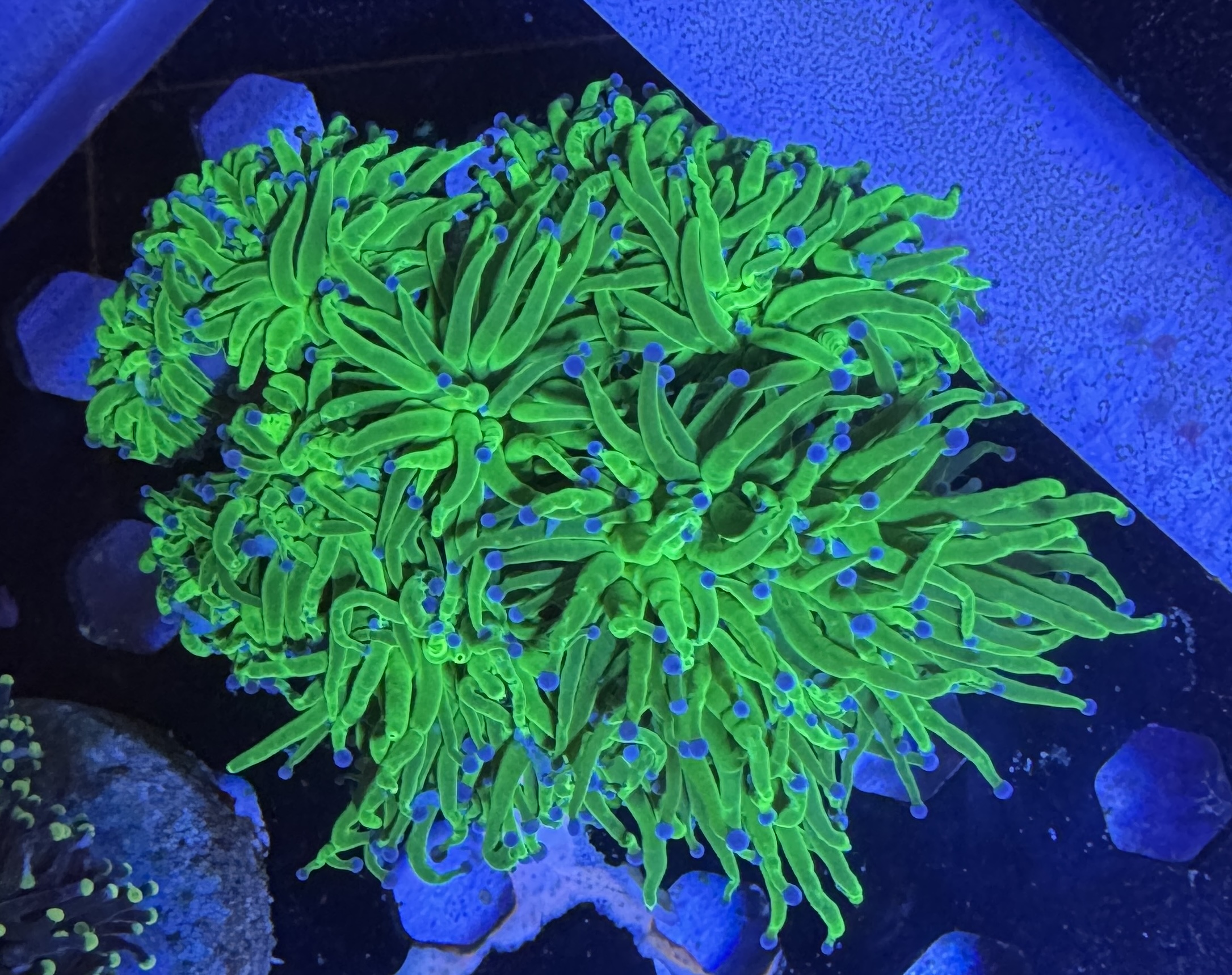
Why Is My Coral Not Opening?
Quick Answer
Coral not opening is usually caused by water quality issues, improper lighting, flow problems, or recent shipping stress. Check your parameters, reduce direct flow, and give new arrivals time to acclimate.
A closed coral is telling you something's wrong. While some closure is normal (corals retract at night or when feeding), persistent closure during daylight hours signals stress. Here's how to diagnose and fix the problem.
Most Common Causes
1. Water Quality Problems
This is the #1 reason corals stay closed. Test these parameters immediately:
- Salinity — Should be 1.024-1.026. Even small swings stress corals
- Temperature — Should be 76-80°F and stable (no more than 2° swing daily)
- Ammonia/Nitrite — Must be 0 ppm. Any detection is toxic
- Alkalinity — 8-11 dKH. Swings are worse than slightly high/low numbers
- pH — 8.0-8.4
Track your parameters consistently using the ReefBay app to catch problems before they cause coral stress.
2. Too Much Flow
Excessive water movement prevents coral polyps from extending:
- LPS corals (hammers, torches, frogspawn) need moderate flow
- Soft corals vary but generally prefer gentler movement
- Polyps should sway gently, not be blasted flat
Fix: Redirect powerheads away from the affected coral, or move the coral to a lower-flow area.
3. Improper Lighting
Both too much and too little light causes corals to close:
- Too bright: Coral may bleach or stay retracted to protect itself
- Too dim: Coral won't thrive and may slowly decline
- New placement: Moving coral to a brighter spot too quickly shocks it
Fix: Start new corals in lower light areas and gradually acclimate them upward over 2-3 weeks.
4. Recent Arrival Stress
Newly shipped corals often stay closed for days or even weeks:
- Shipping is extremely stressful
- Temperature swings during transit damage tissue
- Acclimation shock takes time to recover from
Fix: Be patient. Place new arrivals in moderate light and low flow. Give them 1-2 weeks before worrying.
5. Pests
Check carefully for hitchhikers that irritate coral tissue:
- Flatworms — Look for tiny brown worms on coral surface
- Nudibranchs — Small slugs that eat specific coral types
- Red bugs — Microscopic crustaceans on Acropora
Fix: Coral dipping kills most pests. Quarantine new additions to prevent introductions.
6. Chemical Warfare
Corals release toxins that can affect neighbors:
- Some corals have sweeper tentacles that sting nearby corals
- Soft corals release allelopathic chemicals
- A recently disturbed coral may release stress chemicals
Fix: Run activated carbon to remove chemical compounds. Ensure adequate spacing between coral colonies (at least 3-4 inches).
When to Worry vs. When to Wait
Wait It Out If:
- Coral just arrived within the past 2 weeks
- You recently moved or fragged the coral
- Closure is only happening at certain times (night, during feeding)
- Parameters test normal
Take Action If:
- Coral has been closed for more than a week with no improvement
- You see tissue recession or color loss
- Parameters are abnormal
- You spot visible pests
- Multiple corals are affected simultaneously
Emergency Steps
If your coral looks like it's declining rapidly:
- Test all major parameters immediately
- Do a 10-15% water change with properly mixed saltwater
- Check that heaters and pumps are working correctly
- Move coral to a stable, low-flow area
- Run carbon if you suspect chemical contamination
With patience and proper conditions, most corals recover from temporary stress and begin opening again within days to weeks.
Was this helpful?