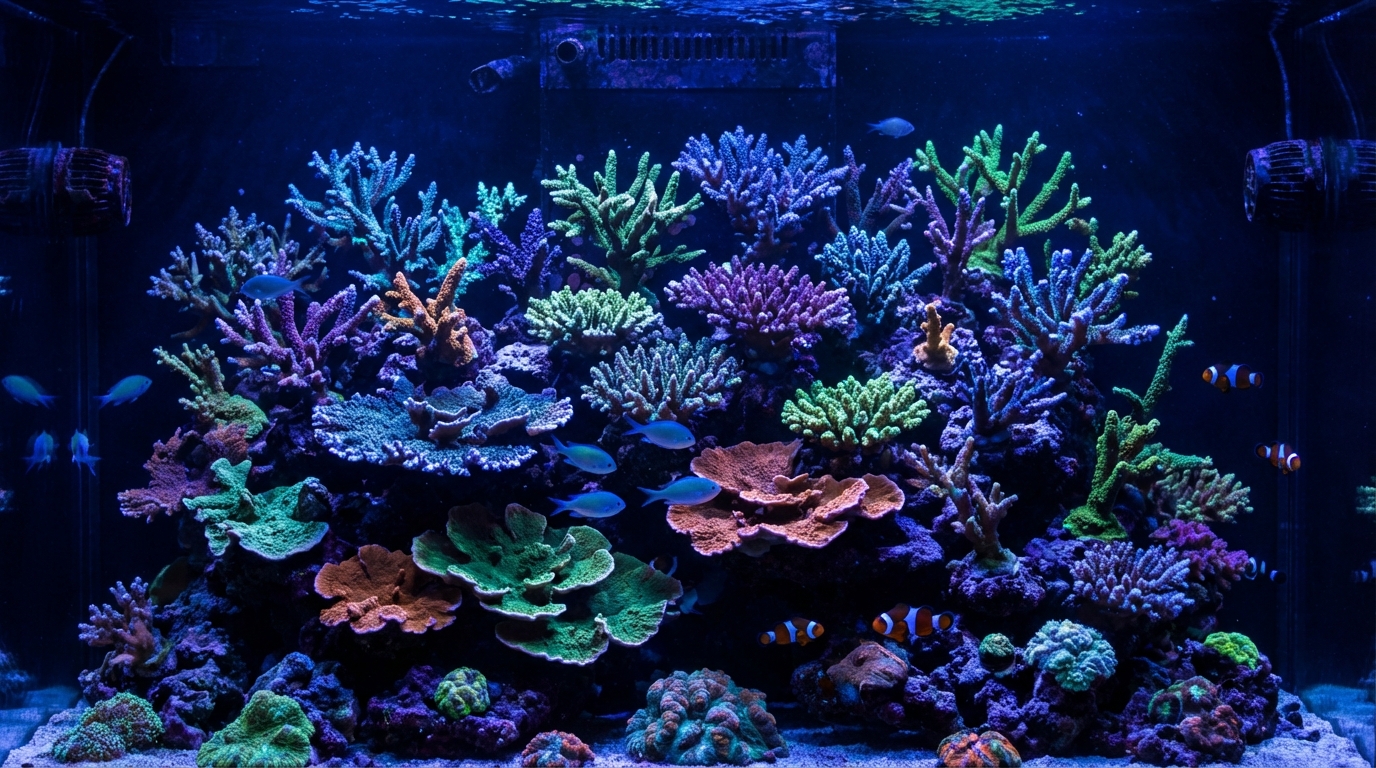
Dosing is where many reef tanks either stabilize and thrive or drift into constant swings. This guide gives you a practical dosing framework for calcium, alkalinity, and magnesium so you can maintain stable parameters, grow healthier corals, and avoid expensive correction cycles.
Why Dosing Matters
Corals — especially stony corals like Acropora, torches, and hammers — build their calcium carbonate skeletons by extracting calcium and carbonate (alkalinity) from the water. As they grow, these elements get depleted faster than water changes can replenish them.
The Big Three Elements
- Calcium (Ca): Building block for coral skeletons
- Alkalinity (KH/dKH): Provides carbonate for skeleton formation, buffers pH
- Magnesium (Mg): Enables proper calcium and alkalinity uptake
These three work together. If one is off, the others won't function properly — like a three-legged stool.
Target Parameters
| Parameter | Optimal Range | Notes |
|---|---|---|
| Calcium | 400-450 ppm | Natural seawater is ~420 ppm |
| Alkalinity | 7-11 dKH | 8-9 dKH is the sweet spot for most tanks |
| Magnesium | 1300-1400 ppm | Should be 3x your calcium level |
Pro Tip: Track your parameters over time with the ReefBay app. Seeing trends helps you dial in your dosing amounts precisely.
When to Start Dosing
Not every tank needs dosing. Here's how to know when it's time:
You DON'T Need to Dose If:
- Your tank is new (under 6 months)
- You only have soft corals and fish
- Weekly water changes maintain stable parameters
- Your calcium/alkalinity stay stable between water changes
You SHOULD Start Dosing When:
- Alkalinity drops noticeably between water changes
- You have a growing SPS or LPS collection
- Water changes alone can't keep up with consumption
- You want to reduce water change frequency
Dosing Methods Compared
1. Two-Part Dosing (Most Popular)
Two separate solutions: one for calcium, one for alkalinity. Dosed in equal amounts.
- Pros: Easy, affordable, precise control
- Cons: Can build up sodium chloride over time
- Best for: Most hobbyists, small to medium tanks
- Popular brands: BRS Two-Part, ESV B-Ionic
2. Kalkwasser (Calcium Hydroxide)
Calcium hydroxide mixed with RO/DI water, dripped into the tank or used as ATO water.
- Pros: Raises both calcium and alkalinity, precipitates phosphates, raises pH
- Cons: Limited by evaporation rate, can cause pH spikes
- Best for: Tanks with low pH issues, high-consumption tanks
3. Calcium Reactor
Dissolves calcium carbonate media using CO2, continuously replenishing the tank.
- Pros: Automated, maintains perfect ratio, adds trace elements
- Cons: Expensive, complex setup, can lower pH
- Best for: Large tanks, heavy SPS systems, experienced reefers
4. All-in-One Solutions
Single products that raise all three elements together.
- Pros: Simplest method
- Cons: Less precise control, more expensive per dose
- Best for: Beginners, low-consumption tanks
How to Calculate Your Dosing Needs
Step 1: Establish Baseline Consumption
- Test calcium and alkalinity after a water change
- Wait 24 hours (don't dose anything)
- Test again at the same time
- Calculate the difference — this is your daily consumption
Step 2: Start Dosing Conservatively
- Begin with 50-75% of calculated consumption
- Dose equal parts calcium and alkalinity solution
- Test daily for the first week
- Adjust amounts based on results
Step 3: Fine-Tune Over Time
As corals grow, consumption increases. Retest monthly and adjust dosing amounts accordingly.
Dosing Best Practices
Timing
- Dose calcium and alkalinity at least 15-30 minutes apart
- Never mix concentrated solutions together (causes precipitation)
- Dose into high-flow areas for quick dispersal
- Spread dosing throughout the day if possible (dosing pumps help)
Consistency is Key
- Dose at the same time(s) each day
- Stable parameters matter more than "perfect" numbers
- Avoid large swings — small daily doses beat weekly mega-doses
Don't Forget Magnesium
Magnesium depletes slower than calcium/alkalinity, but still needs monitoring:
- Test monthly
- If calcium and alkalinity won't rise despite dosing, check magnesium first
- Dose magnesium separately from calcium/alkalinity
Common Dosing Mistakes
1. Chasing Numbers
Stability beats perfection. A tank stable at 380 calcium will do better than one swinging between 400-450.
2. Dosing Without Testing
Never dose blindly. Test at least weekly, more often when starting out.
3. Mixing Solutions Together
Calcium and alkalinity solutions react when mixed, creating useless calcium carbonate precipitate.
4. Starting Too Early
New tanks don't need dosing. Water changes handle parameter maintenance until coral load increases.
5. Ignoring Magnesium
Low magnesium prevents calcium/alkalinity from being absorbed properly, no matter how much you dose.
Automating Your Dosing
Manual dosing works but becomes tedious. Consider automation:
Dosing Pumps
- Budget: Jebao DP-4
- Mid-range: Kamoer FX-STP, BRS Dosers
- Premium: GHL Doser, Neptune DOS
Automated dosing delivers small, consistent amounts throughout the day — exactly what corals prefer.
Conclusion
Need hardware to automate consistency? Compare dosing pumps, backup test kits, and coral-ready gear in the ReefBay marketplace.
Dosing doesn't have to be complicated. Start simple with two-part dosing, test regularly, and let your tank tell you what it needs. As your coral collection grows, you can upgrade to more sophisticated methods.
Track your water parameters and dosing schedule with the ReefBay app to see exactly how your tank responds over time.
Ready to grow some corals? Browse the marketplace for your next addition.