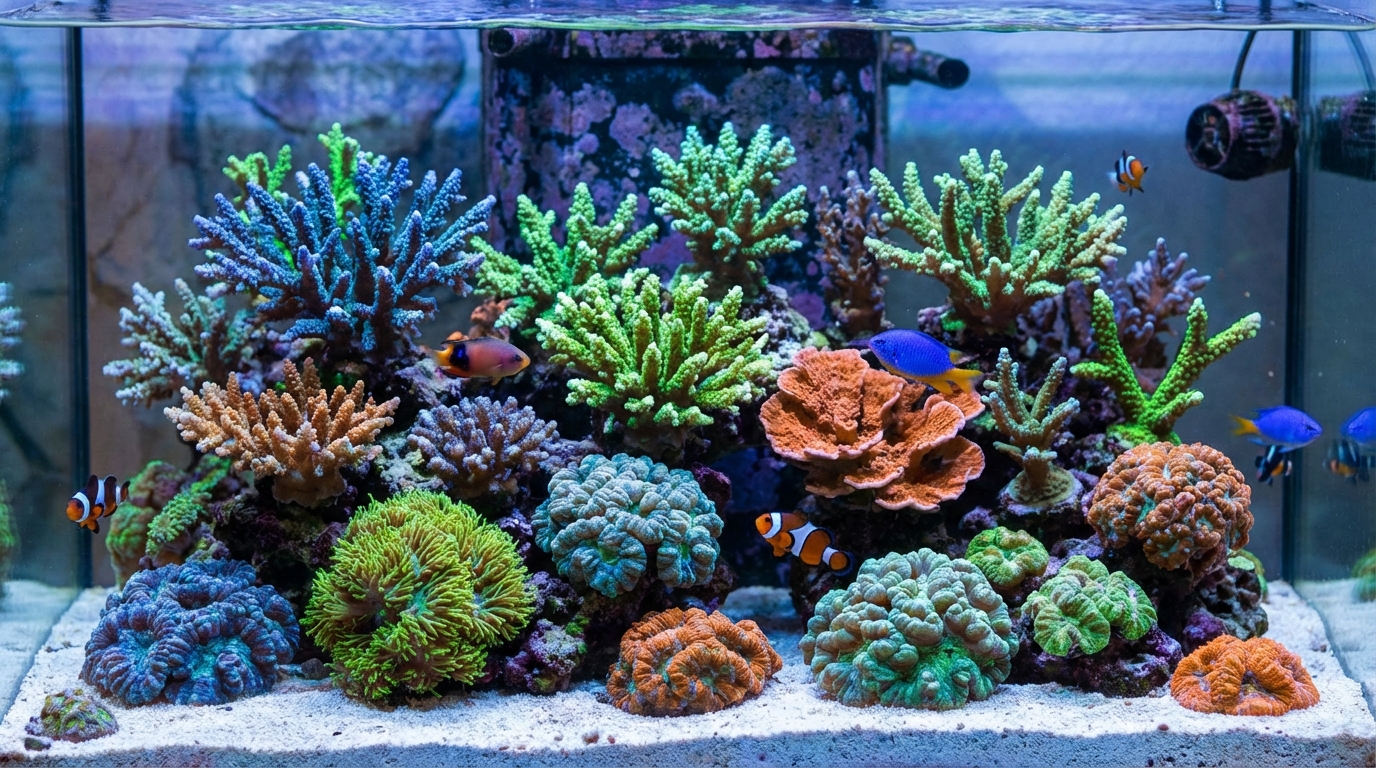
Spend where stability matters
A budget reef can thrive if you prioritize reliability over brand hype. Put money into return flow, heating, and testing consistency first.
Core gear to buy first
- Heater with controller
- Powerhead for flow
- LED reef light
- Skimmer (if bioload requires)
Where to save safely
Start with dry rock, basic dosing tools, and simple test kits. Upgrade only when your tank outgrows current gear.
Where not to cut corners
Avoid cheap heaters, weak flow, and unstable salinity tools. One failure can cost more than buying dependable gear up front.
Use ReefBay to compare listings for return pumps, lights, and flow. Track performance in the ReefBay app to make smarter upgrades.
Budget Reef Equipment Plan That Actually Works
“Budget” should mean high value per dollar, not cheapest part in every category. Cheap gear that fails introduces instability, livestock losses, and replacement costs that erase savings. This expanded guide helps beginners build a stable reef system with a phased spending plan so you can start correctly and upgrade only where it truly improves outcomes.
Rule #1: Spend for stability, save on cosmetics
Prioritize parts that directly protect livestock: heater reliability, flow consistency, and quality test data. You can save on non-critical extras like branded accessories, premium containers, and early automation add-ons you won’t use yet. Stability hardware should be boring and dependable.
- Spend: heater, return/flow reliability, test kits, RO/DI quality.
- Save: premium frag racks, decorative add-ons, unnecessary controllers in month one.
- Delay: advanced dosing automation until consumption justifies it.
Tank and stand: where budget choices are safe
Used tanks can be excellent value if seams are solid and scratches are acceptable. Inspect for chips, prior leaks, and stand damage. A budget setup often starts with a standard rectangular tank because replacement parts are easy to source and plumbing options are flexible.
Search listings for reef tanks and compare complete starter bundles versus pieced builds. If a bundle includes low-quality core equipment, skip it and buy those critical items separately.
Lighting: avoid underpowered fixtures that limit coral options
Many beginners underbuy lighting, then replace it within months. For a budget-friendly start, choose a fixture with proven spread, controllable intensity, and replacement support. You don’t need the most expensive light, but you do need one that can support your planned coral mix.
- Soft coral/LPS-focused tanks can run mid-tier LEDs effectively.
- Check mounting height and spread to avoid dark corners.
- Start intensity lower and increase gradually to prevent bleaching.
Compare market options under reef LED lights and match output to your tank footprint, not just total watts.
Flow and return pumps: the hidden value category
Budget tanks often struggle because flow is uneven or underpowered. Proper water movement improves oxygenation, detritus suspension, nutrient export, and coral health. Two smaller powerheads usually outperform one large fixed stream because you can create intersecting flow patterns.
Look for reliable powerheads and a dependable return pump. Prioritize quiet operation and easy cleaning over feature-heavy mobile apps if budget is tight.
Heaters and temperature control: non-negotiable reliability
Heater failures are one of the most expensive beginner mistakes. A practical budget strategy is using a quality heater sized correctly and, if possible, a secondary temperature safeguard. Even without a full controller ecosystem, simple redundancy can prevent catastrophic swings.
- Choose heater wattage for your room’s real ambient temperature.
- Verify calibration with an independent thermometer.
- Keep a spare heater in your emergency bin.
Filtration on a budget: simple wins over complicated
You do not need every filtration method at once. Start with predictable mechanical export, basic biological surface area, and optional protein skimming if your bio-load warrants it. Overcomplicated filtration can hide maintenance neglect.
Useful budget-first filtration path:
- Filter floss/socks changed consistently.
- Adequate live rock or biomedia.
- Skimmer added when nutrient trend and livestock load justify it.
Review current skimmer listings and buy for your true water volume, not inflated marketing ratings.
RO/DI and saltwater mixing: where beginners should not cut corners
Source water quality drives long-term success. Poor source water introduces silicate, phosphate, and contaminants that fuel nuisance algae and instability. A modest RO/DI setup pays for itself quickly versus fighting preventable issues for months.
- Track TDS and change filters before they fail hard.
- Mix salt fully and heat/aerate before water changes.
- Keep a dedicated mixing container and spare pump.
Test kits: buy fewer, but buy trustworthy
Budgeting does not mean using unreliable tests. In early reefing, actionable data matters more than owning every test kit made. Prioritize salinity, alkalinity, nitrate, and phosphate; add calcium/magnesium as coral demand rises. Consistent method matters as much as brand.
Log every result in the ReefBay app so you can spot trends before corals react visibly. Trend-based decisions are cheaper than crisis corrections.
Livestock budget strategy: stock slowly, avoid loss-driven spending
The biggest hidden equipment cost is replacing livestock lost to instability. Slower stocking protects both animals and wallet. Start with hardy fish and beginner corals, then expand once your maintenance rhythm is automatic.
- Begin with resilient fish from clownfish or goby categories.
- Add hardy corals like zoa and mushroom after stable trends.
- Quarantine or dip to avoid expensive pest outbreaks.
Budget upgrade roadmap (months 1–6)
Month 1: lock stability basics (heat, flow, test process).
Month 2–3: optimize maintenance tools and nutrient control.
Month 4–6: add convenience upgrades only if they reduce real workload or improve consistency.
This phased approach keeps your total cost lower than repeated impulse replacements.
Common budget mistakes that cost more later
- Buying underpowered lighting then replacing it.
- Skipping RO/DI and battling avoidable algae.
- Choosing noisy/fragile pumps that need early replacement.
- Relying on inconsistent testing and overcorrecting.
- Buying livestock too quickly to “fill” the tank.
Sample beginner budget split
Every market is different, but a useful split is: 35–45% core hardware, 15–20% water prep/testing, 10–15% contingency/spares, and the remainder for first livestock plus consumables. Always keep reserve budget for emergencies.
Final checklist before checkout
- Does each purchase improve stability, maintenance, or safety?
- Can this component be cleaned and serviced easily?
- Do you have a backup plan for heater/pump failure?
- Do you have enough budget left for test kits and salt?
When you’re ready, use ReefBay to compare real listings, evaluate seller options, and build a staged cart instead of one oversized purchase. Browse the ReefBay shop, then use the ReefBay app to track setup progress and keep your budget reef stable long-term.
Budget-First Equipment Decisions by Category
To stay under budget without sacrificing livestock safety, decide category-by-category using failure impact and replacement frequency. If a failure can crash livestock quickly, that category deserves higher reliability. If a category is mostly convenience or aesthetics, it can be delayed.
High-priority reliability categories
- Temperature: dependable heater and backup strategy.
- Flow: consistent circulation with easy-clean components.
- Water quality: RO/DI and trustworthy salinity measurement.
- Testing: repeatable kits with known operating cost.
Medium-priority categories
- Skimming and nutrient polishing media.
- Smart automation and remote monitoring add-ons.
- Cabinet organization and cable management upgrades.
Lower-priority early purchases
- Designer accessories that do not improve stability.
- Duplicate premium tools before baseline workflow is proven.
- Livestock purchases to fill visual gaps too early.
Used gear buying checklist
Used gear can dramatically reduce startup cost when evaluated carefully.
- Request clear photos of impellers, cords, and seals.
- Ask runtime history and reason for selling.
- Test for startup reliability before handing over cash.
- Price assuming you may replace wear parts immediately.
Good used purchases often include tanks, stands, and mixing containers; be more cautious with heaters and heavily worn pumps.
How to avoid "cheap now, expensive later" cycles
If a product category is known for early replacement at the low end, move one tier up initially. The total-cost winner is often mid-tier reliability, not absolute cheapest. This is especially true for lights and pumps, where poor performance causes secondary costs in livestock health and maintenance time.
Budget maintenance schedule that lowers long-term spend
- Weekly: remove detritus and clean mechanical filtration before clogs worsen flow.
- Biweekly: inspect pump output and noise for early wear signs.
- Monthly: deep-clean flow hardware to keep efficiency high.
- Quarterly: audit consumables and update recurring cost baseline.
Preventive cleaning extends equipment life and avoids emergency replacement pricing.
Beginner equipment stack: practical, not flashy
A stable budget stack can be simple: reliable tank/stand, one good light matched to footprint, two controllable powerheads, correctly sized heater, practical filtration, and disciplined testing. Add complexity only when your baseline is repeatable.
Cost-per-stability framework
Before each purchase, score it on three questions: Does it reduce parameter volatility? Does it reduce failure risk? Does it reduce maintenance burden? If it scores low on all three, defer it. This framework keeps spending connected to outcomes instead of hype.
When to buy coral and fish relative to equipment spend
Livestock should be purchased after your core operations budget is stable for at least 4 weeks. If you are still replacing hardware or troubleshooting daily drift, delay livestock expansion. Browsing coral and fish is fun, but financial discipline at this stage protects both animals and cash.
Budget reef KPI dashboard
- Monthly operating spend variance under 20%.
- No emergency replacements in the last 30 days.
- Consistent test cadence with actionable trend logs.
- Livestock additions spaced with observation windows.
If these KPIs hold, your setup is ready for gradual upgrades and broader livestock choices.
Use ReefBay to compare sellers and equipment options in one place, then track spend and performance in the ReefBay app. A budget reef succeeds when every dollar is tied to stability, not impulse.
Maintenance Economics: Protecting Budget Gear Long-Term
Budget equipment lasts much longer when maintenance is scheduled instead of reactive. Small preventive tasks dramatically reduce replacement frequency.
- Rinse and rotate mechanical filtration before flow drops.
- Vinegar-soak pumps/powerheads monthly to preserve output.
- Inspect cords, seals, and impellers during every deep clean.
- Recalibrate measurement tools on a fixed schedule.
Replacement timing rules
Replace wear parts at first sign of performance drift rather than waiting for hard failure. Planned replacement is cheaper than emergency replacement plus livestock risk.
Budget-friendly upgrade order after month 3
- Reliability upgrades (backup heater, spare pump parts).
- Efficiency upgrades (quieter, easier-to-clean flow hardware).
- Convenience upgrades (automation) only after reliability is proven.
Decision filter for every purchase
If a purchase does not reduce maintenance time, improve stability, or reduce failure risk, delay it. Use this filter to avoid hype-driven spending and keep a high-value system.
Compare options in the ReefBay shop and track performance outcomes in the ReefBay app so each upgrade is justified by results.
Shipping, Warranty, and Return Cost Planning
Budget builds are strongly affected by shipping and warranty realities. A low sticker price can become expensive after freight, replacement delays, or no-warranty failures. Before checkout, confirm return windows, replacement part availability, and realistic shipping timelines. Prioritize products with dependable support and accessible spare parts. This lowers downtime and avoids emergency premium purchases when something fails unexpectedly.
When possible, consolidate non-urgent items into planned orders but never overbuy livestock just to hit a shipping threshold. Livestock quality and acclimation timing matter more than small freight savings.
Final Budget Sanity Check
Before any major purchase, verify that your last 30 days were stable: no emergency replacements, predictable test trends, and maintenance completed on schedule. If not, delay upgrades and invest in reliability first. This single rule prevents most beginner overspending cycles.
Execution note for first-time buyers
When in doubt, prioritize proven reliability over feature lists. A stable, simpler setup almost always outperforms a flashy setup that is hard to maintain. Keep your monthly routine realistic, protect your reserve budget, and scale only when data shows your tank is ready. This approach saves money, reduces stress, and improves long-term livestock outcomes.
Final reminder: document each purchase outcome so future upgrades are based on evidence, not frustration. Data-driven reefing is the best budget strategy for long-term success.