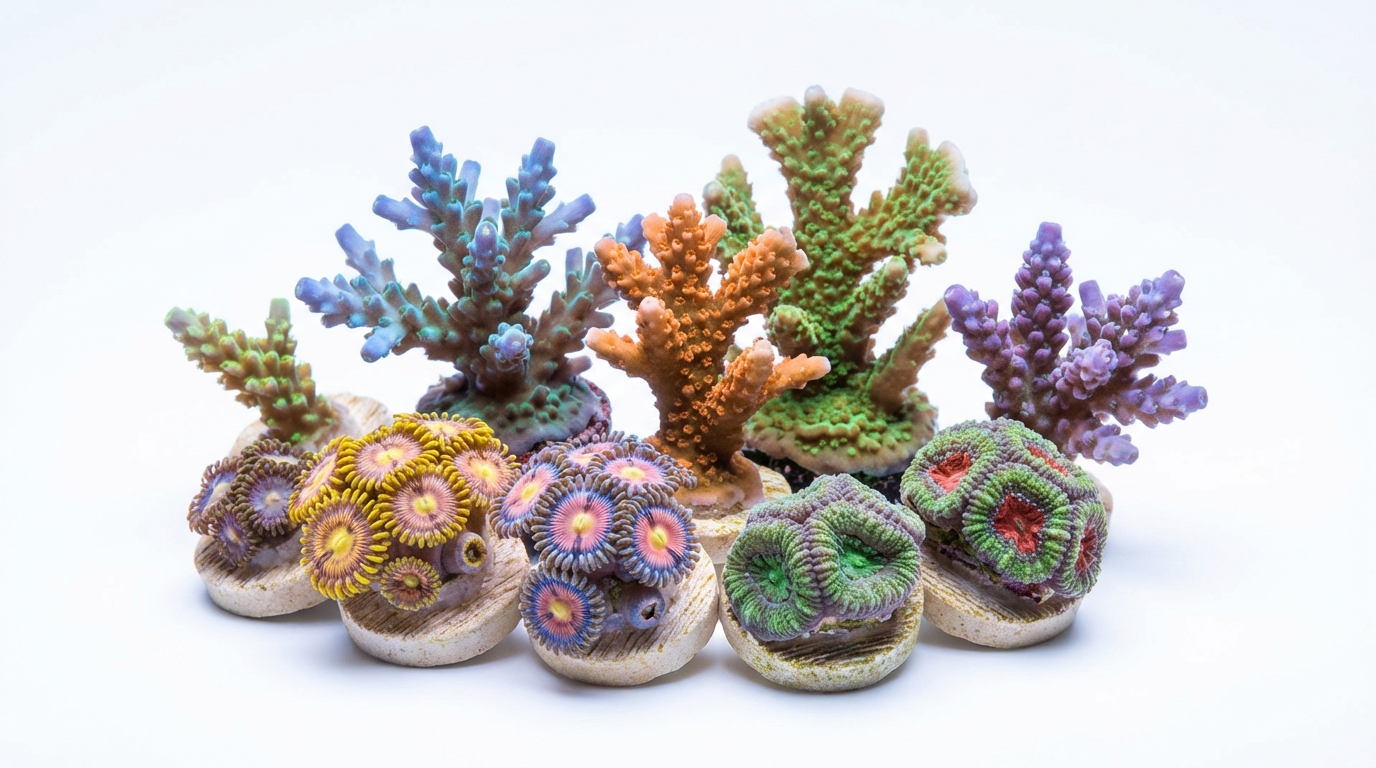
Why Buy Coral Online?
Buying coral online might seem risky, but for most reefers, it's actually the better option. Here's why:
- Selection: Local stores carry maybe 50-100 corals. Online marketplaces have thousands, including rare pieces you'll never see locally.
- Prices: Competition drives prices down. You'll often find better deals than retail stores.
- Direct from source: Many online sellers are hobbyists or small farms selling frags they've grown themselves—healthier than corals that have sat in a retail tank for weeks.
- Convenience: No driving to multiple stores hoping they have what you want.
Yes, there's shipping risk. But with the right seller and proper acclimation, success rates are typically 95%+ for healthy coral arrivals.
Choosing the Right Seller
Not all coral sellers are equal. Here's how to find the good ones:
Look For:
- Clear, honest photos: Photos taken under standard lighting (not just blue LEDs that make everything pop). What you see should match what you get.
- Verified reviews: Real feedback from real buyers. On ReefBay, reviews are from verified purchases only.
- Transparent DOA policy: A clear policy that explains exactly what's covered and what you need to do.
- Responsive communication: Sellers who answer questions quickly and provide updates on shipping.
Questions to Ask Before Buying:
- How long has this coral been in your system?
- Is it eating/growing well?
- What lighting and flow is it under currently?
- What shipping days and methods do you use?
- What's your DOA policy?
Understanding Coral Shipping
Coral shipping is a science. Here's what proper coral shipping looks like:
Proper Packaging Includes:
- Kordon bags or similar: Breathable bags that allow oxygen exchange.
- Heat packs (winter) or cold packs (summer): Temperature control is critical.
- Insulated box: Styrofoam or similar to maintain stable temps.
- Secure frag placement: Rubber bands, foam, or egg crate to prevent damage.
- Overnight or 2-day shipping: Corals shouldn't be in a box longer than 48 hours max.
💡 Shipping Day Matters
Most sellers ship Monday through Wednesday to avoid packages sitting in warehouses over weekends. If a seller ships on Thursday or Friday, that's a yellow flag unless they use Saturday delivery.
Always be home to receive your package. A box sitting on a hot/cold porch for hours can turn a perfect shipment into a disaster.
Shipping Costs
Expect to pay $30-50 for overnight shipping in the US. Some sellers offer:
- Free shipping thresholds: Often $150-200+ orders ship free
- Combined shipping: Multiple frags in one box
- Local pickup: If you're near the seller
DOA Policies Explained
DOA stands for "Dead on Arrival" and it's your protection if something goes wrong in shipping.
Standard DOA Policy Requirements:
- Photos within 2 hours of delivery: Take photos immediately—in the bag, unopened if possible.
- Photo of the coral and the shipping label: Proves it's from that order.
- Report within 2 hours: Most policies have a short window. Don't wait.
- Hold the water/bag: Some sellers want you to keep the original bag for inspection.
⚠️ What DOA Usually Does NOT Cover
- Coral that dies days or weeks after arrival (that's usually acclimation or tank issues)
- Packages delivered to wrong address due to buyer error
- Delays if you weren't home to receive
- Corals that arrive stressed but alive (brown, closed, etc.)
- Color differences from photos (all corals will look different in your tank)
On ReefBay
Every seller on ReefBay has a DOA policy clearly displayed on their shop page. We also offer buyer protection and help mediate disputes if issues arise.
Receiving & Acclimating Corals
You've got your package! Here's the process:
Step 1: Document Everything
Before opening, take a photo of the box. Then open and photograph each coral in its bag. This is your DOA documentation if needed.
Step 2: Temperature Acclimate
Float the sealed bags in your tank or sump for 15-20 minutes. This equalizes temperature slowly.
Step 3: Coral Dip
Always dip your corals! Even from trusted sellers. Popular options:
- CoralRx - Best all-around
- Bayer (diluted) - Great for flatworms/pests
- Iodine dip - Good for bacterial issues
Dip for the recommended time (usually 5-10 minutes), watch for pests falling off, then rinse in clean saltwater.
Step 4: Placement
Start low in the tank. Even if the coral needs high light, placing it immediately in intense light can shock it. Start in a lower position and move up gradually over 1-2 weeks.
What's Normal After Arrival
Normal (Don't Panic):
- Closed polyps for 24-48 hours
- Brownish coloration initially
- Mucus/slime production
- Taking a week to fully extend
Concerning (Document & Contact):
- White, bleached skeleton visible
- Tissue falling off
- Bad smell from the bag
- Brown jelly disease
Red Flags to Avoid
Watch out for these warning signs:
🚩 Seller Red Flags
- No DOA policy or vague terms: "We'll work something out" isn't a policy.
- Only blue-light photos: Everything looks amazing under heavy blues. Demand white light or daylight photos.
- Pressure to buy fast: "Only one left!" on every coral is a sales tactic.
- No reviews or all 5-star reviews: Real sellers have some negative reviews. It's normal.
- Prices too good to be true: That $20 "rainbow" acan is probably brown in person.
- Facebook/Instagram only sellers: No accountability. Prefer marketplaces with buyer protection.
- Ships Friday/Saturday without special arrangements: Weekend warehouse sitting = dead coral.
Buying Coral on ReefBay
ReefBay was built specifically to make buying coral online safer and easier:
- Verified sellers: Every seller is vetted before listing
- Transparent DOA policies: Clearly displayed on every shop
- Real reviews: Only verified buyers can leave reviews
- Secure payments: Your money is protected
- Dispute resolution: We help mediate if issues arise
- Species library: Research corals before buying
Ready to Shop Safely?
Browse healthy corals from trusted sellers on ReefBay. Every purchase is protected, and sellers are held to high standards.