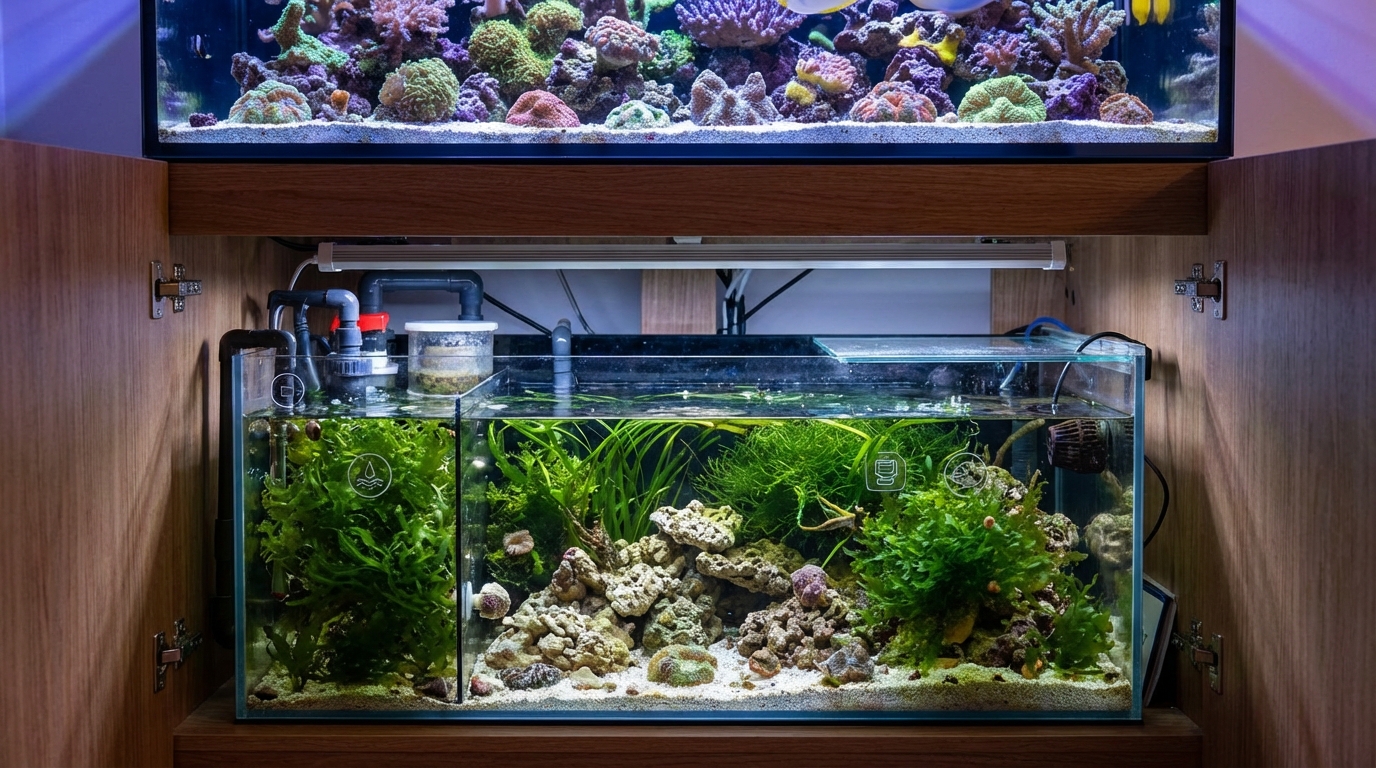
A refugium is one of the most beneficial additions you can make to your reef tank. By growing macroalgae in a dedicated chamber, you create a natural nutrient export system while establishing a thriving copepod population that feeds your fish and corals.
What Is a Refugium?
A refugium is a separate chamber—usually in your sump—dedicated to growing macroalgae and housing microfauna. Unlike your display tank, the refugium provides a "refuge" where beneficial organisms can reproduce without predation.
Key Benefits
- Natural nutrient export: Macroalgae absorbs nitrates and phosphates as it grows
- Copepod breeding: Creates a constant supply of live food
- pH stabilization: Running refugium lights opposite your display can stabilize pH
- Biodiversity: Hosts beneficial bacteria, worms, and microfauna
Refugium Equipment
Container Options
- Sump chamber: Dedicated section in your sump (most common)
- Hang-on refugium: External unit for tanks without sumps
- In-tank refugium: Acrylic box inside display (for nano tanks)
Essential Equipment
- Refugium light: LED grow light in the 6500K-10000K range
- Substrate: Optional—miracle mud, sand, or bare bottom all work
- Flow: Gentle flow from your return pump or a small powerhead
Choosing Macroalgae
The macroalgae you choose determines your refugium's effectiveness and maintenance needs.
Chaetomorpha (Chaeto)
The most popular choice for good reason:
- Extremely effective at nutrient export
- Doesn't go sexual (won't release spores into display)
- Easy to harvest—just remove portions when overgrown
- Tumbles naturally with flow, exposing all surfaces to light
Other Options
- Caulerpa: Fast-growing but can go sexual; requires more attention
- Gracilaria: Beautiful red algae; slower growth but excellent for tangs
- Sea lettuce (Ulva): Good alternative; some fish love eating it
Refugium Lighting
Proper lighting is crucial for macroalgae growth.
Light Specifications
- Spectrum: 6500K-10000K (warmer than display lighting)
- Intensity: 50-100 PAR for chaeto
- Duration: 8-12 hours, often run opposite to display lights
Reverse Lighting Schedule
Running your refugium lights at night while display lights are off helps stabilize pH. During the day, display corals photosynthesize and raise pH. At night, the refugium takes over, preventing the typical overnight pH drop.
Flow Requirements
Flow should be gentle but sufficient:
- Enough to tumble chaeto slowly
- Not so strong that it compacts algae against screens
- Approximately 5-10x refugium volume per hour
Establishing Copepods
One of the best reasons to run a refugium is the copepod population it supports.
Getting Started
- Add a starter culture of live copepods
- Ensure plenty of surface area (macroalgae, rubble)
- Add phytoplankton regularly to feed pods
- Wait 4-6 weeks before harvesting fish see them
Maintaining Pod Populations
- Don't overstock pod-eating fish initially
- Add phyto 2-3 times per week
- Keep macroalgae pruned but not bare
Refugium Maintenance
Weekly Tasks
- Check macroalgae health and color
- Ensure flow is adequate and not blocked
- Add phytoplankton for copepods
Monthly Tasks
- Harvest 1/3 to 1/2 of macroalgae growth
- Clean refugium light of salt creep
- Remove any detritus buildup
Common Refugium Problems
Chaeto Not Growing
- Increase light intensity or duration
- Check that nutrients aren't too low (needs some nitrate/phosphate)
- Ensure adequate flow to prevent dead spots
Chaeto Turning Yellow/White
- Light may be too intense—raise or dim
- Iron deficiency—consider trace element dosing
- Could indicate nutrient depletion (good problem to have!)
Pests in Refugium
- Flatworms, bristleworms, and other hitchhikers are usually fine in the refugium
- They become part of the ecosystem and typically stay contained
Conclusion
A well-maintained refugium is one of the best investments for long-term reef success. The natural nutrient export, stable pH, and constant copepod supply benefit every aspect of your tank.
Ready to set up your refugium? Browse chaeto, copepods, and phytoplankton on the ReefBay marketplace. Track your nitrate and phosphate levels with the ReefBay app to measure your refugium's effectiveness.